
Review · HISTORY WALKING TOURS
Athens: Women in Ancient Greece Guided Walking Tour
Athens looks different through women’s stories. This two-hour walk gives the city a fresh focus, linking famous places with the daily lives of women who are often left out of ancient history. I especially like the unusual subject and the way guides connect mythology with real social rules. I also like that the tour includes both celebrated figures, such as Sappho and Aspasia, and lesser-known women such as Agnodice.
The main drawback is physical. You will walk uphill, manage steps, and finish around Filopappou Hill, so this is not a good fit for wheelchair users or anyone with serious mobility or heart concerns. You also view the archaeological sites from outside, with admission tickets not included.
What makes this Athens walk different
- Women beyond the usual myths: Hear about poets, doctors, thinkers, and women whose lives were shaped by strict social limits.
- Famous sights with a new angle: Monastiraki, Hadrian’s Library, the Ancient Agora, Pnyx, and the Acropolis area all take on added meaning.
- Mythology meets daily life: Athena, Penelope, Demeter, and Pandora help explain how Greek ideas influenced women’s roles.
- A conversational guide: Maelle is praised for asking questions, welcoming discussion, and handling wider questions about Athens.
- A useful two-hour format: The route gives you a thoughtful introduction without taking up an entire day.
- Good views at the finish: Pnyx and Filopappou Hill provide scenic stops after the denser city streets.
Why the women’s perspective matters in Athens
Most first visits to Athens follow a familiar path: temples, democracy, philosophers, and military victories. Those subjects matter, but they can make ancient Athens look like a city built entirely by men, for men. This tour asks what was happening beyond the public speeches and marble buildings.
You hear about women’s daily duties, legal limits, family roles, education, religion, and social standing. The focus is not simply on famous women who managed to break through the rules. It also includes women from different social positions, which helps you avoid the easy mistake of treating one exceptional figure as typical.
That balance is important. Sappho, Aspasia, and Agnodice make memorable stories, but the tour also considers the many women whose names were never recorded. You get a clearer idea of how unusual it was for a woman to become a poet, philosopher, doctor, or public intellectual.
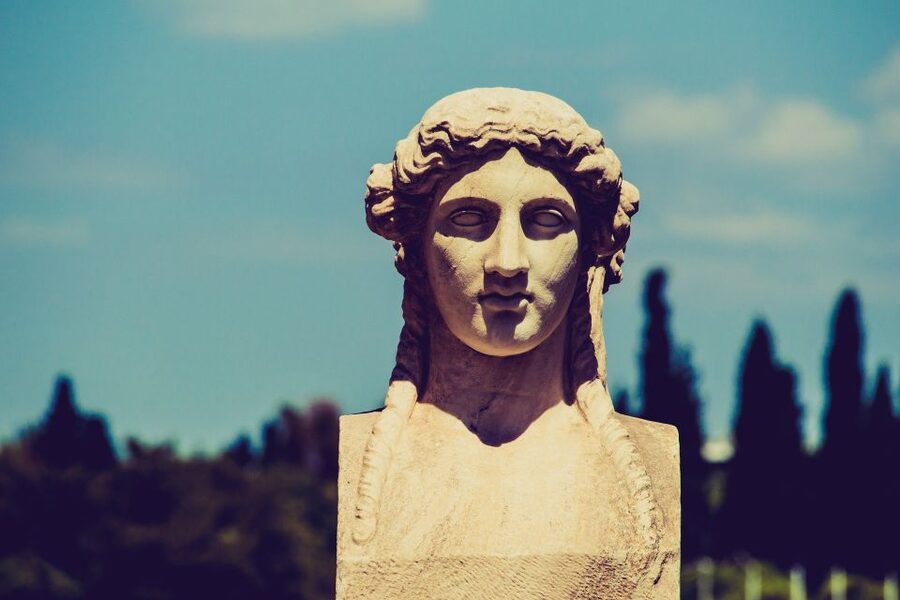
I also appreciate the connection between myth and ordinary life. Athena was not just a statue on a hill, Penelope was not only a patient wife, and Pandora was not merely a cautionary tale. Their stories reveal what ancient Greek society admired, feared, and expected from women.
The discussion can also reach modern questions. A particularly strong part of the experience is the invitation to think about which old assumptions still appear in societies today. That gives the tour more weight than a simple parade of facts.
More History Walking Tours in Athens:
- Acropolis, Parthenon & Athens Old City Heritage Walking Tour
★ 4.5 · 876 reviews - Athens: History of Rebellion Walking Tour
★ 5.0 · 110 reviews - History and Hauntings of Salem Guided Walking Tour
★ 5.0 · 14,564 reviews
Starting at Pantanassa in Monastiraki
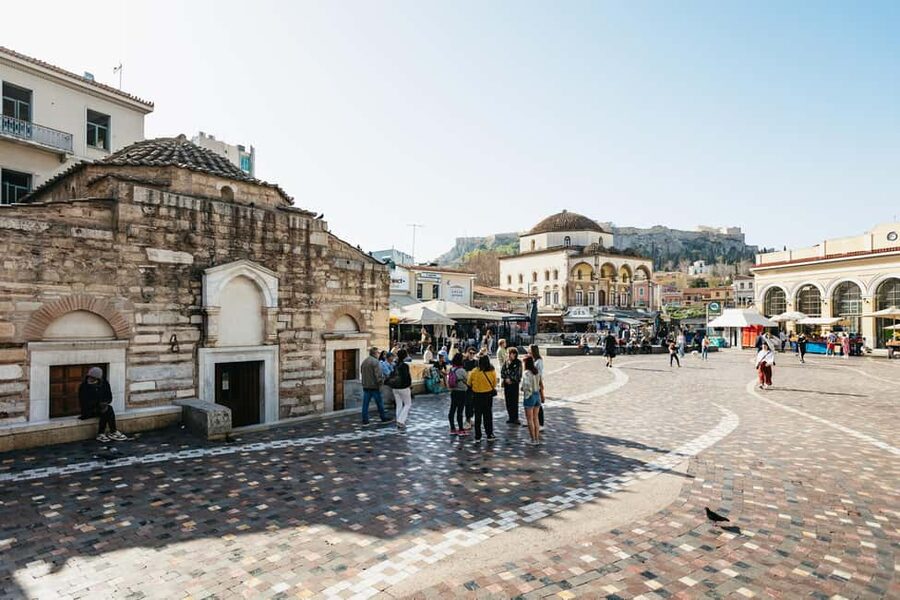
The meeting point is in Monastiraki Square, in front of the Holy Church of the Virgin Mary Pantanassa. Look for the guide holding a sign marked Women in Ancient Greece. This is a busy part of central Athens, so allow enough time to find the church and guide without rushing.
Starting here places you among modern Athens shops, cafés, street life, and archaeological remains almost immediately. It also makes the subject feel practical. You are not beginning in a museum classroom. You are walking through a living city while considering the women who once moved through these same parts of Athens.
The tour is offered in English and French. A private group option is available, which may suit you if you want more room for questions or prefer a quieter pace. The strongest comments about the guiding style describe an open conversation rather than a memorized speech. Maelle, in particular, is praised for her humor, clear explanations, and ability to answer questions beyond the central theme.
Monastiraki and Hadrian’s Library
The first short sightseeing stop is Monastiraki, followed by Hadrian’s Library. You will not spend long at either point, but they help establish the setting.
Monastiraki is useful for orientation because it connects several layers of Athens. Modern streets surround traces of ancient life, and that contrast supports the tour’s central idea: women’s stories are present, but they are not always the first stories a city tells about itself.
At Hadrian’s Library, the subject turns toward learning, public life, and access to knowledge. The stop is brief, so you should not expect a full archaeological visit. Instead, the guide uses the site as a place to discuss who could study, speak, write, or take part in intellectual life.
This is one reason to combine the walk with a separate Acropolis or archaeological visit. The tour offers context and interpretation, but it does not replace a ticketed visit inside the sites.
Plaka and the Gate of Athena Archegetis
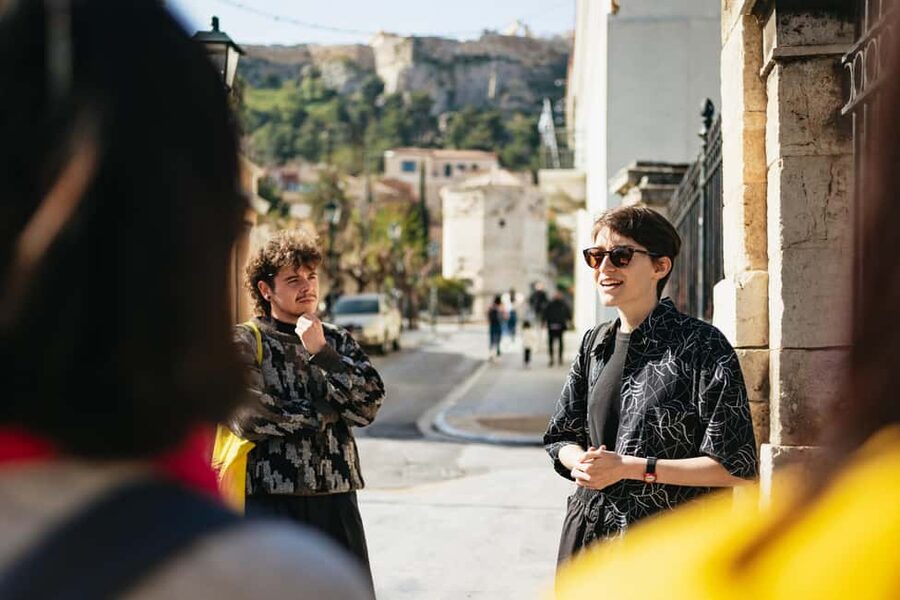
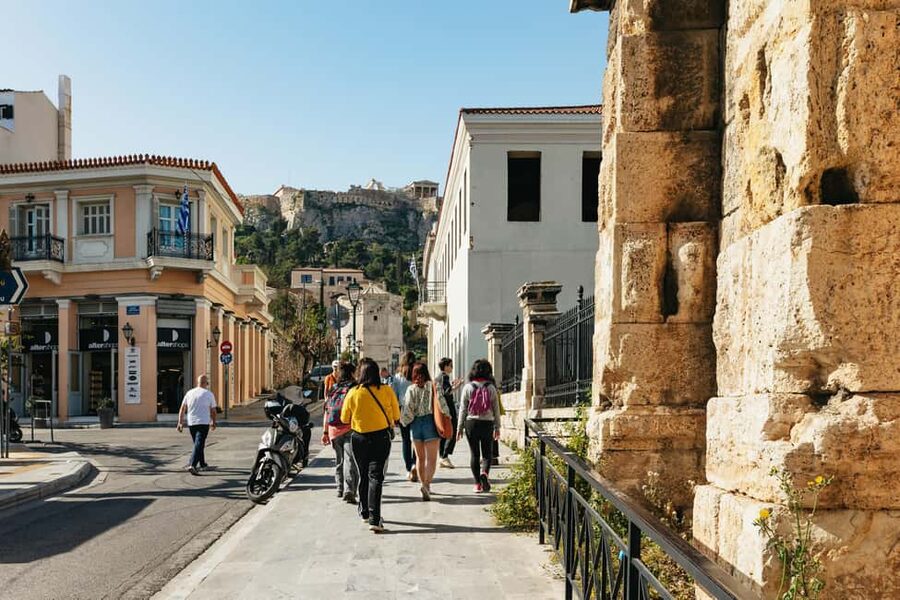
The route continues through Plaka, a pleasant and historic quarter near the main ancient landmarks. Here, you get the feel of Athens as a lived-in city rather than a collection of isolated monuments.
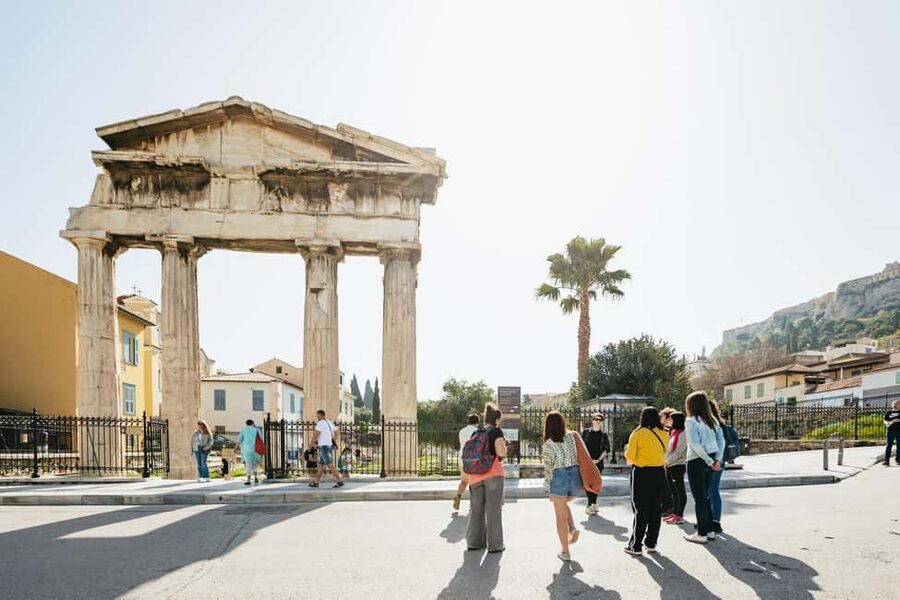
The stop at the Gate of Athena Archegetis adds a mythological and civic layer. Athena is central to Athens, yet the presence of a female deity did not mean that actual women enjoyed equal power. That contrast is one of the tour’s most useful ideas.
You begin to see how mythology could praise wisdom, strategy, fertility, or loyalty while society still restricted women’s movement and authority. The stories are entertaining, but they also make you question the distance between a goddess’s symbolic power and a woman’s real choices.
The guide may also introduce lesser-known material here, including the story of the kidnapped Spartan girls and the mysterious women’s festival in Athens. These tales show that ancient women were not simply passive figures in family homes. They belonged to religious customs, political fears, local legends, and public debates, even when formal authority was limited.
More Guided Walks in Athens:
- Athens: Acropolis and Parthenon Guided Walking Tour
★ 4.6 · 5,882 reviews - Acropolis and Parthenon Guided Walking Tour
★ 5.0 · 4,755 reviews - Acropolis: Acropolis and Parthenon Guided Walking Tour
★ 4.7 · 3,442 reviews - Athens: Guided Greek Food Walking Tour with Tastings
★ 4.9 · 2,859 reviews
The secret stop and the Ancient Agora
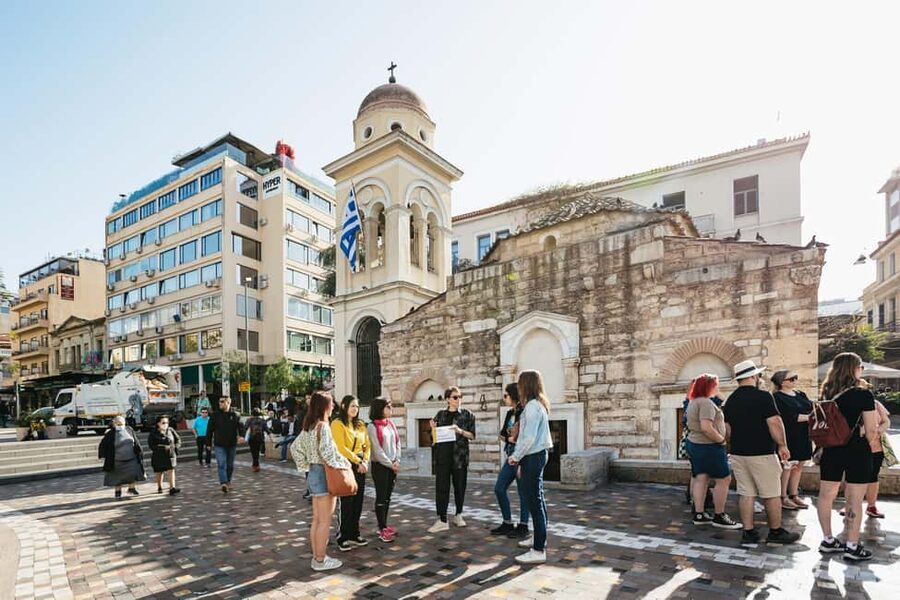
A short stop at an undisclosed point adds variety to the walk. Since the exact location is not provided in advance, you should treat it as a small discovery rather than a major attraction. The value comes from the story attached to the place.
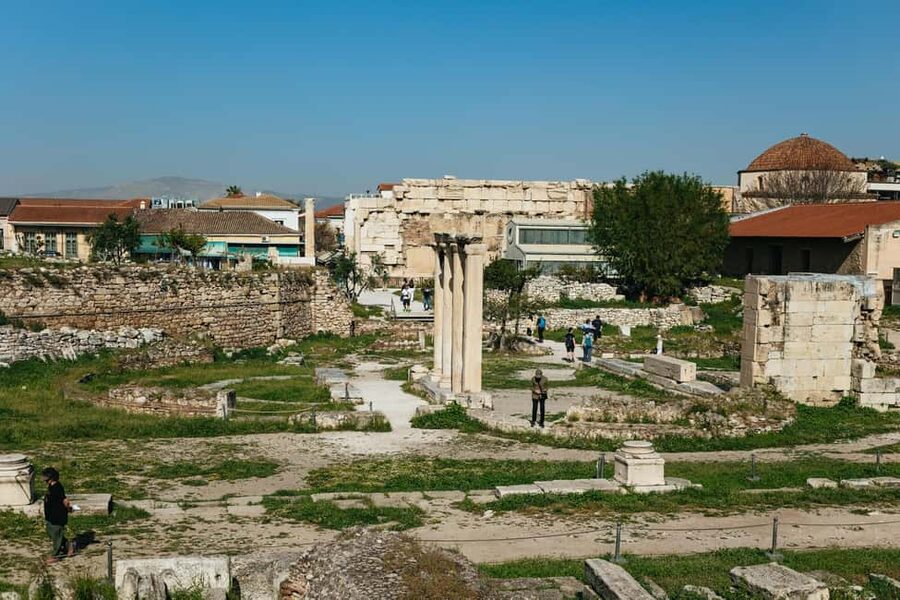
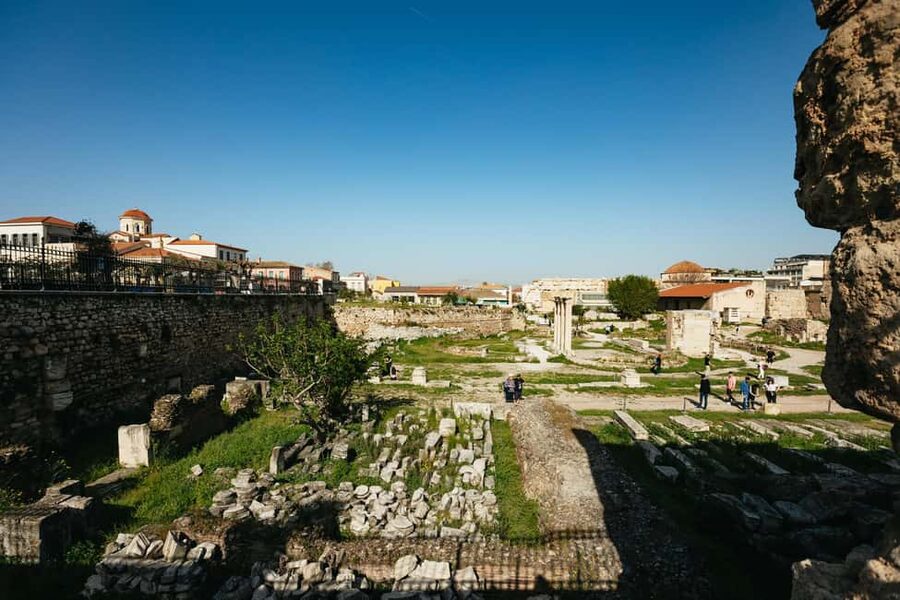
The Ancient Agora is one of the most meaningful sections of the route. This was the heart of public and civic life, and it offers a natural setting for asking who democracy served. Pnyx is commonly associated with the first democratic votes, but the important question here is who was excluded from that political system.
The tour does not present democracy as a simple modern ideal. Women in ancient Athens did not vote, and their public role was sharply restricted compared with that of male citizens. Looking at the Agora from this angle helps you understand both the achievement and the limits of Athenian democracy.
You may also consider how different groups experienced the same city. A male citizen, a woman, an enslaved person, and a foreign resident did not have the same rights or daily choices. That broader view makes the monuments more honest and more interesting.
Because the stop lasts around ten minutes, expect a focused explanation rather than a long site visit. The archaeological areas are viewed from outside, and entrance fees are not included.
Pnyx, the Acropolis view, and Filopappou Hill
At Pnyx, the route moves from the practical limits of women’s lives to the public machinery of Athens. This is where the first democratic votes were cast, making it an ideal place to discuss political participation and exclusion.
The stop lasts about fifteen minutes, one of the longer pauses on the route. You will have more time to absorb the setting and ask questions. This is also a good point to connect ancient civic life with the women introduced earlier.
From the route, you can look up toward the Acropolis. The view is valuable not only for photographs but also for changing how you read the monuments. Instead of seeing the Acropolis only as a symbol of male rulers, soldiers, and philosophers, you consider the women whose labor, family roles, religious duties, and restrictions supported the city.
The final section reaches Filopappou Hill. You should expect steps and an uphill walk, along with a scenic viewpoint on the way. The hill gives the tour a calmer ending and a broad view over Athens.
This finish is attractive, but it is also the part to think about if you have mobility limitations or dislike uneven ground. Bring water, a sun hat, and sunscreen. A hot day can make the climb feel harder, and one guide is praised for seeking shade and checking that the group remained comfortable.
The published details mention the walk ending back at the meeting point, while the route information also lists a kiosk on Rovertou Galli 69 among the drop-off locations. Confirm the exact finishing point when you book, especially if you have a timed reservation afterward.
The guides make or break this experience
The subject is strong, but the guide matters greatly. The most praised guide is Maelle, who brings warmth, humor, and a clear interest in the topic. Her best quality is not simply knowing many names and dates. She encourages questions and often turns the walk into a conversation.
That approach suits this subject. Ancient Greek evidence about women is incomplete, and some popular stories mix myth, later interpretation, and historical material. A good guide needs to explain those limits rather than present every tale as settled fact.
Maelle is also praised for answering general questions about Ancient Greece. That helps if your group wants to connect women’s roles with democracy, religion, mythology, or the wider structure of Athenian society.
The experience appears especially strong for people who like discussion. If you want a guide to deliver a fast list of monuments and dates, this may feel slower or more reflective than expected. If you enjoy asking why the past was organized as it was, the conversational style should suit you well.
Price, timing, and what you receive

The cost is $44.04 per person for two hours. That is reasonable if you value interpretation, a focused theme, and a guide who can connect several sites into one argument. You are paying for the guide and the structure of the experience, not for archaeological admission.
The value is best when you already plan to see the major sites separately. You can visit the Acropolis or Ancient Agora on your own, then use this walk to ask different questions about them. It works less well if you expect entry into the monuments or a full site-by-site archaeological tour.
The tour includes the walking tour, a guide, and a small gift. A private option is available, though the price may vary by group choice and availability. You can reserve now and pay later, and cancellation is free up to 24 hours before the activity for a full refund.
Two hours is enough to build a clear picture without exhausting your morning. Still, the route contains steps and hills, and you should plan for sun exposure. Wear comfortable shoes and carry water.
Who should book this walk?
I would recommend it to you if you have already seen the standard Athens highlights and want a more focused way to understand them. It is also a strong first-day choice if you want historical context before visiting the Acropolis or Agora in greater detail.
The tour suits:
- People interested in women’s history, mythology, and social change
- Visitors who prefer discussion to a lecture
- First-time visitors who want a clear introduction to ancient Athens
- Families with older children or teenagers who enjoy stories and questions
- Anyone who feels that standard ancient-history tours leave out too many voices
It may not suit you if you need step-free access, use a wheelchair, have serious heart concerns, or want to enter the archaeological sites during the two-hour walk. The tour is also less useful for someone seeking only a quick photo stop at the major monuments.
Should you book the Women in Ancient Greece tour?
Yes, if you want Athens to be more than temples, generals, and famous male thinkers. The route is compact, the price is fair for a guided experience, and the subject gives familiar places a fresh purpose.
Book it for the thoughtful stories, the mythology, and the chance to consider how democracy looked from outside the voting assembly. Choose the private option if personal questions matter to you, and schedule it when you can handle the hills without rushing.
I would pair it with a separate Acropolis or Agora visit. This walk will not give you the full archaeological tour, but it can change what you notice when you see those monuments afterward.
FAQ
How long does the Women in Ancient Greece tour last?
The walking tour lasts two hours. Starting times vary, so check availability when choosing a date.
Where does the tour start?
Meet your guide in Monastiraki Square, in front of the Holy Church of the Virgin Mary Pantanassa. The guide will hold a Women in Ancient Greece sign.
Where does the tour finish?
The activity information says it ends back at the meeting point. The route details also mention a kiosk at Rovertou Galli 69 as a drop-off location, so confirm the exact endpoint before the walk.
Which languages are available?
The tour is offered in English and French.
Are archaeological site tickets included?
No. The route provides exterior views of places such as Hadrian’s Library and the Ancient Agora. Admission tickets to archaeological sites are not included.
Is a private tour available?
Yes. A private group option is available when selected during booking.
Is the tour suitable for wheelchair users?
No. The walk includes steps and is not suitable for wheelchair users or people with mobility impairments. It is also not suitable for people with heart problems.
Just added around Athens
- Acropolis monuments, Parthenon and Plaka, Monastiraki walking tour★ 5.0 · 182 reviews
- The Acropolis, Athens Walking City Tour and Acropolis Museum★ 5.0 · 442 reviews
- Athens Street Art Walk★ 5.0 · 309 reviews
- Athens Street Food Walk★ 5.0 · 385 reviews
- Athens Shore Excursion: Acropolis Walking Tour★ 4.5 · 131 reviews
- Athens Off the Beaten Track Private City Walking Tour★ 5.0 · 304 reviews
- Athens at Night Small-Group Walking Tour with Dinner★ 5.0 · 230 reviews
- Athens Highlights: Myths & Philosophers Walking Tour★ 5.0 · 125 reviews
History Walking Tours, compared.

History and Hauntings of Salem Guided Walking Tour
Read our review →

Freedom Trail History Small Group Walking Tour
Read our review →
Historic Charleston Guided Sightseeing Walking Tour
Read our review →
Tapas Walking Tour with Food, Wine, and History
Read our review →
Savannah History and Haunts Candlelit Ghost Walking Tour
Read our review →
A History of Terror – Belfast City Centre Walking Tour
Read our review →Browse the lists this tour appears in