
Review · HISTORY WALKING TOURS
Atlanta: Martin Luther King Historical Park Walking Tour
History feels closer on foot. This 150-minute tour connects Dr. King’s home neighborhood, church, and working world across Atlanta’s Sweet Auburn district, turning a famous name into a human story. I especially like the way it links MLK to other civil rights leaders, and I like that the tour includes a donation to the King Center.
The main consideration is the physical effort. You’ll cover about 1.7 miles outdoors, with plenty of standing, and entry to the King birth home and Ebenezer Baptist Church is not included. Hot weather can make the walk harder, so comfortable shoes, water, and sensible clothing matter.
Key points to know before you go
- The 1.7-mile route connects major MLK sites with the streets, buildings, and public spaces tied to Atlanta’s civil rights story.
- The King Center adds photographs and artifacts, giving the walking tour more personal detail than a street tour alone.
- Prince Hall Grand Lodge is a major stop, since it served as the Southern Christian Leadership Conference headquarters during the 1960s.
- Guides use stories, photographs, and short audio clips to put people and events into context.
- The Jackson Street Bridge provides a memorable city view, along with a useful pause in the walking route.
- The tour costs $40 per person, a fair price if you want interpretation and local context rather than simply visiting the sites on your own.
Why this Atlanta tour works

You can visit the Martin Luther King Jr. National Historical Park independently, but the area makes more sense when the buildings are tied together. This tour gives you that connection. Instead of seeing a church, a lodge, a museum, and a street as separate stops, you learn how they fit into MLK’s family life, ministry, organizing work, and public leadership.
I like that the tour does not focus only on Dr. King. Guides bring in other civil rights figures and explain Atlanta’s role in the movement. That wider view keeps the experience from becoming a single-hero biography.
The strongest praise has centered on the guides’ storytelling. Jay was singled out for adding context and bringing in several important historical figures. Joy, Ariel, Jennifer, Kristen, Zoe, Emily, Jessica, and others have also been praised for warmth, humor, strong preparation, and the ability to answer questions. The exact guide will depend on your date, but the pattern is clear: this is meant to be a story-led walk, not a simple list of landmarks.
Group size can vary. One outing had 10 people, which was described as a comfortable number, while another was just a few people. A smaller group usually makes it easier to ask questions and hear the guide clearly. The experience has also worked for families, including children aged 9 and 11, and for an older adult in his eighties, although the walking and standing still deserve honest consideration.
More History Walking Tours in the USA
- History and Hauntings of Salem Guided Walking Tour
★ 5.0 · 14,564 reviews - Boston: Freedom Trail History Small Group Walking Tour
★ 5.0 · 6,450 reviews - Historic Charleston Guided Sightseeing Walking Tour
★ 5.0 · 6,216 reviews
Meeting at the Behold Monument
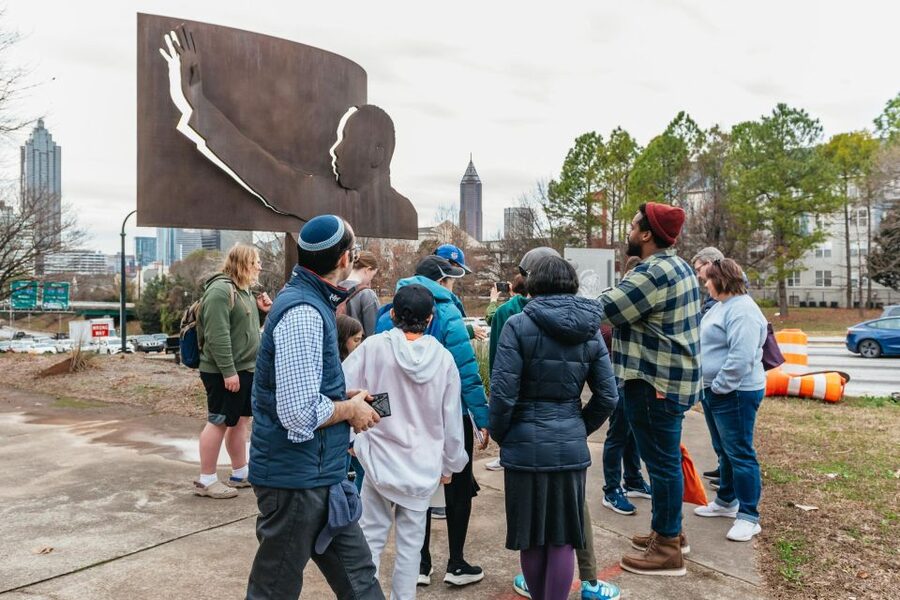
The meeting point is next to the Behold Monument at the entrance to the King National Historical Park, across from Ebenezer Baptist Church. The monument shows an African man holding a baby toward the sky, making it a fairly distinctive place to gather.
Your guide will carry an orange flag. That detail matters in a busy historic district, especially if several groups are forming nearby. The stated starting address is 407 Auburn Avenue NE.
I would arrive a little early so you can locate the monument without rushing. This is a walking tour, so there is no hotel pickup or drop-off. Plan your route to the meeting point separately and wear shoes you can comfortably use for nearly two hours and 1.7 miles.
Walking through the Martin Luther King Jr. National Historical Park
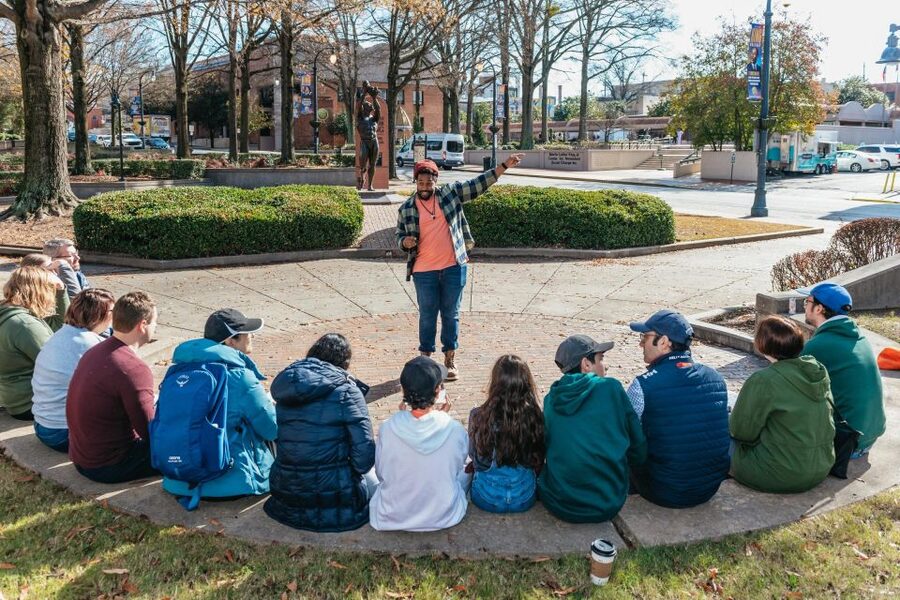
The first section introduces the historic area and sets up the story of Dr. King’s life in Atlanta. You’ll walk along streets he knew and see places connected with his work, family, and worship.
This is where a good guide makes a large difference. The buildings alone cannot explain how personal and public life overlapped here. The tour places MLK within a community of churches, civic groups, businesses, and organizers. You hear about the people who helped shape the movement, not only the figure whose name now defines the park.
The opening guided portion lasts about 25 minutes, followed by additional stops through the district. The pace appears designed to mix walking with discussion rather than rush from one doorway to the next. Still, you should expect frequent standing while the guide speaks.
Some of the most effective guide techniques have included printed photographs and short, relevant voice recordings. These tools help you compare past and present and give the stories a personal sound. A guide may also adjust the pace when heat becomes a problem, but you should not count on cool weather or long indoor breaks.
Ebenezer Baptist Church and MLK’s public life
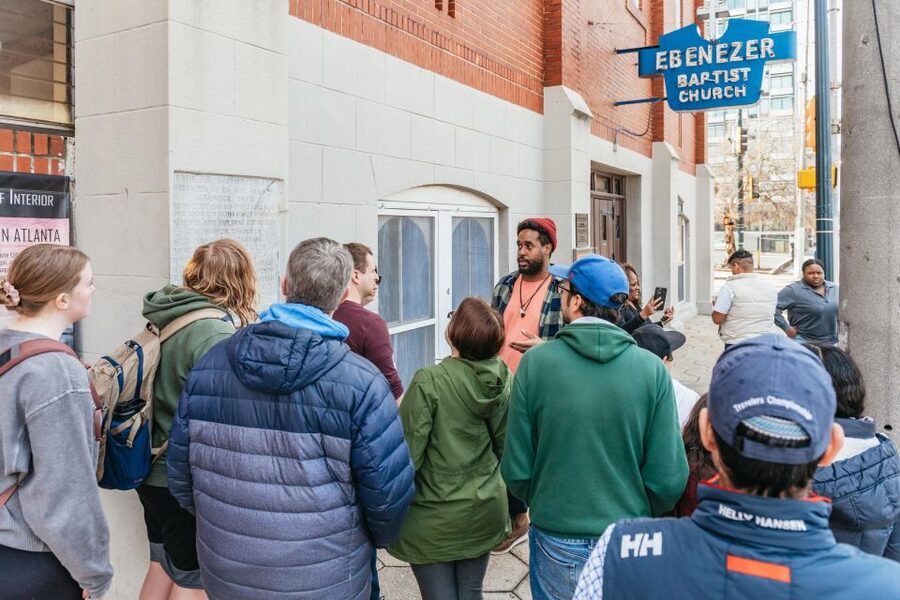
Ebenezer Baptist Church is one of the tour’s essential landmarks. Dr. King served there as co-pastor with his father, and the church links his family life, religious work, and public leadership.
The exterior and setting are part of the guided visit, but entry to the church is not included in the $40 price. The same applies to the King birth home. That distinction is important if you expect a full interior visit. You may need to arrange admission separately, subject to availability and operating details not provided here.
Even without treating the church as a simple photo stop, the tour can help you understand why it matters. MLK was not only a speaker seen on television. He was also a pastor serving a congregation and a son working within a family religious tradition.
The church stop may be especially meaningful if you want to connect his public speeches with the faith-based setting that shaped much of his work. It also gives the guide a natural place to explain the role of Black churches in organizing and community life during the civil rights era.
Same streets, a different way to see them:
- New Orleans Premier Ghost, Voodoo and Vampire Walking Tour
★ 4.5 · 12,856 reviews - Little Havana Food and Walking Tour in Miami
★ 5.0 · 8,882 reviews - Chicago: Gangsters and Ghosts Walking Tour
★ 5.0 · 7,155 reviews - New Orleans Food Walking Tour of the French Quarter with Small-Group Option
★ 5.0 · 6,118 reviews
Prince Hall Grand Lodge and the movement’s working base

Prince Hall Grand Lodge is one of the more unusual stops on the route. Many people know the church and the King Center, but fewer arrive expecting a building tied to the day-to-day work of the movement.
During the 1960s, the lodge served as the headquarters of the Southern Christian Leadership Conference. That fact gives the building real importance. It was not simply a ceremonial site. It was connected to planning, meetings, and the practical work behind public demonstrations and national campaigns.
I like this stop because it moves the story away from famous speeches and toward organization. Social change requires offices, schedules, strategy, fundraising, communication, and people willing to handle unglamorous work. Prince Hall Grand Lodge helps make that side of the movement visible.
The tour’s wider Atlanta focus also fits well here. You learn how the city’s buildings and infrastructure related to civil rights activity. One participant specifically valued the explanation of Atlanta’s city history and how it connected with the movement.
The King Center and Freedom Hall
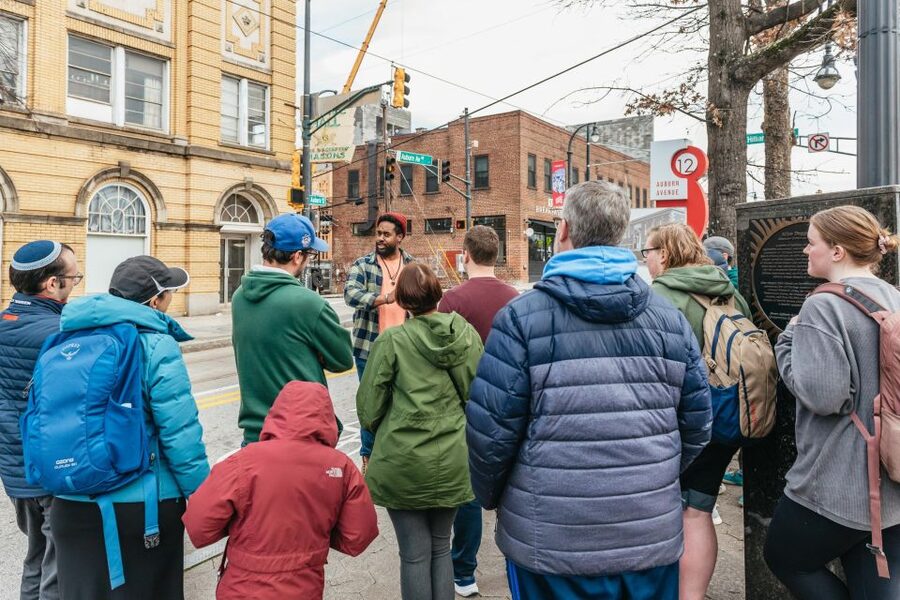
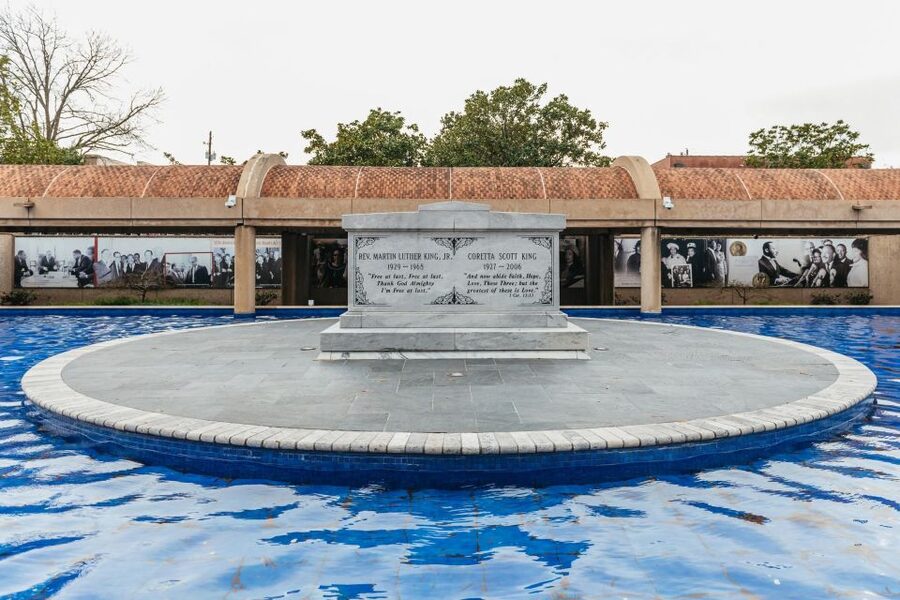
The King Center gives the walk a more reflective, indoor component. The tour includes a visit to Freedom Hall and a look at photographs and artifacts tied to MLK’s life.
These objects add detail that street addresses cannot provide. A photograph can show a family relationship, a public moment, or a side of Dr. King that is easy to miss when you focus only on major events. Artifacts help turn broad historical facts into something more concrete.
The tour includes a donation to the King Center, which improves the value of the package. You are not only paying for a guide’s time. Part of the price supports the institution connected with preserving and presenting this history.
Allow yourself time to take in the material rather than treating the King Center as another quick stop. The walking route gives you place and context. Freedom Hall supplies additional visual evidence and personal detail. Together, they make a fuller visit than either part would provide alone.
Jackson Street Bridge and the Atlanta view
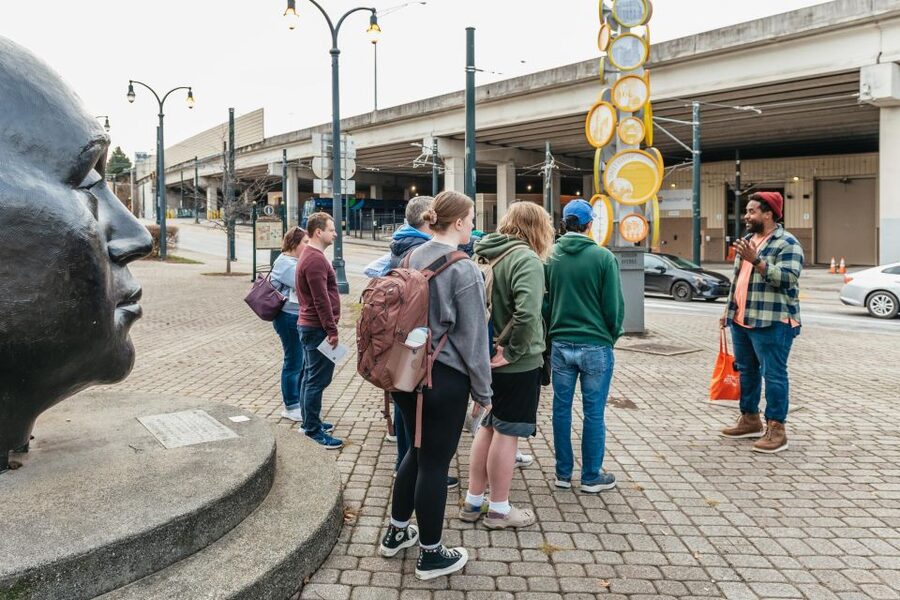
The Jackson Street Bridge stop lasts about 10 minutes and offers a different kind of pause. After several sites tied closely to history, you get a broad view of Atlanta.
The view gives the tour a useful change of scale. You have been standing near churches, civic buildings, and neighborhood streets. From the bridge, you can look outward and consider the city as a whole.
This is also one of the tour’s more scenic moments, though it is still part of an outdoor walking route. Your guide may use the stop to connect Atlanta’s physical setting with the city’s development and civil rights story. Bring weather protection, since the route is not an indoor museum visit from start to finish.
Sweet Auburn and the International Civil Rights Walk of Fame
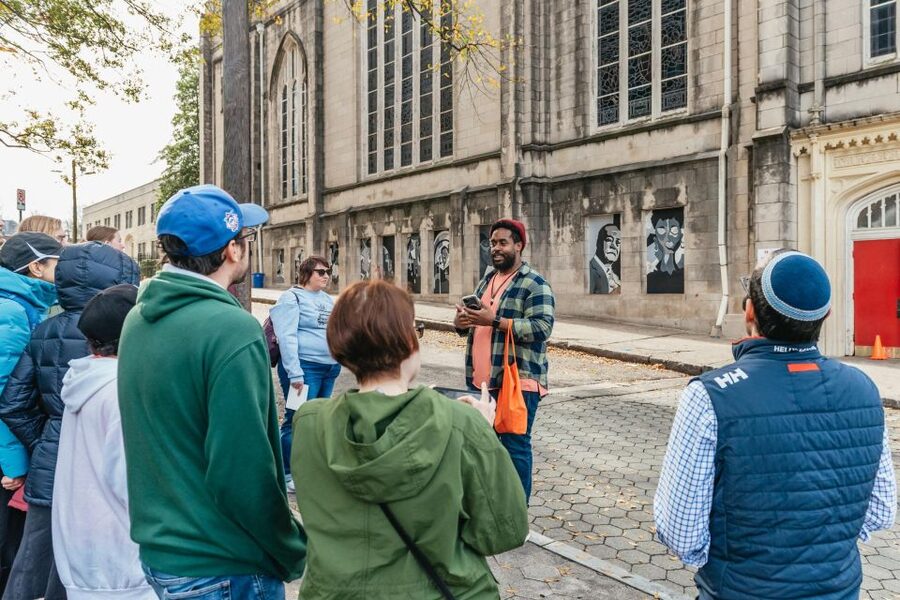
Sweet Auburn is central to the experience. The district is not just a backdrop for MLK history. It is the setting where much of the story happened, making the walk more grounded than a bus tour that only points out distant landmarks.
A brief guided stop in Sweet Auburn helps connect the separate pieces of the route. The neighborhood gives you a sense of place, while the guide explains why these streets mattered to Atlanta’s Black community and to the wider movement.
The International Civil Rights Walk of Fame adds another public marker to the tour. The guided portion here lasts about 10 minutes. It gives the experience a broader national frame, showing that the story extends beyond one pastor, one church, or one Atlanta neighborhood.
I would pay close attention to the transitions between stops. The walking time is not wasted time. It gives your guide room to explain how the sites relate and lets you see the district as a lived-in area rather than a collection of memorials.
How the $40 price measures up

At $40 per person, this is a reasonable choice for a guided history walk lasting two and a half hours. The price includes the guide, the walking tour, and a donation to the King Center. That is good value if you want interpretation, photographs, audio clips, and the freedom to ask questions.
The calculation changes if you want to enter the King birth home or Ebenezer Baptist Church. Those admission tickets are separate, so include them in your budget. You are paying for the guided route, not an all-inclusive ticket to every historic interior.
The tour is also good value for first-time visitors who want orientation. Guides have been praised for connecting MLK’s story with Atlanta’s wider past and for taking people to places they might not find alone. If you already know the area well and prefer to read plaques at your own pace, you may find a self-guided visit more flexible.
The reserve-now, pay-later option and free cancellation up to 24 hours before the tour add useful flexibility. Those policies do not change the experience itself, but they make booking easier when your Atlanta schedule is still moving.
Heat, walking, and who should book
Treat this as an outdoor walking experience, not a short museum visit. You will cover 1.7 miles and spend a lot of time on your feet. Comfortable shoes are essential, and weather-appropriate clothing is specifically recommended. Cash is also listed among the items to bring.
The tour is not suitable for people with mobility impairments. That is the clearest caution in the booking information. Even if you normally manage city walking, consider the heat, the standing, and the length of the route before booking.
The tour suits you best if you:
- Want a guided introduction to MLK’s Atlanta
- Prefer stories and discussion to a self-guided route
- Enjoy seeing historic buildings in their neighborhood setting
- Want context about other civil rights leaders
- Can comfortably walk 1.7 miles and stand outdoors
- Are visiting with older children or teenagers who respond well to storytelling
Families can do well here. One guide was praised for making the material understandable and memorable for children, and another family found the tour held the attention of a teenager. Still, the serious subject matter and outdoor format may not suit very young children.
Six practical questions before booking
FAQ
How long is the Martin Luther King Historical Park walking tour?
The tour lasts 150 minutes, or two and a half hours.
How far do you walk?
The route covers about 1.7 miles outdoors and includes a lot of standing.
Where do you meet the guide?
Meet next to the Behold Monument at the entrance to the King National Historical Park, across from Ebenezer Baptist Church. The guide will have an orange flag.
Is admission to the King birth home included?
No. Entry tickets to the King birth home and Ebenezer Baptist Church are not included in the tour price.
Is the tour suitable for people with mobility impairments?
The tour is listed as not suitable for people with mobility impairments because it involves an outdoor walk and extended standing.
What language is the tour conducted in?
The live guided tour is conducted in English.
Should you book it?
I would book this tour if you want Atlanta’s MLK sites explained as one connected story. The best parts are the guide-led context, the King Center material, the Prince Hall Grand Lodge stop, and the chance to walk through Sweet Auburn rather than simply passing it in a vehicle.
I would skip it if you need a mostly indoor activity, cannot manage 1.7 miles, or want entry to every historic building included in one ticket. For most visitors who can handle the walking, $40 is a solid price for a personal, place-based introduction to Atlanta’s civil rights history. Book with comfortable shoes, allow for heat, and keep extra time or funds available if you want to visit the birth home or church interiors.
Just added around the USA
- Savor Bar Harbor Culinary Walking Tour in Maine★ 5.0 · 169 reviews
- Savor Bar Harbor Culinary Walking Tour★ 4.5 · 75 reviews
- 90-minute Ghost Walking Tour in Bar Harbor★ 4.5 · 161 reviews
- Baltimore Walking Foodie Tour in Fells Point★ 5.0 · 182 reviews
- The Original Fells Point Ghost Walk by Baltimore Ghost Tours★ 4.5 · 73 reviews
- The Story of Austin: Downtown History Walking Tour★ 5.0 · 216 reviews
- Austin Small Group Morning Walk★ 5.0 · 412 reviews
- The Madam’s Curse Walking Ghost Tour★ 4.5 · 103 reviews
History Walking Tours, compared.

History and Hauntings of Salem Guided Walking Tour
Read our review →

Freedom Trail History Small Group Walking Tour
Read our review →
Historic Charleston Guided Sightseeing Walking Tour
Read our review →
Tapas Walking Tour with Food, Wine, and History
Read our review →
Savannah History and Haunts Candlelit Ghost Walking Tour
Read our review →
A History of Terror – Belfast City Centre Walking Tour
Read our review →Browse the lists this tour appears in