
Review · HISTORY WALKING TOURS
Chiang Mai: Historic Temples and City Guided Walking Tour
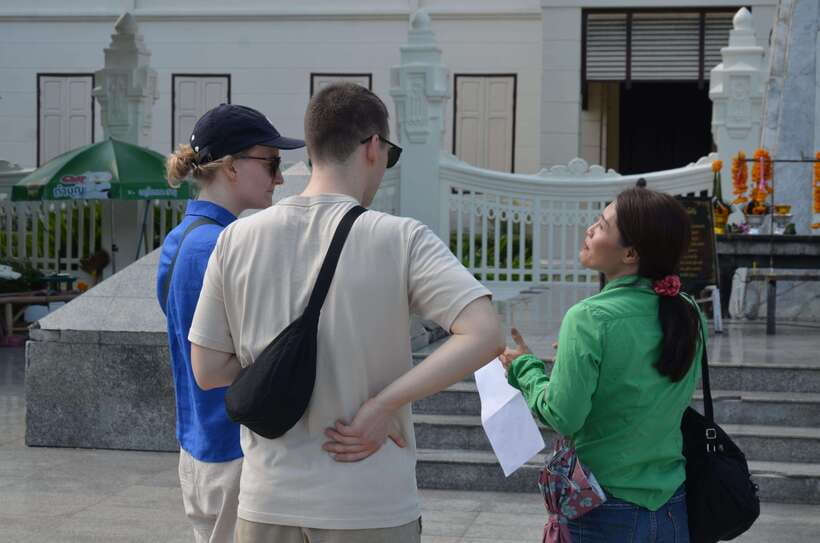
Chiang Mai’s old town is best read on foot. This three-hour walk links four important temples with the Three Kings Monument, giving you a clear introduction to Lanna architecture, Buddhism, and the city’s beginnings. I especially like the small group of up to 10 people and the way guides such as Jen, Pun, Danny, and Twotwo explain what you are seeing rather than simply pointing at buildings.
I also like the easy westward route through the old city, with time for photographs and questions at each stop. The main drawback is that the $21 price does not include the 100 THB total entrance fee for Wat Phra Singh and Wat Chedi Luang. You will also need covered shoulders and knees, comfortable walking shoes, and some tolerance for heat or rain.
Key things to know before you go
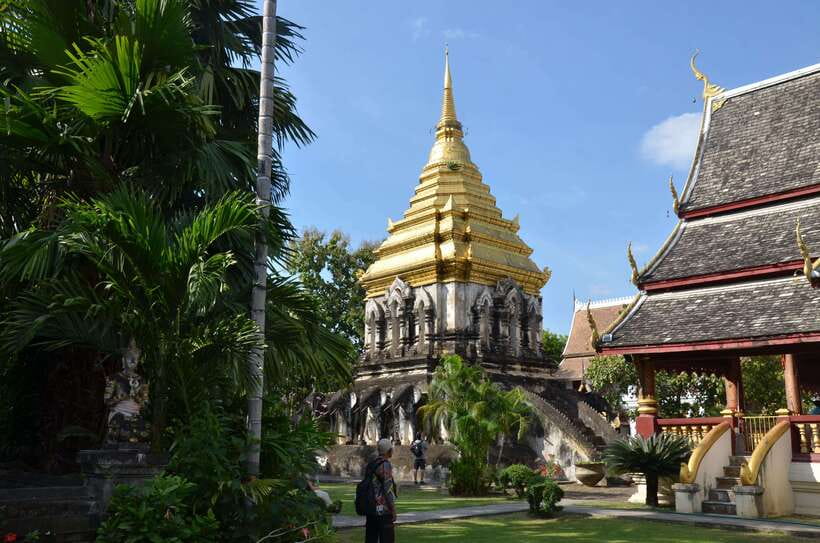
- Four major temples in three hours: See Wat Chiang Man, Wat Phra Singh, Wat Phan Tao, and Wat Chedi Luang in one compact walking route.
- A useful first-day introduction: The tour connects Chiang Mai’s founding story with Buddhist customs and Lanna design.
- Small groups make questions easier: The group is limited to 10, and some departures may be much smaller.
- Start early if possible: Morning departures can be more comfortable before the heat builds.
- Bring modest clothing and cash: Temple rules require covered knees and shoulders, and two entrance fees are paid separately.
- Finish in the old city: The tour ends at Wat Chedi Luang, a convenient point for continuing your own exploration.
Why this walking route works so well
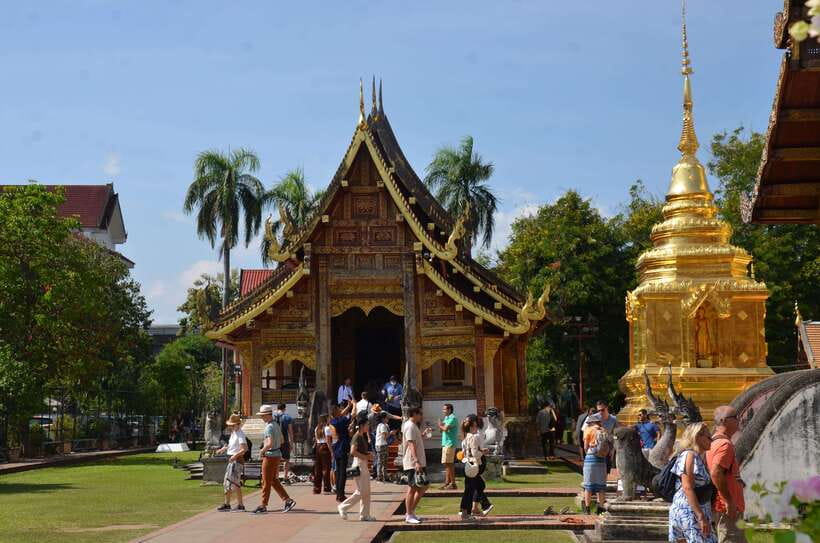
Chiang Mai’s old city can feel simple on a map. The temples are close together, the streets are mostly easy to follow, and the central monuments are not far apart. Yet the meaning behind the buildings is not always obvious. A wooden hall may look like a beautiful old structure, while its royal past and religious purpose remain hidden.
This tour gives you a useful framework. You begin at the oldest temple, pass through the civic heart of the old city, then visit increasingly elaborate examples of Lanna religious architecture. By the final stop, the ruined chedi at Wat Chedi Luang makes more sense as part of Chiang Mai’s royal and spiritual story.
The route lasts about three hours and is conducted in English. It is a walking tour, not a temple-hopping trip by minivan, so you get small glimpses of everyday Chiang Mai between the main sights. You may pass cafes, shops, and quiet side streets along the way. That is part of the appeal: the city is not reduced to a string of photo stops.
Guides have different personalities, but the strongest pattern is clear. Jen is often praised for her warmth, humor, and clear explanations. Pun is described as patient and thorough. Danny has a particularly useful background, having spent 12 years as a monk. John, Jane, Jackie, Faan, and Twotwo have also led departures praised for good pacing, strong English, and helpful local suggestions.
More History Walking Tours in Thailand:
- History and Hauntings of Salem Guided Walking Tour
★ 5.0 · 14,564 reviews - Lisbon: History, Stories and Lifestyle Walking Tour
★ 4.8 · 10,902 reviews - Boston: Freedom Trail History Small Group Walking Tour
★ 5.0 · 6,450 reviews
Starting at Wat Chiang Man, Chiang Mai’s oldest temple
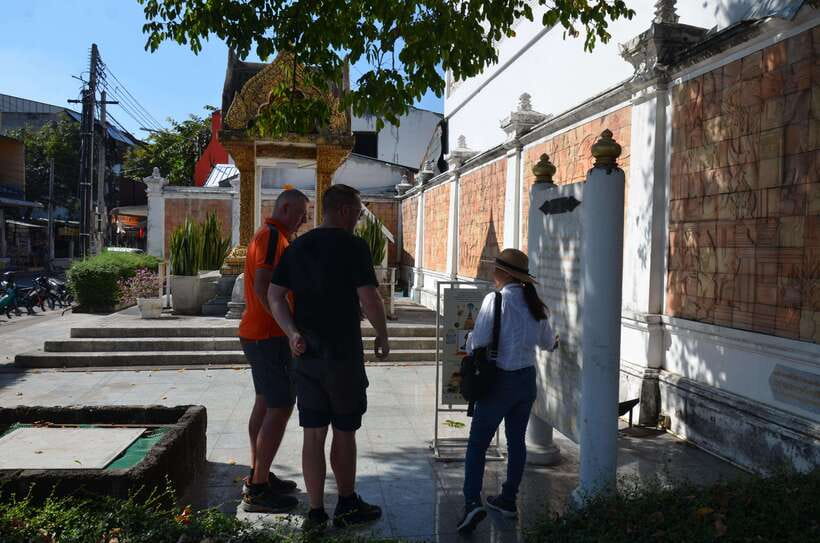
Meet your guide inside the grounds of Wat Chiang Man and look for the Beyond Experience sign. This detail matters because the meeting point is not a large transport hub, and one person had trouble finding the sign. If you cannot spot it immediately, stay inside the temple grounds and use the guide’s contact details from your booking.
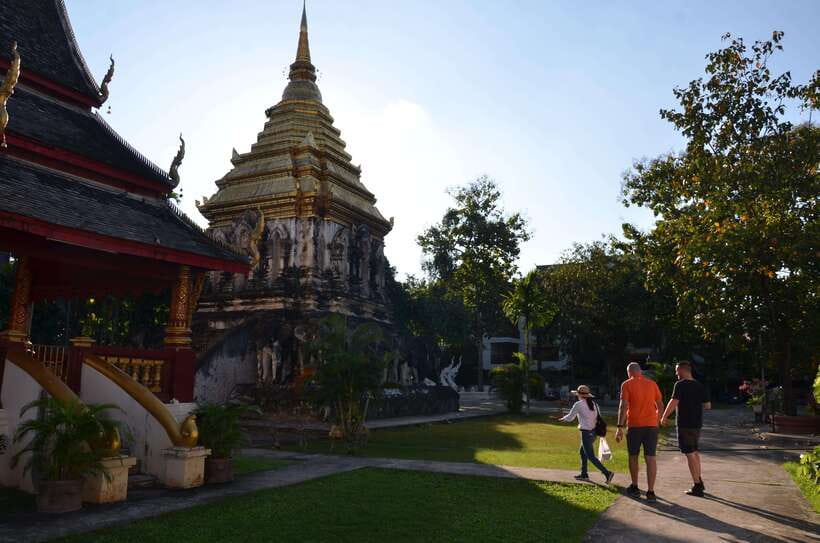
Wat Chiang Man was built in 1296, making it the oldest temple in Chiang Mai. It is a fitting starting point because Chiang Mai itself was founded in the late thirteenth century. The temple offers a direct connection to the city’s early period before you move on to later buildings and royal influences.
You spend about 30 minutes here with the guide. Expect an explanation of the temple’s architectural details, Buddhist imagery, and place in Chiang Mai’s story. This is also a good moment to ask basic questions about temple etiquette, images of the Buddha, and the differences between religious buildings you will see later.
The first stop sets the tone. You are not simply collecting temple photographs. You are learning how to look at them.
The Three Kings Monument and the old city’s civic center
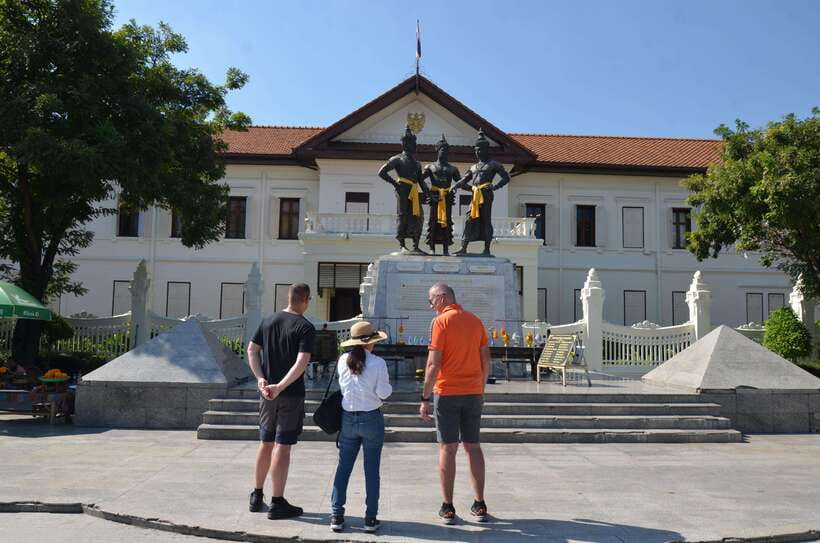
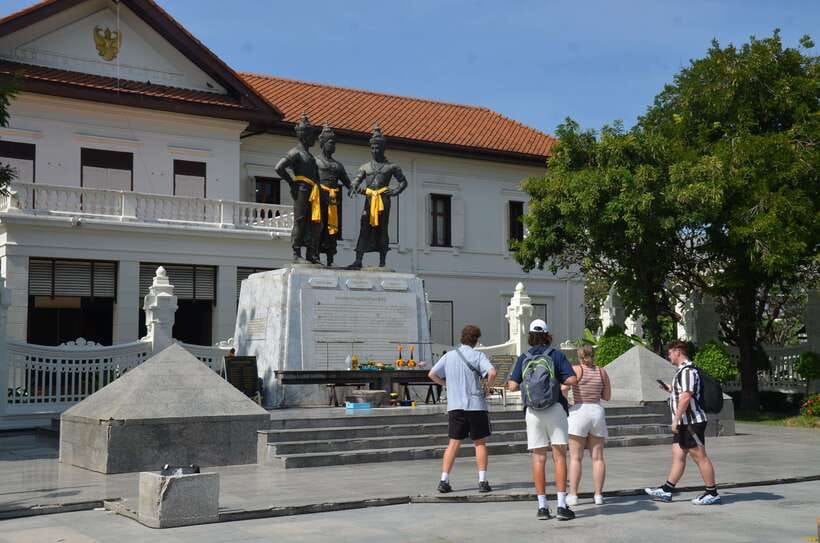
From Wat Chiang Man, the route continues west to the Three Kings Monument. The monument faces a broad open square in the center of the walled old town, making it a useful pause between temple visits.
The stop lasts about 10 minutes, so do not expect a long historical lecture here. Instead, the guide uses the monument and square to explain Chiang Mai’s founding and the rulers connected with the city’s early development. It gives you a civic reference point after the religious focus of Wat Chiang Man.
This brief stop also helps you understand the old city as more than a collection of temples. Chiang Mai was a seat of power, administration, and regional culture. The surrounding streets now mix tourism with daily life, and you may notice cafes and small shops as you walk between the major sights.
Wat Phra Singh and classic Lanna design
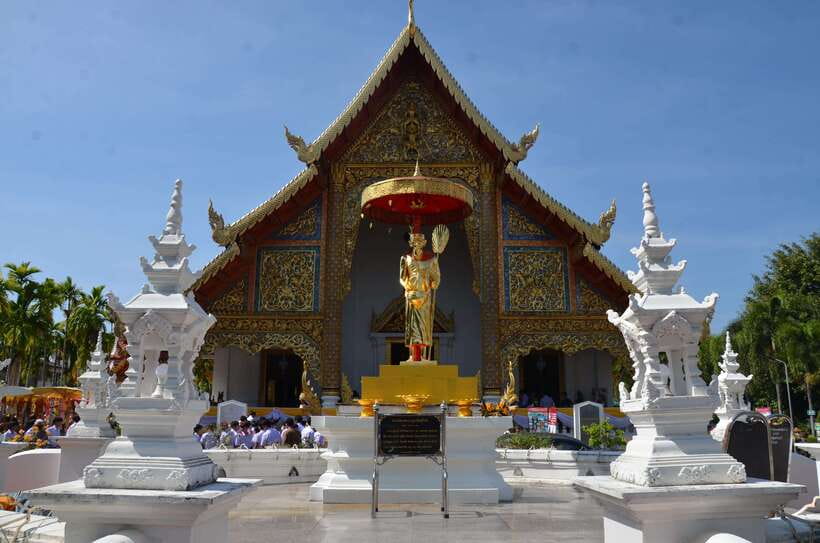
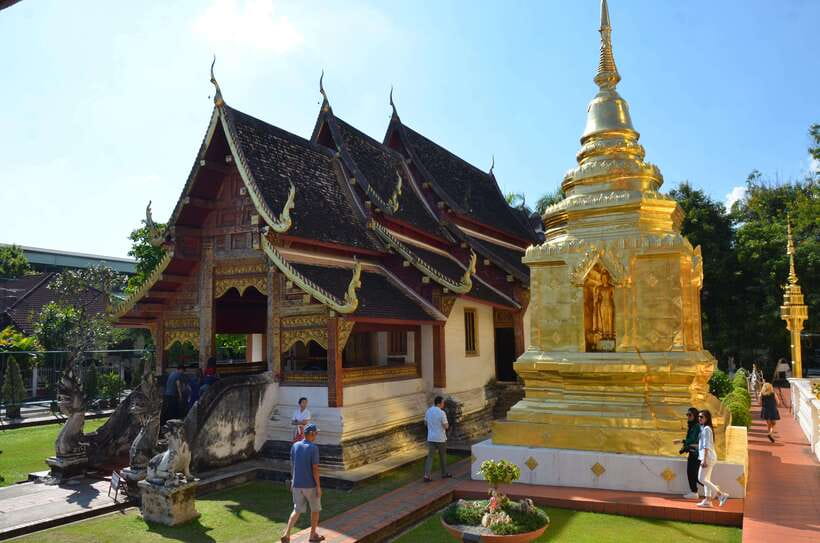
Wat Phra Singh receives about 40 minutes, making it one of the main stops. It is widely regarded as one of Thailand’s finest examples of classic Lanna temple architecture, and the guide can help you notice features you might otherwise miss.
Lanna design has a distinct northern Thai character. Look closely at roof lines, decorative details, woodwork, and the relationship between the prayer halls and the surrounding grounds. The value of having a guide here is not just factual information. It is knowing where to direct your eyes.
This is one of the two temples with a separate entrance charge. The fee is 50 THB, paid by you rather than included in the tour price. Keep some Thai cash ready so the group does not lose time at the entrance.
You get time for photographs, but the schedule remains fairly compact. The guide may point out Buddhist stories, explain the purpose of different areas, and discuss local traditions. Several guides on this route have been praised for giving enough detail without making the stop feel like a lecture.
If you are interested in art and architecture, Wat Phra Singh may be the highlight. If you prefer quiet wandering, the 40-minute visit may feel shorter than you want. The tour gives you an introduction, not an hour-by-hour study of every hall.
More Guided Walks in Thailand:
- Bangkok: Grand Palace and Wat Phra Kaew Guided Walking Tour
★ 4.4 · 2,417 reviews - Bangkok: Wat Pho and Wat Arun Guided Walking Tour
★ 4.6 · 1,720 reviews - Chiang Mai: 3 Hour Old City and Temples Guided Walking Tour
★ 4.6 · 1,568 reviews - Khao Lak: 2-Hour Elephant Sanctuary Eco-Walk with Guided
★ 4.7 · 206 reviews
Wat Phan Tao, a teak hall with royal connections
Wat Phan Tao is a smaller and more intimate stop, lasting about 15 minutes. Its main hall is built almost entirely from teak wood, giving it a different feel from the more ornate masonry and stucco structures elsewhere on the route.
The building was originally part of a royal palace, and the main hall contains a large teak throne once used by Chiang Mai’s rulers. That detail gives the stop extra weight. You are looking at a religious building, but also at a surviving piece of royal architecture.
This is a good example of why a walking guide adds value. Without context, Wat Phan Tao might simply seem like a handsome wooden hall. With the story of its former palace use and royal furnishings, the building becomes easier to place within Chiang Mai’s political past.
The 15-minute schedule is enough for an explanation and photographs, though you will not have much time to sit quietly or explore every corner. Treat it as a focused stop between larger temples.
Wat Chedi Luang and the tour’s dramatic finish
The route ends at Wat Chedi Luang, where you spend about 40 minutes. This is the second site with a 50 THB entrance fee.
The ruined chedi is the visual climax of the walk. Its scale and damaged form make it different from the more complete temple buildings earlier in the day. Ruins can sometimes be difficult to read, especially when you do not know what they once represented. A guide helps you connect the remaining structure with Chiang Mai’s past.
The main prayer hall also contains a majestic standing Buddha. It is an important interior stop, so remember the temple dress rules even if the weather is hot. Knees and shoulders must be covered when entering temple areas.
Ending here is practical. Wat Chedi Luang is in the old city, so you can continue walking afterward, find a cafe, or make your own way to another sight. The tour does not include food, but guides such as Domas, Hayley, Saujas, and Twotwo have offered useful coffee and restaurant suggestions, including recommendations for khao soi.
What the $21 price really gives you
At $21 per person, this is a strong-value introduction to Chiang Mai. You receive three hours with a local English-speaking guide, a bottle of water, and a carefully arranged route through four major temples and one central monument.
The two separate temple fees add 100 THB. Food is also not included. Even with those extra costs, the tour remains inexpensive compared with booking a private guide or trying to build the same route yourself with separate transport and entrance planning.
The main value is interpretation. You can walk past these temples for free, but you may not understand why one building is important, how Lanna style differs from other Thai traditions, or what the symbols and halls are used for. A good guide turns attractive buildings into places with meaning.
Small group size improves that value. With no more than 10 people, you have a realistic chance to ask questions and hear the answer. Some departures have been as small as two, four, or six people, creating a nearly private experience. Group size can vary, so do not assume every departure will be tiny.
Heat, rain, clothing, and the pace of the walk
Choose comfortable shoes. The route covers several hours on foot, and temple grounds may include uneven surfaces or stretches without much shade. A hat, sunscreen, and water are sensible choices even though one bottle is provided.
Morning departures are worth considering. One person particularly appreciated an early start because it kept the walking pace comfortable before the hottest part of the day. Afternoon departures can still work, but Chiang Mai heat may make the same three hours feel more demanding.
July through mid-October is Thailand’s rainy season. Pack an umbrella or raincoat, and accept that the weather may alter how long you want to linger outdoors. The tour is designed as a low-impact way to see the old city, with walking instead of a vehicle-based circuit, but low impact does not mean no physical effort.
Wear clothing that covers your shoulders and knees. Avoid sleeveless shirts, short skirts, and shorts. A scarf can help with coverage, but it is best to dress appropriately before you arrive rather than rely on a last-minute fix.
Large bags and luggage are not allowed on the experience. The tour is not suitable for people with back problems or pregnant women. If you need frequent seated breaks, ask yourself if three hours of walking between temple sites will be comfortable.
Who will get the most from this tour

I would choose this tour for a first visit to Chiang Mai, especially if you want cultural context before exploring more temples on your own. It is also a good fit for solo visitors who would rather walk with a small group than arrange a private guide.
History fans, architecture lovers, and anyone curious about Buddhism should find plenty to enjoy. The guides explain the city, temple customs, Buddhist stories, and Lanna design, while leaving time for photographs and questions.
Families with older children may also appreciate the short route and variety of stops, though the temple rules and walking time still require patience. Older visitors can manage it if they are comfortable walking for three hours. One guide was especially attentive to an older group, pointing out restrooms and keeping everyone safe near busy roads.
You may want a different experience if you prefer long quiet visits, extensive photography time, or a slow meditation-focused morning. Four temples in three hours means the pace is relaxed but purposeful. You see a lot, but each site receives an introduction rather than a deep study.
Should you book the Chiang Mai temple walk?
Book it if you want a low-cost, well-organized first look at the old city, with a guide who can explain what the buildings mean. The route includes the city’s oldest temple, a central historical monument, classic Lanna architecture, a teak royal hall, and the striking ruins of Wat Chedi Luang.
I would aim for an early departure, carry cash for the 100 THB in entrance fees, and dress for temple rules from the start. The $21 cost is easy to justify, especially when you consider the small group and the chance to ask questions directly.
Skip it only if you dislike walking in warm weather, need a slow pace with long rests, or want to explore each temple independently. For most first-time visitors, this is a practical way to get your bearings and gain enough background to make later temple visits more rewarding.
FAQ
How long does the Chiang Mai temple walking tour last?
The tour lasts three hours, including guided visits to four temples and the Three Kings Monument.
Where does the tour meet?
Meet your guide at Wat Chiang Man. Look for the Beyond Experience sign inside the temple grounds.
Where does the tour finish?
The tour finishes at Wat Chedi Luang, also called Watchediluang Varaviharn.
Are temple entrance fees included?
No. Wat Phra Singh costs 50 THB and Wat Chedi Luang costs 50 THB. These fees are paid separately.
What language is the tour conducted in?
The live tour guide speaks English.
What should I wear to the temples?
Your shoulders and knees must be covered when entering temple areas. Avoid shorts, short skirts, and sleeveless shirts, and bring comfortable shoes, sunscreen, and rain protection during the rainy season.
Just added around Thailand
- 3-Hour Bangkok Walking Tour: Wat Pho and Wat Arun★ 5.0 · 102 reviews
- Bangkok by Night Food Tour with 10+ Tastings in Chinatown★ 5.0 · 545 reviews
- Grand Palace, Wat Phra Kaew, Wat Pho and Wat Arun Walking Tour From Bangkok★ 4.5 · 88 reviews
- Local Life, Culture & Food Walking Tour at Chinatown★ 4.7 · 119 reviews
- Khao Lak: Full-Day Khao Sok Jungle Walk and Canoeing Tour★ 4.7 · 149 reviews
- Chiang Mai Untouched Elephant: Nature Walk & Waterfall Trek★ 4.7 · 77 reviews
- Chiang Mai: Temple And City Walking Tour Part I★ 4.7 · 244 reviews
- Chiang Mai: Local Food and Markets Guided Walking Tour★ 4.3 · 175 reviews
History Walking Tours, compared.

History and Hauntings of Salem Guided Walking Tour
Read our review →

Freedom Trail History Small Group Walking Tour
Read our review →
Historic Charleston Guided Sightseeing Walking Tour
Read our review →
Tapas Walking Tour with Food, Wine, and History
Read our review →
Savannah History and Haunts Candlelit Ghost Walking Tour
Read our review →
A History of Terror – Belfast City Centre Walking Tour
Read our review →Browse the lists this tour appears in