
Review · HISTORY WALKING TOURS
Granada: Historic Center and Lower Albaicin Walking Tour
Granada rewards slow looking. This $16 walking tour links the city center with the lower Albaicin, giving you history, architecture, and an Alhambra viewpoint in 2.5 hours. I especially like the mix of major sights and small details, plus the chance to hear how Islamic Granada, the Reconquista, and modern local life fit together. The main consideration is the uphill walk into the Albaicin, which can be tiring if you have knee, heart, or mobility problems.
I also like that you can use this tour early in your stay to get your bearings fast. Guides such as Pablo, Jaime, Irene, and Rocio have been praised for clear explanations, good questions, and practical suggestions for places to visit afterward. Still, English delivery may vary, and two reviews found one guide hard to understand because of a strong accent.
Key points to know before you book
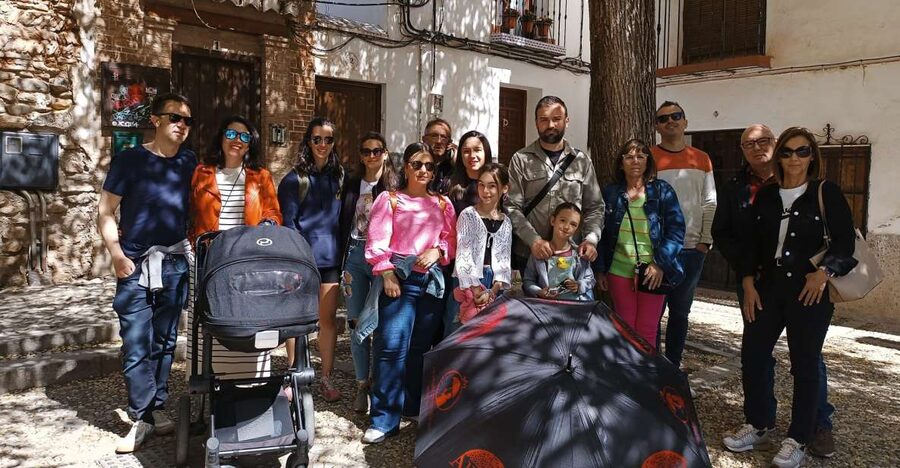
- Two sides of Granada in one walk: The route connects formal city-center monuments with the narrow streets of the lower Albaicin.
- A strong history focus: You learn about Granada’s Islamic past and the Reconquista, which ended here in 1492.
- Several major sights from outside: The route includes the Alcaiceria, Madraza, Cathedral, Corral del Carbón, Royal Chancillería, and other central buildings.
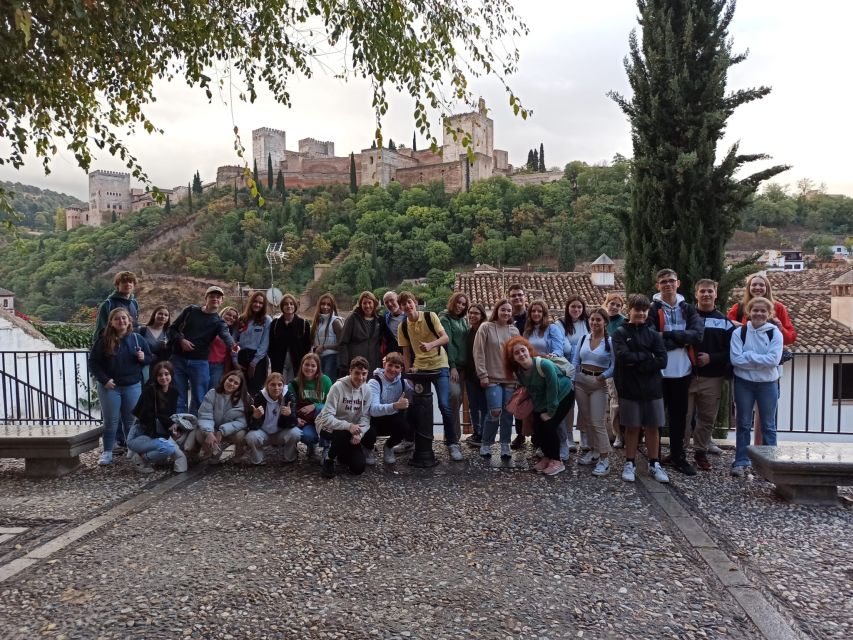
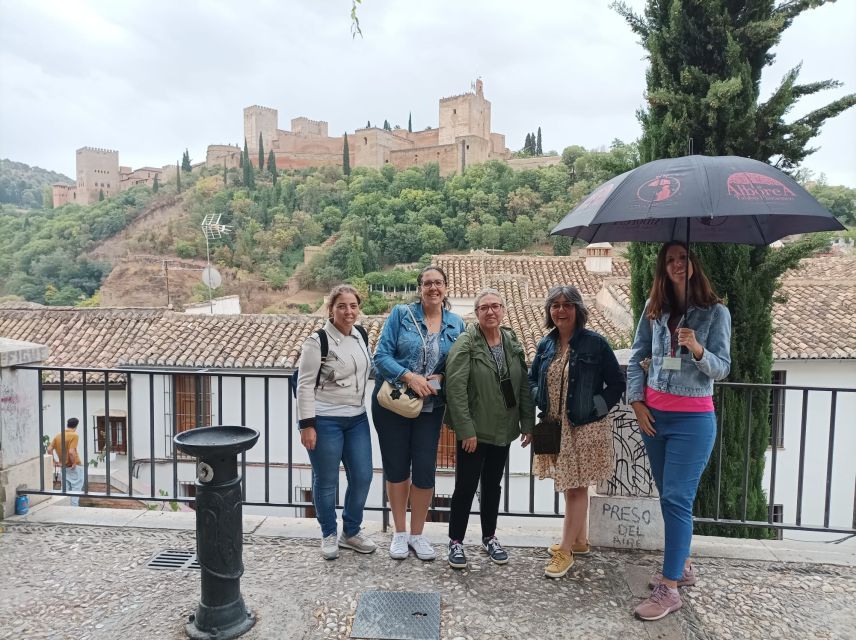
- A useful Alhambra viewpoint: The lower Albaicin stop gives you a clear place for photographs of Granada’s best-known landmark.
- Good value at $16: Two and a half hours with a live guide costs less than many paid city walks and helps you make sense of later sightseeing.
- Not an easy stroll: Comfortable shoes are essential, and the Albaicin section includes narrow streets and an uphill stretch.
Starting beside Granada’s Catholic Monarchs
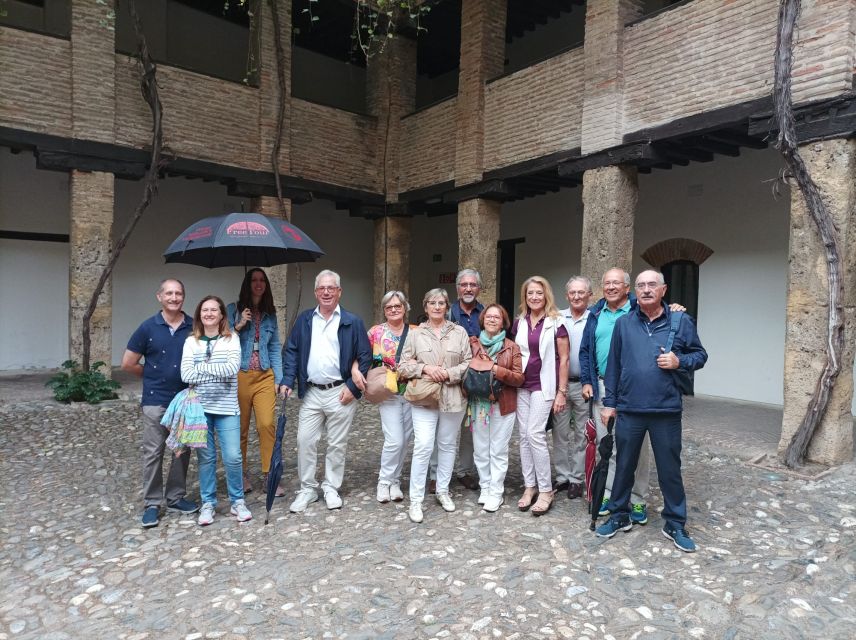
The walk begins in the center of Granada, in front of the monument to Isabel la Católica and Cristóbal Colón. This is a practical meeting point because you are already near the city’s main historic sights and central squares.
Your guide introduces the broad story of Granada before the route gets busy with details. That framing matters. Without it, the Cathedral, old Islamic market streets, royal buildings, and Albaicin can feel like separate attractions. With it, you begin to see the city as a place shaped by Muslim rule, Christian conquest, royal power, trade, and later changes to its streets and buildings.
I would book this near the start of a Granada visit. One of the best uses of a short walking tour is orientation. You learn which areas connect, where the main monuments sit, and what deserves a longer visit later. Kate specifically found it useful for seeing a lot quickly and getting her bearings.
Group size may vary. One January family group of seven had a nearly private experience, while another tour had only five participants. Smaller groups can make a real difference here, since narrow streets and frequent questions are easier to manage when you are not surrounded by a large crowd.
More Old Town Walking Tours in Spain
- Madrid Old Town & Royal Palace Walking Tour Skip the Line Ticket
★ 4.5 · 1,829 reviews - Barcelona Helicopter, Sailboat & Old Town Private Walking Tour
★ 5.0 · 1,395 reviews - Barcelona: Old Town and Gothic Quarter Walking Tour
★ 4.8 · 1,393 reviews
Corral del Carbón and the old commercial heart
The Corral del Carbón is one of the central historic stops. Its name refers to a former commercial and lodging building connected with Granada’s trading life. On this tour, it helps explain how the center once functioned as a place of movement, storage, business, and overnight stays.
The value of a guide here is not simply pointing out an old doorway. You get a sense of how the city’s Islamic past survives in the arrangement of its streets and buildings, even where later Christian construction changed the appearance of the center.
I would pay attention to the guide’s explanation of how Granada’s cultures overlap. The tour is not limited to a list of dates. The strongest guide reports describe stories about architecture, old paving, local art, and the development of the city. Jaime, Irene, and Pablo were each praised for answering detailed questions and connecting individual buildings to the larger story.
Alcaiceria, Madraza, and the marks of Islamic Granada
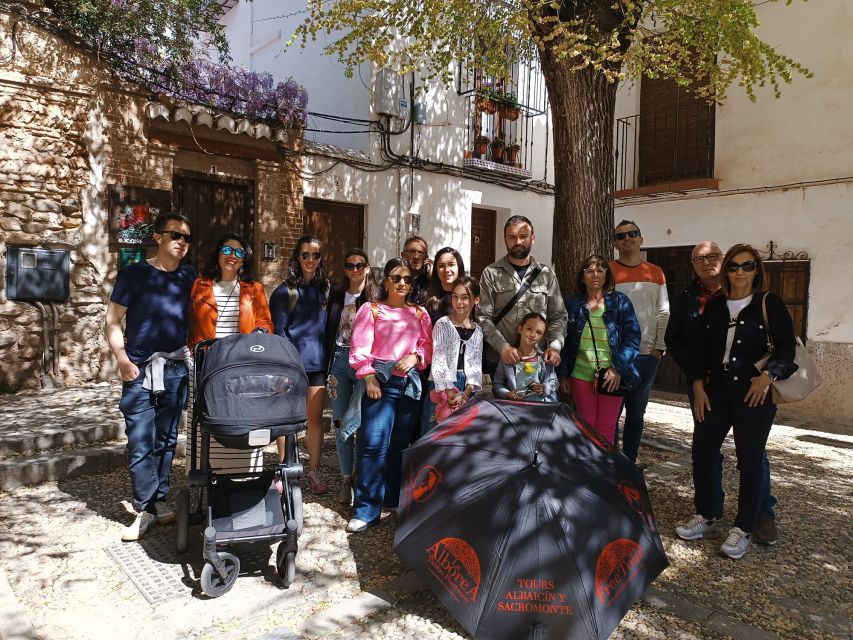
The route continues through the Alcaiceria, a central area associated with Granada’s old silk market. Today, it is a compact shopping area with narrow lanes, but the setting gives you a feel for the dense commercial center that developed under Muslim rule.
This is a good place to listen rather than rush. The streets are easy to pass through without understanding their purpose. A guide can explain why the area mattered and how Granada’s Islamic heritage remains part of the city’s identity.
The Madraza adds another important layer. It was a center of learning, and its location near the Cathedral makes the city’s religious and political changes especially clear. You are not touring a single preserved Islamic quarter. You are watching one city change hands and absorb new institutions while retaining traces of earlier ones.
That is one of the tour’s strongest features. Granada’s story is often reduced to the Alhambra, but this walk shows that Islamic influence reaches well beyond the palace complex. The lower Albaicin, market streets, old buildings, and street patterns all help place the Alhambra in its proper setting.
Plaza Bib Rambla and the city’s grander face
Plaza Bib Rambla brings you into one of Granada’s best-known public spaces. The Giants Fountain is a central landmark, and the square offers a change of pace after the tighter lanes around the market area.
Your guide also points out the Church of Saint Ana and other important buildings in the historic center. The goal is not to enter every monument. Instead, you learn what you are seeing, why it matters, and which places deserve a return visit.
I like this approach for first-time visitors. You get a useful outside overview without spending the whole day inside one building. If you later decide to visit the Cathedral, the Madraza, or another site at greater length, you already have context for it.
The tradeoff is that this is primarily an interpretation walk, not an entry-ticket tour. The information provided promises a guided route and views of important buildings, but it does not promise interior visits to each one. If your priority is detailed access inside Granada’s monuments, you will need separate admission and time.
Same streets, a different way to see them:
- Barcelona Tapas and Wine Experience Small-Group Walking Tour
★ 5.0 · 5,804 reviews - Barcelona: Tapas Walking Tour with Food, Wine, and History
★ 4.8 · 4,261 reviews - Madrid Tapas & Wine Tasting Walking Tour – Small Group Local Bars
★ 5.0 · 3,644 reviews - Granada: Albaicín and Sacromonte Guided Sunset Walking Tour
★ 4.9 · 2,962 reviews
Cathedral, Royal Chancillería, and the power of 1492
Granada’s Cathedral is among the most important buildings on the route. Its scale and position express the city’s transformation after the Christian conquest. The nearby Royal Chancillería and Royal Jail add a legal and political side to the story, showing that Granada became a major center of royal administration as well as religion.
The guide connects these buildings to the Reconquista, which concluded in Granada in 1492. That date is central to the city’s identity, but it can be presented too simply. A good guide gives you more than the basic account of Christian forces taking the city. You also learn about the Islamic society that came before, the physical changes that followed, and the way both periods remain visible.
This is where guide quality matters most. Pablo was praised for mixing accurate history with an entertaining style. Jaime was repeatedly described as patient and able to answer questions about architecture and old cobblestones. Irene was praised for involving the group rather than delivering a one-way speech.
You should expect some variation because the guide is a person, not an audio recording. Most of the supplied feedback is very positive, but two English-speaking participants found a guide’s accent difficult at times. If you need very slow, simple English, it is sensible to confirm the available language and be prepared to ask for clarification.
Entering the lower Albaicin
After the center, the walk moves into the lower Albaicin. This is the point where the character of the route changes. Streets become narrower, the setting feels more residential, and the Moorish past is suggested by the layout and atmosphere rather than by a single grand monument.
The tour does not cover every corner of the Albaicin. It focuses on the lower part, which makes sense for a 2.5-hour route that also includes the center. You see charming lanes and learn how the neighborhood relates to the rest of Granada.
The route is not flat. One family group noted that two people with angina and knee trouble struggled with the climb, although their guide allowed pauses and adjusted the pace. That is useful practical information. The tour is not suitable for people with mobility impairments, and even fit walkers should wear comfortable shoes.
I would avoid treating the Albaicin portion as a casual afterthought. The neighborhood is one of the main reasons to choose this walk instead of a center-only tour. You get a direct sense of how Granada’s older street pattern differs from the formal squares and monumental buildings below.
At the same time, do not expect a long, demanding hike through the entire hill district. The advertised route is the lower Albaicin, and the total duration is 2.5 hours. The walk gives you an introduction, not a full neighborhood exploration.
The Alhambra viewpoint and the best photo stop
The viewpoint is the tour’s visual reward. From the lower Albaicin, you can look toward the Alhambra and take photographs from a different angle than you would get while standing inside the palace complex.
This stop also helps explain Granada’s geography. The Alhambra is not an isolated attraction. Its position above the city, with the Albaicin opposite it, is part of what makes Granada so memorable. Seeing the two areas in relation to each other gives you a better sense of the city than visiting either one alone.
The timing at the viewpoint may depend on the group and the guide. Penelope appreciated that her guide chose sensible stopping places, including comfortable pauses on a busy holiday day. That kind of judgment matters more than a rigid list of stops, especially in warm weather or when the group includes different walking speeds.
Bring your camera, but do not make the photo stop the whole point of the tour. The view is excellent, yet the explanation around it is what gives the scene meaning. You learn why the Albaicin feels Moorish, how the Alhambra fits into Granada’s past, and why the two landmarks are so often presented together.
Guide quality, questions, and local suggestions
The most praised part of this experience is the guiding. Again and again, the strongest feedback centers on enthusiasm, patience, and the ability to explain Granada in an engaging way.
Pablo is described as friendly, entertaining, and generous with suggestions for places to visit later. Jaime is praised for his command of local history and his care with groups that needed extra breaks. Irene received strong praise for involving people in the discussion and answering questions with energy. Emilio, Rocio, Anna, and Elene were also singled out for being friendly, informative, or well organized.
You should ask questions. This is where a live walk earns its price. Past participants asked about architecture, street surfaces, local culture, and what to see next. One guide added a calm explanation of flamenco, which gave the walk a useful connection to Granada’s living culture rather than leaving it in the past.
Practical suggestions can be just as valuable as dates. Guides have offered ideas about where to eat and which places are worth visiting after the walk. I would carry a small note on your phone and record those recommendations as you go.
There is one small uncertainty: the provider is listed as Tablao Flamenco La Alborea, while the experience itself is a historic walking tour. That does not change the stated route or price, but it may leave you wondering about the connection when booking. Check the confirmation for the exact meeting instructions and language before you set out.
Is $16 good value for 2.5 hours?
At $16 per person, this is good value if you want context rather than a simple sightseeing loop. You are paying for a live guide, a two-and-a-half-hour route, and a useful combination of central Granada and the lower Albaicin.
The value is strongest if you are new to the city. A good guide can save you time by showing how the main areas connect and by explaining which monuments deserve a closer look. You also get the Alhambra viewpoint without paying for an Alhambra entry ticket.
The price does not include admission to the monuments listed along the route. Think of this as an orientation and history walk, not a replacement for visiting the Cathedral, Alhambra, or other interiors.
You can cancel up to 24 hours before the activity for a full refund, and you can reserve now and pay later. Those terms make it easier to fit the tour around Alhambra tickets or changing travel plans.
Who should book this Granada walk?
I would recommend it to first-time visitors who want a clear introduction to Granada’s history and layout. It also suits anyone who enjoys architecture, Islamic heritage, city stories, and photography but does not want to spend a full day on a formal museum tour.
Families and small groups may benefit especially from the flexible pace. Several strong guide reports describe patient answers and breaks when needed, although that should not be taken to mean the route is suitable for serious mobility limitations.
You may want something else if you want extensive interior access, a full Albaicin climb, or a highly specialized architectural tour. You should also think twice if hills and uneven streets are a problem.
Final verdict: book it early for context
Book this tour if you want Granada to make sense before you explore it on your own. For $16, you get the city center, lower Albaicin, Islamic and Christian history, major buildings, and an Alhambra view in one manageable walk.
My best advice is to schedule it early in your stay, wear supportive shoes, and arrive ready to ask questions. Choose it for orientation and local explanation, not for monument interiors or a completely level route. If those limits suit you, this is an affordable and useful first look at Granada.
FAQ
How long does the walking tour last?
The tour lasts 2.5 hours.
How much does the tour cost?
The listed price is $16 per person.
Where does the tour meet?
Meet the guide in front of the monument of Isabel la Católica and Cristóbal Colón.
What languages are available?
The live tour guide is available in Spanish and English.
Does the tour include a guide?
Yes. A live guide and the walking tour are included.
Does the tour visit the Alhambra?
The tour does not list a visit inside the Alhambra. It includes a viewpoint in the lower Albaicin with views of the Alhambra.
Which parts of Granada does the tour cover?
It covers Granada’s historic center and the lower part of the Albaicin neighborhood.
Which historic sights can you see?
The route includes the Corral del Carbón, Alcaiceria, Plaza Bib Rambla, Church of Saint Ana, Royal High Court, Giants Fountain, Madraza, Cathedral, Royal Chancillería, and Royal Jail.
What should you bring?
Bring comfortable shoes for the walking route.
Is the tour suitable for people with mobility impairments?
No. The activity is listed as unsuitable for people with mobility impairments, and the lower Albaicin section includes an uphill walk.
Can you cancel for a refund?
Yes. You can cancel up to 24 hours in advance for a full refund.
More History Walking Tours in Spain
- Barcelona Tapas Walking Tour: Food, Wine & History
★ 4.5 · 1,928 reviews - Madrid Historic Centre Food Tour with Authentic Tapas & Wines
★ 5.0 · 814 reviews - Seville: Tapas, Taverns, and History Walking Tour
★ 4.9 · 676 reviews - Seville: Tapas, Taverns and History Guided Walking Tour
★ 4.9 · 515 reviews
Just added around Spain
- Barcelona Private Food Tour: Tapas, Paella & 8+ Food Tastings★ 5.0 · 164 reviews
- Barcelona Gothic Quarter Walking Tour with Tapas★ 5.0 · 248 reviews
- Picasso Museum and Walking Tour Plus Optional Wine & Food Tasting★ 5.0 · 596 reviews
- Private Barcelona Old Town and Gothic Quarter Walking Tour★ 5.0 · 134 reviews
- Barcelona Architecture Walking Tour With Casa Batlló Upgrade★ 5.0 · 137 reviews
- Montjuïc Walking Tour With Optional Flamenco Show★ 5.0 · 196 reviews
- Semi-Private Montserrat Monastery, Funicular & Scenic Nature Walk★ 5.0 · 172 reviews
- Gothic Quarter Donation-Based Walking Tour in English★ 5.0 · 72 reviews
History Walking Tours, compared.
History and Hauntings of Salem Guided Walking Tour
Read our review →
Freedom Trail History Small Group Walking Tour
Read our review →
Historic Charleston Guided Sightseeing Walking Tour
Read our review →
Tapas Walking Tour with Food, Wine, and History
Read our review →
Savannah History and Haunts Candlelit Ghost Walking Tour
Read our review →
A History of Terror – Belfast City Centre Walking Tour
Read our review →Browse the lists this tour appears in