
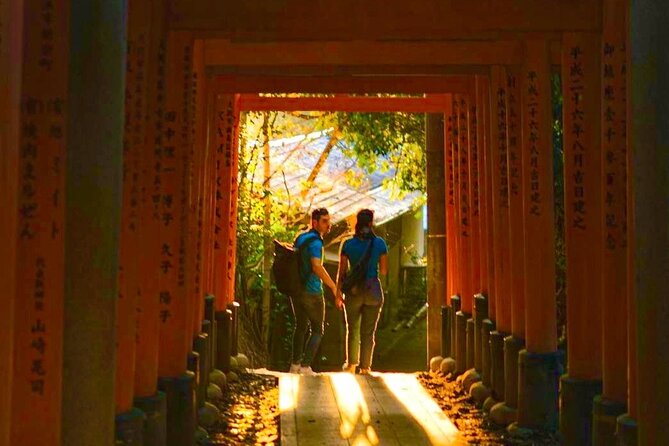
Review · NIGHT WALKING TOURS
Kyoto Fushimi-Inari Night Walking Tour
The shrine changes after sunset. This two-hour walk through Kyoto’s Fushimi Inari Shrine is a smart way to see its famous red torii gates with fewer people, cooler air, and soft evening light. I especially like the quiet atmosphere and the chance to hear local stories instead of simply following the crowd through the gates.
I also like that guides such as Hiro, Jem, Tammy, Vincent, and Cade make the visit personal, stopping for photographs and explaining how to behave at a Shinto shrine. The main consideration is the uphill walking: this tour does not reach the top of Mount Inari, but it still includes a steady climb, and the paths can be dark after sunset.
Key points at a glance
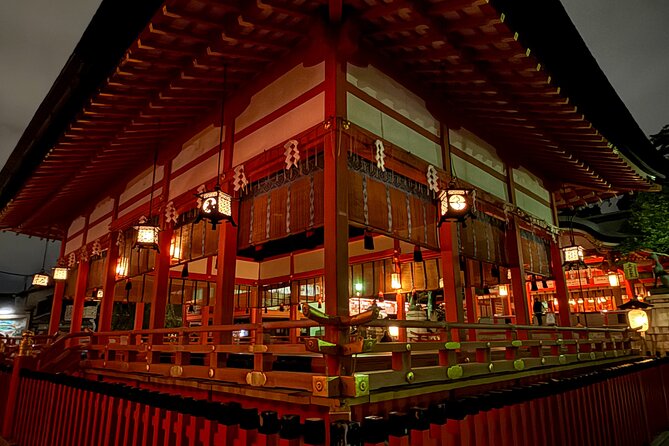
- Evening access: See Fushimi Inari after the daytime rush, usually around sunset and into the night.
- Glowing torii gates: The vermilion gates and shrine buildings take on a soft orange glow under the lanterns.
- A partial mountain walk: You explore roughly the lower to middle section rather than hiking the entire mountain.
- Strong English guidance: Guides including Hiro, Jem, Tammy, Vincent, and Caleb explain shrine customs, symbols, and local culture.
- Two hours well used: The pace allows time for explanations, questions, photographs, and a loop back down.
- Useful planning details: Bring comfortable shoes, cash, and working WhatsApp access. Public transportation costs about 300 yen extra.
Why Fushimi Inari works better at night
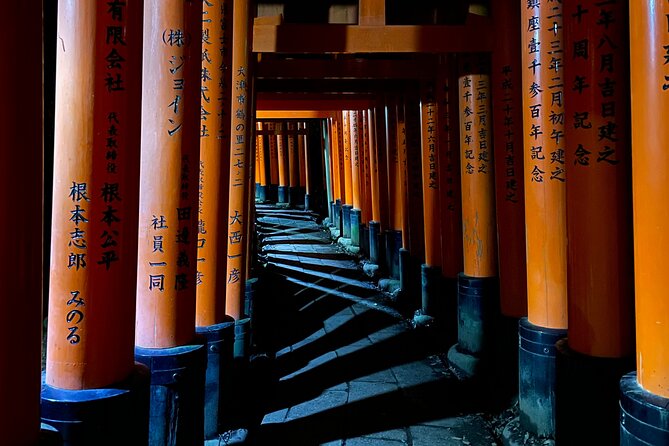
Fushimi Inari Taisha is one of Kyoto’s most recognizable sights. Its long corridors of vermilion torii gates climb Mount Inari, creating the famous tunnel effect seen in photographs around the world.
During the day, the first gates can be packed. The lower shrine grounds are easy to reach, so large numbers of people arrive with the same plan: take a few pictures, walk under the gates, and head farther uphill. At night, the rhythm changes. The shrine feels quieter, the air is usually cooler, and the illuminated gates create a more subdued mood.
That does not mean you get the entire shrine to yourself. Other people may still be walking the route, and popular photo spots can have company. Even so, the difference from peak daytime conditions can be substantial. One visitor described the daytime route as difficult to move through, while the evening visit allowed room for photographs and pauses.
I think this timing is especially useful in Kyoto’s warmer months. The tour description specifically promotes the evening as a way to avoid both heat and crowds. Sunset is around 7:00 PM in the relevant season, although the exact starting time depends on the date.
More Night Walking Tours in Kyoto
- Kyoto: Gion Magical Night Walking Tour with Geisha Trivia
★ 4.9 · 2,393 reviews - Night Walk in Gion: Kyoto’s Geisha District
★ 4.5 · 2,003 reviews - Kyoto Gion Night Walk & Geisha District Guided Tour
★ 5.0 · 786 reviews
Meeting the guide by the fox statue
The meeting point is in front of the fox statue at the main entrance of Fushimi Inari Shrine. The coordinates are 34.9669313, 135.7710506.
This matters because Fushimi Inari has several paths, entrances, and nearby transport links. Do not simply arrive in the general area and expect to spot the group at once. The guide sends detailed instructions through WhatsApp, so make sure the app is available before the tour.
If no message has arrived at least four hours before the scheduled start, contact the operator directly. One guide, Masaki, was praised for helping a late participant who had become confused about the meeting point. That is reassuring, but you should still allow time to find the entrance.
Public transportation is not included. The expected fare is about 300 yen. Bring cash, as the tour information specifically recommends it.
The lower shrine grounds and first torii gates
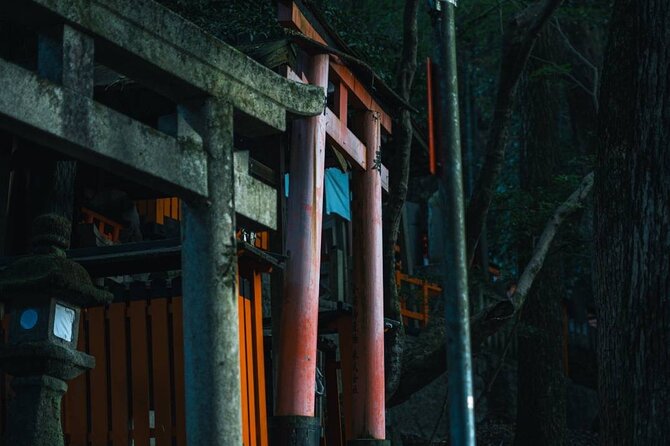
The walk begins near the main entrance, where the first gates and fox imagery introduce the importance of Inari worship. Foxes are closely linked with Inari, a Shinto deity associated with rice, prosperity, and business. The fox statues are understood as messengers, not the deity itself.
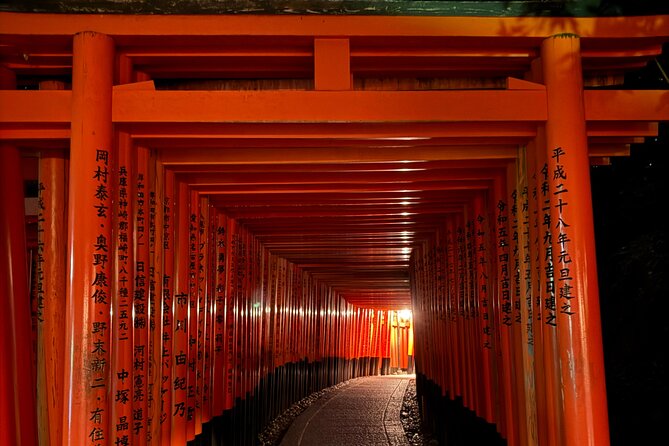
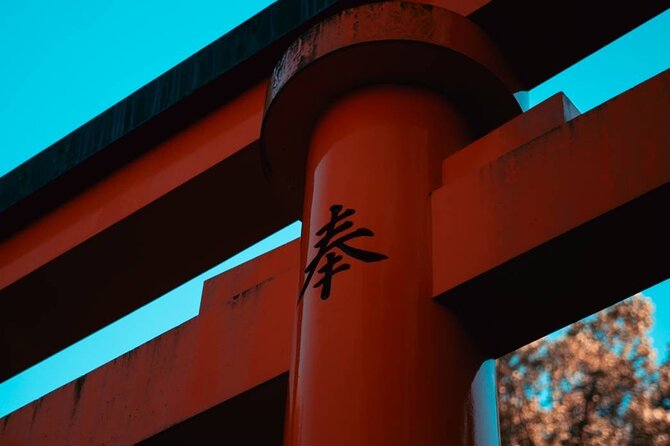
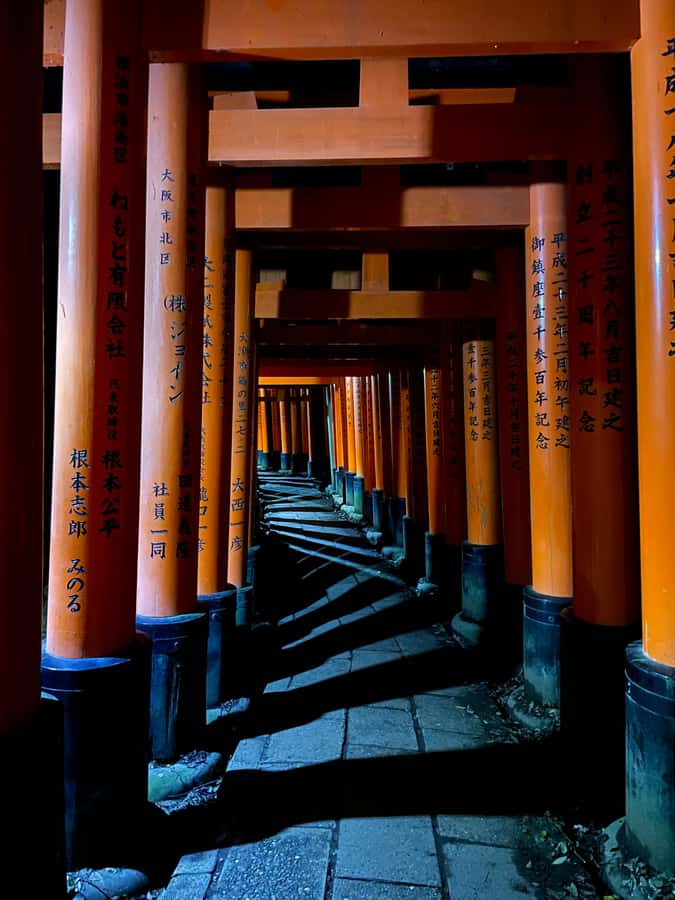
A guide adds value here because it is easy to rush past these details. The torii gates are not merely decorative arches. Many were donated by individuals and businesses as expressions of thanks or hope for success. The names of donors can be seen on the gates, giving the route a personal and commercial connection that is easy to miss when you are focused on taking pictures.
This opening section is also where the tour can explain basic shrine manners. Several participants appreciated learning how to behave respectfully at the site, rather than treating it as a photo backdrop. The exact explanations may vary by guide, but the emphasis is on understanding the place before moving uphill.
The early portion is likely the easiest part physically. It is also the busiest section during the day, so visiting after sunset gives you more room to look closely at the smaller shrines, stone details, lanterns, and folded paper cranes along the route.
Walking beneath the torii gates after dark
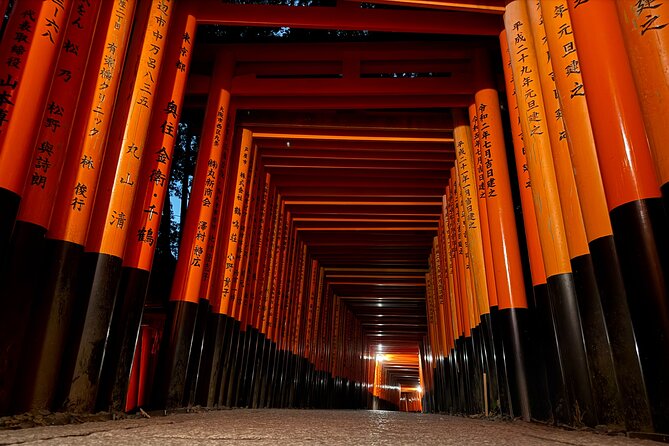
The famous torii corridors are the heart of the experience. In daylight, the gates appear bright vermilion and graphic, with strong contrasts between the wood, stone paths, and forest. At night, the lanterns soften those contrasts. The gates become more atmospheric, and the repetition feels less like a checklist of photo stops.
This is where a night tour earns its price. Fushimi Inari is free to enter, so you are not paying for admission. You are paying for timing, company, translation, cultural context, and the ability to notice details you might otherwise miss.
Guides commonly stop at good photo locations and help people take pictures. That can be useful in low light, especially if you are traveling alone or with a small group. The guides also answer questions during the walk instead of delivering one long speech at the entrance.
The guide styles appear to vary, which is normal with a rotating team. Hiro is repeatedly praised for his fluent English, enthusiasm, and ability to connect Japanese customs with broader cultural questions. Jem is described as warm, funny, and engaging. Tammy receives strong praise for clear explanations and keeping tired participants interested. Vincent is often noted for practical advice as well as stories about the shrine.
The group can be around ten people, though the size may vary. Some departures have been small enough to feel almost private. That can make it easier to ask questions and adjust the pace.
Same streets, a different way to see them:
- Kyoto Geisha Walking Tour: Gion District & Hidden Gems
★ 4.7 · 3,273 reviews - Kyoto: Gion Geisha District Walking Tour – Stories of Geisha
★ 4.7 · 2,187 reviews - Best of Kyoto: Gion, Geisha, Pagodas & Cobblestones
★ 4.9 · 2,058 reviews - Kyoto Gion Geisha District Walking Tour – The Stories of Geisha
★ 5.0 · 1,441 reviews
The uphill route and the point where the tour turns back
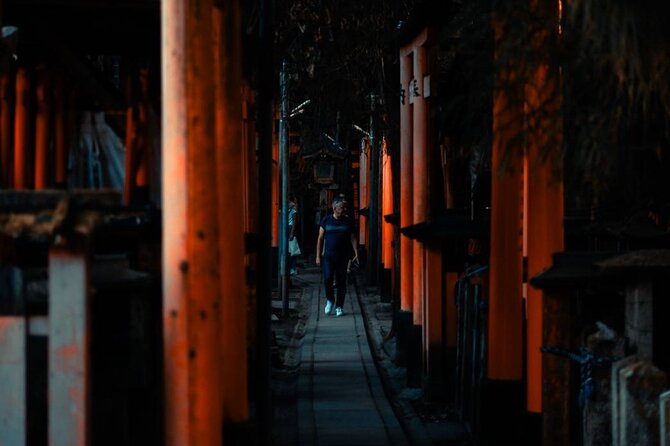
The important limitation is printed clearly: this is not a full hike to the top of Fushimi Inari mountain.
The group goes partway uphill, with one participant describing the route as reaching about one-third of the way before looping back down. Another described the tour as ending roughly 45 minutes from the top, with the option to continue independently afterward. The exact turning point may depend on the guide, group pace, and conditions, so do not book this expecting a summit walk.
You should still prepare for uphill walking. The route has stairs and slopes, and several people noted that their legs were tired by the end. Comfortable shoes are essential. This is not a difficult mountain expedition, but it is more active than a flat city stroll.
The partial route is a sensible choice for a two-hour evening tour. You see the most famous gate corridors, learn about the shrine, enjoy the lit paths, and return without turning the experience into a long night hike. If reaching the summit and seeing the views from the upper mountain is a major goal, plan separate time for that.
There are drink vending machines along the way. One useful practical warning is that washrooms may not remain open after 8:00 PM once you pass the lower temple area. Use facilities before going higher, especially if your tour begins late or you are walking with children.
What the guide adds beyond a self-guided walk
You can visit Fushimi Inari without paying for a guide. That makes the $41 price a decision about depth and convenience, not access.
I would consider the tour worthwhile if you want to understand what you are seeing. Guides explain the meaning of the torii gates, the role of foxes, shrine customs, and the significance of smaller religious details. They can also answer questions about Japanese culture that do not fit neatly on a sign.
The strongest guide comments focus on personality as much as information. Hiro is described as highly fluent in English and especially good at making the two hours pass quickly. Tammy is praised for adjusting explanations to the group and keeping people engaged. Vincent has helped with dinner suggestions and transit advice. Cade has been praised for taking photographs, answering questions, and giving individual attention when the group was tiny.
That personal element matters at Fushimi Inari. The site is visually powerful, but its meaning is easy to flatten into red gates and social media pictures. A good guide helps you see the shrine as an active religious place with traditions, donations, rituals, and local connections.
The tour can also suit families. A group with a ten-year-old and teenagers found the explanations and guide’s conversational style held their attention. Guides have also adjusted the pace for photographs and questions rather than pushing everyone forward.
Weather, seasons, and evening light
Summer is the clearest case for choosing this tour. Evening temperatures are more comfortable than the middle of the day, and the shade of the wooded route becomes especially welcome. The sunset timing also gives you a gradual change from daylight to lantern light.
Spring and autumn offer a pleasant balance of cooler air and longer visibility. An evening visit in November, for example, can have a quiet, moonlit feel, though you should not assume every night will be equally bright or uncrowded.
Winter is different. The tour provider offers a daytime option during the winter season, presumably because sunset comes early and evening conditions can be less comfortable. Check the available start time for your date instead of assuming the standard sunset schedule.
Rain does not automatically ruin the outing. One participant enjoyed the tour despite wet weather, and the guides continued to provide explanations and help with the experience. Still, bring suitable footwear and expect slippery surfaces when it rains. The supplied information specifically lists comfortable shoes but does not include rain gear, so pack according to the forecast.
Price and practical value at $41
At $41 per person, the tour is not the cheapest way to visit Fushimi Inari. Entry to the shrine itself is free, and an independent visitor can walk part of the route without booking anything.
The price makes more sense if you value three things: an evening start, an English-speaking guide, and an organized route through a large site. You also get help with photographs, cultural explanations, and questions. For a first visit to Kyoto, those details can prevent Fushimi Inari from becoming a quick photo stop.
The two-hour length is another strength. It is long enough to reach the notable gate corridors and gain context, but short enough to fit before dinner or another evening activity. Several guides have also offered restaurant or Kyoto suggestions at the end, though that should be treated as a pleasant extra rather than a promised part of the service.
The tour includes only the English-speaking guide. Transportation costs about 300 yen and must be paid separately. There is no full mountain hike, no summit finish, and no promise of an entirely empty shrine. If those limitations match your plan, the price is reasonable. If you mainly want photographs and do not need explanations, self-guided access may be better value.
Who should book this night walk?
I would recommend it for a first-time Kyoto visitor who wants a calmer look at Fushimi Inari without waking up early. It is also a good fit for couples, families with older children, solo visitors who want company, and anyone interested in Shinto customs rather than photography alone.
Choose it if you enjoy asking questions, walking uphill at a moderate pace, and seeing a famous site in a different mood. The guides have been especially well received for warmth, clear English, flexibility, and practical Kyoto advice.
Think twice if you want to hike all the way to the summit, need a completely flat route, or prefer to explore at your own speed. You may also prefer a daytime visit if your main goal is broad mountain views rather than lantern-lit corridors.
Should you book the Fushimi-Inari night tour?
Book it if you want the torii gates with fewer people, cooler air, and a guide who can explain what the symbols and customs mean. The strongest reasons are the evening atmosphere and the quality of the guiding, with Hiro, Jem, Tammy, Vincent, Caleb, and Cade among the names that receive especially warm praise.
Skip it if you are happy to walk alone, only want the summit, or are trying to keep costs near zero. For most visitors who want a more thoughtful two-hour visit, though, $41 buys useful context and a much calmer version of one of Kyoto’s busiest sights.
FAQ
How long is the Kyoto Fushimi-Inari Night Walking Tour?
The tour lasts two hours.
What time does the tour start?
Starting times vary by date. During the main evening season, sunset is around 7:00 PM, so check availability for the exact departure time.
Does the tour reach the top of Mount Inari?
No. The tour explores part of the mountain route and does not hike the entire Fushimi Inari mountain. Some participants have continued independently after the guided portion.
Where is the meeting point?
Meet in front of the fox statue at the main entrance of Fushimi Inari Shrine. The coordinates are 34.9669313, 135.7710506.
How will the guide contact me?
The guide uses WhatsApp to send meeting instructions and contact you before the tour. Make sure WhatsApp is available before the scheduled visit.
Is transportation included?
No. Public transportation is separate and costs about 300 yen.
What should I bring?
Bring comfortable shoes and cash. You should also have WhatsApp ready for communication with the guide.
Is the tour conducted in English?
Yes. This is an English-guided walking tour with a live English-speaking guide.
Just added around Kyoto
- Kyoto : Private Custom Walking Tour With A Local Guide★ 4.6 · 144 reviews
- Kyoto: Private 2.5 Hour Historical Walking Tour★ 4.9 · 121 reviews
- Kyoto: Private Walking Tour with a Local★ 4.6 · 118 reviews
- Kyoto: Gion Sunset Walking Tour with Local Guide★ 4.7 · 351 reviews
- Kyoto: Gion Walking Tour★ 5.0 · 195 reviews
- Kyoto: Izakaya Bars Guided Walking Tour★ 4.9 · 815 reviews
- Kyoto: Imperial Palace & Nijo Castle Guided Walking Tour★ 4.7 · 453 reviews
- Kyoto Gion Cultural Walk & Geisha Show with Dining Options★ 5.0 · 518 reviews
Night Walking Tours, compared.

Private Street Food Evening Walking Tour in Ho Chi Minh City
Read our review →
Albaicín and Sacromonte Guided Sunset Walking Tour
Read our review →
Bremen: Walking Tour in German with Night Guard
Read our review →
Ghosts of Charleston Night-Time Walking Tour with Unitarian Church Graveyard
Read our review →
Savannah’s Ghost City “Dead of Night” Walking Night Tour
Read our review →
Gion Magical Night Walking Tour with Geisha Trivia
Read our review →

Browse the lists this tour appears in