
Review · CITY HIGHLIGHTS WALKING TOURS
Lisbon: City Highlights Guided Walking Tour
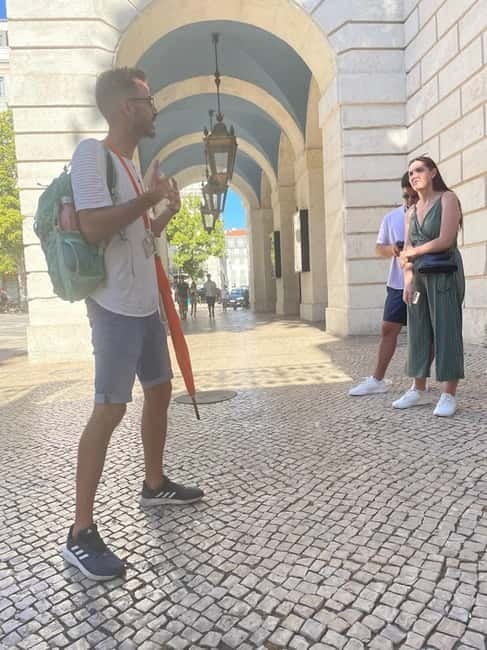
Lisbon’s center tells its story on foot. This 150-minute walk links Praça do Comércio, Baixa Pombalina, Rossio, Carmo, and Chiado while a local guide explains the earthquake, dictatorship, revolution, food, customs, and everyday life behind the stones. I especially like the clear city-center route and the practical advice on restaurants, transport, viewpoints, and lesser-known stops. The $17 price is fair for a first look at Lisbon, though you should know that group size may vary and some departures have been connected with larger free walking groups.
The guides are the real strength. Tiago, Claudia, Walter, Kate, Jose, Beatriz, Samuel, James, and others are repeatedly praised for making complicated subjects easy to follow, often with humor and memorable stories. I also like that the walk gives you useful ideas for the rest of your stay, from where to eat to where to try ginjinha. The main caution is sound: one person found it hard to hear without audio equipment, especially if the group grows.
Key points to know before you book
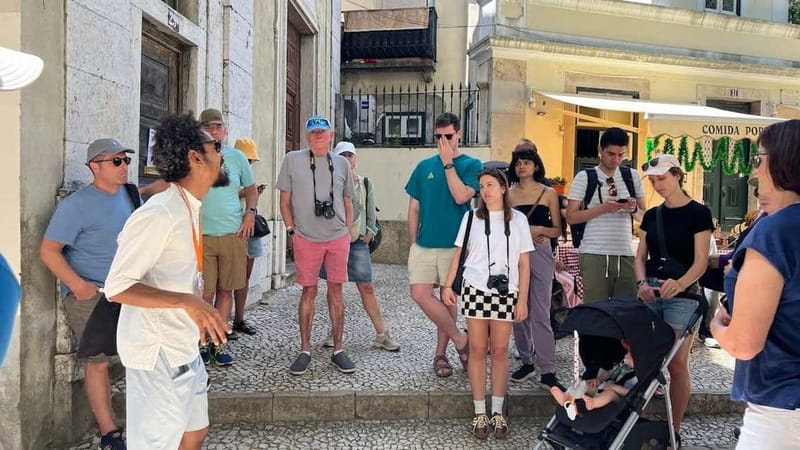
- Start beneath the orange umbrella: Meet at Praça do Comércio, between the large arch and the statue in the center of the square.
- See Lisbon’s central landmarks in one route: The walk covers Augusta Street, Santa Justa Elevator, Rossio, São Domingos Church, Carmo, Chiado, and more.
- The history goes beyond monuments: Expect discussion of the 1755 earthquake, the end of the monarchy, the Jewish massacre, Portugal’s long dictatorship, and the revolution.
- Guides add useful local advice: Past groups received tips about food, public transport, free viewpoints, galleries, bookstores, and places to try Portuguese specialties.
- The pace is manageable: The route is generally easy, with a few uphill stretches and about two and a half hours on foot.
- Check the group setup carefully: Some departures have been larger than expected, with reports of groups around 15 to 30 people.
Starting at Praça do Comércio
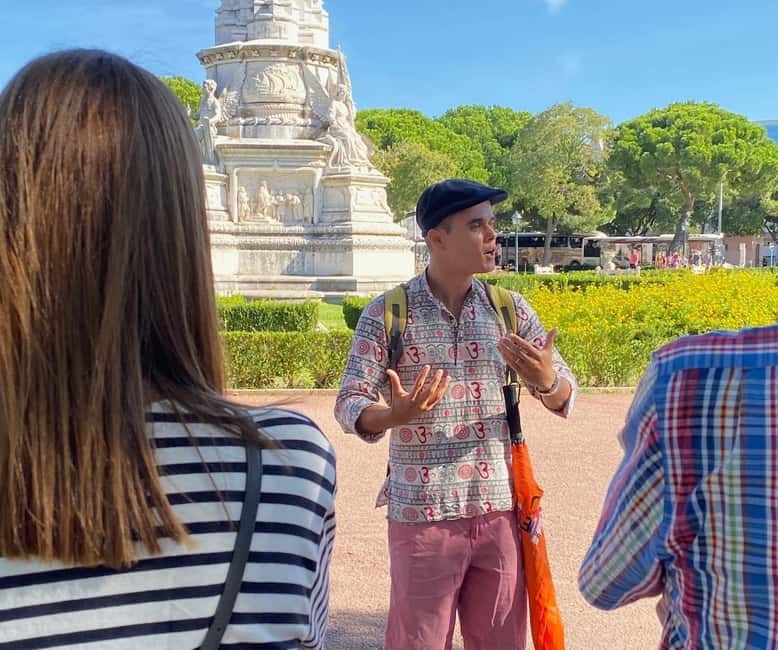
Praça do Comércio is a fine place to begin. Lisbon opens here in a grand sweep of yellow buildings, arcades, the Tagus waterfront, the monumental arch, and the statue at the square’s center. You meet the guide between the arch and the statue, looking for an orange umbrella.
That meeting point is easy to picture once you arrive, but the instructions could be clearer. One person went to the wrong place and missed the tour, although the company did try to help by calling with directions. I would arrive a little early and use the arch and statue as your fixed reference points.
The square also gives your guide a useful opening chapter. This area was badly damaged by the 1755 Lisbon earthquake and later rebuilt in a planned grid. The reconstruction changed the city center and produced the broad streets and orderly blocks of Baixa Pombalina.
A good guide can make this more than a lesson in architecture. The earthquake raises questions about how Lisbon rebuilt, how power was organized, and why the center looks so different from the older hills around it. The tour uses the setting to connect buildings with politics, religion, trade, and daily life.
More City Highlights Walking Tours in Lisbon:
- Lisbon: Starter Walking Tour to the highlights in German
★ 4.9 · 781 reviews - Lisbon: Full-Day Private Walking Sightseeing Tour
★ 4.9 · 123 reviews - Historic Charleston Guided Sightseeing Walking Tour
★ 5.0 · 6,216 reviews
Walking through Baixa Pombalina and Augusta Street
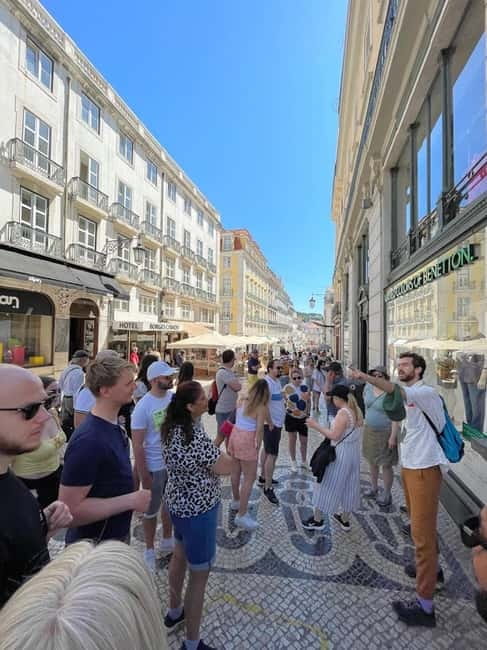
From Praça do Comércio, the route moves toward Baixa and Augusta Street. This is Lisbon’s main central corridor, lined with grand façades, shops, cafés, and steady foot traffic. It is a useful introduction because you see the city’s formal nineteenth-century face before moving into the more intimate streets of Chiado.
The famous Augusta Arch provides one of the route’s most recognizable photo stops. You will learn how the street, square, and surrounding buildings fit into the post-earthquake plan. The walk does not treat the arch as a stand-alone monument. Instead, it helps you understand why this part of Lisbon feels broad, geometric, and different from the older quarters.
The guide also points out Lisbon City Hall. This is a short stop, but it helps place modern civic life within the historic center. Along the way, expect stories about Portugal’s monarchy, the change of the capital to a foreign country, and major turning points in national politics.
The value here is orientation. On your own, you might rush up Augusta Street and see only shops and pretty buildings. With commentary, you begin to recognize Baixa as a planned response to disaster and as the center of Lisbon’s public life.
Santa Justa Elevator and the climb toward Rossio
The Santa Justa Elevator is one of Lisbon’s best-known structures. Its iron frame rises above the Baixa streets and links the lower center with the higher Carmo area. The tour includes the elevator as an exterior landmark, but you should not assume that riding it is part of the experience.
This is one of the places where a walking tour can save time later. Your guide can explain where the elevator fits into the city’s steep street system and may offer practical advice for getting around. Lisbon is not difficult to explore, but its hills, steps, trams, and busy central streets can confuse you on a first day.
The route continues toward Rossio Square and Rossio Train Station. Rossio is one of the central meeting places in Lisbon, with a wide open space and the familiar black-and-white wave paving associated with Portugal. The station adds another handsome façade and a useful transport reference.
The walk is not described as strenuous. One person found it comfortable with only a few uphill sections. Still, you are on your feet for two and a half hours, so sensible shoes matter. Lisbon’s paving can be uneven, and the route includes slopes rather than a flat promenade.
São Domingos Church and difficult chapters
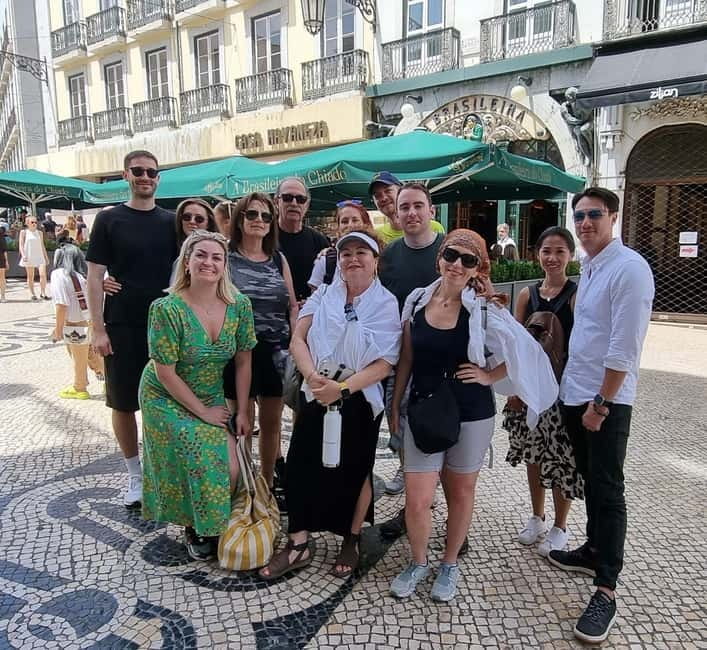
São Domingos Church is among the most memorable stops. Its interior carries visible signs of fire and age, giving it a character that polished monuments cannot match. The guide uses the church to tell a story that has stayed with many participants, and several guides have made this stop a highlight through vivid narration.
The church also brings the tour into more difficult parts of Portuguese history. The route covers the Jewish massacre, a subject that needs care and context, rather than a quick dramatic anecdote. You will also hear about the long dictatorship that shaped modern Portugal and the revolution that changed the country.
This is one reason the tour works well early in a Lisbon visit. You are not simply collecting names and dates. You are being given a framework for understanding how Portugal moved from monarchy through dictatorship and revolution into the country you see today.
The guides are often praised for their delivery. Walter is described as an engaging storyteller, while James is praised for handling sad, political, funny, and joyful material across the full two and a half hours. Claudia, Samuel, Kate, Jose, and Beatriz also receive high marks for clarity and presentation.
The one practical weakness is group size. If the group is large, sound can become a problem inside or near busy streets. One person specifically wished for audio devices. Stay near the guide when possible and ask for repetition if you miss a key point.
More Guided Walks in Lisbon:
- Best of Lisbon Small-Group Guided Walking Tour
★ 5.0 · 4,869 reviews - Lisbon: Private Boat Trip, Guided Walking Tour, Bike & Tram
★ 4.8 · 116 reviews - Lisbon by Night: Guided Walking Tour – The Unholy Secrets
★ 4.8 · 93 reviews - Lisbon: City of Spies Guided Walking Tour
★ 4.7 · 81 reviews
The Jewish memorial and stories beneath the streets
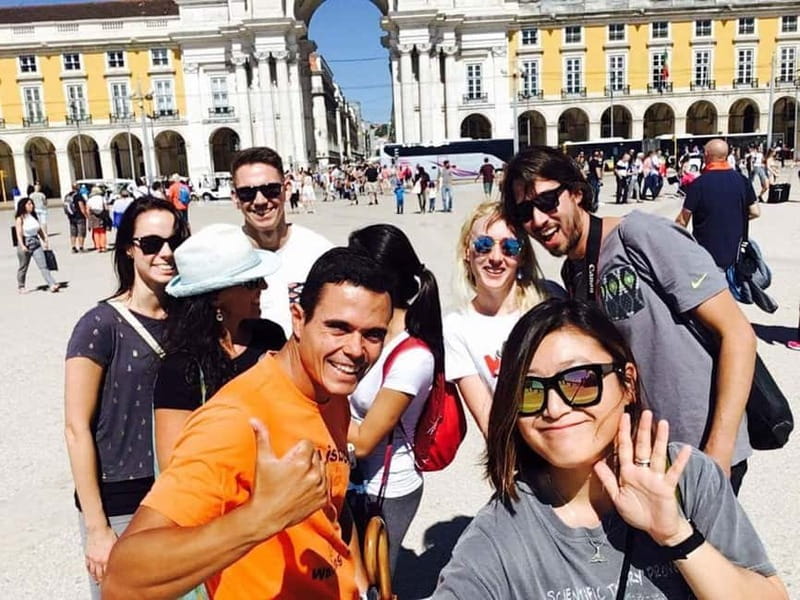
The Jewish memorial adds another layer to the central route. It marks a painful episode in Lisbon’s past and gives the tour a chance to discuss how memory is handled in public spaces. This stop may be brief, but it is important because it keeps the city’s story from becoming a parade of attractive buildings.
A strong guide will connect the memorial to the wider political and religious history of Portugal. You should expect a serious tone here, balanced by the lighter stories elsewhere on the route. The tour includes both difficult facts and local legends, so the mood shifts as you walk.
The route also includes the original Ginjinha Shop. Ginjinha is Portugal’s sour cherry liqueur, usually served in a small glass. A taste is not included, but the stop gives you a chance to try it separately if you wish.
You may also encounter suggestions for other Portuguese treats. One group tried ginjinha and pastel de nata along the way, though you should regard food and drink purchases as optional rather than part of the tour. The guide’s recommendations are useful because they turn a passing sight into a plan for later.
Carmo Square and the ruins of the monastery
The walk continues toward Carmo Square and the Carmo Monastery. The roofless Gothic ruins are among Lisbon’s most striking sights, made more powerful by the open sky above the old stone arches. The site also connects directly to the 1755 earthquake, which damaged the monastery and much of central Lisbon.
Carmo is not just a scenic stop. It gives you a physical sense of the disaster discussed earlier at Praça do Comércio. Seeing the damaged structure makes the scale of the earthquake easier to grasp than a description alone.
The square can also feel calmer than the streets below. It is a useful pause in a route that passes through busy central areas. Your guide may explain the connection between Carmo, the upper Chiado area, the Santa Justa Elevator, and Lisbon’s steep network of streets.
The route here includes uphill walking. It is not presented as a demanding hike, but the grade is noticeable. If you have limited stamina, this is the point to judge your pace honestly. You can still gain a great deal from the tour by walking steadily and taking short pauses.
Chiado, A Brasileira, and Lisbon’s literary side
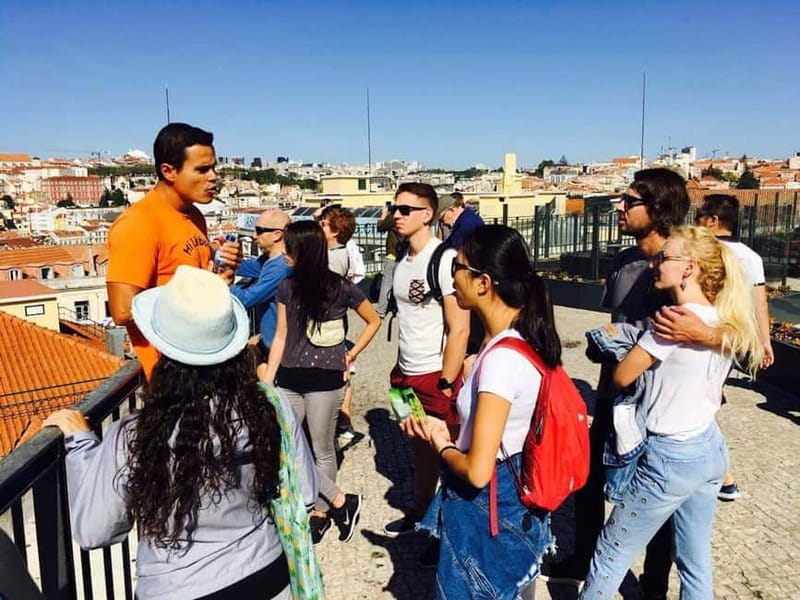
From Carmo, the tour moves into Chiado, one of Lisbon’s most elegant and historically important neighborhoods. Since the eighteenth century, Baixa and Chiado have attracted artists, writers, poets, politicians, shoppers, and café regulars. The area still feels like a cultural crossroads.
A Brasileira Café is one of the familiar stops. Its history links the café tradition with Lisbon’s literary life, and the surrounding streets make a pleasant contrast with the formal blocks of Baixa. You get a sense of how the city’s social life moved between public squares, bookshops, cafés, theaters, churches, and political meeting places.
Camões Square marks another useful point on the route. It sits between Chiado and the older streets leading toward Bairro Alto, making it a practical place to continue exploring after the tour. The guide may also point out places to eat, drink, or return to later.
This is where the practical side of the walk becomes especially useful. Tiago is praised for food and transport advice, while Jose recommended a lunch spot and the world’s oldest bookstore. Kate even provided her own guide after the tour. Those details suggest that the best benefit is not just what you see during the walk, but how much easier the rest of your Lisbon visit becomes.
What you learn beyond the landmarks
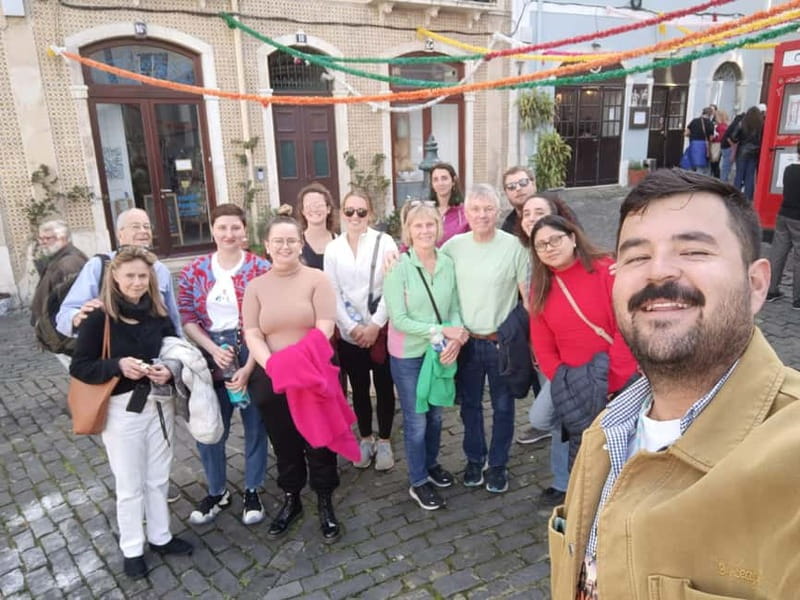
The tour covers a wide sweep of Portuguese history. Topics include the monarchy, the relocation of the capital to a foreign country, the Jewish massacre, the dictatorship, the revolution, the earthquake, and everyday Portuguese culture.
That is a lot for 150 minutes, so the depth depends on the guide and the size of the group. You should expect a lively overview rather than a specialist seminar. Guides such as Natalia, who explained Lisbon’s long history, and James, who kept a group engaged through many connected subjects, show how much can fit into the time when the presentation is well paced.
The strongest guides avoid turning the walk into a date-filled lecture. They use legends, humor, food, architecture, and personal recommendations to keep the story moving. Claudia is praised for mixing Portuguese history with humor, while Tiago is described as witty and generous with useful advice.
I would book this near the start of your stay. The tour gives you names and locations that make later sightseeing easier. You will know why Baixa is so orderly, why Carmo matters, where Chiado begins, and which central streets deserve another look.
Price, group size, and practical value
At $17 per person, this is a low-cost introduction to central Lisbon. You are paying for an English-speaking local guide, about 150 minutes of walking, historical context, stories, and practical recommendations. There are no admission tickets or tastings included, so the value rests mainly on the guide’s quality.
That price is attractive if you want to get oriented without committing to a full-day tour. It is also useful for solo visitors who want company during their first walk through the city. Families with older children may find the mix of stories and landmarks easier than a formal museum visit.
Group size needs closer attention. The published information does not guarantee a fixed number, and some paid bookings have been combined with free walking tour groups. Reports range from about 15 people to around 30, while other departures were smaller.
A larger group can weaken the experience. You may stand farther from the guide, wait longer at crossings, and miss parts of the commentary. The guides themselves are often praised, so the concern is less about their ability and more about whether everyone can hear and stay together.
Tips are not included, and ginjinha is also separate. The booking terms allow cancellation up to 24 hours before the start for a full refund, and you can reserve now and pay later. English is the stated language.
Who should choose this Lisbon walk?
Choose it if you want a clear first look at central Lisbon, enjoy history told through stories, and value restaurant and transport advice. It suits first-time visitors especially well because the route covers the main central areas without trying to reach every corner of the city.
It is also a good fit for people who prefer an active introduction. You will see many landmarks from outside, learn how the neighborhoods connect, and finish with a better sense of where to return independently.
You may prefer another format if you want a very small private group, extensive interior visits, or a slow photography walk. The changing group size is the main concern, and the lack of audio equipment could matter if you have difficulty hearing in crowds.
Should you book the City Highlights Guided Walking Tour?
I would book this tour for the first or second day of a Lisbon stay, especially at $17. Its route is sensible, the history is broad, and the guides appear strongest when they mix facts with humor and practical local advice.
Book with realistic expectations. You are getting a guided orientation, not a private tour or a ticketed monument package. If you can accept a group that may be larger than expected and you stay close enough to hear, this is a useful, inexpensive way to understand Baixa, Chiado, Carmo, and the central story of Lisbon.
FAQ
Where does the tour meet?
Meet at Praça do Comércio, between the large arch and the statue in the middle of the square. Look for the guide carrying an orange umbrella.
How long does the walking tour last?
The tour lasts approximately 150 minutes, or two and a half hours.
What language is the tour conducted in?
The stated tour language is English.
What landmarks are included?
The route includes Praça do Comércio, Lisbon City Hall, Augusta Street and its arch, Santa Justa Elevator, Rossio Square and Rossio Train Station, São Domingos Church, the Jewish memorial, the original Ginjinha Shop, Casa do Alentejo, Carmo Square and Monastery, A Brasileira Café, Camões Square, Baixa Pombalina, and Chiado.
Is ginjinha included in the price?
No. Ginjinha is not included, so any tasting or purchase costs extra.
Are gratuities included?
No. Tips are not included in the tour price.
How much does the tour cost?
The listed price is $17 per person.
Can I cancel the booking?
Yes. You can cancel up to 24 hours in advance for a full refund.
Can I reserve now and pay later?
Yes. The booking option allows you to reserve your place and pay later.
Just added around Lisbon
- Small Group Walking Tour of Belém★ 4.9 · 80 reviews
- Lisbon Tram No. 28 Ride & Walking Tour★ 4.1 · 766 reviews
- Lisbon: Walking Tour in the Center (Max 12 Participants)★ 5.0 · 741 reviews
- Lisbon Through the Eyes of a Local – Food and Walking Tour★ 4.9 · 141 reviews
- Lisbon: Private Boat Trip, Guided Walking Tour, Bike & Tram★ 4.8 · 116 reviews
- Lisbon: Kickstart Street Art Walking Tour★ 4.9 · 717 reviews
- Lisbon: Food & Wine Walking Tour Through Baixa★ 4.9 · 287 reviews
- Lisbon: Helicopter Ride, Boat Trip, & Old Town Walking Tour★ 4.7 · 480 reviews
City Highlights Walking Tours, compared.

Historic Charleston Guided Sightseeing Walking Tour
Read our review →
Dublin Highlights and Hidden Gems Guided Walking Tour
Read our review →
Guided Walking Tour of City Center Highlights
Read our review →

City Highlights Temple and Market Walking Tour
Read our review →
Montmartre Hidden Gems and Scenic Highlights Walking Tour
Read our review →
Browse the lists this tour appears in