
Review · PRIVATE WALKING TOURS
Nara Half Day Trip Walking Tour (Private Option Available)
Nara’s deer are only the beginning. This five-hour walking tour links the city’s biggest sights with quieter corners, a traditional lunch, and useful cultural guidance. I like the mix of Todaiji Temple and Kasuga Taisha with Naramachi’s old merchant district, and I also like the small maximum of eight people. It gives you a better chance to ask questions and keep a sensible pace.
The tour is especially helpful on a first visit, when Nara’s temples, shrines, lanterns, deer, and narrow streets can blur together. Guides such as Shin, Yuki, Miyabi, and Eri have been praised for clear explanations and thoughtful help with photos, customs, and deer etiquette. The main consideration is that five hours on foot can feel demanding, especially in Japan’s summer heat, winter cold, or wet weather. Dietary needs also require care because gluten-free meals are not available and allergy-free food cannot be promised.
Five things to know before booking
- A compact route covers six very different Nara experiences: Kofuku-ji, Todaiji, lunch, Kasuga Taisha, Nara Park, and Naramachi.
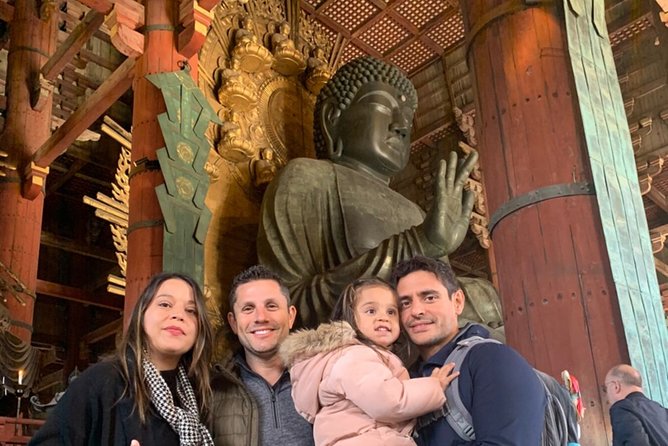
- The Great Buddha is the visual high point: Todaiji’s huge wooden hall and guardian statues provide the tour’s biggest wow moment.
- The deer encounter includes practical advice: Your guide can show you how to feed the deer without letting them crowd or push you around.
- Lunch is part of the value: The meal is served at a traditional Japanese restaurant and has been praised for its local dishes and generous spread.
- The group stays small: The maximum is eight people, with a private option listed as available.
- The route mixes famous sights with local texture: An old merchant’s house and Naramachi give you more than a standard temple stop.
Starting near Higashimuki Shopping Street
The meeting point is the Statue of Gyoki-bosatsu at 27 Higashimuki Nakamachi, a convenient central location near public transportation. Starting here makes sense. You are not asked to find a remote temple gate or meet far outside the main visitor area.
I would arrive early enough to locate the statue without rushing. The tour ends back at the same meeting point, which is useful if you plan to continue shopping, return to your hotel, or catch a train after the walk.
The format is small-group and guided, with no more than eight people. That number matters in Nara. A large group can easily lose its guide among deer, temple grounds, and busy paths. A small group also makes it easier to hear explanations and ask about religious customs, local food, or the best place for a photo.
The route lasts about five hours. The listed stops add up to roughly three hours, leaving time for walking between them, short pauses, and the practical delays that come with a popular sightseeing area. I would not schedule a tight train connection immediately afterward.
More Private Walking Tours in Japan
- Osaka: Hotspots & Hidden Gems Walking Tour Private or Group
★ 4.9 · 1,300 reviews - Tokyo: Private Custom Walking Tour with Local Guide
★ 4.8 · 533 reviews - Tokyo: Private Walking Tour with a Local Guide
★ 4.9 · 469 reviews
Kofuku-ji’s five-story pagoda
The first stop is Kofuku-ji Temple, known for its five-story pagoda. The pagoda was built by the Fujiwara clan in 730 and remains one of Nara’s most recognizable landmarks.
The stop lasts about 15 minutes and has no admission charge. That makes it a quick orientation point rather than a long temple visit. Your guide can give you the basic setting and help you understand why Kofuku-ji matters before the tour moves toward the larger Todaiji complex.
I like this opening because it begins with a clear symbol of old Nara without using up too much of your limited morning or afternoon. You get a strong photograph and a bit of context, then keep moving.
The drawback is simple: 15 minutes is not enough for an unhurried look at every building in the temple grounds. If Kofuku-ji is a personal priority, you may want to return after the tour for more time.
Todaiji and the Great Buddha
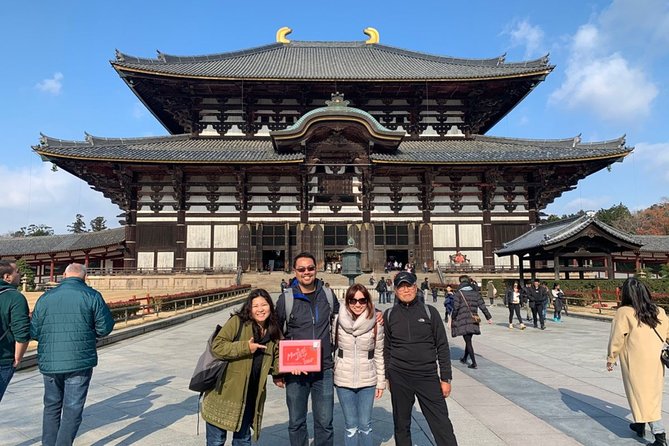
Todaiji is the tour’s major temple stop. You visit the Main Hall and Nandaimon, the great southern gate. At the gate, two imposing Kongorikishi guardian statues greet you. Their size and force make an immediate impression before you even reach the Great Buddha.
Inside the Main Hall, the Great Buddha provides the moment many people come to Nara hoping to see. The scale of the statue and the wooden hall is difficult to grasp from photographs. A guide adds value here by explaining what you are looking at, how the temple fits into Nara’s development, and how to approach the site respectfully.
The scheduled visit lasts about 30 minutes, and admission is included. That removes one small task from your day and helps the group move through the complex without stopping to sort out tickets.
I would treat this as an introduction rather than a full Todaiji visit. Thirty minutes passes quickly once you account for the gate, the hall, the Buddha, and the crowds. Your guide can point out the essential features, but you may want extra time later if you like architecture, sculpture, or religious art.
The temple grounds also connect naturally with Nara Park, so the route does not feel like a string of unrelated stops. You move from the monumental and formal side of Nara toward the open park and its famous deer.
A traditional lunch in an old Japanese town
Lunch takes about 45 minutes at a traditional Japanese restaurant at 107 Zōshichō. The meal is described as a spread of local dishes, and several guides have helped make lunch one of the most praised parts of the experience.
This is more useful than it may sound. A guided walk can become tiring when every stop is visual and every explanation requires concentration. Sitting down for a proper Japanese meal gives you time to rest, compare notes with the group, and ask your guide about dishes you might otherwise overlook.
Some meals have included vegetarian or vegan arrangements, and one group received a meal suited to a fish allergy. Still, the official conditions are cautious. Gluten-free requests cannot be accommodated, and allergy-free food or substitutions are not guaranteed. If you have a dietary request, make it by the day before. Do not wait until the morning of the tour.
You do not need to pay for the guide’s food or drinks. Bring cash if you want extra snacks or beverages. The meal is included, but additional purchases are not.
I see lunch as a strong part of the $105.45 price, especially for a first visit. You are not just paying for a seat at a restaurant. You are getting a local meal within a guided route, without having to guess which place will handle a group efficiently.
Same streets, a different way to see them:
- Kyoto Geisha Walking Tour: Gion District & Hidden Gems
★ 4.7 · 3,273 reviews - Tokyo Tsukiji Fish Market Food and Culture Walking Tour
★ 5.0 · 3,184 reviews - Kyoto: Gion Magical Night Walking Tour with Geisha Trivia
★ 4.9 · 2,393 reviews - Tokyo: Imperial Palace and Shogun Historical Walking Tour
★ 5.0 · 2,251 reviews
Kasuga Taisha and the forest approach
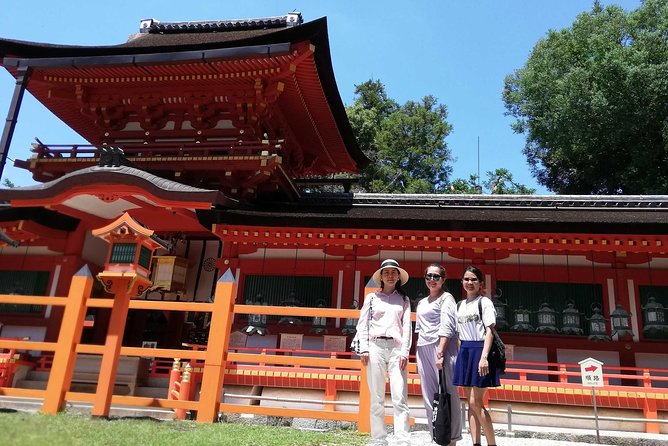
Kasuga Taisha brings a different mood. This major Shinto shrine sits near Kasugayama Primeval Forest, and the approach is known for its lanterns and wooded setting. The tour allows about 30 minutes, with admission included.
The shrine helps explain why Nara feels different from a simple temple day. Todaiji gives you immense Buddhist architecture and sculpture. Kasuga Taisha gives you Shinto spaces, ritual details, and rows of stone and hanging lanterns. Your guide can explain how to behave at the shrine and how to make a respectful wish.
The stop is not just a quick photo opportunity. The forest setting changes the pace and gives your eyes a break from large buildings and open parkland. I especially like this contrast because it makes the day feel like a look at Nara’s religious traditions rather than a checklist of famous structures.
The limitation is time. Thirty minutes may be enough for an introduction, but not for a slow exploration of every shrine feature or a long walk into the forest. Comfortable shoes are important, and you should expect a fair amount of walking even though the route uses established paths.
Nara Park and the polite, pushy deer
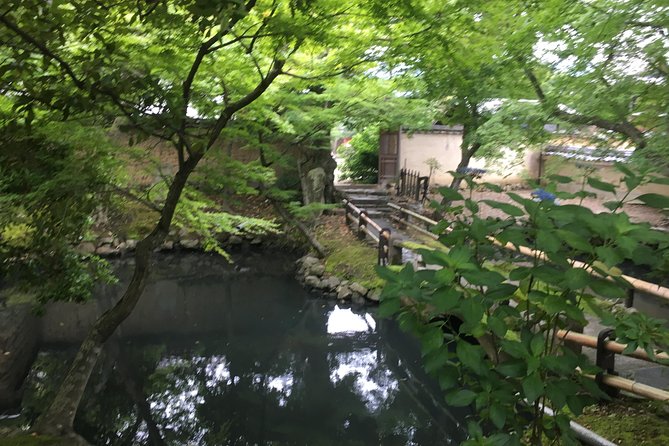
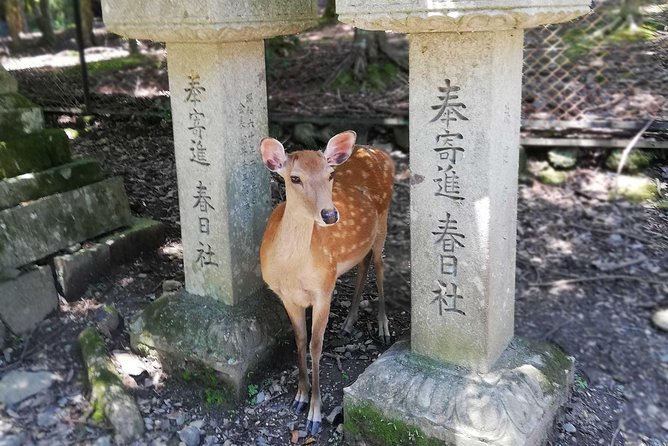
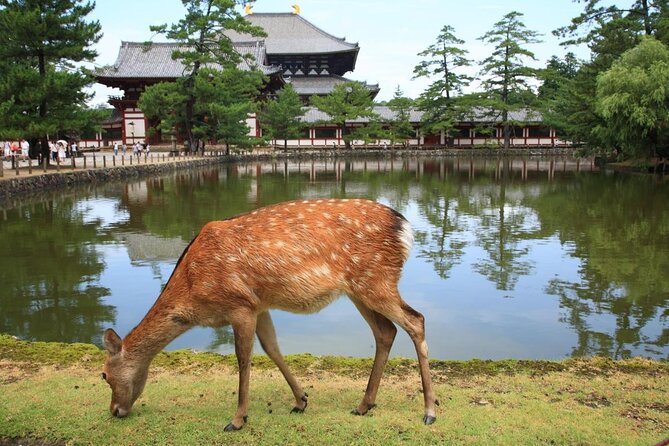
Nara Park is the most playful part of the tour. You walk through the park and see the deer that have made Nara famous. The animals are accustomed to people, and some will bow when they expect a cracker.
That cute behavior needs a little caution. The deer can become pushy, especially when they think you have food. Guides have shown groups how to offer crackers respectfully, avoid letting animals crowd them, and choose quieter areas where younger deer may be gentler. One guide even led a group near the forest, where they saw a baby fawn.
I would listen closely to this advice. Keep your attention on the deer, finish your crackers, and do not assume the animals will wait politely forever. They are charming, but they are still animals with strong opinions about snacks.
The park stop lasts about 30 minutes and is free. It works well for families because children get a memorable break from temple explanations. At the same time, adults get a chance to take photographs and notice how the park connects the city’s major religious sites.
The deer are a highlight, but I like that the tour does not treat them as the entire point of Nara. The animals become part of a larger day that includes architecture, religion, food, and neighborhood life.
Naramachi and the old merchant house
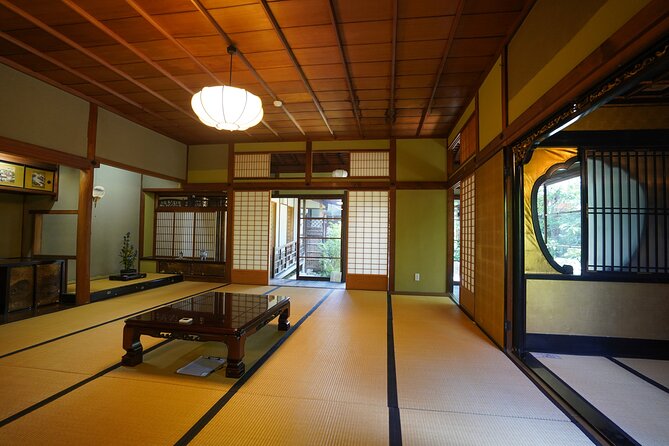
The final main stop is Naramachi, a historic neighborhood with a townscape very different from modern Tokyo. The tour includes Naramachi Nigiwai no Ie, where you can enter an old merchant’s house.
This is one of the most valuable parts of the route for anyone who wants to see how ordinary urban life once fit around Nara’s temples. Instead of looking only at grand religious buildings, you get narrow streets, traditional structures, and a closer sense of how commerce and home life worked in the old town.
The visit lasts about 35 minutes and includes admission. Guides have also pointed out artisan goods, Nara sweets, mochi shops, and other local places. Some have offered recommendations for sake tastings or restaurants after the official route ends.
I would save a little energy for this neighborhood. Naramachi is not a grand finale in the same way as Todaiji. Its appeal is quieter. You notice doors, rooflines, shopfronts, and the feeling of a preserved district. If your interest is only in major monuments, this stop may seem less dramatic. If you want a broader picture of Nara, it adds real value.
What the guides add to the day
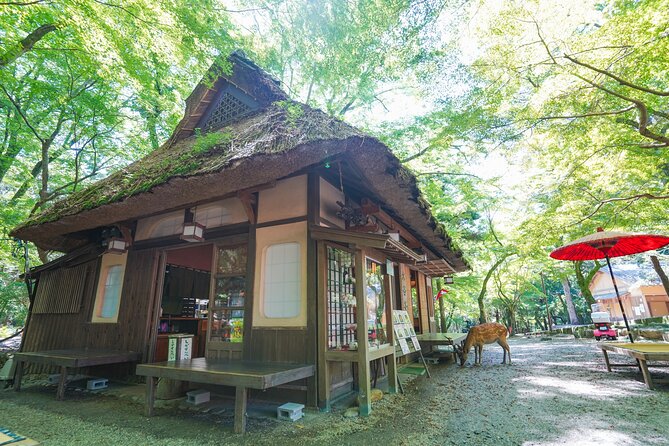
The strongest part of this experience is the guide. The route itself is good, but the explanations determine whether you simply look at temples or understand what makes them important.
Shin has been praised for his history explanations, photography, humor, and ability to tailor the day. Yuki has helped groups explore at a relaxed pace and offered clear guidance at temples. Miyabi has been praised for her passion and warm manner, while Eri has helped families understand religious customs and interact with the deer safely.
Guide assignments can vary, so you should not book expecting one particular person unless the operator confirms it. The consistent pattern is more important: guides explain customs, answer questions, manage the timing, and often adjust the pace for the group.
That flexibility has helped families and older participants enjoy the route. The tour welcomes all ages, but it still involves regular walking with only a few short breaks. Tell the operator in advance if someone in your group has health concerns.
Is $105.45 good value?
At $105.45 per person, this is not the cheapest way to see Nara. You can walk through public areas independently and pay only for individual admissions. The tour earns its price through the combination of a guide, several admissions, lunch, route planning, and local interpretation.
I think the value is strongest for a first visit, especially if you are coming from Kyoto or Osaka for a limited stay. In five hours, you see the major temple and shrine, meet the deer, eat a traditional meal, and visit an old neighborhood. That saves you from researching the route and figuring out how to fit the sights together.
The small group also matters. A maximum of eight is much more personal than a large coach tour, and the private option may appeal to families or groups wanting more control over the pace. The supplied details do not specify the private option’s exact price or conditions, so confirm those before booking.
I would see the tour as less useful for someone who has already spent several days in Nara and prefers long, independent visits at each temple. The schedule favors variety and orientation over deep time at one site.
Weather, clothing, and food planning
Japan’s summer can be extremely hot and humid, with temperatures reaching 40°C. Bring water, wear a hat, and consider booking for a cooler part of the year if heat affects you badly.
Winter can also be cold, with possible lows near -5°C. One group enjoyed the tour despite strong cold wind, but the experience would be easier with warm layers and comfortable shoes. The tour requires good weather, and poor conditions can lead to a new date or a full refund.
Wear shoes you can walk in for five hours. You will move through temple grounds, park paths, shrine areas, and old streets. The route is suitable for all ages, but it is not a seated sightseeing tour.
For food, make requests by the day before. Gluten-free meals are not available, and the operator cannot promise an allergy-free kitchen. Vegetarian and vegan arrangements have worked on some occasions, but you should receive confirmation rather than assume it.
Who should book this Nara walk?
I would recommend it to first-time visitors who want the main sights without spending a full day on a complicated plan. Families should also consider it because the deer, lunch break, and guide support create a good rhythm for children.
It suits anyone who wants cultural context but does not want a lecture-heavy tour. The guides have helped explain temple etiquette, shrine customs, local foods, and deer behavior in a friendly way.
I would choose another plan if you need guaranteed allergy-safe food, cannot manage several hours of walking, or want to explore Todaiji and Kasuga Taisha at a slow photographic pace. The route is busy with highlights, and its strength is variety.
With a 4.9 rating from 937 reviews and a 99 percent recommendation rate, the experience has a strong record. More important, the praise focuses on the parts that matter in practice: thoughtful guides, a good lunch, smooth timing, family-friendly pacing, and access to smaller places you might not find alone.
Final verdict
I would book this tour for a first Nara visit, particularly if you have one day or less in the city. You get the Great Buddha, Kasuga Taisha, Nara Park’s deer, a traditional lunch, and Naramachi in one well-organized walk.
The main tradeoff is pace. You will see many places, but you will not linger at every one. Bring water, wear good shoes, make food requests early, and let the guide handle the cultural details. For a compact introduction to Nara that feels more personal than a large group tour, $105.45 is a fair price.
FAQ
How long does the Nara walking tour last?
The tour lasts approximately five hours.
Where does the tour begin and end?
It begins at the Statue of Gyoki-bosatsu at 27 Higashimuki Nakamachi in Nara. It ends back at the same meeting point.
What is included in the price?
Admission tickets for the listed temple and shrine visits and lunch are included. You do not need to pay for the guide’s food or drinks.
How many people can join the tour?
The maximum group size is eight people. A private option is also listed as available.
Can the tour accommodate dietary restrictions?
Gluten-free requests cannot be accommodated. Allergy-free meals and all dietary substitutions cannot be guaranteed. Requests should be made by the day before the tour, and vegetarian or vegan arrangements should be confirmed in advance.
What happens if the weather is poor?
The experience requires good weather. If it is canceled because of poor conditions, you will be offered another date or a full refund.
More 1-Day Tours in Japan
- Madrid: 6-Hour Day Trip to Toledo with Guided Walking Tour
★ 4.0 · 1,029 reviews - Madrid: Day Trip to Toledo with Walking Tour & Small Group
★ 4.2 · 111 reviews - 1 Day Trekking in Chiang Rai forest (walk only)
★ 4.9 · 95 reviews - Samarkand One Day Tour: one day walking & group tour
★ 4.4 · 87 reviews
Just added around Japan
- Tokyo: Asakusa & Sensoji ー Oldest Temple Walking Tour (2hrs)★ 5.0 · 213 reviews
- Asakusa Senso-ji Temple and Old Tokyo Walking Tour★ 5.0 · 560 reviews
- Asakusa Cultural Walk & Matcha Making Tour★ 5.0 · 245 reviews
- Tokyo: Tsukiji Market Walking Tour & Sushi Cooking Class★ 4.6 · 122 reviews
- Tokyo: Dark Side of Tokyo Shinjuku Red Light Walking Tour★ 4.7 · 862 reviews
- Tokyo: Shinjuku Nightlife & Secret Backstreets Walking Tour★ 4.8 · 229 reviews
- Tokyo: Shibuya Highlights Walking Tour★ 4.8 · 601 reviews
- Tokyo: Shibuya Highlights Walking Tour & Secret View Spot★ 4.9 · 196 reviews
Private Walking Tours, compared.

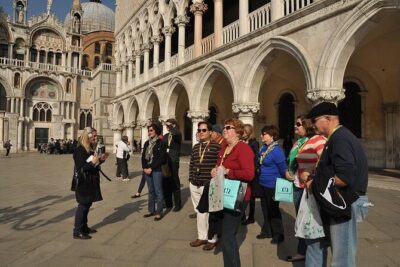
Private 3 hrs Venice Tour: St Mark’s, Walking tour & Boat tour
Read our review →
Private Street Food Evening Walking Tour in Ho Chi Minh City
Read our review →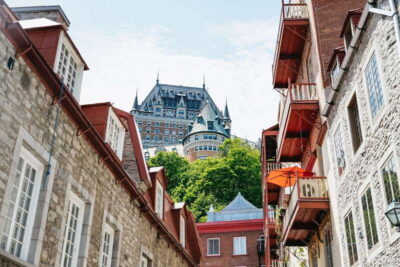
Old Quebec City: Grand Walking Tour with Private Option
Read our review →
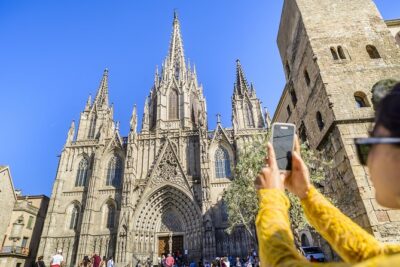
Barcelona Helicopter, Sailboat & Old Town Private Walking Tour
Read our review →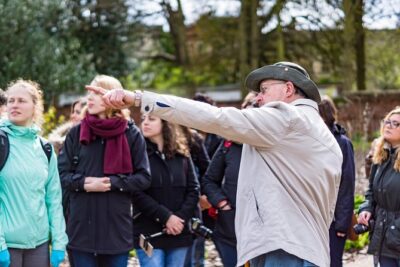
Browse the lists this tour appears in