
Review · USA WALKING TOURS
San Francisco: Castro LGBTQ Walking Tour
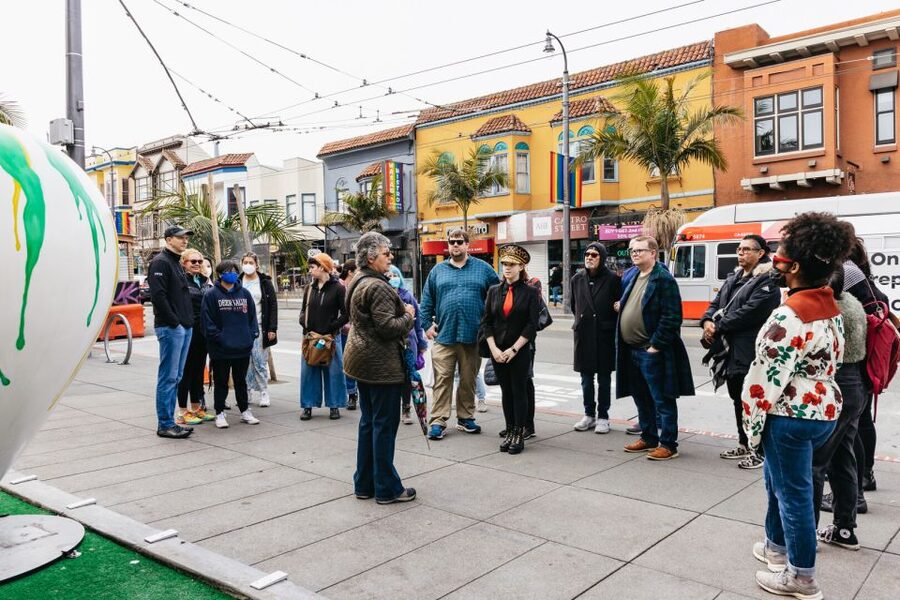
History lives on these sidewalks. This two-hour Castro walking tour connects San Francisco’s LGBTQ past with its present through the stories of a local LGBTQ activist. I especially like the focus on Harvey Milk’s neighborhood and the chance to visit memorials many first-time visitors miss. The route is also easy, wheelchair accessible, and free of large hills. The one caution is that this is an educational tour with painful chapters, including wartime persecution and the AIDS crisis, so it may feel emotionally heavy at times.
At $40 per person, the tour offers solid value if you want more than colorful flags, nightlife, and a quick photo at the Castro Theatre. Guide Kathy receives repeated praise for her warmth, humor, local knowledge, and ability to make people feel included. You should bring comfortable shoes, though, and leave luggage or large bags behind.
Key points before you book
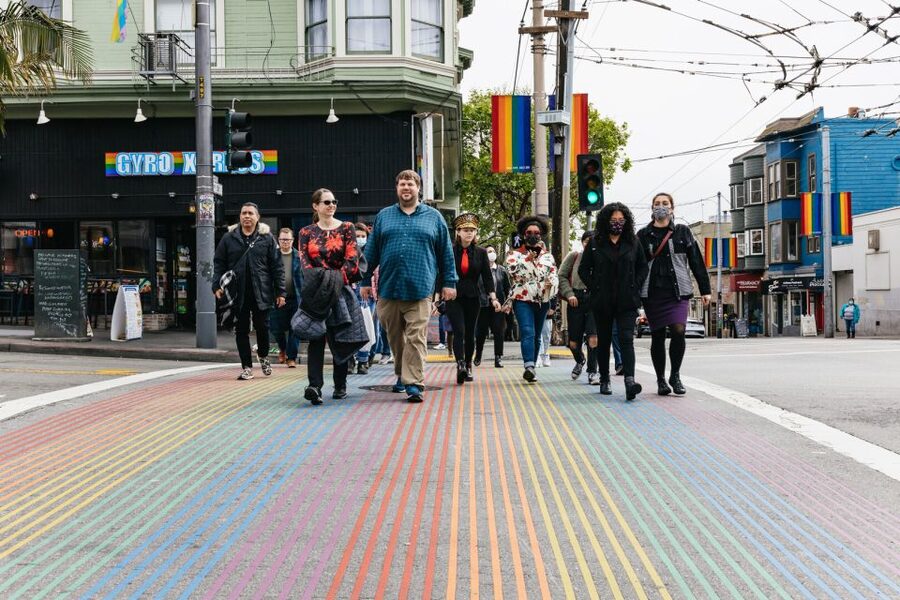
- Harvey Milk’s Castro comes alive: Learn where Milk lived, worked, and campaigned for equality.
- A local activist leads the way: Kathy has lived in the Castro for decades and brings personal insight to the neighborhood.
- Important memorials anchor the route: Visit Pink Triangle Park and Memorial, the AIDS Memorial Quilt and Names Project, and the Rainbow Honor Walk.
- An easy two-hour walk: The route is ADA-compliant, with no large hills and regular stops.
- History reaches beyond San Francisco: The tour links local events to LGBTQ civil rights and wider world history.
- Serious subjects receive thoughtful treatment: Expect humor and warmth, but also stories of persecution, loss, and continuing struggles.
Meeting the tour at Castro and Market Streets
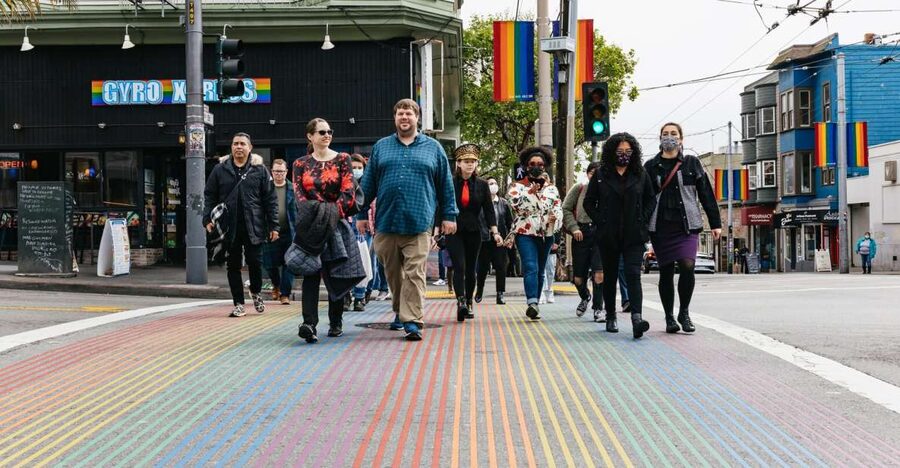
The tour begins at 400 Castro Street, in front of SoulCycle at the corner of Castro and Market Streets. Look for the Big Rainbow Flagpole Landmark nearby. This detail matters because the location image associated with the meeting point may show the Castro Theatre, which is not the actual starting place.
I would arrive a little early. The Castro is easy to reach within San Francisco, but the neighborhood has plenty of visual distractions, and the correct corner is more useful than simply heading toward the famous theater. Hotel pickup and drop-off are not included, so you make your own way to the meeting point.
The tour is conducted in English and lasts about two hours. Times vary, so check the available start times when booking. Tours operate rain or shine. A light rain will not change the history, but it can make listening outdoors less comfortable, so dress for the forecast.
A few more walks around the USA worth a look
- Pride Tours NYC’s LGBTQ Historical Walking Tour
★ 5.0 · 89 reviews - Berlin: Gay Berlin Out in Schöneberg Walking Tour
★ 4.8 · 281 reviews - Florence: LGBTQ Renaissance Walking Tour with Mila
★ 4.9 · 85 reviews
Why Kathy makes the difference
The guide is a major part of this experience. Kathy has lived in the Castro for decades and has led this tour for years. She is also an LGBTQ activist, which gives the walk a clear purpose beyond pointing out buildings and taking photographs.
Her approach appears to balance facts with feeling. You can expect stories about political change, community life, prejudice, and personal courage, along with humor and opportunities for discussion. Several guests describe her as warm, inspiring, and able to bring together people of different ages and backgrounds.
That makes this a good choice if you are new to LGBTQ history. It also works if you already know the broad outline of Harvey Milk’s life but want to understand how those events connect to actual streets and local places.
The tour is not presented as a lecture where you simply follow along. Kathy encourages people to share stories and think about the meaning of community. That can make the experience more personal, though anyone hoping for a quick sightseeing loop may find the conversation and historical detail more demanding than expected.
Entering the Castro’s LGBTQ story
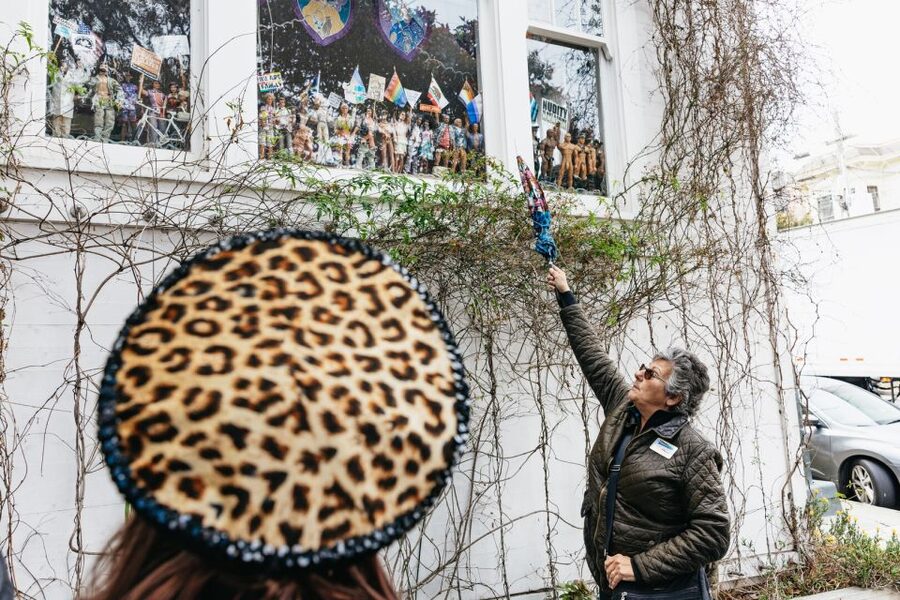
The Castro is often presented as San Francisco’s LGBTQ center, but the tour places that identity within more than 170 years of local culture and social change. You learn how the neighborhood became important, how LGBTQ residents organized, and how San Francisco events helped shape civil rights discussions far beyond California.
The useful point here is context. A rainbow flag or a busy bar tells you little on its own. The walk explains why certain corners, plazas, memorials, and sidewalk plaques matter, and how the neighborhood’s meaning has changed over time.
You will see the Castro as a living community rather than a museum. The tour covers the past, present, and future of sexual and gender diversity, so the focus is not only on famous figures. It also considers the people and organizations that made community life possible.
Because the route uses public streets, you should expect an outdoor experience rather than indoor exhibits. Street noise, weather, and the normal movement of the neighborhood are part of the setting. That is also the strength of the format: the history is attached to the places where it happened.
Following Harvey Milk’s footsteps
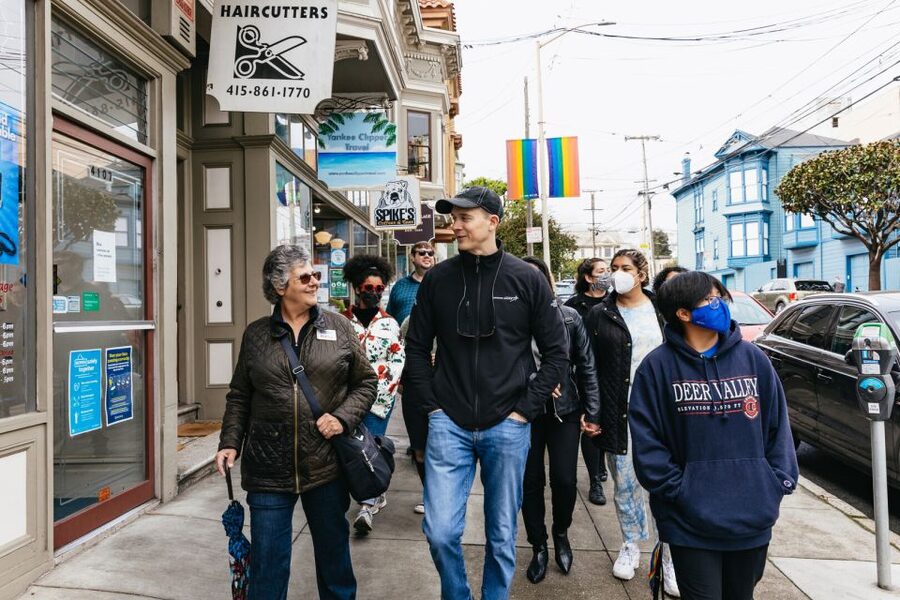
Harvey Milk is one of the central figures on the walk. Milk was a San Francisco supervisor, LGBTQ civil rights leader, and one of the most widely recognized political figures in the modern movement. He was assassinated in 1978, but his political work helped shape the Castro’s public identity.
The tour points out where Milk lived, worked, and advocated for equality. Those details turn a familiar name into a local story. Instead of treating Milk as a distant historical symbol, you see how his life was tied to ordinary streets and neighborhood businesses.
Harvey Milk Plaza is one of the key stops. It is both a public gathering place and a spot for considering how much has changed since Milk’s campaigns, as well as how much work remains. The tour does not reduce his legacy to easy inspiration. It also addresses the risks, conflicts, and losses that surrounded LGBTQ political organizing.
For many people, this is the strongest part of the walk. If you have seen the film Milk or read about his political career, the street-level setting adds useful scale. If you know little about him, the guide gives you a clear entry point into San Francisco’s LGBTQ civil rights story.
Same streets, a different way to see them:
- History and Hauntings of Salem Guided Walking Tour
★ 5.0 · 14,564 reviews - New Orleans Premier Ghost, Voodoo and Vampire Walking Tour
★ 4.5 · 12,856 reviews - Little Havana Food and Walking Tour in Miami
★ 5.0 · 8,882 reviews - Chicago: Gangsters and Ghosts Walking Tour
★ 5.0 · 7,155 reviews
Pausing at Pink Triangle Park and Memorial
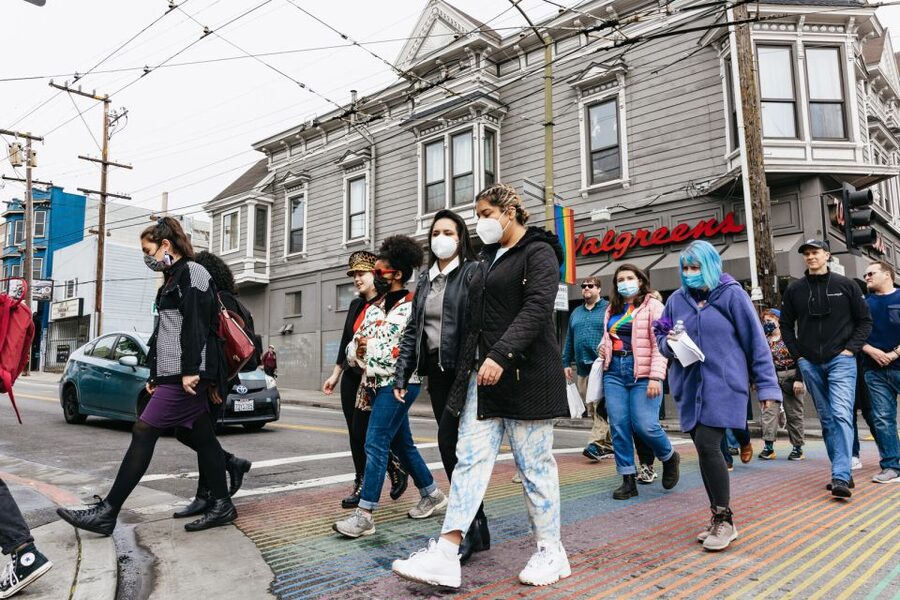
Pink Triangle Park and Memorial is one of the more solemn stops. It remembers the thousands of gay men persecuted during World War II, when the pink triangle was used by the Nazi regime to identify homosexual prisoners in concentration camps.
This is not a casual photo stop. The memorial asks you to think about how symbols can be used to shame and harm, and how communities can reclaim them as signs of remembrance and resistance. The tour gives the stop a broader connection to human rights and the dangers of state persecution.
The emotional weight is real. One guest described the experience as hard but important, and that is a fair way to prepare yourself. You will hear difficult material, but the guide’s clear explanations help place it in historical context rather than using shock for its own sake.
I value the inclusion of this memorial because it prevents the Castro story from becoming only a celebration of progress. The neighborhood’s history includes joy, political gains, and cultural energy, but also fear, discrimination, violence, and grief.
Understanding the AIDS Memorial Quilt and Names Project
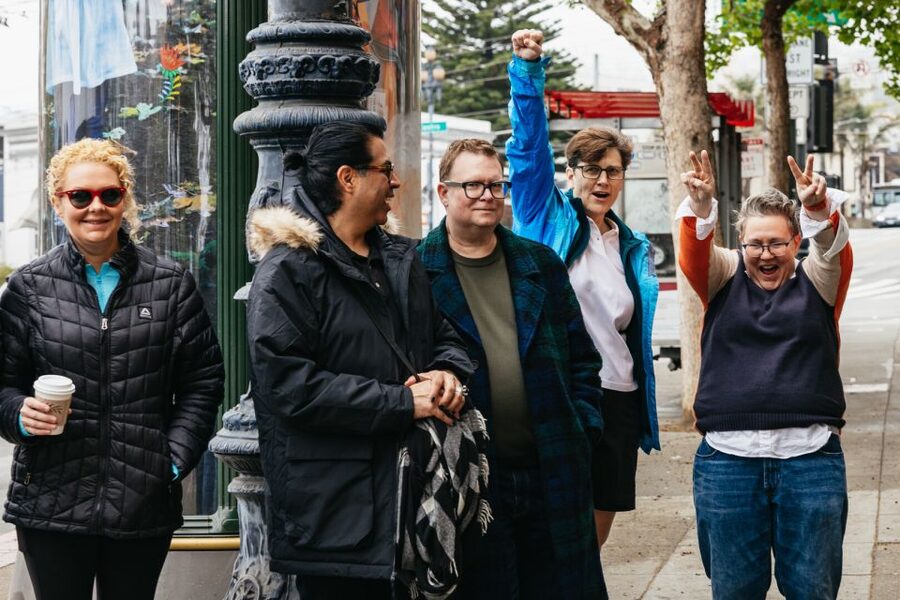
The tour also includes the AIDS Memorial Quilt and Names Project. These memorials connect the Castro to the AIDS epidemic and to the many people who died, as well as the families, friends, and activists affected by the crisis.
This part of the tour helps explain why remembrance is so important in LGBTQ communities. The subject can be painful, especially when paired with stories about the lack of understanding and support that marked the early years of the epidemic.
The value of visiting these sites with a guide is that you receive more than a name or a display. You hear how loss affected community life and how activism pushed institutions and governments to respond. The tour links grief with organizing, showing that memorials can preserve memory while also pointing toward action.
You may find this section especially meaningful if you are interested in public health, social movements, or the way communities respond during a crisis. It is also one reason this tour suits adults and older teenagers better than very young children, although the information provided does not set a formal minimum age.
Reading the Rainbow Honor Walk
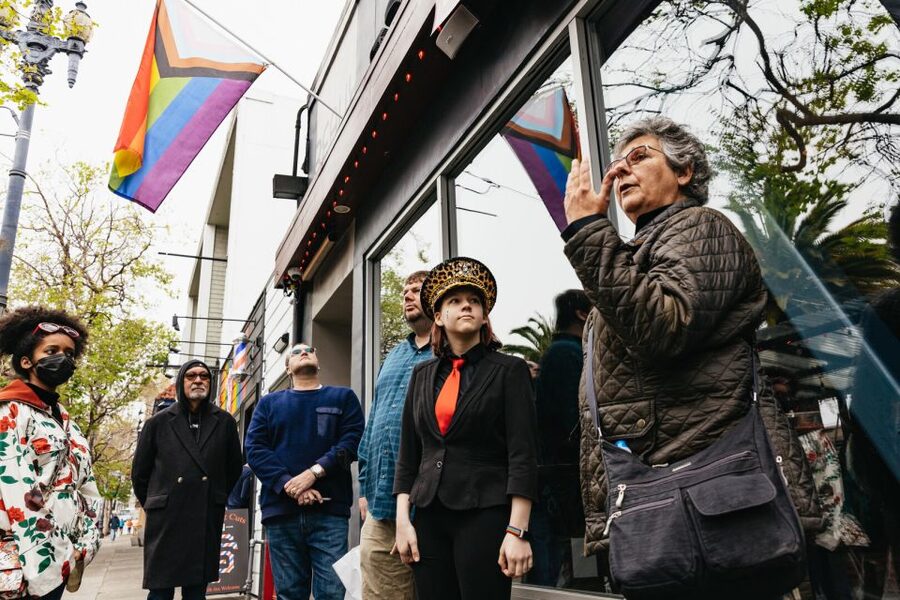
The Rainbow Honor Walk uses bronze sidewalk plaques to recognize LGBTQ people who made an impact on world history. You encounter these markers as part of the neighborhood, not behind glass in a gallery.
That setting is the point. The plaques bring history into daily life and encourage you to look down as you walk. Some names may be familiar, while others may prompt questions about artists, activists, writers, scientists, and public figures whose LGBTQ identities or contributions were overlooked.
This stop broadens the tour beyond San Francisco. Harvey Milk remains central, but the Rainbow Honor Walk shows that LGBTQ history is international and reaches across many fields. It also gives the walk a hopeful counterpoint after the more painful memorials.
Take your time at the plaques. The route is only two hours, and the guide controls the pace, but the plaques are easy to miss if you focus only on storefronts and flags. Comfortable shoes will help, even though this is not a strenuous hike.
Seeing the Castro beyond its famous theater
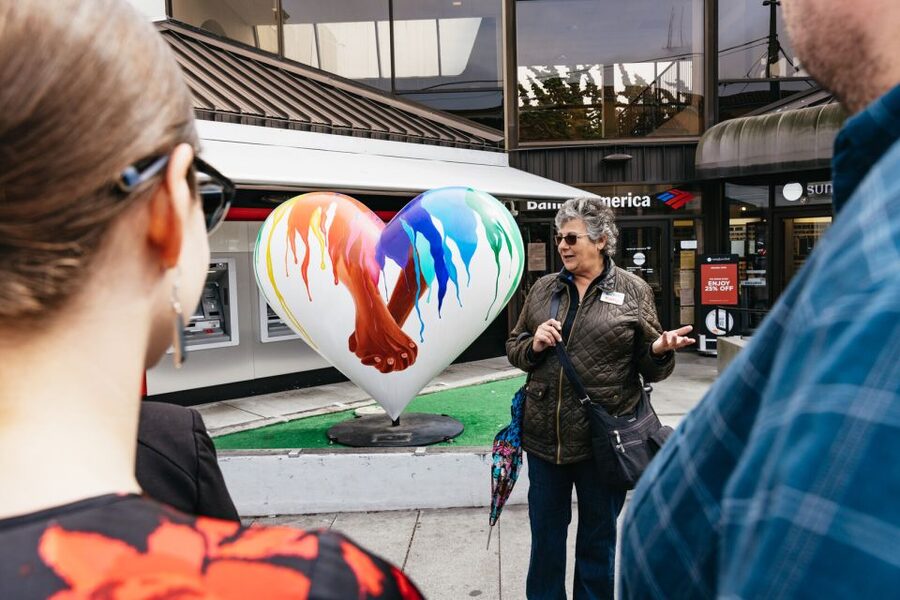
The Castro Theatre is one of the neighborhood’s best-known landmarks, but it is not the meeting point for this tour. The walk uses the wider district to show why the Castro matters, rather than treating it as a single photogenic building.
You will see a mix of historical sites, public memorials, community markers, and everyday streets. That mix gives you a better sense of the neighborhood’s identity. The Castro is not frozen in the era of Harvey Milk, and the tour recognizes that LGBTQ culture continues to change.
This is also where the tour’s local perspective helps. Kathy can explain the difference between a place that appears important to an outsider and a place that holds meaning for people who live there. The result is less a checklist of attractions and more a guided reading of the neighborhood.
Do not expect time for shopping, nightlife, or extended visits inside businesses. The purpose is history and interpretation. You can return afterward if you want to explore restaurants, bars, stores, or the theater at your own pace.
How difficult is the walk?
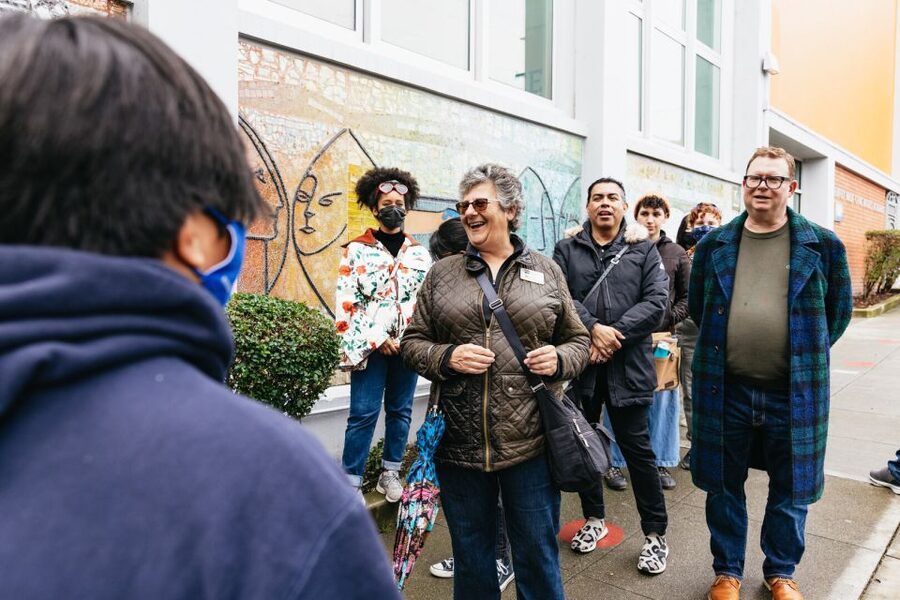
The route is ADA-compliant and involves no large hills. That is a practical advantage in San Francisco, where even a short walk can become tiring when steep streets enter the picture.
The tour still takes two hours on foot, so comfortable shoes are sensible. The guide makes several stops, and one past guest specifically appreciated a restroom break midway. Restroom arrangements can vary, so do not assume every stop has facilities, but the pacing is designed to be manageable.
Wheelchair users can book this experience, and the route is described as wheelchair accessible. If you have specific mobility needs, you may still want to confirm the current route before booking, since public streets and weather conditions can affect any outdoor walk.
Do not bring luggage or large bags. A small day bag is more practical, but the safest plan is to arrive with only what you need for two hours.
Is $40 a fair price?
At $40 per person, this is not the cheapest way to see the Castro. You can walk through the neighborhood for free, visit public places on your own, and read about Harvey Milk before you arrive.
The fee makes sense if you value interpretation. You are paying for a local activist’s time, a planned route, historical context, and access to a connected story that would be hard to assemble from street signs alone. The guide also helps you notice memorials and plaques that you might otherwise pass without understanding.
I would consider the price fair for a first visit, especially if LGBTQ history is a main reason you are coming to San Francisco. It is less compelling if you want a fast orientation, a nightlife introduction, or a general Castro sightseeing tour with minimal discussion.
The two-hour length helps the value. It is long enough to cover major places without taking up an entire day. You can pair it with your own Castro exploration before or after, making the tour a focused introduction rather than your only time in the neighborhood.
Who should take this Castro walk?
I would recommend it to LGBTQ visitors, allies, history students, families with older children, and anyone interested in civil rights movements. The mixed group described by the guide experience includes singles, couples, and families, so you do not need to arrive with a particular type of group.
It is also suitable for people who want a more thoughtful activity than a standard sightseeing stop. The tour can help you become a better ally by explaining both the achievements and the continuing struggles of LGBTQ communities.
You may want to skip it if you dislike emotionally serious material or prefer to explore independently. The walk includes humor, but it does not turn painful history into entertainment. It asks you to listen, reflect, and sometimes sit with uncomfortable facts.
The tour is conducted in English only. If you are comfortable following a spoken historical tour in English, the guide’s interactive style should make the material easier to follow. If you need another language, this is not the right fit based on the available information.
Should you book it?
Book this tour if you want to understand why the Castro matters, not simply see where it is. The strongest reasons are Kathy’s long connection to the neighborhood, the focus on Harvey Milk, and the carefully chosen memorials that connect local events with world history.
The easy, ADA-compliant route also removes one common San Francisco worry: steep streets. At $40, you receive the best value when you treat the walk as a history lesson in the places where the story unfolded.
I would choose it early in a San Francisco visit, then return to the Castro afterward with more context. Skip it only if you want a purely casual stroll or are not prepared for serious subjects. For most visitors interested in LGBTQ culture, civil rights, and the real story behind the rainbow flags, this is time and money well spent.
FAQ
Where does the Castro LGBTQ walking tour meet?
The tour meets at 400 Castro Street, in front of SoulCycle at the corner of Castro and Market Streets. It is next to the Big Rainbow Flagpole Landmark.
Is the meeting point at the Castro Theatre?
No. The correct meeting point is 400 Castro Street. The location photo may incorrectly show the Castro Theatre, but the map location is correct.
How long is the walking tour?
The tour lasts two hours.
What language is the tour offered in?
The live tour is conducted in English.
Is the route wheelchair accessible?
Yes. The tour is ADA-compliant and wheelchair accessible, with no large hills on the route.
Does the tour run in bad weather?
Yes. Tours run rain or shine.
What should I bring?
Wear comfortable shoes. Do not bring luggage or large bags.
Is hotel pickup included?
No. You are responsible for getting to and from the meeting point.
Just added around the USA
- Savor Bar Harbor Culinary Walking Tour in Maine★ 5.0 · 169 reviews
- Savor Bar Harbor Culinary Walking Tour★ 4.5 · 75 reviews
- 90-minute Ghost Walking Tour in Bar Harbor★ 4.5 · 161 reviews
- Baltimore Walking Foodie Tour in Fells Point★ 5.0 · 182 reviews
- The Original Fells Point Ghost Walk by Baltimore Ghost Tours★ 4.5 · 73 reviews
- The Story of Austin: Downtown History Walking Tour★ 5.0 · 216 reviews
- Austin Small Group Morning Walk★ 5.0 · 412 reviews
- The Madam’s Curse Walking Ghost Tour★ 4.5 · 103 reviews
USA Walking Tours, compared.
History and Hauntings of Salem Guided Walking Tour
Read our review →
New Orleans Premier Ghost, Voodoo and Vampire Walking Tour
Read our review →
Freedom Trail History Small Group Walking Tour
Read our review →
Historic Charleston Guided Sightseeing Walking Tour
Read our review →
New Orleans Food Walking Tour of the French Quarter with Small-Group Option
Read our review →
St. Louis Cemetery No. 1 Official Walking Tour
Read our review →Browse the lists this tour appears in