
Review · HISTORY WALKING TOURS
Pride Tours NYC’s LGBTQ Historical Walking Tour
Stonewall’s story begins on ordinary streets. Pride Tours NYC turns a small patch of Greenwich Village into a clear, human account of LGBTQ+ life, protest, and political change. I especially like the small group limit of 15 and the way the route links famous places with lesser-known stories, including the Oscar Wilde Memorial Bookshop and the first Sip In. The main caution is that the tour is conducted in English, and one past participant found the guide’s pace too quick.
At $30, this is a fair buy for anyone who wants more than a photograph outside the Stonewall Inn. You get about 75 minutes of guided context, plenty of chances to ask questions, and a compact route that works well in a busy New York schedule. Guide Joe receives repeated praise for his energy and command of the subject, though the experience can vary with the guide and group.
Key points to know before you go
- Stonewall is only one part of the story: The tour connects the 1969 uprising to Pride marches, the Rainbow Flag, the first Sip In, and later LGBTQ+ politics.
- The route stays in Greenwich Village: You cover a small area, with eight stops and a return to Christopher Park.
- A maximum of 15 people keeps it personal: That makes it easier to hear the guide and ask questions on narrow city streets.
- Joe is a frequently praised guide: His enthusiasm, clear storytelling, and local recommendations are recurring strengths.
- Morning and afternoon departures help with planning: You can place the tour before lunch, after lunch, or alongside a wider Village visit.
- Weather matters: The tour requires good weather, with a new date or full refund offered if poor conditions cause cancellation.
Why this Greenwich Village walk is worth your time
New York offers plenty of landmark tours, but this one asks you to pay attention to the streets between the landmarks. The route moves through Christopher Street and nearby Greenwich Village, where signs, bars, monuments, and former storefronts help explain how LGBTQ+ activism grew from local organizing into a broad Pride movement.
I like the scale. You are not crossing half of Manhattan or trying to absorb a museum-sized timeline in one sitting. The tour lasts about 1 hour and 15 minutes and remains within a small area, making it a good choice on a warm day or during a packed New York weekend.
The storytelling also reaches beyond Stonewall. You hear about the people and groups that built the movement before and after June 1969. That wider frame matters. Stonewall is often treated as the single beginning of LGBTQ+ rights in the United States, but this walk shows the organizing, publishing, protest, and social spaces that helped shape what followed.
The format is especially useful if you have already walked through the Village on your own and sensed that you were missing something. The streets may look familiar, but a guide can point out why a particular bar, bookshop, street sign, or monument matters.
More History Walking Tours in New York City
- #1 Rated NYC Chinatown Food and History Walking Tour with FNYT
★ 5.0 · 171 reviews - Tribeca Architecture And History Walking Tour
★ 5.0 · 141 reviews - Lower Manhattan Secrets And History Walking Tour
★ 5.0 · 96 reviews
Christopher Park sets the scene
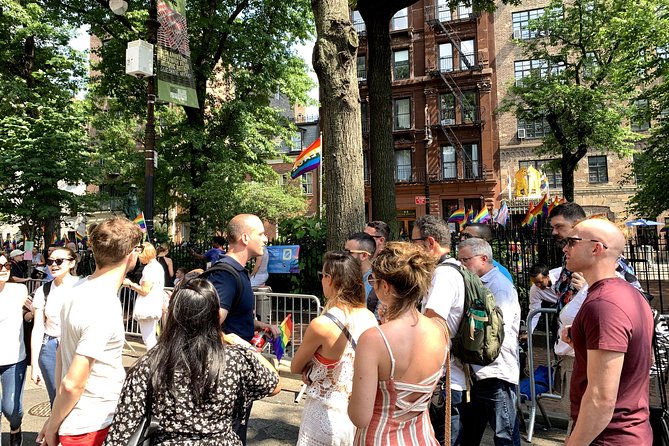
The meeting point is Christopher Park, at 38 to 64 Christopher Street. The tour begins here with an overview of LGBTQ+ life and activism in the United States and New York City before the Stonewall Uprising.
This opening is important because it gives you a timeline before the famous event appears. You are not simply told that Stonewall happened in 1969. You are given some sense of what led up to it, allowing the later stops to make more sense.
The park is also a practical starting point. Admission is free, the site is near public transportation, and the route returns here at the end. Since the tour begins outdoors, arrive ready to listen on a city street rather than expecting a seated presentation.
The guide spends about 12 minutes here. That is enough time to establish the setting without using up half the tour before reaching Stonewall.
The Stonewall Inn and the night of June 28, 1969
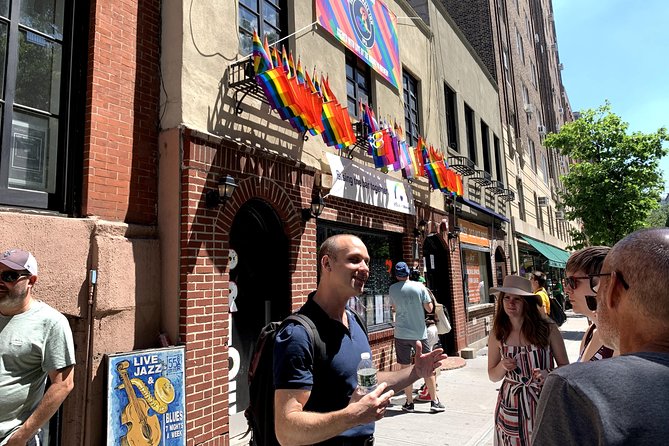
At the Stonewall Inn, the guide focuses on the early morning hours of June 28, 1969, and the days that followed. This is the emotional center of the walk, but the value comes from hearing the event placed in its local setting.
The tour does not treat the building as a quick photo stop. You hear the account of the Stonewall Uprising and how the immediate days changed the mood and direction of activism. The stop lasts about 12 minutes, matching the time given to Christopher Park.
You should expect a public street setting rather than an indoor visit. Admission is listed as free, and the experience centers on narration at the site. If you want a long look inside the bar, this tour is not designed for that. If you want the story of what happened here and why it mattered, the stop earns its place.
The Stonewall Inn is also where the guide’s delivery matters most. Several comments about the tour praise an engaging, passionate presentation, while one person felt the speaker needed to slow down and check in with the group more often. If you have trouble following spoken English, stay close to the guide and ask for clarification when needed.
Greenwich Letterpress and the Oscar Wilde Memorial Bookshop
The next stop is Greenwich Letterpress, at the original site of the Oscar Wilde Memorial Bookshop. Here the guide explains the shop’s history, its founder Craig Rodwell, and Rodwell’s role in the activism that connected Stonewall to the modern Pride movement.
This is one of the most useful stops for understanding how a protest becomes an organized movement. A bookshop might sound less dramatic than a bar or a street uprising, but places that sold books, shared ideas, and supported community organizing helped keep the movement going.
The stop lasts about seven minutes, so expect a compact account rather than a long lecture. I like this part because it takes the tour beyond the most familiar names. It shows you that the story depends not only on famous events, but also on people who built spaces for information and connection.
Greenwich Letterpress remains an active business, so be considerate of the storefront and the people around it. The tour is about the former bookshop site, not a special admission visit to a museum.
More History Walking Tours in the USA
- NYC: History of Slavery & Underground Railroad Walking Tour
★ 4.7 · 87 reviews - History and Hauntings of Salem Guided Walking Tour
★ 5.0 · 14,564 reviews - Boston: Freedom Trail History Small Group Walking Tour
★ 5.0 · 6,450 reviews - Historic Charleston Guided Sightseeing Walking Tour
★ 5.0 · 6,216 reviews
Gay Street and the stories behind a street sign
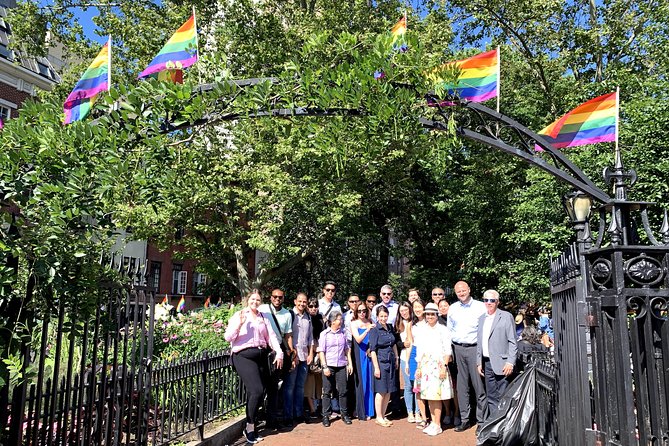
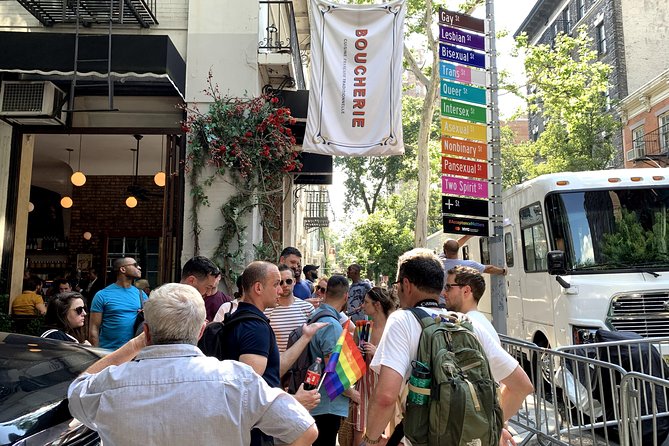
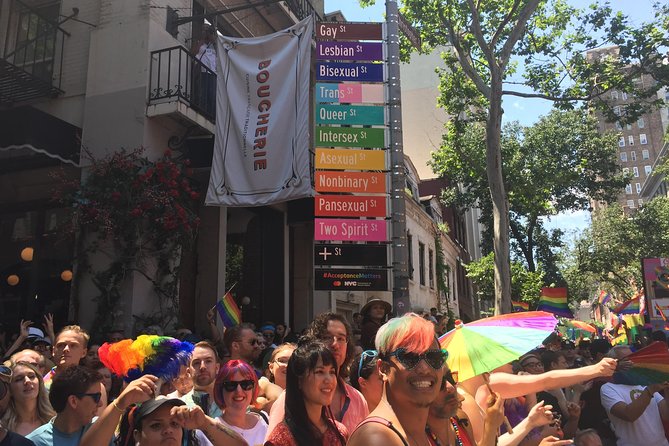
At the Gay Street sign, the guide explains the history of the name. This is a short stop, about seven minutes, but it demonstrates how ordinary details can carry unexpected meaning.
You may have walked past the sign without giving it much thought. That is part of the appeal here. The tour does not rely only on grand monuments. It uses the neighborhood itself as evidence, helping you notice the layers of local history around you.
This stop is also a reminder to keep your expectations realistic. The tour does not turn every location into a major attraction. Some points are simply places where a good explanation changes what you see. The value is in the context, not in the physical size of the stop.
Axis Theatre Company and the first Pride March
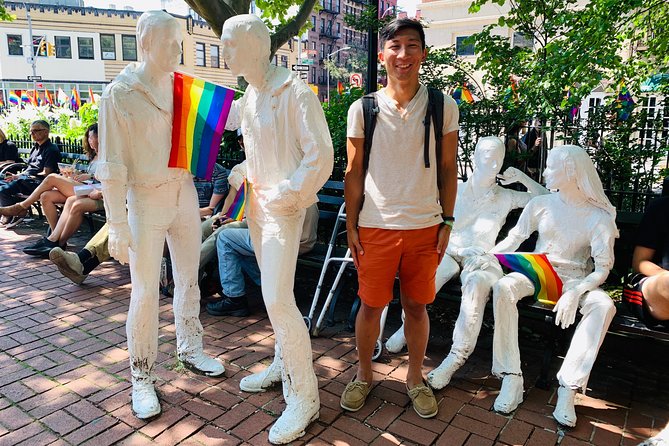
At the site of Axis Theatre Company, the guide discusses the first Pride March and the history of Pride marches since then. The Rainbow Flag also enters the story here.
This stop links Stonewall to the public celebrations and demonstrations that now define Pride in many cities. You hear how the movement moved from immediate protest into recurring marches and a wider public presence.
The stop lasts about 12 minutes, giving the guide room to explain both the first march and the Rainbow Flag. That makes it one of the more substantial sections of the route.
I find this connection useful because Pride can seem like a modern festival detached from its political roots. Here, the guide places it in a timeline of protest, remembrance, visibility, and rights. The tone is educational, but the subject naturally carries emotional weight.
Julius’ and the first Sip In
At Julius’, the guide tells the story of the first Sip In. The stop takes about seven minutes and adds another form of protest to the tour’s story.
This is a good counterpoint to Stonewall. The movement did not use only marches or confrontations. The Sip In showed how activists could challenge discrimination through a planned public action in a bar.
The tour presents Julius’ as a historic place within the neighborhood rather than promising a meal or drink. You should treat it as an outdoor history stop unless your own plans include returning there afterward.
This is also a convenient point to think about food. One useful way to plan the day is to schedule lunch or dinner around the walk, since the route finishes back near Christopher Park and the surrounding Village has plenty of places to continue exploring. The tour itself does not include food.
Marie’s Crisis Café and a movement entering the mainstream
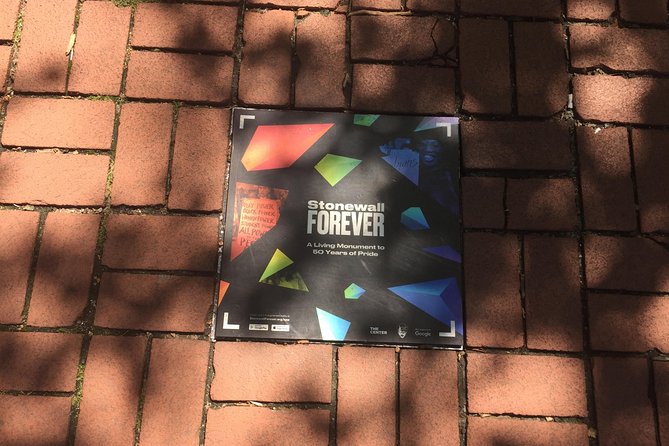
At Marie’s Crisis Café, the guide covers the café’s history and the changes in the LGBTQ+ movement as it entered mainstream public life. The stop lasts about seven minutes.
This section gives the tour a later chapter. You are no longer hearing only about the conditions before Stonewall or the first years of organized protest. The guide also considers what happened as LGBTQ+ issues became more visible in wider American culture.
That shift is worth discussing because public acceptance and political change do not happen in a straight line. The stop helps connect a local Greenwich Village story to the broader movement, without requiring you to visit another part of the city.
As with Julius’, the focus is on the history of the location. The tour does not list a café purchase as part of the price or schedule, so plan for a brief outdoor explanation rather than a sit-down break.
The Gay Liberation Monument closes the circle
The final major stop is the Gay Liberation Monument, where the guide discusses LGBTQ+ rights and politics in the United States since Stonewall. You also hear how the monument came to be.
This is a fitting closing point because it lets the tour look backward and forward. The earlier stops establish the people, places, and actions that shaped the movement. The monument then gives you a place to consider how those struggles entered public memory.
The guide spends about 12 minutes here, one of the longer stops. That time allows the tour to cover both the monument and later political developments.
The tour ends back at Christopher Park. That return is helpful if you are meeting friends, collecting belongings, or continuing toward another Greenwich Village plan. It also gives the route a clear beginning and end instead of leaving you on an unfamiliar side street.
What the guide and group size add
The group limit is 15 people, which is small enough to keep the walk fairly personal without making it feel like a private tour. You should have a better chance of hearing the guide and asking questions than you would in a large city group.
Guide Joe receives especially warm praise for being enthusiastic, friendly, and clear. His strongest quality appears to be the ability to connect individual people with the larger story, rather than simply reciting dates. Some feedback also credits him with offering helpful neighborhood recommendations.
Still, you should allow for normal guide-to-guide variation. One person found the pace too fast and wanted more attention to the group’s interests. That is useful advice. If you need more time, say so early. The route contains a lot of information in 75 minutes, and a guide who is excited about the subject may move quickly.
The tour is offered in English. You do not need specialist background, but strong English comprehension will help because much of the value comes through spoken explanation. One non-native English speaker found it easy to lose parts of the presentation, so this may not be the best choice if you need slow, simplified narration.
Is $30 good value?
At $30 per person, the tour is priced like a modest New York activity rather than a major attraction. There are no admission fees at the stops, so you are paying for the guide’s research, narration, organization, and the chance to understand the neighborhood in context.
I think the price is fair if you care about LGBTQ+ history or want a focused introduction to Greenwich Village. The route packs eight stops into 75 minutes and covers the Stonewall Uprising, Craig Rodwell, the Oscar Wilde Memorial Bookshop, the first Pride March, the Rainbow Flag, the first Sip In, Marie’s Crisis, and the Gay Liberation Monument.
The value is lower if you prefer to wander silently, take long photographs, or spend time inside attractions. This is a guided history walk, not a general sightseeing loop and not an admission-based museum tour.
The schedule helps. Morning and afternoon departures let you fit it around other New York plans. Since the walk stays in a compact area, you can combine it with lunch, dinner, or more independent exploring in Greenwich Village.
Practical advice for a smoother walk
Wear comfortable shoes, even though the route is short. You remain outdoors and make several stops, so comfort matters more than covering a large distance.
Bring a phone with your mobile ticket ready. Confirmation is provided at booking, and the tour begins at Christopher Park rather than at a separate office.
The activity is near public transportation, and most people can participate. Service animals are allowed. The supplied details do not promise specific seating, indoor shelter, or a fully accessible route, so contact the provider before booking if you have mobility needs that require precise information.
Weather is the main scheduling risk. The experience requires good weather, and poor conditions can lead to a different date or a full refund. For the best chance of keeping your plans intact, avoid placing this tour immediately before a time-sensitive reservation.
Free cancellation is available up to 24 hours before the start time. Cancellations or changes made inside that window are not refunded or accepted.
Who should book this tour?
I would choose this walk if you want a focused, human account of LGBTQ+ history in New York and prefer learning through real places. It suits first-time visitors, repeat New York visitors who have walked the Village before, LGBTQ+ travelers, allies, families, couples, and solo visitors.
It is especially good for someone who wants to understand how Stonewall connects to the longer movement. The route does not stop at the famous bar. It follows the links between protest, community spaces, publishing, Pride marches, political change, and public memorials.
I would hesitate if you need a tour in another language, dislike outdoor narration, or want a long, slow stop at each location. The route is short but information-heavy, and the guide’s pace may feel quick for some people.
Should you book Pride Tours NYC’s LGBTQ Historical Walking Tour?
Yes, if the story matters to you and you want a concise, well-organized introduction to the Greenwich Village sites tied to LGBTQ+ activism. The small group, compact route, and strong guide feedback make $30 a reasonable spend.
Book it as part of a Village day, not as a stand-alone replacement for every LGBTQ+ attraction in New York. You will leave with a clearer sense of how Stonewall fits into a much longer struggle, and you can keep exploring the neighborhood on your own after the guide returns you to Christopher Park.
FAQ
How long does Pride Tours NYC’s LGBTQ Historical Walking Tour last?
The tour lasts approximately 1 hour and 15 minutes.
How much does the tour cost?
The price is $30 per person.
Where does the tour begin and end?
It begins at Christopher Park, 38 to 64 Christopher Street, New York, NY 10014, and ends back at the same meeting point.
What language is the tour offered in?
The tour is offered in English.
How many people can join the tour?
The activity has a maximum of 15 participants.
What happens if bad weather cancels the tour?
If poor weather causes cancellation, you will be offered a different date or a full refund. You can also cancel up to 24 hours before the start time for a full refund.
More LGBTQ-Friendly in New York City
- Berlin: Gay Berlin Out in Schöneberg Walking Tour
★ 4.8 · 281 reviews - San Francisco: Castro LGBTQ Walking Tour
★ 5.0 · 90 reviews - Florence: LGBTQ Renaissance Walking Tour with Mila
★ 4.9 · 85 reviews
Just added around New York City
- New York City: Superheroes of NYC Guided Walking Tour★ 4.5 · 271 reviews
- West Harlem: Gospel Church Service and Sunday Walking Tour★ 4.3 · 411 reviews
- SoHo, Little Italy, and Chinatown 2-Hour Guided Walk★ 4.6 · 566 reviews
- New York City: Food Walking Tour of Chinatown & Little Italy★ 4.8 · 195 reviews
- NYC: Brooklyn Graffiti & Street Art Walking Tour in Bushwick★ 4.8 · 492 reviews
- NYC: Brooklyn Bridge and Dumbo Guided Walking Tour★ 4.5 · 186 reviews
- NYC: Walking Tour with Local Guide and 30+ Top NYC Sights★ 4.5 · 248 reviews
- New York City’s Hell’s Kitchen: Walking Food Tour★ 4.8 · 200 reviews
History Walking Tours, compared.
History and Hauntings of Salem Guided Walking Tour
Read our review →
Freedom Trail History Small Group Walking Tour
Read our review →
Historic Charleston Guided Sightseeing Walking Tour
Read our review →
Tapas Walking Tour with Food, Wine, and History
Read our review →
Savannah History and Haunts Candlelit Ghost Walking Tour
Read our review →
A History of Terror – Belfast City Centre Walking Tour
Read our review →Browse the lists this tour appears in