
Review · HISTORY WALKING TOURS
Lower Manhattan Secrets And History Walking Tour
Lower Manhattan keeps its best stories close. This three-hour walk links the Brooklyn Bridge, Wall Street, Battery Park, and the World Trade Center with lively local storytelling rather than a parade of quick photo stops. I especially like the easy meeting point at Tweed Courthouse and the small-group limit of 15. The included New York pizza at the end is another fine touch. The main drawback is simple: you will walk and stand a lot, so comfortable shoes and a bit of stamina matter.
The $60 price is fair for a small-group tour covering so much ground, particularly if you are new to New York or want the city’s early history explained in one connected story. Guides such as Meghan Sara have earned especially warm praise for their wit, preparation, flexibility, and care with shade, restrooms, seating, and weather. Still, this is an outdoor walking tour, and bad weather can lead to a cancellation or a date change.
Key points to know before you book
- Start beneath New York’s civic history: Meet at Tweed Courthouse, 52 Chambers Street, at 11 a.m.
- Ten major Lower Manhattan stops: The route covers the Brooklyn Bridge, South Street Seaport, Wall Street, Federal Hall, Battery Park, and One World Trade Center.
- A small group changes the experience: With no more than 15 people, it is easier to hear the guide and ask questions.
- Pizza is part of the finish: The tour ends near the World Trade Center at an iconic New York pizzeria.
- Guides add personal touches: Meghan Sara has adjusted routes for family interests, Hamilton fans, weather, age, and photography.
- Plan for a serious walk: The tour lasts about three hours, with plenty of walking and standing between stops.
Why this Lower Manhattan walk makes sense
Lower Manhattan is compact on a map but packed with stories. A few blocks can take you from the birth of American government to global finance, immigrant arrivals, the colonial waterfront, and the rebuilding of the World Trade Center site.
That range is the chief strength of this tour. You are not only looking at famous buildings. You are hearing how the places connect. The Brooklyn Bridge leads naturally toward the old port, then to the financial district, the founding of the United States, New York Harbor, and the city’s response to September 11.
I like tours that give you a framework for exploring on your own. This one does that well. After three hours, you should have a clearer sense of why Lower Manhattan became the city’s center and how its landmarks gained their meaning.
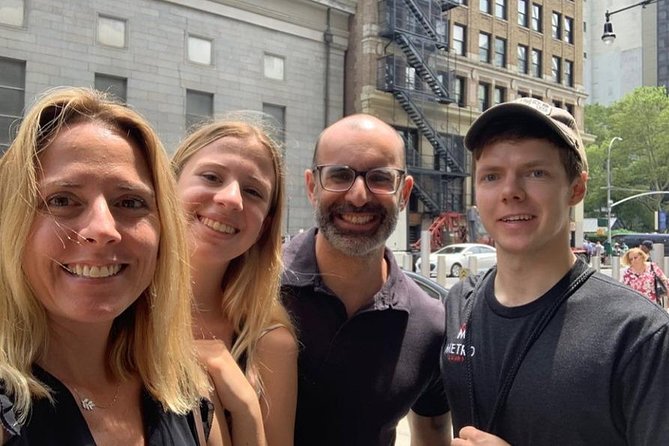
The small-group format helps. A maximum of 15 people is intimate enough for questions without requiring the price of a private guide. Some departures may be much smaller. Meghan Sara has led tours for groups of two, four, and families, which allowed her to adjust the pace and focus.
More History Walking Tours in New York City
- #1 Rated NYC Chinatown Food and History Walking Tour with FNYT
★ 5.0 · 171 reviews - Tribeca Architecture And History Walking Tour
★ 5.0 · 141 reviews - Pride Tours NYC’s LGBTQ Historical Walking Tour
★ 5.0 · 89 reviews
Starting at Tweed Courthouse at 11 a.m.
The meeting point is Tweed Courthouse at 52 Chambers Street. This is a practical starting place near public transportation and close to Manhattan’s civic core.
Arrive ready to begin at 11 a.m. A mobile ticket is accepted, and confirmation comes at booking. You will want water, comfortable shoes, and clothing suited to the weather. The route is outdoors, and the experience requires good weather.
The tour does not begin with a long formal lecture. Instead, the guide uses the first stop, the Brooklyn Bridge, to set up the story of New York’s growth and ambition.
The Brooklyn Bridge and a feat of engineering
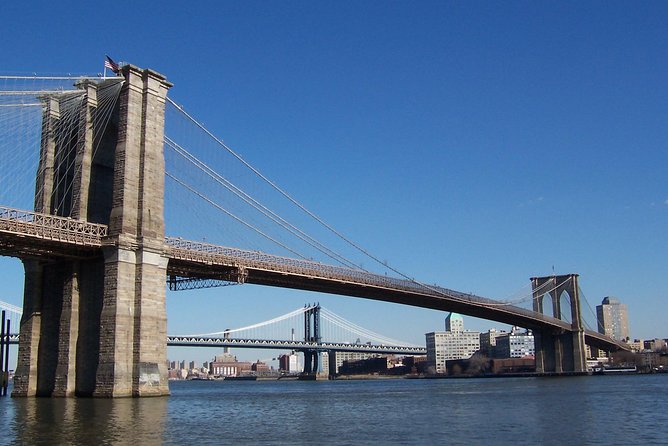
The Brooklyn Bridge receives about 10 minutes, but that does not mean it is a minor stop. The guide explains the huge undertaking behind its construction and why the bridge became one of the world’s best-known crossings.
This is a good place to get your bearings. You are at the edge of Lower Manhattan, looking toward a structure that joined two cities at a time when the bridge was considered an extraordinary engineering project.
The stop is free, and you do not need an admission ticket. The challenge is that the area can be crowded and noisy. Stay close enough to hear your guide, especially if the group is moving around busy sidewalks.
South Street Seaport and the making of New York
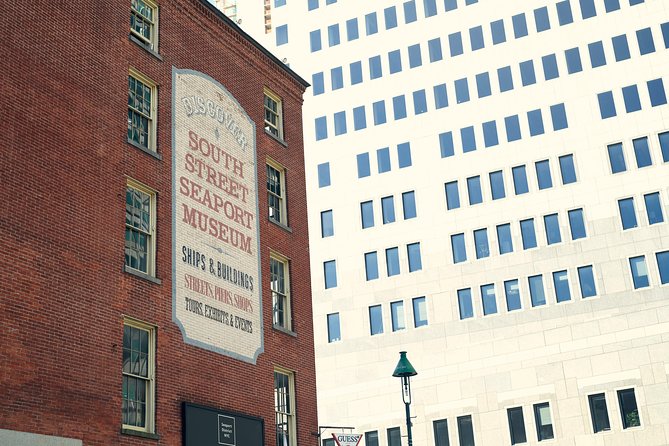
The South Street Seaport Historic District is next. This waterfront area helps explain how New York became a major port and how the city developed through trade and shipping.
The guide also connects the seaport to one of New York City’s most famous nicknames. That small detail gives the stop extra appeal, since it shows how language, commerce, and local identity grew together.
You spend about 10 minutes here. It is enough time for a focused story, not an extended museum visit. The tour keeps moving, so if you want to explore the seaport’s buildings in detail, plan to return later on your own.
More History Walking Tours in the USA
- NYC: History of Slavery & Underground Railroad Walking Tour
★ 4.7 · 87 reviews - History and Hauntings of Salem Guided Walking Tour
★ 5.0 · 14,564 reviews - Boston: Freedom Trail History Small Group Walking Tour
★ 5.0 · 6,450 reviews - Historic Charleston Guided Sightseeing Walking Tour
★ 5.0 · 6,216 reviews
Wall Street before it became Wall Street
At Wall Street, the focus shifts from waterfront commerce to money and power. Today, the name carries global weight, but the guide explains that it did not begin as the financial center of the world.
That contrast is useful. You get a chance to separate the modern image of Wall Street from the older street and city that existed before international finance took over the district.
The stop lasts about 10 minutes and is free. Expect a story-rich pause in a very active part of Lower Manhattan. It is not a quiet setting, so keep your attention on the guide rather than trying to take in every passing detail.
The New York Stock Exchange and the machinery of finance
The New York Stock Exchange gets about 15 minutes, slightly longer than several nearby stops. The guide explains how the exchange developed into the home of the financial market and what makes the building such a familiar symbol.
You should not expect an interior visit. Admission is not included, and the tour is built around the exterior setting and the story connected with it.
This stop works best if you are curious about how the district gained its power. Even if financial history is not your favorite subject, the building gives a clear visual anchor for the larger story of Wall Street.
Federal Hall and the birth of the nation
Federal Hall brings the tour into the story of the American republic. This is where the guide discusses the colonies becoming free and the role this Lower Manhattan site played in the country’s early political life.
It is a free stop and takes about 10 minutes. The value comes from the connection between the building and the events that shaped the new nation. Instead of treating the site as a random old structure, the guide places it in the city’s wider development.
Families may find this section especially helpful because the story gives context to nearby landmarks. Young visitors do not need to know every date in advance. The guide’s job is to connect the place to the people and decisions that mattered.
Fearless Girl and a newer symbol of Wall Street
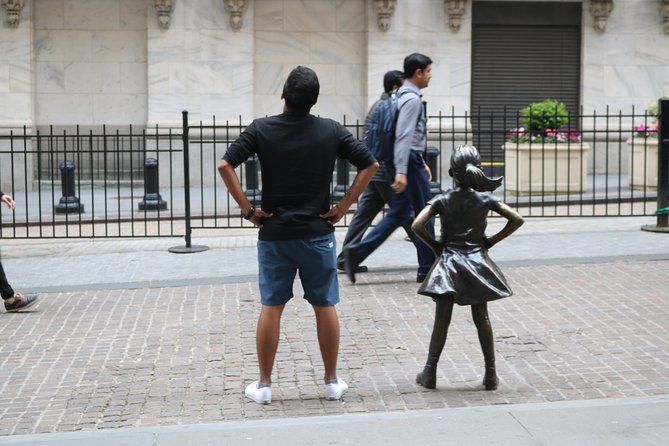
The Fearless Girl statue offers a change of tone. After bridges, ports, government, and finance, the guide explains how this statue arrived on Wall Street and what it represents.
The stop lasts about 10 minutes and is free. It is a good reminder that Lower Manhattan’s public symbols are not all centuries old. Some were created in recent years and quickly became part of the city’s visual identity.
This is also a useful photo stop, though your guide may need to balance pictures with the movement of pedestrians. The story gives the statue more weight than a quick snapshot alone would provide.
Trinity Church, Alexander Hamilton, and old New York
Trinity Church adds atmosphere and personal connections to the route. The guide discusses the church’s links with figures such as George Washington and Alexander Hamilton, along with the stories tied to them.
A particularly nice feature is the possibility of entering the Trinity Church graveyard when conditions and timing allow. Meghan Sara has made a point of taking Hamilton fans to his grave and showing them other figures connected with the musical and the period.
That detail makes the stop useful for different kinds of visitors. You can approach it through architecture, early American politics, famous people, or popular culture. The church stop takes about 10 minutes and is free, but the graveyard visit may depend on the day’s logistics.
Charging Bull and the story behind the icon
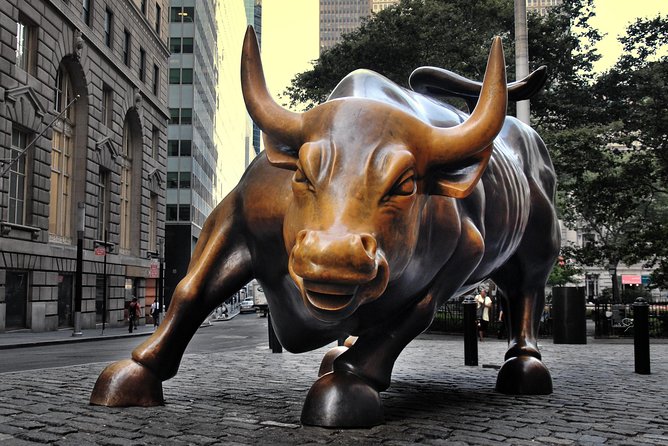
The Charging Bull receives about 15 minutes. Most people recognize the statue, but the guide explains how it came to Wall Street and why it became such a beloved symbol.
This is one of those stops where a short backstory changes the experience. Instead of seeing only a polished photo opportunity, you learn how the sculpture gained its place in the financial district.
The area around the bull can be crowded. Your guide can help you understand the setting and find useful angles for pictures, but you should not expect unlimited time for an individual photo session. Keep the group moving and use the stop for both the story and a quick picture.
Battery Park, harbor views, and the road into New York
Battery Park is one of the most open parts of the tour. From here, you can look across New York Harbor toward the Statue of Liberty, making it one of the better photo locations on the route.
The guide also explains the port’s role in welcoming millions of people to New York. That gives the view a human dimension. The harbor was not only scenery. It was a gateway through which people, goods, ideas, and hopes entered the city.
You spend about 15 minutes here. The park can offer a welcome break after several downtown streets, though shade and seating may vary. Guides have helped older visitors find places to sit and have pointed out restrooms along the route, which is valuable on a three-hour walk.
One World Trade Center and space for reflection
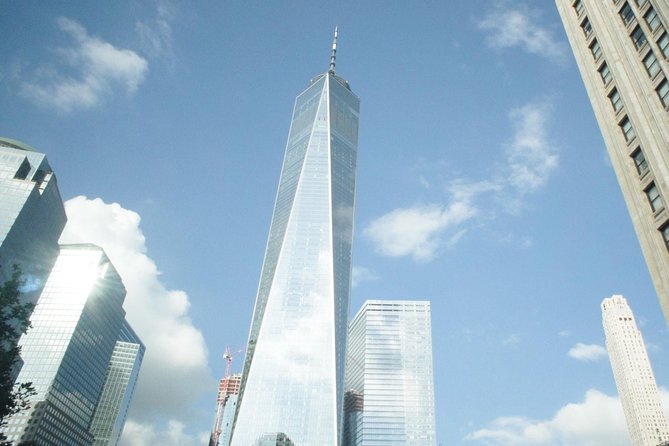
The final major stop is One World Trade Center, with about 25 minutes set aside for the area. Here, the guide discusses September 11, the destruction that followed, and the large rebuilding effort that reshaped Lower Manhattan.
This part of the tour is handled as a serious moment. You receive time to walk through the solemn grounds and reflect privately, rather than being rushed from one talking point to the next.
Admission to One World Trade Center is not included. The tour discusses the site from the outside and does not promise entry to an observation deck or museum.
The emotional weight of this stop makes the guide’s tone important. Meghan Sara has been praised for answering questions with care and for giving people room to take in the site. The experience is not only about facts. It is also about how New York responded and rebuilt.
Finishing with New York pizza
The tour ends near the World Trade Center at 110 Cedar Street, at an iconic New York pizzeria. A slice of New York-style pizza is included as the closing gesture.
That ending is practical as well as fun. You finish near public transportation and in an area with plenty more to see. You can continue exploring Lower Manhattan, visit nearby attractions, or simply sit down after the walk.
The pizza also gives the tour a local flavor that a standard sightseeing route often misses. It is a small inclusion, but it makes the finish feel less formal and more connected to everyday New York.
Guide quality and the small-group advantage
The guide can make or break a walking tour, and this experience has received especially strong praise for Meghan Sara. She is described as witty, energetic, well prepared, and deeply interested in New York’s past.
The useful part is not only her store of facts. She has adjusted the route for people who had already seen certain places, made Hamilton-related additions for interested groups, found cover during rain, and looked for shade and restrooms in hot weather.
That flexibility matters because a three-hour route cannot suit every person in exactly the same way. Parents may need a pause. Older visitors may need seating. Children may respond better to stories about the bull, Fearless Girl, or famous people than to a long explanation of finance.
The small group also lets you ask questions without speaking over a crowd. It may even feel close to a private tour if few people book your time slot, though you should not count on having the guide to yourself.
Is $60 a fair price?
At $60 per person, this is not the cheapest way to walk around Lower Manhattan. You can see many of these landmarks without paying anything, and the tour does not include admission to the New York Stock Exchange or One World Trade Center.
The value comes from the structure, the guide, the time saved, and the connections between places. If you tried to research the Brooklyn Bridge, South Street Seaport, Wall Street, Federal Hall, Trinity Church, Battery Park, and the World Trade Center separately, you could spend hours building your own route.
The price also includes a small-group setting and a slice of pizza. I consider it fair for a visitor who wants an organized introduction rather than a self-guided walk with a phone in hand.
It is less useful if you already know Lower Manhattan well or prefer to linger inside museums and historic buildings. This is primarily an outdoor storytelling tour.
Who should book this walk?
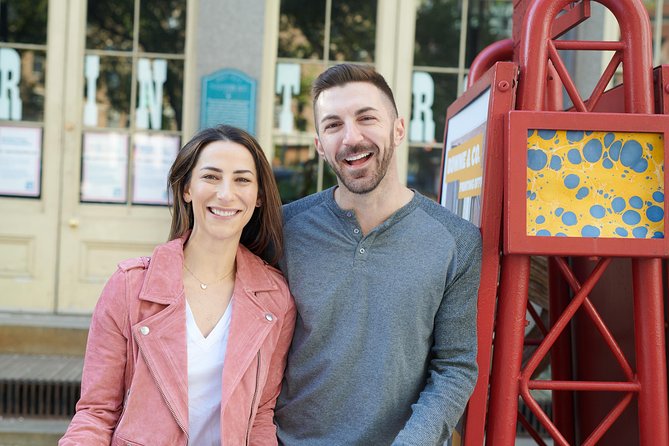
I would recommend it to first-time visitors, families, couples, history fans, and anyone who wants a strong orientation to Lower Manhattan. It also suits New Yorkers who enjoy learning fresh details about familiar streets. One local couple found it worthwhile precisely because the guide revealed things they had not known about their own area.
Families should note that children and teenagers have responded well to the mix of famous landmarks, visual symbols, and short stories. The three-hour length sounds demanding, but the pace can feel manageable when the guide includes pauses and points out restrooms.
You should think twice if walking is difficult, if you want a fully indoor experience, or if you hope to enter every building along the route. The tour involves plenty of standing, and weather can affect the schedule.
Book at least a little ahead if possible. The experience is booked an average of 44 days before the start date, which suggests that popular dates may fill early.
Final verdict: a strong way to meet Lower Manhattan
I would book this tour if I had three hours available and wanted the city’s major downtown stories tied together by a lively guide. The strongest reasons are the small group, the broad route, the thoughtful treatment of the World Trade Center site, and the practical care shown by guides such as Meghan Sara.
Bring good walking shoes, expect outdoor conditions, and allow yourself time after the tour for more Lower Manhattan exploring. If you want a relaxed introduction with history, famous landmarks, personal stories, photo tips, and pizza at the finish, this is a very good use of an afternoon.
FAQ
How long does the Lower Manhattan Secrets and History Walking Tour last?
The tour lasts approximately three hours.
What time does the tour start?
The tour starts at 11 a.m.
Where does the tour begin?
It begins at Tweed Courthouse, 52 Chambers Street, New York, NY 10007.
Where does the tour end?
It ends at 110 Cedar Street, near the World Trade Center, at an iconic New York pizzeria.
Is pizza included?
Yes. The tour ends with a slice of New York-style pizza.
What landmarks are included?
Stops include the Brooklyn Bridge, South Street Seaport Historic District, Wall Street, the New York Stock Exchange, Federal Hall, Fearless Girl, Trinity Church, Charging Bull, Battery Park, and One World Trade Center.
Is admission to the New York Stock Exchange included?
No. Admission to the New York Stock Exchange is not included.
Is admission to One World Trade Center included?
No. Admission to One World Trade Center is not included. The tour includes discussion of the site and time for walking and private reflection.
What happens if the weather is poor?
The experience requires good weather. If it is canceled because of poor weather, you will be offered a different date or a full refund. Free cancellation is available up to 24 hours before the start time.
More Hidden Gems Walking Tours in New York City
- Secrets of Grand Central Station Walking Tour New York City
★ 5.0 · 1,796 reviews - Dublin Highlights and Hidden Gems Guided Walking Tour
★ 5.0 · 6,020 reviews - Explore Berlin: See All The Iconic Sights & Some Hidden Gems
★ 5.0 · 4,429 reviews - Kyoto Geisha Walking Tour: Gion District & Hidden Gems
★ 4.7 · 3,273 reviews
Just added around New York City
- New York City: Superheroes of NYC Guided Walking Tour★ 4.5 · 271 reviews
- West Harlem: Gospel Church Service and Sunday Walking Tour★ 4.3 · 411 reviews
- SoHo, Little Italy, and Chinatown 2-Hour Guided Walk★ 4.6 · 566 reviews
- New York City: Food Walking Tour of Chinatown & Little Italy★ 4.8 · 195 reviews
- NYC: Brooklyn Graffiti & Street Art Walking Tour in Bushwick★ 4.8 · 492 reviews
- NYC: Brooklyn Bridge and Dumbo Guided Walking Tour★ 4.5 · 186 reviews
- NYC: Walking Tour with Local Guide and 30+ Top NYC Sights★ 4.5 · 248 reviews
- New York City’s Hell’s Kitchen: Walking Food Tour★ 4.8 · 200 reviews
History Walking Tours, compared.
History and Hauntings of Salem Guided Walking Tour
Read our review →
Freedom Trail History Small Group Walking Tour
Read our review →
Historic Charleston Guided Sightseeing Walking Tour
Read our review →
Tapas Walking Tour with Food, Wine, and History
Read our review →
Savannah History and Haunts Candlelit Ghost Walking Tour
Read our review →
A History of Terror – Belfast City Centre Walking Tour
Read our review →Browse the lists this tour appears in