
Review · HISTORY WALKING TOURS
Walking Tour of the Historic Center of Mexico City
Mexico City reveals its layers on foot. This three-hour walk links the Aztec capital, colonial power, revolution-era art, and modern city life in a compact route through Centro Histórico. I especially like the small groups of up to 10 and the chance to enter the Ministry of Education for Diego Rivera’s murals. The route also finishes near two of the city’s most photogenic buildings, Palacio de Bellas Artes and Casa de los Azulejos.
The main drawback is physical: this is a real city walk, not a gentle stroll. Cobblestones, crowds, sun, and Mexico City’s high elevation can wear you down, and one slow group may not reach every planned stop. The cathedral and Palacio Postal are explained from outside, so this tour works best as an introduction rather than a detailed interior visit.
What makes this walking tour worth your morning
- Aztec and Spanish Mexico meet at the Zócalo: Start with the city’s oldest central stage and see how pre-Hispanic and colonial power overlap.
- Diego Rivera murals inside the Ministry of Education: Spend time with scenes of work, politics, festivals, trade, and social struggle.
- A maximum of 10 people: Small numbers make it easier to hear the guide and ask questions.
- A useful mix of famous and less obvious sights: The route includes the Templo Mayor ruins, a street-level archaeological window, Plaza de Santo Domingo, and grand historic palaces.
- An English tour shaped by strong guides: Fernanda, Alexia, Luis, Nat, Benjamin, Sarah, Gabby, and others are praised for clear explanations, humor, patience, and local pride.
- A central finish: End beside Palacio de Bellas Artes and Casa de los Azulejos, with easy options for further exploring.
Starting in the Zócalo, where Mexico City tells its biggest story
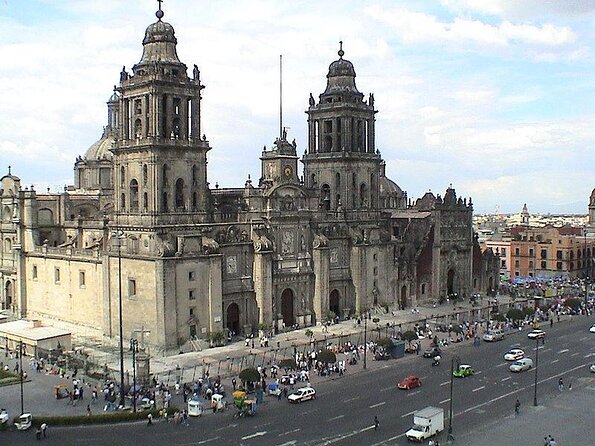
The tour begins at Plaza de la Constitución, usually called the Zócalo. This huge square is surrounded by the National Palace, the Supreme Court of Justice, and rows of shops connected with Mexico’s silver trade.
The setting gives your guide room to explain the city as a meeting point between Mexica and Spanish power. The Zócalo is not just an open square for photographs. It is the place where government, religion, commerce, protest, ceremony, and daily city life have shared the same ground for centuries.
You spend about 15 minutes here, which is enough for orientation but not enough for a long architectural study. That is a sensible choice early in the walk. You need the basic map first: the cathedral to one side, the former Aztec ceremonial center nearby, and the colonial streets spreading outward.
I would arrive with water and a hat. There may be little shade in the square, and the guide may need to position the group carefully around pedestrians and street activity.
More History Walking Tours in Mexico
- Historic Downtown Walking Tour
★ 5.0 · 1,289 reviews - Mexico City: Historic Downtown Walking Tour
★ 4.8 · 1,039 reviews - Historical and Cultural Walking Tour of San Miguel de Allende
★ 5.0 · 641 reviews
The cathedral and Templo Mayor, two cities occupying one site
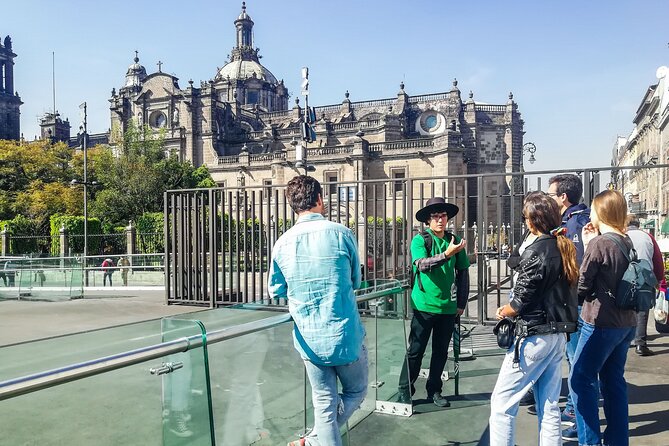
The Metropolitan Cathedral is covered from the outside for about 10 minutes. Your guide explains its construction, origins, and mix of Baroque and neoclassical design. The cathedral is a good example of how Spanish religious architecture took shape in a city built over the former Mexica capital.
The important limit is clear: admission is not included, and the scheduled explanation is outside. If you want to see the interior, treat that as a separate visit before or after the walk.
Nearby, you see the archaeological remains of Templo Mayor from outside. This is where the city’s pre-Hispanic foundations become easier to picture. The temple was dedicated to the god of rain and the god of the sun, and the guide explains its importance to the Mexica and how the ceremonial center was arranged.
This section is valuable because it turns a ruin into a city plan. You are not simply looking at stones. You are learning why this particular spot mattered and how the Spanish colonial city was built around, above, and over what came before.
Diego Rivera inside the Museo Vivo del Muralismo
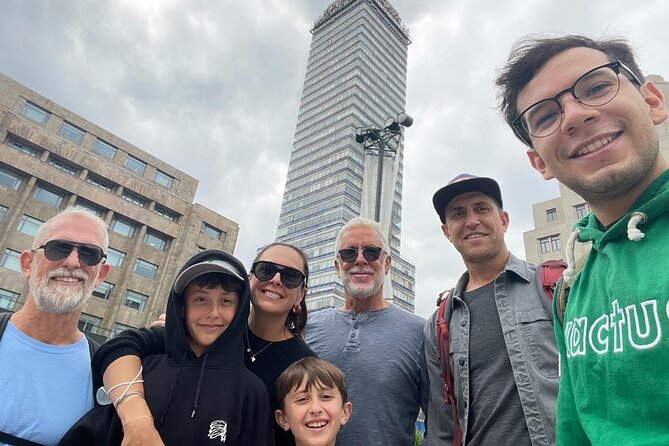
For many people, the Ministry of Education is the artistic high point of the morning. The tour enters the building, known here as the Museo Vivo del Muralismo, and spends about 25 minutes with murals by Diego Rivera.
A substantial portion of Rivera’s career is represented in this complex. The scenes touch on festivals, customs, labor, trade, politics, and social struggle in early twentieth-century Mexico. That range gives you more than a quick look at famous Mexican art. It shows how murals were used to tell a public story about the country and its people.
The interior stop also provides welcome shelter from sun and street noise. Fernanda was specifically praised for allowing extra time in the education building courtyard, a useful detail if your group wants to look closely rather than rush through.
Still, 25 minutes is an introduction, not a museum visit. You will not study every panel or explore the building at length. I would note which murals catch your attention, then return later if your schedule allows.
Plaza de Santo Domingo and the long reach of New Spain
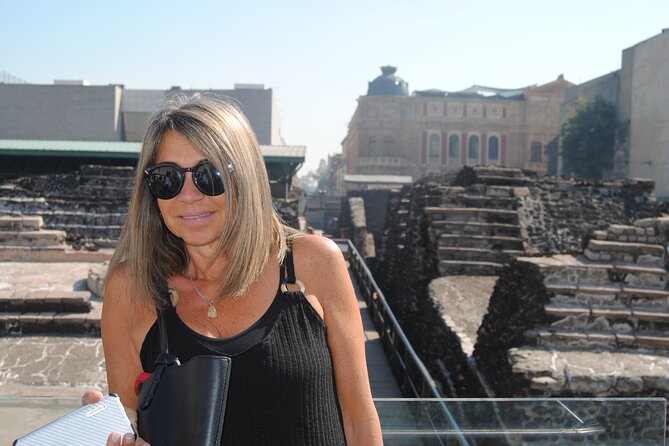
The walk continues to Plaza de Santo Domingo, a square tied to the colonial period and the viceroyalty of New Spain. The guide connects the area with major events of that era, trade in spices and goods with Asia, the Holy Inquisition, and France’s attempts to conquer Mexico.
This is one of the route’s strongest history stops because it pushes beyond the familiar story of Spain and Mexico. The plaza also points toward the wider networks that shaped colonial life. Goods, religious authority, political power, and foreign pressure all passed through this part of the city.
You spend about 15 minutes here. The stop is free, and the value comes from the explanation rather than a formal entry. Expect a city square with a lot to observe, not a quiet museum room.
More Old Town Walking Tours in Mexico:
- Underground Vaults Walking Tour in Edinburgh Old Town
★ 4.5 · 8,506 reviews - Prague: 3-Hour Walking Tour of Old Town & Prague Castle
★ 4.7 · 5,696 reviews - Dubrovnik: Old Town Walking Tour
★ 4.8 · 5,174 reviews - Split: Old Town and Diocletian Palace Walking Tour
★ 4.9 · 4,727 reviews
Plaza Tolsá, a shaded pause with local context
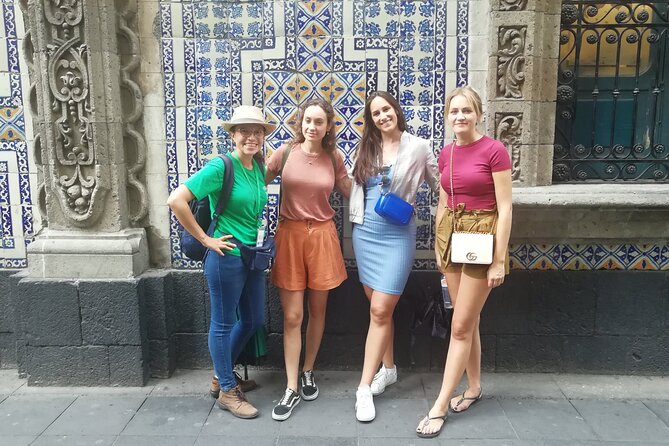
Plaza Tolsá is the planned rest stop. You spend about 20 minutes in the shade while the guide discusses indigenous languages, Day of the Dead traditions, music, politics, and Mexican food.
This pause matters. A three-hour walk can become a blur of dates and façades unless you stop to connect the past with present-day life. The guide’s own background and interests shape this part of the tour, so the conversation may vary. That is a strength if you enjoy questions and local perspective.
The square also brings together several important sights. You see the equestrian statue of Charles IV, often called El Caballito, or the little horse. You also view the exterior of the National Museum of Art and the Mining Palace.
The stop is not a full visit to either museum. Instead, you get architectural context and a chance to decide which building deserves a return visit. This is a practical way to use a first morning in the center: get the map, then choose your priorities.
The Ventana Arqueológica and the city beneath your feet
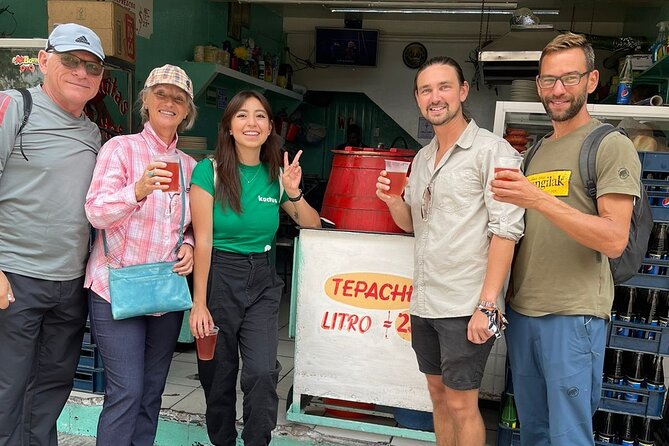
The Ventana Arqueológica is a short five-minute stop, but it offers a memorable idea. Through an archaeological window beneath a street near the main temple, you see part of the city’s older layers.
The guide explains how the remains were discovered and points to the hidden traces found beneath many central buildings. Mexico City’s past is not confined to a fenced ruin or one museum. It can sit below the pavement, behind a colonial wall, or under a working modern street.
Because the stop is brief, listen closely. This is more of a sharp visual clue than a long archaeological talk. Its value lies in changing how you see the rest of the walk. Afterward, every old façade may suggest an earlier structure below it.
Palacio de Bellas Artes, Palacio Postal, and the grand finish
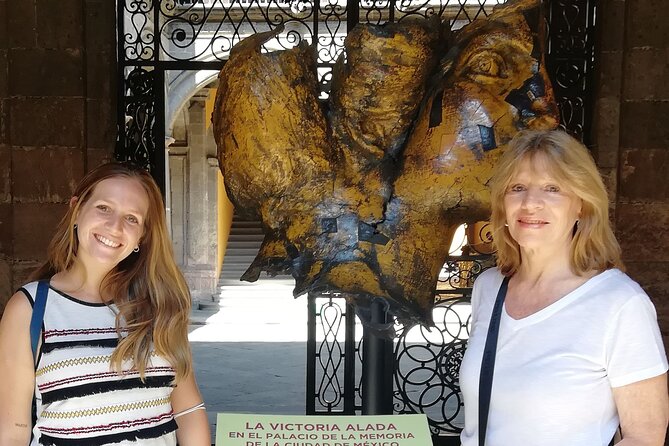
Palacio de Bellas Artes is one of the route’s essential sights. The tour spends about 15 minutes here, looking at the building’s exterior and discussing its art-filled interior.
The stop is free as scheduled, but the tour does not function as a full museum visit. You get the orientation and the visual impact, then can return later for more time inside if needed. That approach works well because Bellas Artes deserves patience, especially if you want to examine its murals, performance spaces, and changing exhibitions.
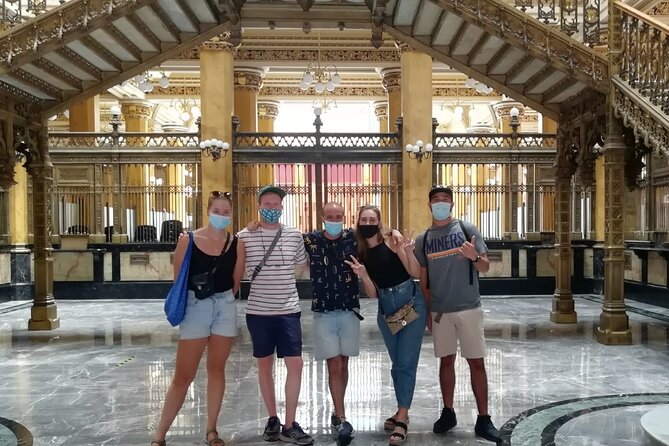
Next comes Palacio Postal, a still-functioning palace that reveals the economic and political ambitions behind grand public buildings. You see it from outside, and admission is not included. The point is not simply that the building is ornate. It is the guide’s explanation of why a working postal palace was made so impressive and what that says about Mexico’s political and commercial life.
The tour ends at Edificio Guardiola on Avenida 5 de Mayo, beside Palacio de Bellas Artes and Casa de los Azulejos. That makes the finish useful. You can continue sightseeing, stop for food, or return to one of the buildings you only saw briefly.
Casa de los Azulejos and the pleasure of a final photograph
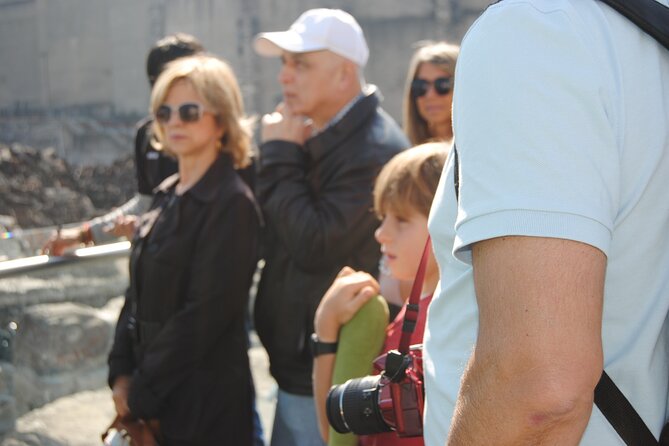
Casa de los Azulejos, or the House of Tiles, is one of the city center’s most photographed façades. Its patterned tiles make it easy to recognize, but the guide helps place it within the larger collection of palaces, churches, museums, and commercial buildings along the route.
The scheduled visit lasts about 15 minutes and admission is free. It is a light, visual ending after the heavier political and archaeological material earlier in the walk.
I like this final stretch because it gives you a practical next step. Once you finish, you are already near several major sights. You do not have to spend another hour finding your way back to the core of the center.
What the guides do especially well
The strongest part of this experience is the guiding. Fernanda is praised for mixing humor with a clear love of Mexico City. Alexia is described as thoughtful and good at connecting historic sites with present-day life. Luis is repeatedly praised for his local pride, clear English, useful recommendations, and careful pace.
Nat is noted for answering questions and managing a small group of four. Benjamin brings humor and covers the major sights with energy. Gabby is praised for storytelling and for handling a steady stream of questions. Sarah is singled out for patience with different needs within the group.
The guides wear green shirts and carry green umbrellas, which helps you identify them at the busy meeting point. That small detail matters in the Zócalo, where a large open square can make meeting instructions feel less precise than they sound on paper.
The English quality appears consistently strong. You should still expect different personalities and emphasis from guide to guide. One may focus more on architecture, another on politics, art, or daily life. That variation is normal for a walking tour and can make repeat visits feel different.
Pace, comfort, and the value of a paid walk
This tour is advertised as about three hours, with close to two hours and 40 minutes of scheduled sightseeing across the stops. The route covers a lot, so the pace needs to keep moving.
The main physical challenge is not distance alone. You may deal with uneven cobblestones, standing at outdoor sites, street crossings, sun, and Mexico City’s elevation. A past group moved slowly enough that it did not reach every planned sight. If you have trouble walking, tell the guide early and bring water, comfortable shoes, sun protection, and a little patience.
The maximum group size of 10 is a real benefit. You can hear more easily, ask questions without losing the whole group, and receive more attention at crossings or during breaks. Some departures may be much smaller, which makes the experience feel closer to a private orientation.
No tour price is provided here, so I cannot judge the exact cost. The value depends on what you want. You are paying for an English-speaking guide, a structured route, historical context, and entry to the Ministry of Education and archaeological window where scheduled. You are not paying for cathedral entry, Palacio Postal entry, transportation, food, or a full museum tour.
One comment raised the fair question of using a free walking tour instead and tipping a student directly. That is a reasonable comparison. This paid experience makes more sense if you value a capped group, advance confirmation, a set three-hour route, and the chance to reserve an English tour. Compare the price before booking and decide if those features matter to you.
Who should book this Mexico City walk?
I would recommend it for a first visit, especially if you want a fast but thoughtful introduction to Centro Histórico. It gives you enough history to understand why the main buildings matter, while also showing art, archaeology, religion, government, and everyday Mexican culture.
It suits solo visitors, couples, and friends who want a social but small-group outing. It also works well near the start of a trip because the guide can help you choose which places to revisit. Several guides provide local recommendations, so ask directly about what to see next.
It is less suitable if you want long interior visits, a relaxed pace, or a detailed study of one subject. Art lovers who want extensive time with Rivera’s murals should return to the Ministry of Education. Architecture fans may want separate visits to the cathedral, Bellas Artes, National Museum of Art, Mining Palace, and Palacio Postal.
The tour is near public transportation, allows service animals, and says most people can participate. The operator requires at least 24 hours’ notice for a full refund. If bad weather cancels the walk or the minimum group is not reached, you are offered another date or a full refund.
FAQ
How long is the walking tour?
The experience lasts approximately three hours.
Where does the tour begin?
It begins at Plaza de la Constitución in Mexico City’s Centro Histórico.
Where does the tour end?
It ends at Edificio Guardiola on Avenida 5 de Mayo, beside Palacio de Bellas Artes and Casa de los Azulejos.
Is the tour offered in English?
Yes. The tour is offered in English.
How many people can join the group?
The maximum group size is 10 people.
Are admission tickets included?
The tour includes admission to the Museo Vivo del Muralismo and the Ventana Arqueológica. Admission is not included for the Metropolitan Cathedral or Palacio Postal, and several other stops are viewed without an admission charge.
Can I cancel for a full refund?
Yes, if you cancel at least 24 hours before the experience starts. Cancellations or changes made within 24 hours are not refunded, and poor weather or an unmet minimum group may lead to a new date or full refund.
Should you book it?
Book this tour if you want a well-organized first look at Mexico City’s center, with strong English guidance and a small group. The blend of Templo Mayor, colonial squares, Rivera murals, archaeological remains, and landmark façades gives you a useful sense of how the city was built layer by layer.
Skip it if your priority is spending a long time inside museums or moving at a very slow pace. For most first-time visitors who can handle three hours on city streets, this is a smart introduction, and the ending near Bellas Artes and Casa de los Azulejos makes it easy to keep exploring on your own.
Just added around Mexico
- Playa del Carmen: 3-Hour Local Food Walking Tour★ 4.8 · 267 reviews
- Mexico City: Lucha Libre Show, Walking Tour & Tequila★ 4.6 · 156 reviews
- Mexico City: Guided walking tour through the most historic parts of the city.★ 4.5 · 172 reviews
- Mérida: 3-Hour Walking Food Tour★ 4.9 · 287 reviews
- Historical & Cultural Walking Tour of San Miguel de Allende★ 4.8 · 225 reviews
- Guadalajara: Culture, Architecture, and Market Walking Tour★ 5.0 · 81 reviews
- Historical and Cultural Walking Tour of San Miguel de Allende★ 5.0 · 641 reviews
- Tulum Local Walking Food Tour★ 5.0 · 340 reviews
History Walking Tours, compared.

History and Hauntings of Salem Guided Walking Tour
Read our review →

Freedom Trail History Small Group Walking Tour
Read our review →
Historic Charleston Guided Sightseeing Walking Tour
Read our review →
Tapas Walking Tour with Food, Wine, and History
Read our review →
Savannah History and Haunts Candlelit Ghost Walking Tour
Read our review →
A History of Terror – Belfast City Centre Walking Tour
Read our review →Browse the lists this tour appears in