
Review · FLORENCE WALKING TOURS
Florence: LGBTQ Renaissance Walking Tour with Mila
Florence has more than one past. This two-hour walk with Mila brings the city’s queer stories into view, linking laws, punishments, art, powerful families, and public meeting places across the historic center. I like that it does not treat LGBTQ history as a side note. It uses familiar Florence landmarks to tell a different, more personal story of the city.
I also like the route’s variety. You cross the Santa Trinita Bridge and Ponte Vecchio, pass through Pitti Palace Square, visit Piazza della Signoria, and finish near Orsanmichele. Mila’s warm, funny style helps with the harder material, including arrests, fines, public denunciation, and the risks faced by gay men and women in earlier centuries.
The main thing to consider is the subject matter. This is not a light sightseeing stroll, even though the guide keeps it approachable. Some stories involve persecution and social control, and the tour focuses mainly on gay men because the surviving records and historical setting center on them. Mila also gives some attention to lesbians and women, but this is not an equal survey of every part of LGBTQ history.
Key points at a glance
- The route connects queer history to famous sights: You see the Ponte Vecchio, Pitti Palace Square, Piazza della Repubblica, Piazza della Signoria, and Orsanmichele rather than spending two hours in obscure side streets.
- Mila is the heart of the experience: Her storytelling, humor, patience, and use of source material are among the most praised parts of the tour.
- The old gay district gives the walk its strongest focus: Near Piazza della Signoria, you learn how public spaces once functioned as places for male cruising and social contact.
- The Medici section adds useful political context: Gian Gastone, the last male Medici, receives special attention as a controversial figure in European history.
- You see major art without an entry ticket: Cellini’s Perseus with the Head of Medusa and a copy of Michelangelo’s David are viewed outdoors.
- The price is reasonable for a focused private-style subject: At $29 per person, you get two hours, an English-speaking local guide, a headset, and a route that also covers classic Florence sights.
Why this Florence walking tour feels different
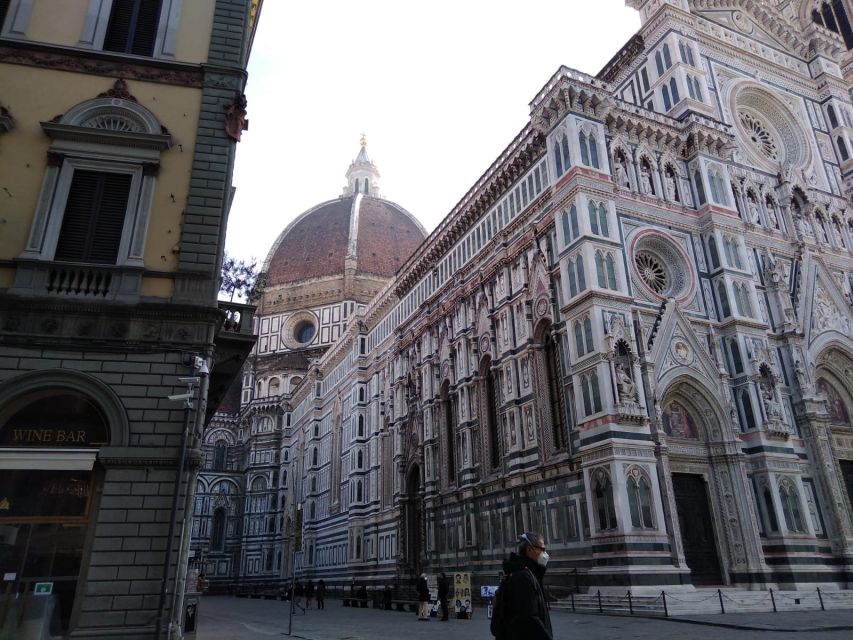
Standard Florence walks usually point you toward the Duomo, Michelangelo, the Medici, and the political power of the Renaissance. This tour still brings you to famous places, but asks a different question: who used these streets, bridges, churches, and squares, and what happened to people whose private lives crossed the limits of the law?
That change in viewpoint is the tour’s real value. You do not simply collect another explanation of the Ponte Vecchio. You hear how public places could have private meanings, how social networks worked, and how authorities tried to control behavior.
Mila also gives the wider setting needed to make the subject clear. She explains how punishments and fines were used against people accused of sodomy, then connects those rules to changes in Italian politics and society over time. The result is not a modern label pasted onto old Florence. It is an effort to understand how sexuality, power, religion, and public life interacted in different periods.
The tour is in English and includes a headset. That matters in Florence, where traffic, footfall, and crowded squares can make a guide hard to hear. You are outside for the full two hours, and the walk operates rain or shine, so sensible shoes and weather protection are important.
A few more walks around Florence worth a look
- Berlin: Gay Berlin Out in Schöneberg Walking Tour
★ 4.8 · 281 reviews - San Francisco: Castro LGBTQ Walking Tour
★ 5.0 · 90 reviews - Pride Tours NYC’s LGBTQ Historical Walking Tour
★ 5.0 · 89 reviews
Starting at Piazza della Repubblica
You meet Mila in Piazza della Repubblica, beside the Hard Rock Café under the Loggia. She carries a sign, making the meeting point easier to identify in a large and busy square.
This is a smart place to begin. Piazza della Repubblica is one of Florence’s broadest central spaces, and its modern appearance hides layers of change. Here, Mila introduces the laws that targeted same-sex relations and explains the fines and punishments imposed on people found guilty of sodomy.
The opening gives you a useful warning about the tour’s tone. There are lighter stories and plenty of humor, but the subject includes real danger. Accusations could damage a person’s reputation, finances, freedom, and standing in the community. Mila’s approach, based on the comments available about her tours, is serious when it needs to be and relaxed when the material allows.
You return to this square at the end, which gives the walk a clear shape. The starting point is no longer just a meeting place. After two hours, you see it as part of a larger story about public life, law, and changing attitudes.
Crossing Santa Trinita to Pitti Palace Square
From the center, the route crosses the Santa Trinita Bridge and continues toward Pitti Palace Square. The bridge gives you a pleasant change of pace from the tighter streets near the central piazzas, while the square opens the door to the Medici story.
Pitti Palace is closely tied to Medici power and ambition. Here, the tour focuses especially on Gian Gastone, the last male member of the Medici family. Mila explains why he became one of the most controversial figures in European history, placing his life within the family politics and social expectations of his era.
This is one of the strongest sections for anyone who thinks they already know Florence’s Medici story. The family is often presented through banking, art, diplomacy, and palace building. Gian Gastone allows a more personal discussion of sexuality, reputation, inheritance, and the pressure placed on a powerful family’s final male heir.
You do not enter Pitti Palace on this experience, and there are no entrance tickets included. That keeps the tour moving and the price down, but it also means the focus remains on the outdoor setting and Mila’s explanation rather than on palace interiors.
The Ponte Vecchio and its older social life
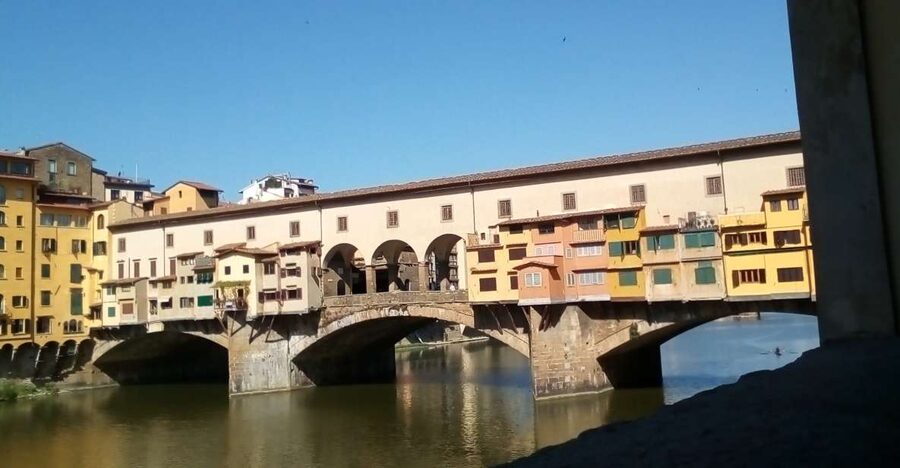
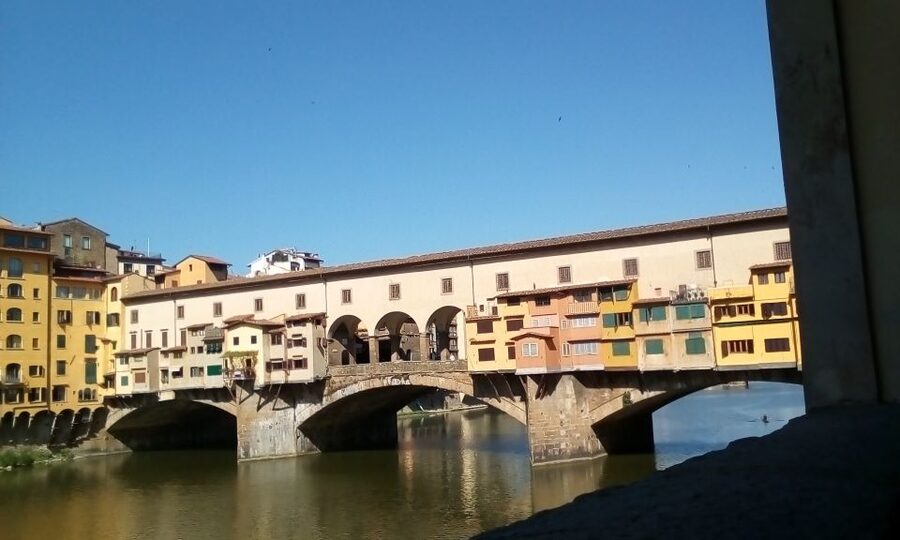
The Ponte Vecchio is one of Florence’s most photographed sights, but this tour asks you to look beyond the postcard view. As you cross the bridge, Mila discusses its connection to the queer community and explains how it was associated with cruising in medieval and Renaissance Florence.
That detail changes the way you read the bridge. Today, it is a major sightseeing route lined with shops and packed with people taking photographs. In earlier periods, a bridge could be a place to pass slowly, observe others, arrange encounters, and take advantage of crowds and shadows.
The point is not to pretend that the bridge was an openly gay district in the modern sense. Historical public life was shaped by secrecy, risk, coded behavior, and unequal power. Mila’s subject works best when you keep that distinction in mind.
The bridge section also shows why this is a walking tour rather than a lecture. You hear about a social use of the city while standing in the actual place. The surroundings remain beautiful, but the story adds tension and complexity to a familiar view.
Same streets, a different way to see them:
- Florence: Highlights Walking Tour with Expert Guide
★ 4.6 · 4,662 reviews - Uffizi & Accademia Timed Entry: Small Group Duomo Walking Tour
★ 4.5 · 3,630 reviews - Florence: Duomo Complex with Tickets & City Walk Guided Tour
★ 4.7 · 2,057 reviews - Michelangelo’s David, Accademia & Uffizi Small Group Tour
★ 4.5 · 1,986 reviews
Piazza della Signoria and Cellini’s Perseus
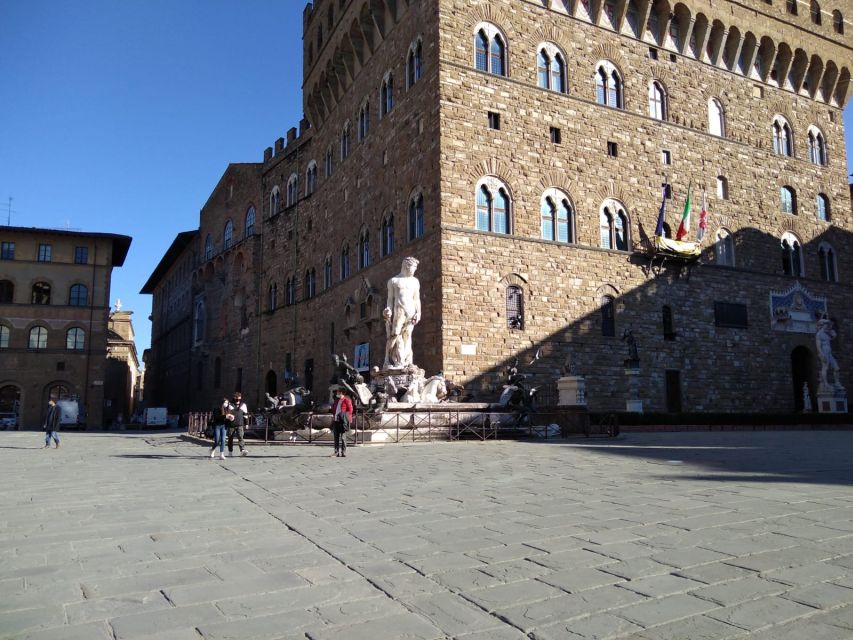
The route continues to Piazza della Signoria, near what is described as Florence’s ancient gay district. This is where art and public power come together most clearly.
You see an outdoor copy of Michelangelo’s David and Benvenuto Cellini’s Perseus with the Head of Medusa. Cellini’s statue is especially important to the route. Mila uses the work and its setting to discuss the people, ideals, and sexual politics connected to Renaissance Florence.
You do not need to be an art expert to get something from this stop. The sculptures are visible in public, and Mila gives them a social setting that a standard art explanation may leave out. The subject is not simply who made the statue or when it was commissioned. It is also about how male beauty, power, violence, and reputation were displayed in the heart of the city.
This part of the walk can be crowded. Piazza della Signoria is one of Florence’s busiest sightseeing areas, and a headset helps. You should still expect to pause, listen, and keep track of the group rather than wander freely around the sculptures.
Orsanmichele and the cost of public accusation
At Orsanmichele Church, the tour turns toward the machinery of social control. Mila explains how the church displayed special boxes used to denounce members of the LGBTQ community, particularly gay men.
This is one of the more sobering stops. It shows that queer life in Florence was not only about private relationships or discreet meeting places. Institutions could encourage suspicion and make accusation part of public life.
The stop is valuable because it gives legal and religious context to the earlier stories. The fines and punishments discussed at Piazza della Repubblica were not isolated rules on a page. They were part of a wider system involving neighbors, authorities, churches, and social reputation.
The tour does not make these subjects comfortable, and it should not. Mila’s humor helps keep the experience human, but the walk still asks you to think about how quickly a community can turn private behavior into public judgment.
Mila’s guiding style and what you can expect
Mila receives exceptionally strong praise for her delivery. Her style is described as warm, funny, patient, and energetic, with a clear passion for the subject. She also answers questions carefully and explains which sources she used for some of her stories.
That last point matters. Historical LGBTQ stories are sometimes repeated without much evidence, especially when they involve famous figures or colorful rumors. Mila’s practice of identifying her sources gives the tour a more careful footing and helps you separate documented material from interpretation.
Her tone also seems well judged for groups with different ages and interests. One account specifically found the tour appropriate for a 15-year-old, while other comments highlight her ability to handle difficult topics with humor and care.
The group may include LGBTQ visitors, allies, solo visitors, couples, and people simply interested in a less familiar side of Florence. One useful benefit is the chance to meet others with an interest in queer history. For a solo visitor, that social element may be as welcome as the information.
Mila also shares suggestions for other places to visit and eat. One person found her gelato advice especially good, and another recommended taking the tour early in a Florence stay because it can give you ideas for the rest of your time in the city.
Route, timing, and physical demands
The walk lasts two hours and remains outdoors. You should expect regular city walking, standing at several stops, and crossing bridges and public squares. The activity is listed as wheelchair accessible, though the experience still takes place on city streets and bridges, so you may want to confirm current route conditions when booking.
The tour runs rain or shine. Florence can be very hot, and Mila has taken care to look after groups in the heat, but you should bring water, sun protection, and clothing suited to the forecast. In wet weather, a compact rain jacket is more useful than an umbrella in crowded streets.
There is no hotel pickup or drop-off. You meet at Piazza della Repubblica and make your own way there. Entrance fees are not part of the experience, but most of the main sights are viewed from public spaces, so you can plan this walk without adding museum costs.
The headset is a practical inclusion, especially around busy roads and crowded piazzas. It lets you look at the statues and buildings without having to stand directly beside Mila at every moment.
Is $29 a fair price?
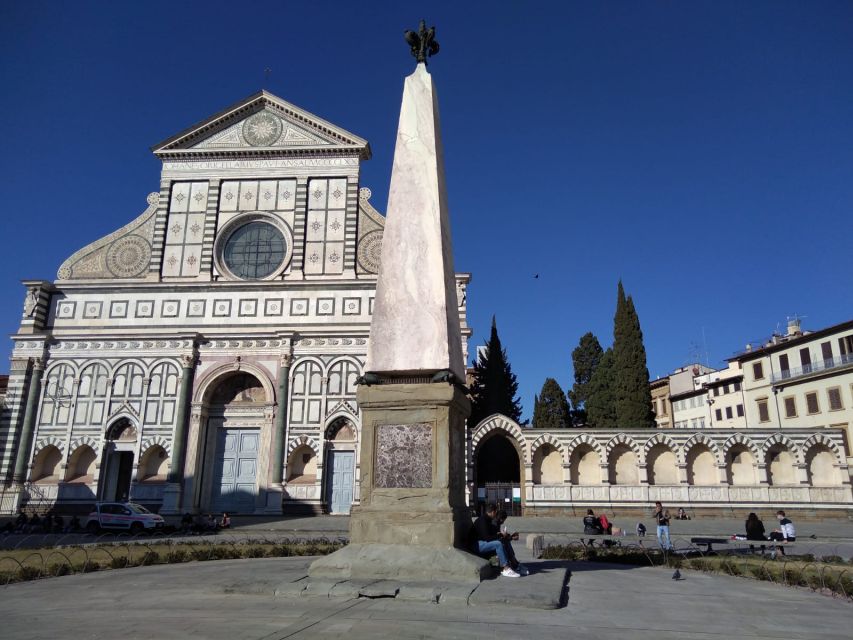
At $29 per person, this is a good value if you want a focused subject and a live guide rather than a general audio walk. The price covers two hours, an English-speaking local guide, a headset, and a route through several of Florence’s best-known central sights.
It is also good value because the tour combines two experiences. You receive a queer history lesson, but you also walk through the Medici quarter, cross major bridges, and see important Renaissance sculpture. If you booked a standard historic-center walk separately, you might cover some of the same ground without this particular point of view.
The value depends on your interests. If you mainly want inside access to palaces, churches, or museums, this is not the right purchase. No admission is included, and the tour is built around storytelling in public spaces.
For anyone curious about LGBTQ history, social history, or the lives left out of traditional sightseeing routes, $29 feels modest. The strongest part is not the number of sights. It is Mila’s ability to connect them into one clear story.
Who should book this experience?
I would recommend it to you if you want:
- A queer-focused way to understand Florence
- A walking tour that still includes famous sights
- Stories about Medici politics, Renaissance culture, and public law
- A guide who can handle painful material with warmth and humor
- A two-hour activity that fits easily into a busy Florence schedule
- A welcoming option for LGBTQ visitors, allies, couples, families, and solo visitors
You may want to skip it if you prefer only art technique, architecture, or museum interiors. It is also not ideal if you want a completely casual stroll. The subject demands attention, and some sections deal with punishment, denunciation, and discrimination.
Should you book the LGBTQ Renaissance Walking Tour with Mila?
Yes, if you want to see Florence through a human story that standard sightseeing often leaves out. Mila’s warmth, careful research, and clear storytelling give the walk its value, while the route makes good use of major landmarks such as the Ponte Vecchio, Piazza della Signoria, and Pitti Palace Square.
Book it early in your stay if you can. The route may sharpen your understanding of the city and point you toward other places to explore. At $29, it is a sensible choice for a thoughtful two-hour walk, especially if you want history that includes private lives, social risk, and people who rarely receive their own chapter.
FAQ
How long is the LGBTQ Renaissance Walking Tour with Mila?
The tour lasts two hours.
What language is the tour conducted in?
The live tour guide speaks English.
Where does the tour meet?
You meet Mila at Piazza della Repubblica, next to the Hard Rock Café under the Loggia. She will have a sign.
What sights are included on the walking route?
The route includes Piazza della Repubblica, Santa Trinita Bridge, Pitti Palace Square, Ponte Vecchio, Piazza della Signoria, and Orsanmichele Church.
Does the tour include the Pitti Palace or museum entrances?
No. Entrance fees are not included, and the experience is an outdoor walking tour.
Will I see Michelangelo’s David?
You will see a copy of Michelangelo’s David in the Piazza della Signoria area.
Will I see Cellini’s Perseus?
Yes. The route includes Perseus with the Head of Medusa by Cellini in Piazza della Signoria.
Is the tour wheelchair accessible?
The activity is listed as wheelchair accessible.
What happens if it rains?
The tour takes place rain or shine. You should dress for the weather and bring suitable protection.
Just added around Florence
- Florence: Heart of Florence Guided Walking Tour★ 4.0 · 81 reviews
- Florence: The Medici Family Guided Walking Tour★ 4.7 · 129 reviews
- Florence: Tuscan Food and Wine Guided Walking Tour★ 4.8 · 72 reviews
- Florence Walking Tour & Skip-the-Line David at Accademia★ 4.7 · 159 reviews
- Florence: Walking Tour with David, Duomo & Uffizi Gallery★ 4.7 · 414 reviews
- Florence: Small Group Guided Walking Tour★ 4.7 · 176 reviews
- Florence Street Food Walking Tour with Wine in Duomo Area★ 4.9 · 76 reviews
- Florence: Pitti Palace and Boboli Gardens Walking Tour★ 4.6 · 182 reviews
Florence Walking Tours, compared.
Uffizi & Accademia Timed Entry: Small Group Duomo Walking Tour
Read our review →
Duomo Complex with Tickets & City Walk Guided Tour
Read our review →
Michelangelo’s David, Accademia & Uffizi Small Group Tour
Read our review →
David & Accademia Guided Tour with Time Entry Ticket
Read our review →
Browse the lists this tour appears in