
Review · OLD TOWN WALKING TOURS
Gdansk Old Town 2-Hour Walking Tour
Gdansk rewards a closer look. This private walk links the city’s grandest gates, churches, squares, and riverfront sights while a local guide explains how Gothic, Renaissance, and Mannerist buildings shaped the city. I especially like the Royal Way route and the chance to see The Crane, a powerful reminder of Gdansk’s trading past. The main caution is pace: some visitors found two hours of detailed commentary tiring, and the tour may spend too much time around the central sights.
The guide speaks English, German, or Polish, and the private format works well if you want to ask questions or keep the walk focused on your interests. I also like that the tour is built for a small group of up to 10 people, though the value is strongest when several people share the $167 group price. Be ready for a history-heavy walk, since the commentary can feel formal if you prefer a quick look rather than a long explanation.
Key points to know before you book
- The route begins at the Upland Gate, beside the Pomerania Tourist Information center on Wały Jagiellońskie 2A.
- The Royal Way connects the main sights, from the Golden Gate and Upland Gate to Long Market and Neptune Fountain.
- The Crane gives the tour its best link to working Gdansk, showing how the port helped make the city wealthy.
- St Mary’s Church is a major highlight, known as the largest brick church in the world.
- The tour is private for up to 10 people, with a guide in English, German, or Polish.
- Entry inside St Mary’s Cathedral costs extra, at EUR 1 per person.
Why this two-hour walk works in Gdansk
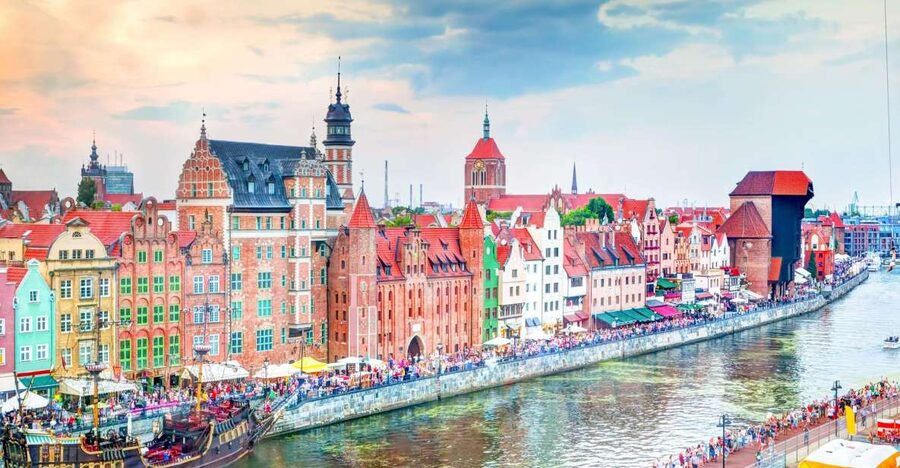
Gdansk’s historic center is compact, but it is not simple. A few streets contain royal gates, wealthy merchant houses, a medieval port crane, a huge brick church, and public monuments tied to Polish history. You can cover the ground on your own, but a guide helps connect the pieces.
I like this tour because it gives you a clear route instead of sending you zigzagging between isolated sights. You begin at the Upland Gate, move through the old ceremonial entrance to the city, reach the Long Market, walk toward the Motława River, and finish near the Great Armoury. That progression lets you see Gdansk as a planned city, not just a collection of pretty façades.
The private format matters. With only your own group, you can ask about the rebuilding of Gdansk after the Second World War, the old city defenses, or the city’s role in Hansa trade. You also avoid being tied to a large group moving slowly through narrow streets.
Still, two hours is a tight window for this much material. The guide may need to keep moving, or may spend more time explaining one area than expected. If you want a fast orientation, the walk may feel long. If you enjoy architecture and stories, the fuller commentary will be more useful.
More Old Town Walking Tours in Poland
- Warsaw: Old Town Highlights Walking Tour in English
★ 4.7 · 1,516 reviews - Old Town Krakow & Wawel Castle Walking Tour
★ 5.0 · 1,508 reviews - Krakow: The Old Town Walking Tour
★ 4.8 · 794 reviews
Starting at the Upland Gate and Golden Gate
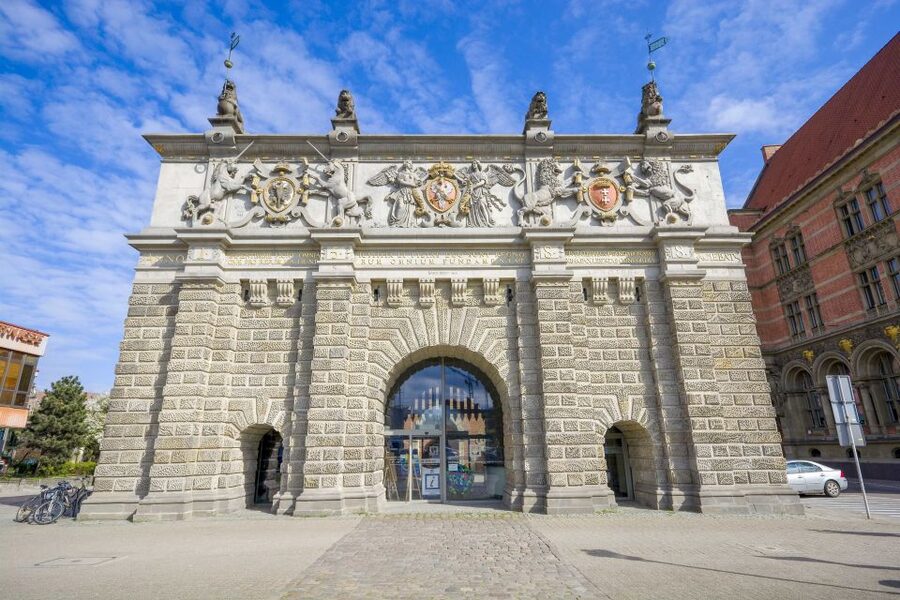
The meeting point is Brama Wyżynna, or the Upland Gate, at the entrance to the Pomerania Tourist Information center. This is a practical starting point because it sits at the edge of the historic center and marks the old entry route into Gdansk.
The Upland Gate dates from the 16th century and once served as the main approach for the Polish king arriving from Warsaw. That fact gives the first part of the tour a ceremonial feel. You are not simply walking into the center. You are following the same general route used for formal arrivals.
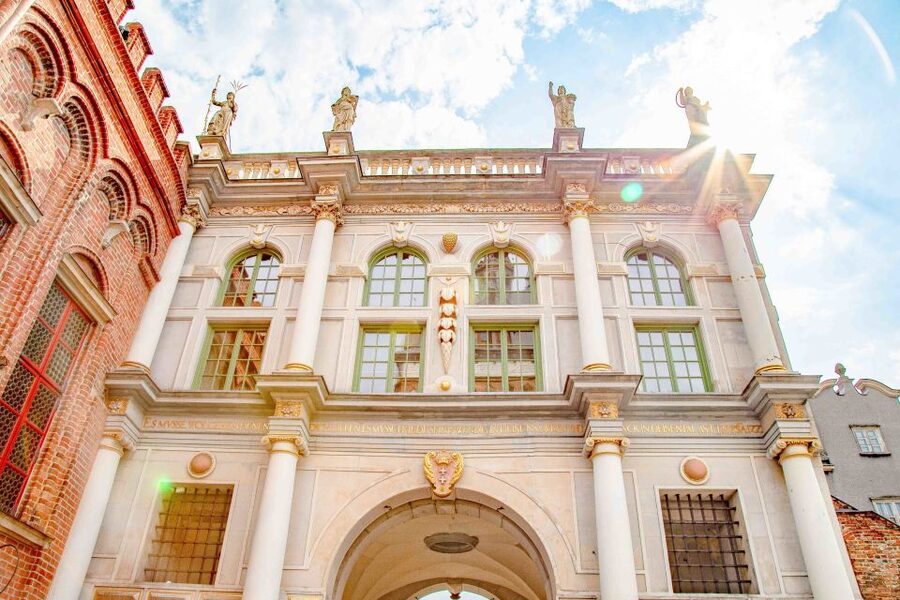
The walk then continues toward the Golden Gate, once part of the city’s defensive system. Its decorative design shows how Gdansk wanted to present itself: secure, wealthy, and connected to European artistic styles. This is a good place to notice the contrast between military purpose and civic display.
The nearby Torture Chamber adds a darker note. Executions took place here until the middle of the 19th century. The stop helps balance the polished architecture with the harsher realities of old city life. The tour does not present Gdansk as a perfect postcard, and that makes the setting more believable.
You will likely hear how the city changed through war, trade, and reconstruction. One useful part of the commentary is the attention to rebuilding after the war. Gdansk’s historic center looks old, but much of what you see has been restored or reconstructed. Understanding that fact changes how you read the façades.
Long Market and Neptune Fountain
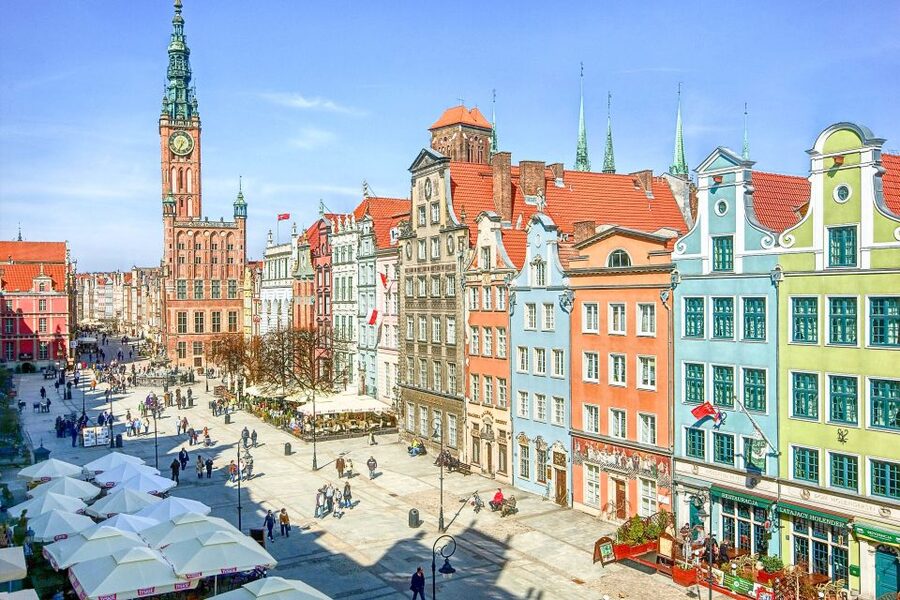
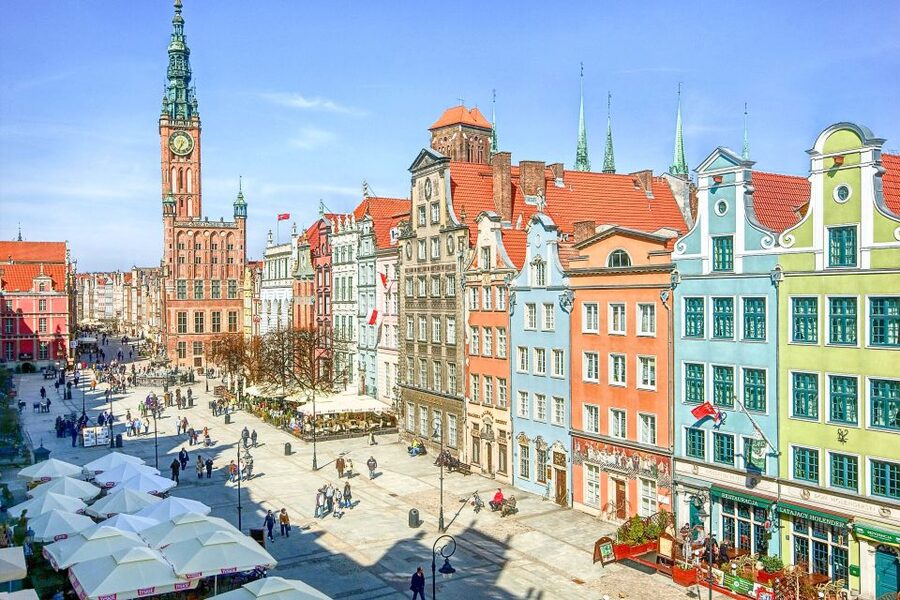
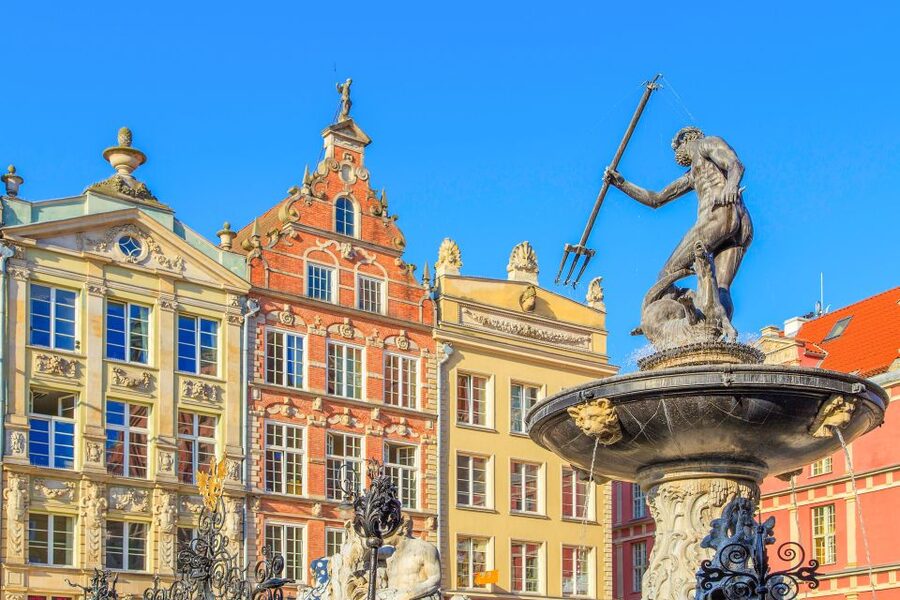
From the gates, the route follows the Royal Way toward Long Market. This is the public heart of the walk and one of the most attractive stretches in the center. Tall townhouses line the route, with decorative façades that reflect the city’s former wealth.
Long Market was not simply a shopping street. It was a place for civic ceremony, business, and public life. The guide’s stories can help you read the buildings as symbols of merchants, city officials, and visiting rulers rather than as a row of colorful façades.
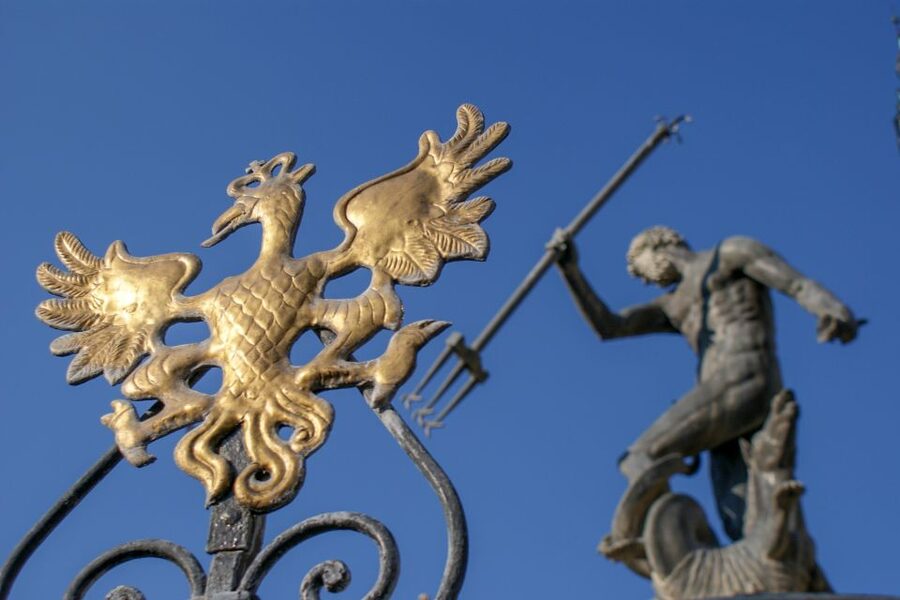
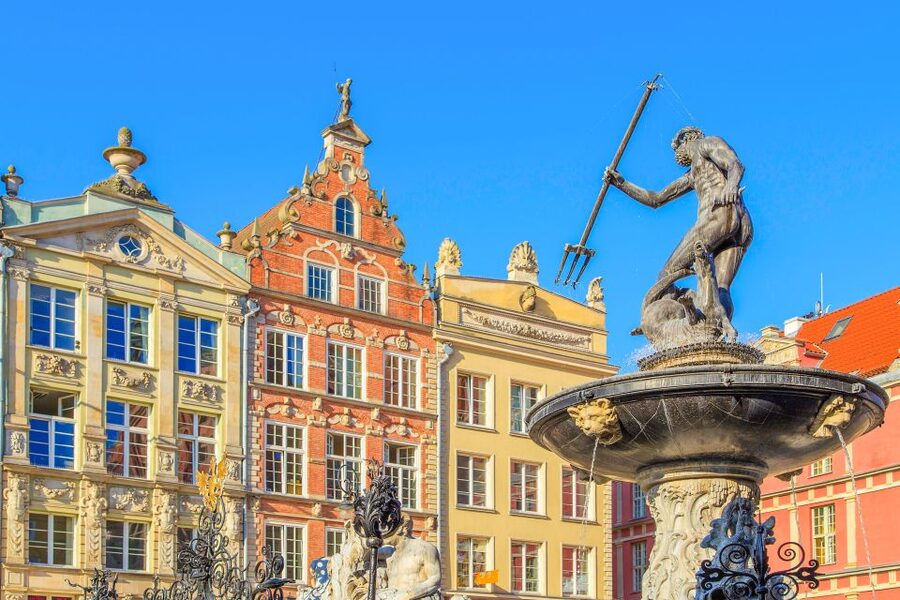
Neptune Fountain is the focal point. The sea god is a fitting figure for Gdansk, a city tied closely to the Baltic and to port trade. The fountain gives the guide an easy way to explain the city’s relationship with the water, its trading power, and the way civic monuments carried political meaning.
This is also one of the easiest stops for photographs, though it can be busy around the fountain. A private group gives you some freedom to pause, but the tour still has a schedule. If you want detailed photos of every building on Long Market, you may need to return later on your own.
The Town Hall adds another layer. It represents the authority of the city itself, while Neptune represents its maritime identity. Together, the two stops show how Gdansk’s public spaces mixed government, commerce, religion, and trade.
St Mary’s Church, a vast brick landmark
St Mary’s Church is one of the tour’s strongest sights. It is widely described as the largest brick church in the world, and its scale is difficult to grasp from a quick glance outside. The structure dominates the surrounding streets and gives the city center a strong vertical landmark.
The tour includes a guided look at the church, but entrance inside is optional and costs EUR 1 per person. That small extra fee is worth considering if you want to understand the building from within rather than only admire its exterior.
The church stop also shows why a guide can be useful here. Gothic churches are easy to admire but harder to interpret. A good explanation can point out the building’s religious role, its place in the city skyline, and the effect of using brick rather than the pale stone seen in many western European churches.
You should check the pace of the group at this point. Fifteen minutes is listed for the church portion, which may be enough for an introduction and exterior viewing but not for a leisurely visit inside. If the church matters greatly to you, ask the guide whether the route allows time for the optional entrance.
Same streets, a different way to see them:
- Creepy Krakow: 2-Hour City Walking Tour
★ 4.7 · 1,131 reviews - Gdańsk City Sights & History Guided Walking Tour in English
★ 4.8 · 876 reviews - Warsaw: Old Town Guided Walking Tour
★ 4.9 · 599 reviews - Krakow: Kazimierz Jewish Quarter Walking Tour
★ 4.8 · 571 reviews
St Mary’s Street and the amber shops
St Mary’s Street is one of the prettiest parts of the walk. Its narrow, atmospheric setting leads toward the church and is lined with amber galleries. Amber is closely tied to the Baltic coast, so these shops are more than a standard souvenir stop.
You will see amber worked into jewelry and decorative pieces, with galleries offering many different styles. The tour is not presented as a shopping excursion, so you should not expect a detailed buying guide. Still, the street gives you a chance to see how a local material became part of Gdansk’s modern identity.
This is a good place to ask questions if you are curious about amber, craft, or the city’s relationship with the Baltic. The guide can also help you distinguish the historic atmosphere of the street from its more commercial side.
Some people will find this section charming. Others may feel that the galleries make the route more tourist-oriented. That is a fair concern, but St Mary’s Street remains one of the most memorable pedestrian lanes in the center.
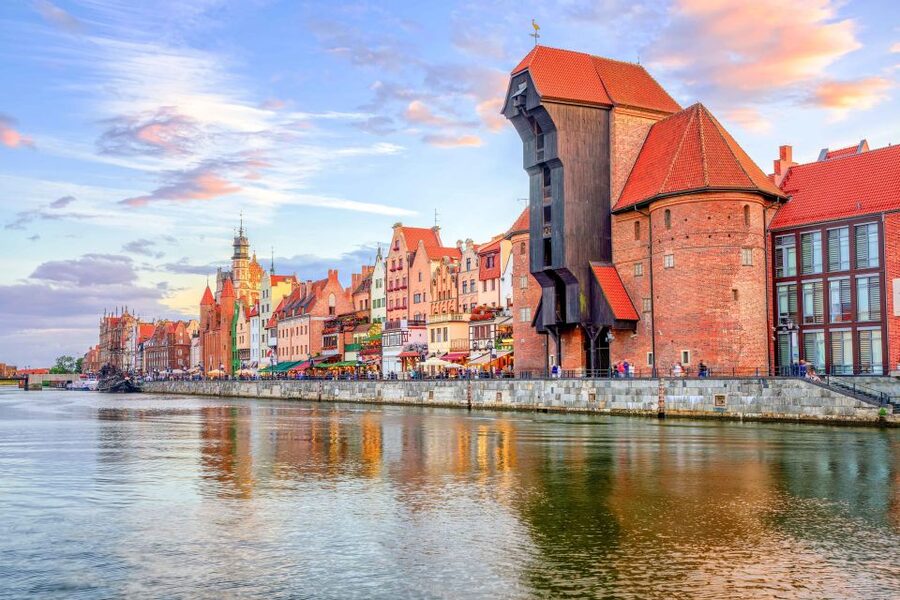
The Motława River and The Crane
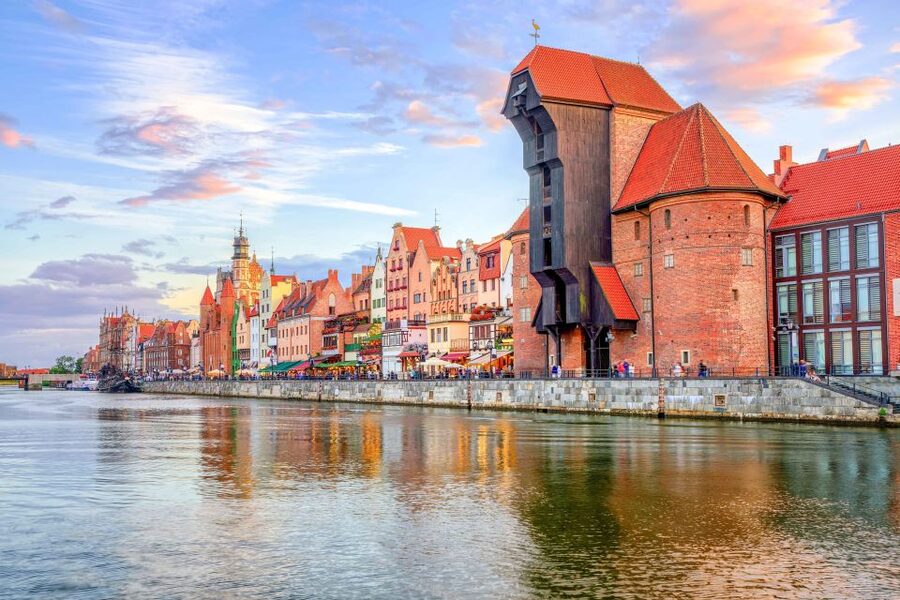
The route continues toward the Motława River, where Gdansk’s trading past becomes easier to picture. The waterfront is not just scenic. It explains why the city grew so prosperous and why warehouses, ships, and lifting equipment mattered so much here.
The Crane is the key sight. It is described as the biggest harbor construction of the Hansa Association, and its heavy timber structure gives the riverfront a strong industrial character. Unlike the ornate façades on Long Market, The Crane shows the practical side of old Gdansk.
This is one of the most valuable stops for understanding the city. The crane was built for work, not decoration. It helped load and unload cargo, and its presence reflects the scale of trade that passed through the port. When you look at it from the river, the city’s commercial story becomes more concrete.
The waterfront also provides a change of rhythm. After gates, monuments, and formal buildings, you reach open water and a working port setting. If the central streets feel crowded or repetitive, this part can refresh the walk.
The route may not offer a long riverfront pause, so note the location and return later if you want more time by the water. The Crane is a particularly useful landmark to revisit because it helps you orient yourself in the old center.
The Main Town Hall and the Great Armoury
The Main Town Hall is another major stop, with about 25 minutes assigned for its explanation. Its role was civic and administrative, making it a natural partner to the religious power of St Mary’s Church and the commercial activity along the river.
The guide uses the Town Hall to explain local government, public life, and the city’s changing fortunes. You may find this section especially useful if you want more than visual sightseeing. It gives meaning to the grand buildings around Long Market.
The tour finishes at the Great Armoury, one of Gdansk’s finest examples of Renaissance architecture. The building’s name may suggest a fortress, but its elaborate design shows that public and commercial buildings could also serve as statements of wealth.
This final stop brings several architectural styles together. Earlier sections feature Gothic brickwork and medieval defenses. The Great Armoury adds Renaissance confidence and ornament. The route therefore gives you a useful visual lesson in the city’s changing architectural taste.
The main drawback is that the walk concentrates heavily on the central historic area. That is sensible for a two-hour tour, but it means you will not get a broad survey of every part of Gdansk. If you want neighborhoods outside the Old Town, a longer or different tour would be a better choice.
Guide quality and the pace of the commentary
The guide is the heart of this experience. The strongest feedback describes the guide as pleasant, informative, and able to give a good appreciation of Gdansk. That is exactly what this route needs, since many of its best details are historical rather than visual.
The guide can conduct the walk in English, German, or Polish. The private setup also means you can ask for clarification instead of losing a question in a large group.
The main weakness is presentation. Some people found the commentary too long, too formal, or filled with stock phrases. One German-language assessment praised the factual content but criticized the sound equipment and the lack of entertaining delivery. That suggests you should book this for solid explanation rather than theatrical storytelling.
There is also a practical issue with audio. If the guide uses a microphone or other sound equipment, its quality may affect how easily you follow the commentary. Stay close enough to hear clearly, especially near busy streets and open riverfront spaces.
The listed stop timings add up to a little over two hours, so pacing may not be identical on every departure. You may get a brief overview at some stops and a longer explanation at others. A private tour gives you the best chance of asking the guide to adjust the balance.
Is $167 good value for your group?
The price is $167 per group of up to 10 people, not per person. That makes the arithmetic important. For 10 people, the cost works out to about $16.70 each. For two people, it is $83.50 each, which is a much steeper price for a two-hour walk.
I think the tour offers good value for a family or group of friends who will use the full capacity. You get a private guide, a carefully arranged central route, and commentary in one of three languages. You also avoid the compromises of a large public group.
For a couple, the price is harder to justify unless personal attention matters greatly to you. The free cancellation up to 24 hours before the start and the reserve-now, pay-later option make the booking less rigid, but they do not change the basic cost calculation.
The optional EUR 1 church entrance is modest. I would budget for it if you want to see St Mary’s from inside, since the church is one of the tour’s major reasons to book.
Who should book this Gdansk walk?
This tour suits you if you have limited time and want a strong first look at the historic center. It also works well if you like architecture, civic history, maritime trade, and stories about how the city was rebuilt after the war.
Families and groups of friends can benefit from the private format, particularly if several people share the cost. The three language choices make it practical for mixed-language groups as well.
You may want something else if you prefer a fast-paced overview with little commentary. The route can feel concentrated, and the guide may spend a long time explaining a small area. It is also not the best match if your main goal is to explore districts beyond the central old town.
FAQ
Where does the Gdansk Old Town walking tour start?
The meeting point is Brama Wyżynna, or the Upland Gate, at the entrance to the Pomerania Tourist Information center on Wały Jagiellońskie 2A.
How long does the walking tour last?
The advertised duration is two hours.
How much does the private tour cost?
The price is $167 per group of up to 10 people.
What languages can the guide speak?
The tour is available in English, German, and Polish.
Is the tour private?
Yes. It is offered for a private group.
Is entrance to St Mary’s Cathedral included?
Entrance is optional and is not included in the tour price. It costs EUR 1 per person.
What sights are included on the route?
The route includes the Upland Gate, Golden Gate, Torture Chamber, Royal Way, Long Market, Neptune Fountain, Main Town Hall, St Mary’s Church, St Mary’s Street, the Motława River area, The Crane, and the Great Armoury.
Can I cancel the booking?
You can cancel up to 24 hours in advance for a full refund.
Do I have to pay when I reserve?
No. The reserve-now, pay-later option lets you book without paying at the time of reservation.
Should you book it?
Book this walk if you want a private, central introduction to Gdansk and you value clear historical explanation over a quick checklist of sights. The Golden Gate, Neptune Fountain, St Mary’s Church, and The Crane give you a strong sense of the city’s power, faith, and trade in a short time.
I would especially recommend it for groups of four to 10 people, since the flat price becomes more reasonable as the group grows. If you are a couple or prefer a lively, fast-moving guide, compare the cost and ask about the pace before booking. This is a solid orientation walk, but its value depends on enjoying detailed commentary and staying focused on Gdansk’s compact historic center.
More 2-Hour Experiences in Poland
- Krakow: 2h Kazimierz (Jewish Quarter) Walking Tour
★ 4.5 · 75 reviews - Berlin’s Best: 2 Hour Walking Tour Third Reich and the Cold War
★ 5.0 · 5,486 reviews - Budapest City Landmarks Walking Tour in 2 Hours
★ 5.0 · 2,048 reviews - Leipzig: 2-Hour Guided Walking Tour in German
★ 4.8 · 1,612 reviews
Just added around Poland
- Krakow: Jewish Quarter Guided Walking Tour★ 4.8 · 119 reviews
- Szczecin: Old Town Highlights Private Walking Tour★ 4.7 · 76 reviews
- Old Town Poznan: Guided Walking Tour in English★ 4.6 · 78 reviews
- Krakow: Old Town Guided Walking Tour★ 4.6 · 94 reviews
- Krakow: Old Town Highlights Walking Tour★ 4.5 · 173 reviews
- Krakow: Street Food Walking Tour★ 4.8 · 285 reviews
- Kraków: Old Town & Wawel Castle Walking Tour in English★ 4.8 · 532 reviews
- Krakow: Legends and Tales of Old Town Walking Tour★ 4.8 · 227 reviews
Old Town Walking Tours, compared.

Underground Vaults Walking Tour in Edinburgh Old Town
Read our review →
3-Hour Walking Tour of Old Town & Prague Castle
Read our review →

Old Town and Jewish Quarter Guided Walking Tour
Read our review →
Cartagena: Historic Center and Getsemaní Shared Walking Tour
Read our review →Browse the lists this tour appears in