
Review · HISTORY WALKING TOURS
Athens: History of Rebellion Walking Tour
Athens has more than ancient stones. This 2.5-hour walk follows the city’s long story of resistance, from Ottoman rule and the Greek Revolution to present-day struggles over freedom and social justice. I especially like the focus on modern Greece, a subject often missed between the Acropolis and the ancient agora, and the chance to spend real time in Exarchia, one of Athens’ most politically charged neighborhoods. Guide Maelle receives especially warm praise for her clear storytelling, humor, care, and useful food and sightseeing tips.
The main drawback is the format: you will walk and stand for two to three hours, and the subject matter is openly sympathetic to resistance movements. That makes this a poor match if you want a neutral overview with little political discussion, or if you have mobility limitations. For the right audience, though, the tour offers a thoughtful way to understand the people and movements behind modern Athens.
Key points to know before booking
- Ottoman rule to today: The route links the Greek Revolution, fascism, popular protest, police repression, and current social movements.
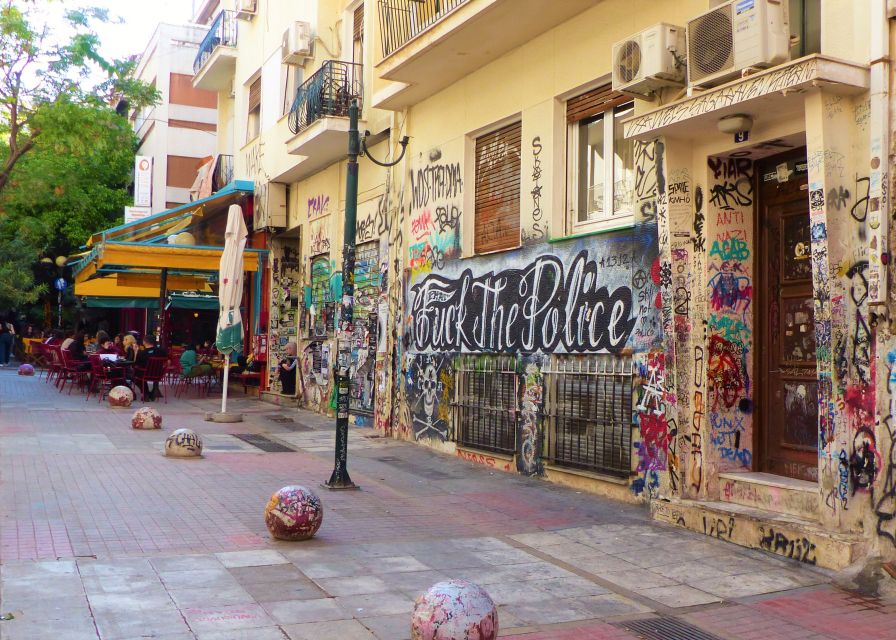
- Exarchia is the finale: The tour spends its most distinctive section in a neighborhood associated with anarchists, artists, refugees, LGBT+ communities, and activism.
- Maelle is a major strength: She explains difficult political subjects with clarity, warmth, humor, and room for conversation.
- A small-group feel matters: Private and small-group options allow more questions and a more personal exchange.
- This is not an ancient Athens tour: You will pass major central sights, but the focus is modern and contemporary Greek society.
- Bring walking gear: Comfortable shoes, water, sunscreen, and a sun hat are sensible for this outdoor tour.
Why this Athens walking tour feels different
Most first visits to Athens revolve around temples, philosophers, and mythology. Those subjects matter, but they explain only part of the city. This tour asks a different question: how did Athens become a place where protest, political argument, and public action remain part of daily life?
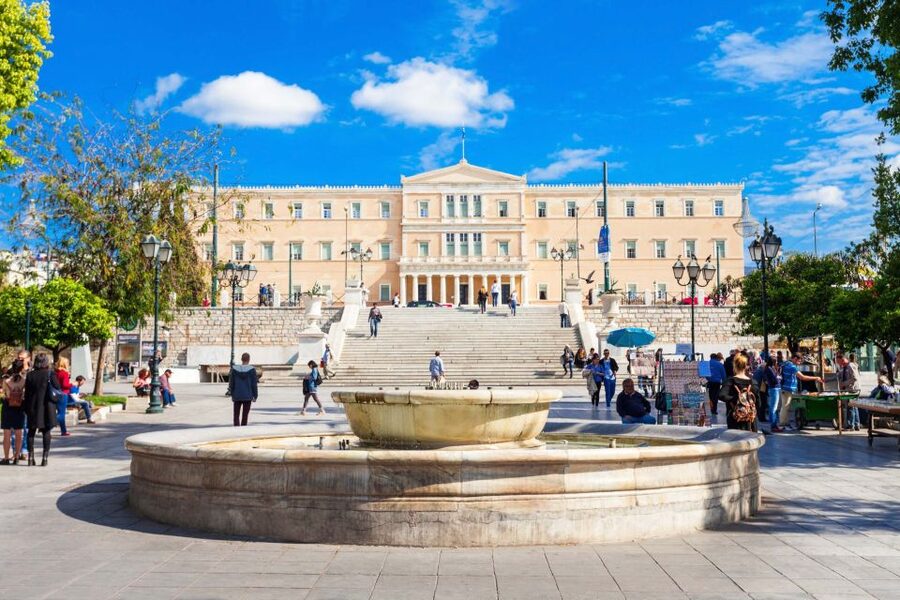
You begin at Monastiraki Square, in front of Pantanassa Church. From there, the route moves toward Syntagma and then north into Exarchia. The walk connects places that can seem unrelated at first, giving you a way to read Athens through rebellion, popular movements, oppression, and the ongoing effort to claim public space.
I like that the tour does not treat resistance as a single heroic episode. It reaches back to the period of Ottoman rule, follows the events that helped ignite the Greek Revolution about two centuries ago, and then moves into the more recent struggles that shaped modern Greece. The result is less a list of dates and more a conversation about how history affects the streets you are standing on.
The guide also brings the subject down to human scale. Stories of individuals, collective action, and everyday political life help explain why certain squares and neighborhoods carry such strong meaning. You are not simply told that a place matters. You are encouraged to consider who used it, who controlled it, and who still contests it.
More History Walking Tours in Athens:
- Acropolis, Parthenon & Athens Old City Heritage Walking Tour
★ 4.5 · 876 reviews - Athens: Women in Ancient Greece Guided Walking Tour
★ 5.0 · 86 reviews - History and Hauntings of Salem Guided Walking Tour
★ 5.0 · 14,564 reviews
Starting in Monastiraki with Ottoman-era stories
Monastiraki is a busy and familiar starting point, but this tour gives the square a different role. Instead of using it only as a backdrop for shopping and photographs, the guide uses it to introduce Athens under Ottoman rule and the resistance that eventually helped lead to Greek independence.
The first guided stop is brief, around five minutes, but it sets the historical direction for the rest of the walk. You begin to see central Athens as a city shaped by occupation, revolt, and changing power rather than as a collection of isolated monuments.
The route passes the Metropolitan Church of Athens. Since this is a pass-by rather than a full visit, you should not expect an interior tour or extended architectural explanation. Its purpose is to keep the story moving toward the political heart of the city.
A short stop at an unnamed point adds another layer to the opening section. The exact character of this stop is not specified, so the experience depends on the guide’s explanation and the questions raised by the group. That uncertainty can be a virtue here: the walk is built around interpretation, not a rigid monument checklist.
Syntagma Square and the public life of protest
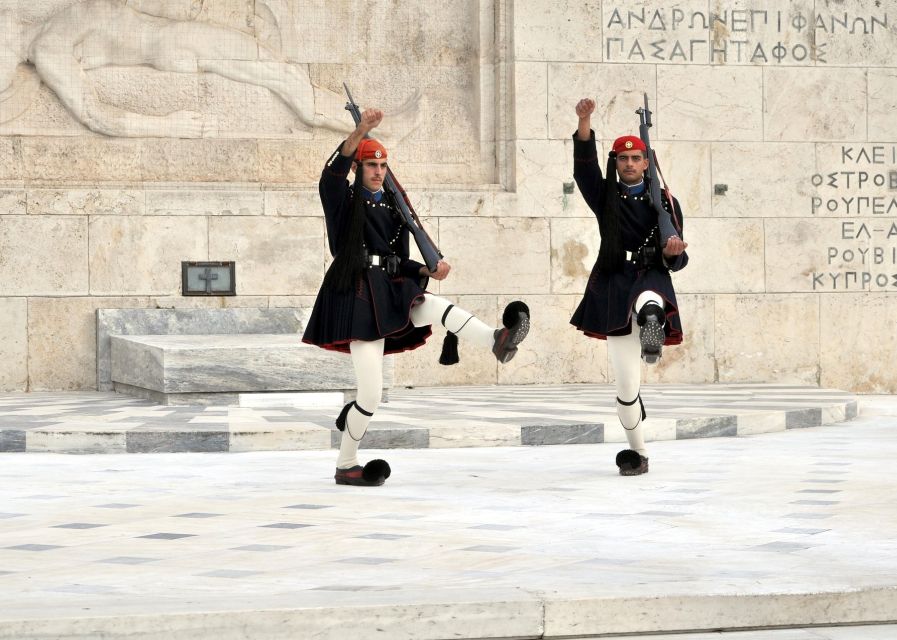
Syntagma Square is the tour’s central political stage. You receive about ten minutes of guided sightseeing here, followed by time at the Hellenic Parliament and the Tomb of the Unknown Soldier.
This is where the broad story of resistance becomes easier to picture. Syntagma is described as the heartbeat of modern-day protests, so the guide can connect the square to mass movements, freedom struggles, fascism, violence, and oppression. The point is not just that demonstrations happened here. It is that public squares can become places where ordinary people challenge power in full view of the state.
At the Hellenic Parliament, the tour continues that discussion with attention to the institutions that govern Greece. The stop lasts about ten minutes. You are not visiting the building as a formal parliamentary tour, but using its location to think about the relationship between government, public pressure, and civic action.
The Tomb of the Unknown Soldier receives a shorter visit of around five minutes. It adds a national and symbolic element to the route. Placed beside the Parliament, it allows the guide to discuss how countries remember sacrifice, define patriotism, and decide which stories become part of public memory.
This section is a good reason to take the tour early in your stay. Once you understand the role of Syntagma, later demonstrations, memorials, and political references around Athens may make more sense. One participant specifically wished they had taken the walk on their first day, since it would have provided a better frame for the rest of their time in the city.
From Kolonaki to the Academy of Athens
The route passes through Kolonaki before reaching the Academy of Athens. Kolonaki is not treated as a main stop, so do not book this experience expecting a neighborhood tour focused on shopping, cafés, or architecture.
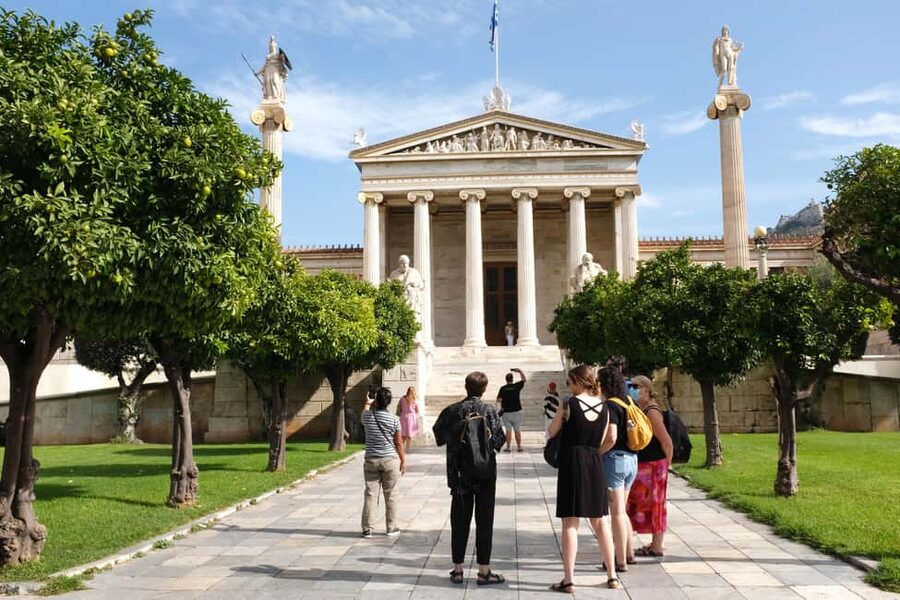
The Academy receives around ten minutes of guided sightseeing. Its presence helps broaden the tour beyond street protest. Athens is also a city of education, national identity, formal culture, and public ideas. The walk uses these central institutions as a contrast to the less official forms of politics you encounter later in Exarchia.
This change in setting is useful. The tour is not arguing that resistance exists only in one neighborhood or among one kind of person. Instead, it shows how competing ideas about Greece appear in public buildings, national symbols, squares, art, and community spaces.
The route also includes another short stop described only as a secret stop, followed by a further brief stop. Since the exact locations are not named in advance, you should expect the guide to reveal them during the walk. These moments appear designed to keep your attention on overlooked parts of central Athens rather than only on famous landmarks.
A few more walks around Athens worth a look
- Athens: Acropolis and Parthenon Guided Walking Tour
★ 4.6 · 5,882 reviews - Acropolis and Parthenon Guided Walking Tour
★ 5.0 · 4,755 reviews - Greek Food Walking Tour in Athens
★ 5.0 · 4,740 reviews - Acropolis: Acropolis and Parthenon Guided Walking Tour
★ 4.7 · 3,442 reviews
Entering Exarchia, Athens’ center of activism
Exarchia is the most distinctive part of the experience. The neighborhood is presented as a current center of resistance and activism, with connections to anarchists, refugees, LGBT+ communities, and artists. The guide explains its role in struggles for social justice, including opposition to police repression and gentrification.
That subject needs care, and the tour seems to approach it as a lived community rather than a spectacle. One especially valuable aspect is the effort not to treat local people or political activity as an exhibit for outsiders. You are asked to understand the neighborhood, not simply photograph its walls and leave with a dramatic story.
The main Exarchia stop lasts about ten minutes, followed by the two additional short stops and Exarchion Square. The square is the final guided point, with around ten minutes for discussion. By this stage, the earlier stories of occupation, revolution, national identity, and public protest have a current setting.
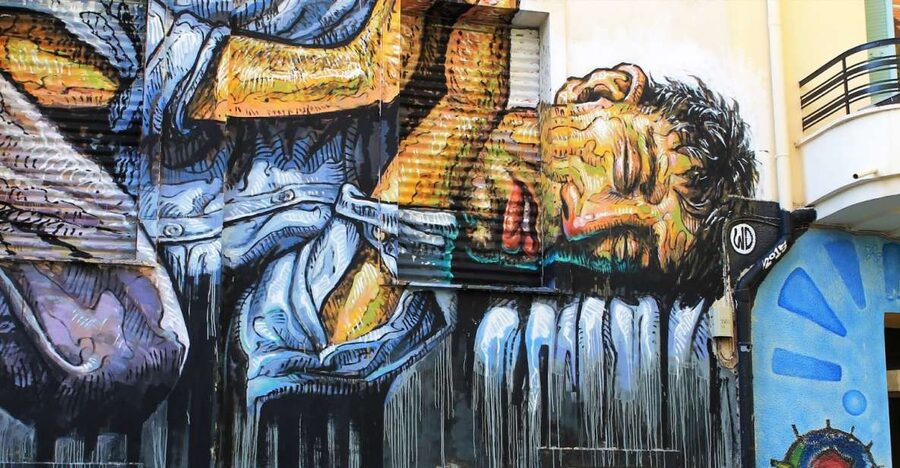
Street art also plays a part in the discussion. The guide may use works such as graffiti by the artist WD to encourage questions about power, public space, and who gets to speak in the city. This is not a standard street-art walk, so the art matters mainly as evidence of ideas and conflict rather than as a catalogue of artists.
You should also expect conversation. Maelle is praised for asking questions instead of simply reciting facts, and for making space for serious discussion without losing humor. That approach works particularly well in Exarchia, where simple labels do not explain the neighborhood’s politics or its appeal.
What Maelle adds to the experience
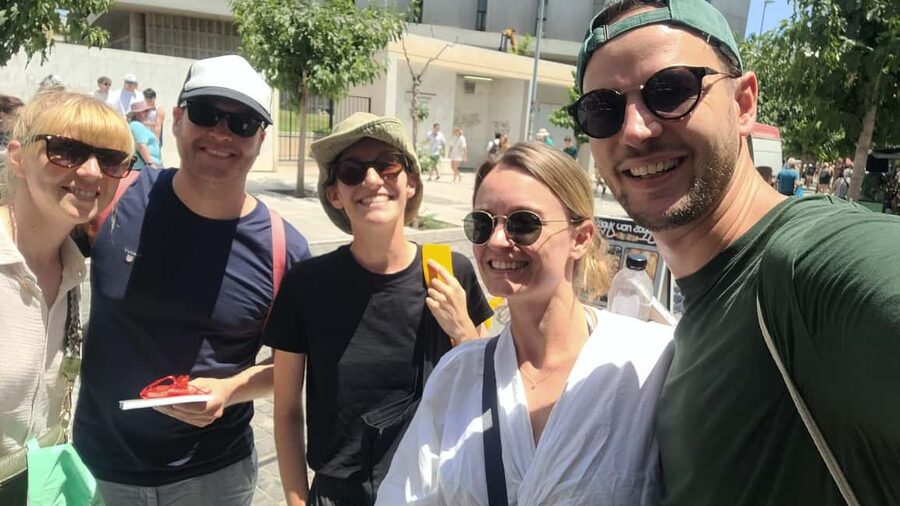
The guide is central to the value of this tour. Maelle is described as warm, inclusive, funny, patient, and deeply informed about Greek political and social history. More important, she appears able to make complicated events understandable without flattening them into a simple good-versus-bad story.
You can ask about modern Greek history, political movements, daily life, culture, and street art. The tour also leaves room for ideas that may not have a single tidy answer. That is useful if you enjoy connecting places with wider questions about justice, freedom, state power, and community.
A further benefit is the personal advice at the end. Maelle often provides recommendations for restaurants, shopping, sights, and places to visit in Athens and the Greek islands. These suggestions are not the formal product of the tour, but they add practical value, especially if you appreciate guidance beyond the usual tourist list.
The small-group setup matters here. With fewer people, you can ask follow-up questions and discuss what you are seeing. A private booking may make the exchange even more personal, while a small group can add different viewpoints without turning the walk into a lecture.
The tour is offered in English or French. If you need a particular language, check the available departure before booking.
Walking conditions, timing, and price
The listed price is $44.04 per person for 2.5 hours. That is not the cheapest way to walk around central Athens, but it is fair if you value interpretation, conversation, and access to a subject that most general city tours barely cover.
You are paying for a guide who connects several periods of history and helps you understand places you could easily pass without noticing. The value is strongest for people interested in modern Greece, politics, social justice, and the relationship between national history and neighborhood life.
The value is weaker if you want a fast orientation tour, a long list of famous monuments, or entry inside major buildings. Several stops last only five or ten minutes, and much of the experience takes place while walking between locations. The route gives context rather than extended visits.
Wear comfortable shoes. Bring water, sunscreen, and a sun hat, especially in warm weather. You will spend much of the 2.5 hours outdoors, walking and standing, and the activity is not suitable for people with mobility impairments.
There is one practical detail worth checking before you set out. The route information identifies Plateia Exarcheion as the finish, while the meeting instructions say the activity ends back at the meeting point in Monastiraki. Confirm the exact end point when you book, since that affects your next plans.
Cancellation is flexible, with a full refund available if you cancel at least 24 hours ahead. You can also reserve and pay later, which helps if your Athens schedule is still changing.
Who should book this tour?

I would choose this walk if you want to understand Athens beyond antiquity. It suits people who enjoy political history, social movements, contemporary culture, street art, and the human stories behind public events.
It is also a strong choice for a repeat visit. If you have already seen the Acropolis and the major archaeological sites, this tour offers a different way into the city. It can also work well on your first day, since the guide’s recommendations and explanations may help shape the rest of your stay.
Families with older teenagers may find it useful if they enjoy discussion and can manage the walking. The political content is serious at times, so it is not designed as a light sightseeing stroll for young children.
You should think twice if you want to avoid politics while on holiday. The tour openly supports the importance of resistance movements and social justice, and its treatment of Exarchia includes police repression, gentrification, and community struggle. That is precisely its appeal for some people, but it will not suit every outlook.
Should you book the History of Rebellion Walking Tour?
Book it if you want Athens to make sense as a living city, not just an archaeological site. The combination of Monastiraki, Syntagma, the Parliament, the Academy, and Exarchia gives you a useful route through Greece’s past and present.
I would give it high priority for a short Athens stay, particularly if Maelle is leading your departure. Her warmth, clear explanations, personal recommendations, and willingness to discuss difficult subjects are the experience’s strongest assets.
Skip it if you need an accessible route, dislike extended walking, or want a politically neutral overview. For everyone else, the $44.04 price buys something more lasting than another set of snapshots: a clearer sense of how resistance, memory, and community continue to shape Athens.
FAQ
How long does the Athens History of Rebellion Walking Tour last?
The tour lasts 2.5 hours. Starting times vary, so check availability when booking.
Where does the tour begin?
The meeting point is Monastiraki Square, in front of Pantanassa Church. The guide carries a sign reading Athens City of Rebellion.
Where does the tour finish?
The route information lists Plateia Exarcheion as the finish. The meeting instructions also say the activity ends back at the meeting point, so confirm the final location when booking.
What language is the tour offered in?
Live guiding is available in English and French.
Is this a private tour or a group tour?
You can book a private experience or join a small group, depending on availability.
What should I bring?
Bring comfortable shoes, water, sunscreen, and a sun hat. You will walk and stand outdoors for much of the tour.
Is the tour suitable for people with mobility impairments?
No. The activity is listed as unsuitable for people with mobility impairments.
Can I cancel for a refund?
Yes. You can cancel up to 24 hours in advance for a full refund. A reserve-now, pay-later option is also available.
Just added around Athens
- Acropolis monuments, Parthenon and Plaka, Monastiraki walking tour★ 5.0 · 182 reviews
- The Acropolis, Athens Walking City Tour and Acropolis Museum★ 5.0 · 442 reviews
- Athens Street Art Walk★ 5.0 · 309 reviews
- Athens Street Food Walk★ 5.0 · 385 reviews
- Athens Shore Excursion: Acropolis Walking Tour★ 4.5 · 131 reviews
- Athens Off the Beaten Track Private City Walking Tour★ 5.0 · 304 reviews
- Athens at Night Small-Group Walking Tour with Dinner★ 5.0 · 230 reviews
- Athens Highlights: Myths & Philosophers Walking Tour★ 5.0 · 125 reviews
History Walking Tours, compared.

History and Hauntings of Salem Guided Walking Tour
Read our review →

Freedom Trail History Small Group Walking Tour
Read our review →
Historic Charleston Guided Sightseeing Walking Tour
Read our review →
Tapas Walking Tour with Food, Wine, and History
Read our review →
Savannah History and Haunts Candlelit Ghost Walking Tour
Read our review →
A History of Terror – Belfast City Centre Walking Tour
Read our review →Browse the lists this tour appears in