
Review · MARKET WALKING TOURS
Bangalore: Palace, Temples, Fort & Markets Walking Tour
Old Bangalore rewards curious walkers. This three-hour tour links Tipu Sultan’s teak palace with a 16th-century fort, Hindu and Jain temples, and the extraordinary KR Market. I especially like the mix of grand landmarks and ordinary street life, plus the chance to see flower sellers, porters, shoppers, cows, and traffic all sharing the same narrow lanes. The main drawback is that the route can feel crowded and confusing, and temple access or opening hours may change.
I also like the small-group format, limited to 10 people, and the way the best guides turn dates and dynasties into stories. Guides such as Vijay, Vasuki, Vanaja, Raghu, Ramesh, Varun, and Kamakshi have been praised for calm crowd handling, clear explanations, photo help, and kindness. Wear proper clothing, bring socks, and expect uneven ground rather than a polished sightseeing stroll.
Key points at a glance
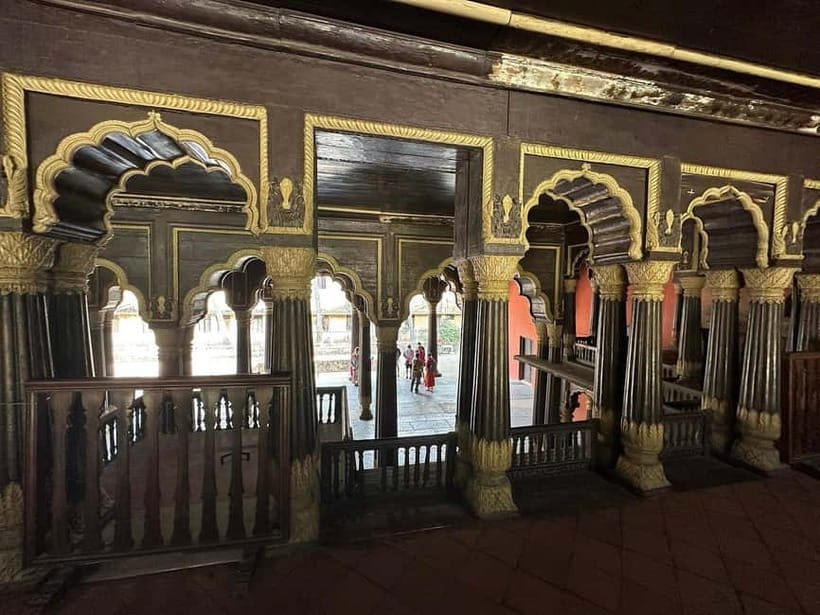
- Tipu Sultan’s Summer Palace: See a 230-year-old palace built mainly from teak wood.
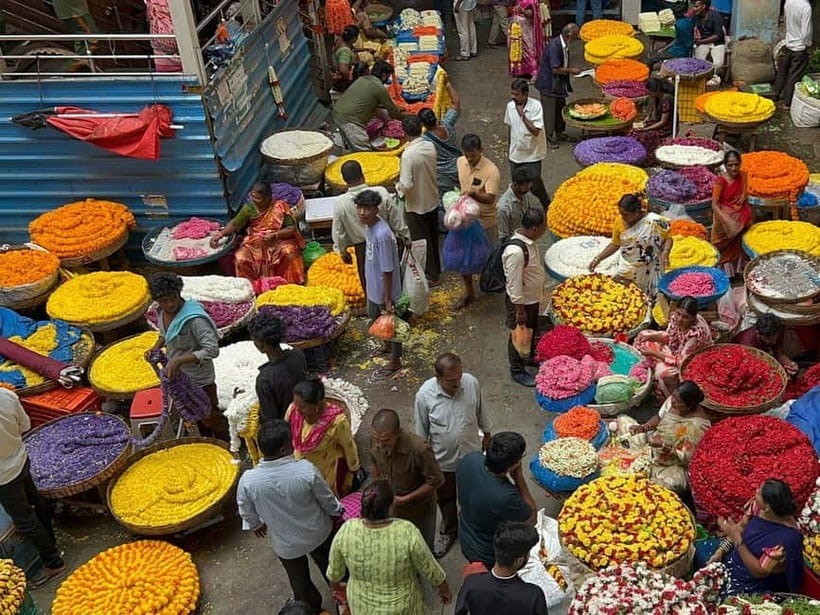
- KR Market’s flower scene: Watch garlands and decorations take shape among fruit, vegetable, and flower stalls.
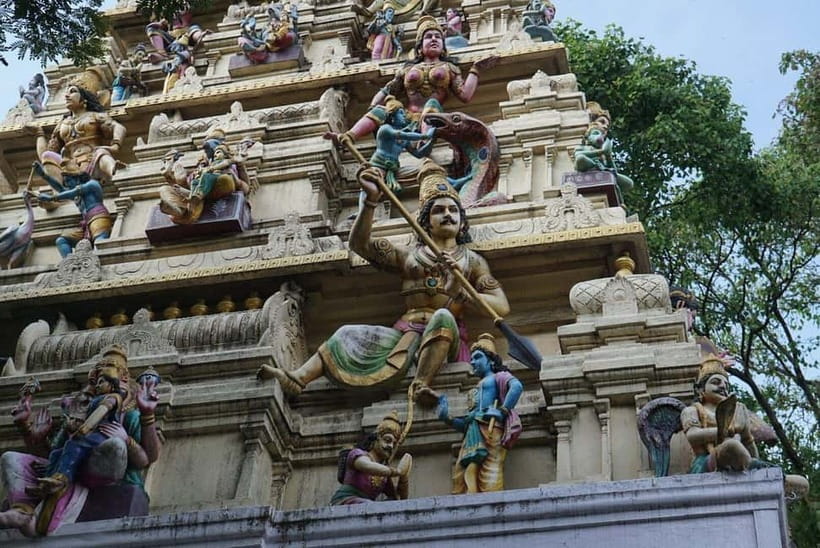
- Four faith and power centers: Visit a Hindu Vishnu temple, Bangalore Fort, a Jain temple, and the former palace of Tipu Sultan.
- A useful city introduction: Learn how Bangalore grew from Kempegowda’s settlement and Tipu Sultan’s era into India’s technology capital.
- Small-group attention: Groups of up to 10 make it easier to ask questions and stay together in tight streets.
- Practical clothing matters: Cover your shoulders and legs, carry a headscarf and spare socks, and wear walking shoes.
Why this three-hour walk works so well
Bangalore can be hard to read at first. The modern city is spread out, traffic is heavy, and its technology campuses tell only one part of the story. This walk takes you into the old center, where the city’s past is still tied to worship, trade, royal power, and daily work.
You move through several centuries in a short distance. Kempegowda’s early Bangalore, Tipu Sultan’s court, the British period, and the modern city all enter the conversation. The guide’s job is not only to identify buildings, but to explain how Bangalore changed from the City of Boiled Beans into the Silicon Valley of India.
The tour costs $32 per person. I consider that fair value if you have only a few hours and want a guide to handle the route, explain the sites, and help you make sense of the market. Entry to the listed palace, fort, temples, and market experience is included, while food, drinks, and transport to the starting point are not.
That price becomes especially useful if you are visiting Bangalore for one day or staying outside the old center. Several guides have also helped solo visitors find their way back afterward, including assistance with the Metro or a ride, although return transport is not part of the standard price.
More Market Walking Tours in India
- Delhi Food Walk: Rickshaw Ride, Street Eats & Market Tour
★ 5.0 · 401 reviews - Private Heritage Walking Tour in Jaisalmer Fort and Old Bazaar
★ 5.0 · 306 reviews - Old Delhi Food-Spice Market-Temples Tour Soon Featured on NETFLIX
★ 5.0 · 304 reviews
Starting at Tipu Sultan’s Summer Palace
The meeting point is at the gates of Tipu Sultan’s Summer Palace. Your guide waits there, so you should arrive with enough time to find the entrance without rushing.
The palace is about 230 years old and made from teak wood. It is not a huge royal complex, but its timber construction and age give it a special character. This is a good first stop because it places Tipu Sultan in a real setting before the tour moves into the streets.
Expect the guide to explain Tipu Sultan’s role and the wider political story of southern India. The tour also connects his period with the work of Kempegowda and later British influence, so you get a basic timeline rather than isolated facts.
This is one place where a good guide makes a real difference. Vijay has been praised for explaining monuments clearly and answering questions, while Raghu has a gift for mixing dates with folklore and storytelling. If your guide gives you time for photographs, use it. The old timber details are easy to appreciate at a slower pace.
Bangalore Fort and the city’s changing power
From the palace, the route continues to Bangalore Fort, with roughly 30 minutes set aside for the visit. The fort began in the 16th century and was later renovated, making it a useful stop for understanding how Bangalore developed as a defended settlement and regional center.
Do not expect a vast fortress complex. The value here is historical context. The fort helps connect the early city with later rulers, military changes, and British involvement. Your guide can show how the old center grew around places of power, worship, and commerce.
I like this part of the tour because it prevents the palace visit from feeling like a stand-alone monument. You see another layer of the city’s past, then move directly into the living market area. That change is part of the experience: one moment you are thinking about rulers and fortifications, and soon you are negotiating crowded streets beside people doing their daily shopping.
The route is not strenuous for most people, according to the information available, but you should still wear comfortable shoes. You may walk over uneven roads and through close quarters. The pace can also be affected by crowds, traffic, temple activity, or the time needed to keep the group together.
KR Market, where Bangalore gets loud and fragrant
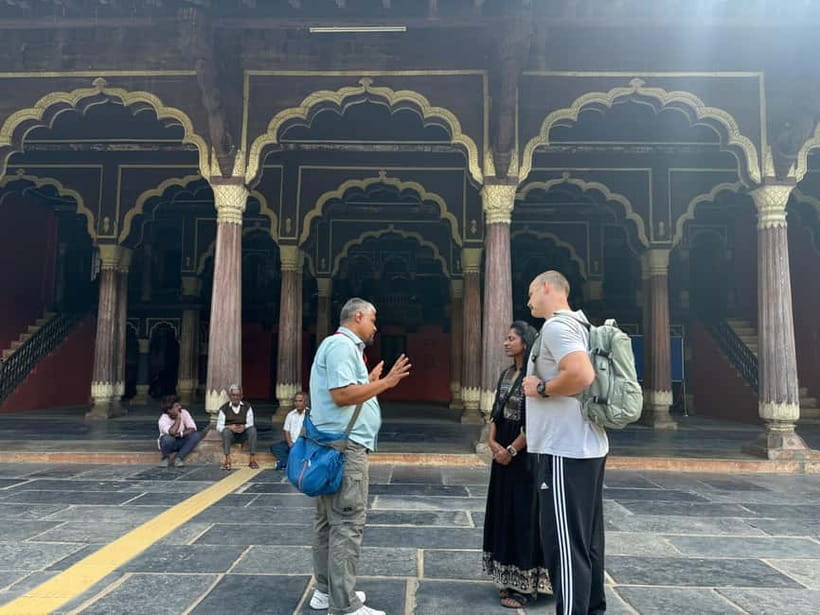
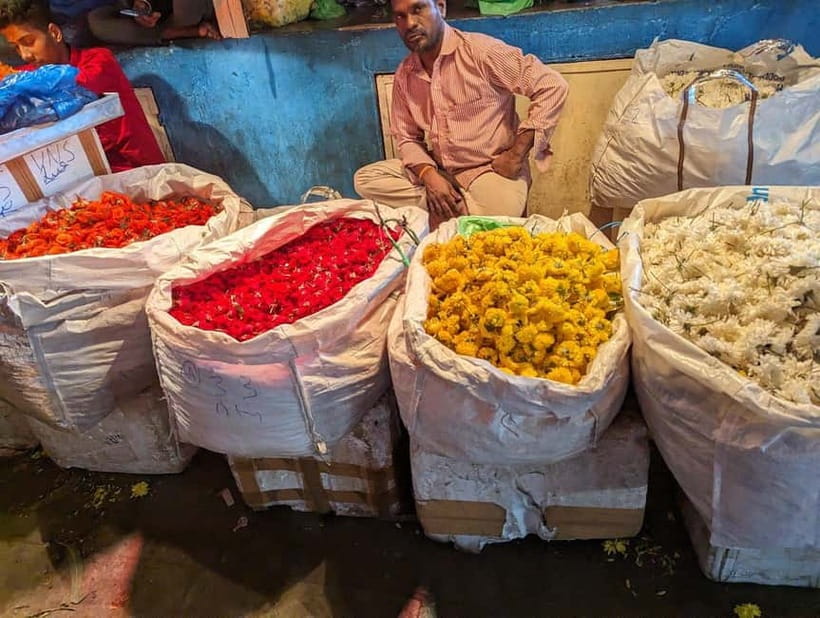
The KR Market section lasts about 30 minutes, but it may become the most memorable part of the walk. This is where you see fruit, flowers, and vegetables being bought and sold amid vehicles, porters, workers, pedestrians, and the occasional cow.
The flower area is a particular treat. Small blossoms are arranged into large decorations on threads, and the colors and scents change as you move through the stalls. You are not simply looking at a market display. You are seeing a working place where flowers are prepared for worship, ceremonies, and daily use.
This is also the part of the route where a guide earns the fee. The streets can be crowded, and it is easy to miss a turn or lose sight of your group. Ramesh and Vijay have been praised for keeping people together calmly, while Raghu has helped visitors speak with traders and decide what they might want to buy.
You should ask before photographing people or stalls. Keep your phone and wallet secure, and stay close to the guide when the market tightens. If you want spices, flowers, or another small purchase, your guide may be able to help with basic questions and local interactions, but shopping is not the main purpose of the tour.
Some tours rush through markets as if they were scenery. This one gives the market enough attention to make it meaningful. You get time to observe how goods move, how sellers work, and how the old city functions. The trade-off is noise and crowding. If you dislike tight spaces, this will be the least comfortable portion.
A short coffee break may also be possible during the experience, based on how some guides organize the walk, but food and drinks are not included. Treat that as a possible extra rather than a promised part of the itinerary.
Same streets, a different way to see them:
- Fontainhas Heritage Walk by Make It Happen
★ 5.0 · 2,834 reviews - The Great Indian Food Tour: Old Delhi Food and Heritage Walk
★ 5.0 · 1,698 reviews - Group Guided Walking Tour in Fort and Colaba
★ 5.0 · 1,073 reviews - Private Guided Walking Tour in Fort & Colaba
★ 5.0 · 895 reviews
The Vishnu temple and a living religious setting
The tour includes a 320-year-old Vishnu temple, where you may see Hindu devotees offering prayers. This is not just an architectural stop. It gives you a direct look at a place still used for worship.
You should enter quietly, follow your guide’s instructions, and avoid treating the service like a performance. Temple routines can vary, and access may depend on working hours, seasonal changes, or local conditions.
The temple visit adds an important balance to the palace and fort. Those places speak mainly about rulers and political power. Here, the focus shifts to religious practice and the rhythm of ordinary devotion.
Your clothing matters. Cover your shoulders and legs, avoid sleeveless tops, short skirts, see-through clothing, and similar outfits. Carry a headscarf, and bring spare socks because footwear rules or temple surfaces may make them useful.
Quiet details inside the Jain temple
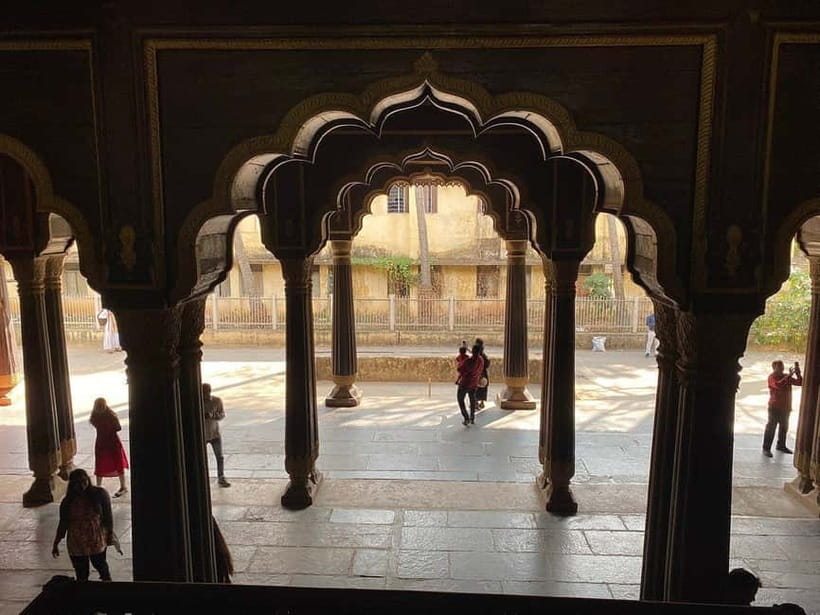
The walk finishes at Shri Adinath Jain Shwetamber Mandir. After the noise of the market, this temple can feel noticeably calmer.
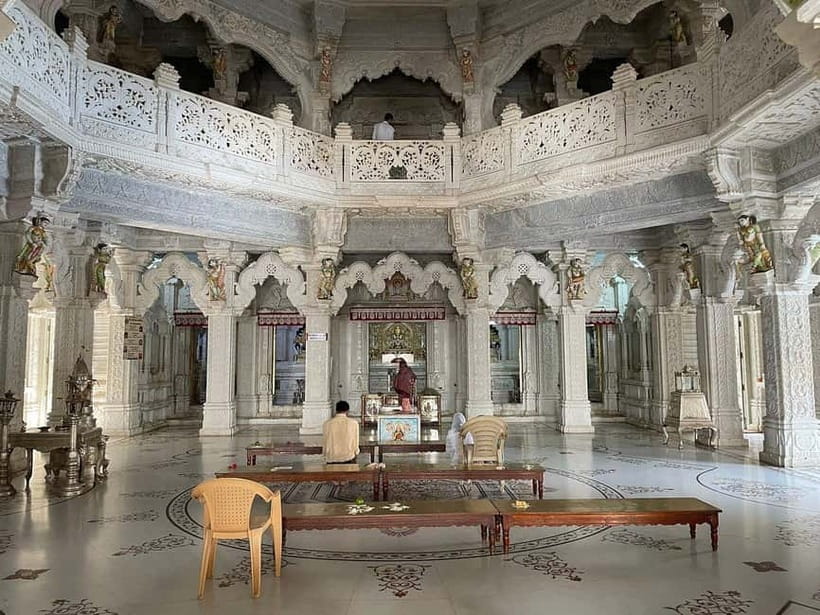
Look for carvings and inlay work. The stop is less about size than close observation, so take your time with the details your guide points out. The contrast with KR Market is one of the tour’s strongest ideas: you move from loud commerce into a place built for stillness and prayer.
The Jain temple is also why modest clothing is required. You may need to remove shoes, so socks are a practical item to pack. Temple access can change, and one visitor chose not to go inside the temples, which made the tour shorter than expected. If you want the full religious and architectural experience, confirm with your guide what is open and permitted that day.
The guides make the difference
The tour is delivered in English, and the guide quality is a major part of its appeal. The strongest descriptions emphasize clear explanations, local pride, patience, and the ability to answer questions without making the walk feel like a lecture.
Vijay appears often in praise for his history, religion, safety awareness, photography, and crowd control. Vasuki is described as warm, funny, generous, and easy company. Vanaja has been appreciated for her enthusiasm and for looking after the group, while Raghu is noted for clear explanations, folklore, and help at the market.
Varun is especially suited to people who enjoy conversations about temples, Indian culture, and less familiar stories. Kamakshi has been praised for combining facts with storytelling and responding thoughtfully to personal interests. Ramesh has helped visitors feel safe in the Sunday market, a useful point if you are uneasy about crowded streets.
The guides are not interchangeable in personality, so your experience may differ depending on who leads the walk. One small caution is that an accent or speaking style may occasionally require you to ask for a point to be repeated. The tour is in English, but clear communication is still worth confirming at the start.
Crowds, clothing, and getting around
Plan for a real city walk, not a quiet heritage route. You will navigate narrow streets with traffic, vendors, pedestrians, workers, and animals. The market may be especially crowded on a weekend.
Comfortable walking shoes are essential. The walk is described as light rather than strenuous, but uneven roads and close quarters demand attention. Carry water, though food and drinks are not included.
A headscarf is listed among the recommended items. Modest clothing is required at the Jain temple and should also be suitable for the Hindu temple. If your outfit does not cover your legs and shoulders, you may not be able to enter every stop.
The tour begins at the palace and ends at the Jain temple, not at the original meeting point. Transport from your hotel to the venue and back can be arranged for an additional fee. If you are unfamiliar with Bangalore or staying far away, ask about this before booking rather than assuming it is included.
Who gets the most from this Bangalore tour
I would choose this walk if you have one day in Bangalore, a long layover with enough time, or a first morning when you want a clear introduction to the old center. It gives you architecture, religion, commerce, and city history without requiring a full day.
It is also a strong choice for solo visitors. A small group and a guide who knows the market can make a new city feel easier to manage. The guides have helped solo participants with photographs, Metro directions, and onward transport, though those extras depend on the individual guide.
This is less suitable if you want a slow, quiet museum-style tour. The city is noisy, the market is crowded, and the route involves constant movement. It may also disappoint if your main goal is extensive time inside each monument, since several major stops share a compact three-hour schedule.
The small group limit of 10 is a real advantage. You can ask questions, hear the explanations, and stay connected to the guide more easily than on a large coach tour. Private departures may occur when only one or two people book, which allows for more personal attention, but you should not assume that arrangement in advance.
Should you book the old Bangalore walk?
Book it if you want a focused introduction to Bangalore’s oldest center and value a local guide more than independent wandering. The palace, fort, temples, and KR Market create a strong three-hour sequence, and the market is the most convincing reason to go.
I would especially recommend it to first-time visitors, solo visitors, history and religion enthusiasts, and anyone with limited time. Bring modest clothes, socks, walking shoes, and an open mind about noise and crowds.
Skip it if you dislike markets, narrow streets, or religious sites with changing access rules. For most people who want to understand Bangalore beyond its modern technology image, though, $32 buys a useful, lively slice of the city and a much better sense of how its old center still works.
FAQ
How long does the Bangalore walking tour last?
The tour lasts three hours.
What language is the tour conducted in?
The live tour guide speaks English.
Where does the tour begin?
It begins at the gates of Tipu Sultan’s Summer Palace, where the guide waits for you.
Where does the tour finish?
The walk finishes at Shri Adinath Jain Shwetamber Mandir.
What places are included?
The route includes Tipu Sultan’s Summer Palace, Bangalore Fort, KR Market, a Vishnu temple, and the Jain temple.
Is transport included?
No. Transport is not included in the $32 price, but hotel transport to the venue and back can be arranged for an additional fee.
What should I wear?
Cover your shoulders and legs. Do not wear short skirts, sleeveless shirts, skirts that do not provide suitable coverage, or see-through clothing. Bring a headscarf and spare socks.
Is the tour suitable for a small group?
Yes. The group is limited to 10 participants, and the activity is offered as a small-group tour.
More Castle and Palace Walks in India
- Tipu Palace + Koté Vishnu + Fort + KR Market + Jain Temple = Bengaluru Pété Walk
★ 5.0 · 150 reviews - Edinburgh Castle: Guided Walking Tour with Entry Ticket
★ 4.7 · 11,699 reviews - Venice: Doge’s Palace and St Mark’s Basilica Walking Tour
★ 4.4 · 6,291 reviews - Prague: 3-Hour Walking Tour of Old Town & Prague Castle
★ 4.7 · 5,696 reviews
Just added around India
- Tipu Palace + Koté Vishnu + Fort + KR Market + Jain Temple = Bengaluru Pété Walk★ 5.0 · 150 reviews
- Street Food walking tour in Bangalore with a food evangelist★ 5.0 · 83 reviews
- Bengaluru Pete City Market Half-Day Walking Tour★ 5.0 · 163 reviews
- Amritsar Heritage Walking Tour★ 5.0 · 112 reviews
- Agra Walking Tour★ 5.0 · 109 reviews
- The Great Indian Food Tour: Old Delhi Food and Heritage Walk★ 5.0 · 106 reviews
- Spiritual Walk Tour Trivandrum (Guided Walking Experience)★ 4.6 · 87 reviews
- Spiritual Walking tour with Puja Ceremony -The Pushkar Route★ 5.0 · 101 reviews
Market Walking Tours, compared.

City Highlights Temple and Market Walking Tour
Read our review →
Tokyo Tsukiji Fish Market Food and Culture Walking Tour
Read our review →
London Bridge & Borough Market Food Tour with 7 Authentic Dishes
Read our review →
Air Raid Shelter + St. Nicholas Market Walking Tour
Read our review →
Nishiki Market Brunch Walking Tour (7 Tastings + Brunch)
Read our review →
Bologna Food & Market Tour with 6 Tastings, Pasta, Wines & More
Read our review →Browse the lists this tour appears in