
Review · OLD TOWN WALKING TOURS
Perugia: Old Town Walking Tour, Piazza IV Novembre
Perugia keeps its best stories underground. This 90-minute walk gives you two things I especially like: a close look at Piazza IV Novembre and the Fontana Maggiore, plus entry into the shadowy passages of Rocca Paolina. The main consideration is language, since the tour is offered in Italian.
The route also gives you a useful sweep through Perugia’s past, from the Etruscans and Romans to medieval rule and papal power. Guide Elena received particular praise for being warm, attentive, and good at holding interest, which matters on a history-heavy walk through a compact old town.
Key points at a glance
- Piazza IV Novembre is the heart of the walk, with the Gothic Fontana Maggiore and St. Lawrence Cathedral setting the scene.
- The Etruscan Arch dates to the 3rd century BC, giving the tour a direct link to Perugia’s earliest period.
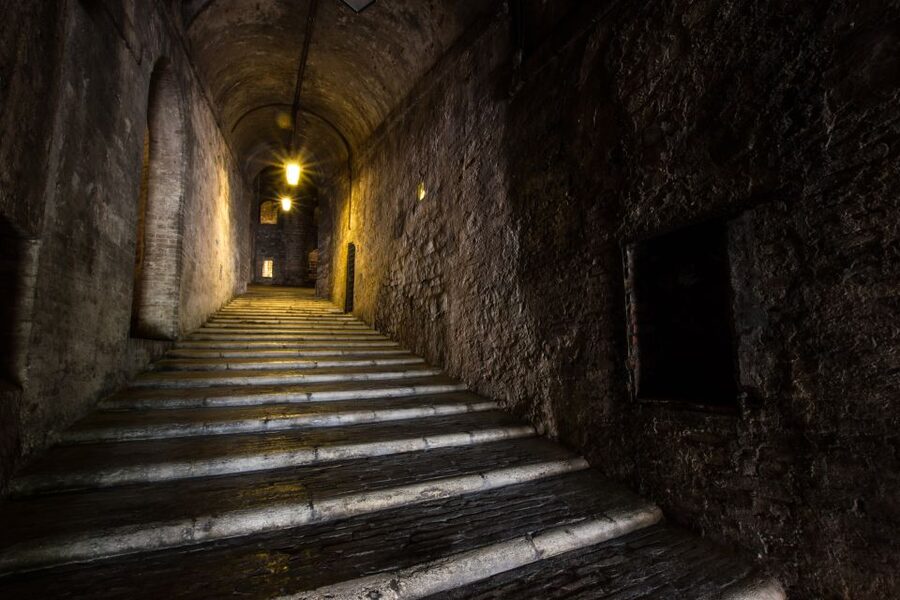
- Rocca Paolina takes you below modern Perugia, where old streets and fortress remains reveal the city’s conflict with papal authority.
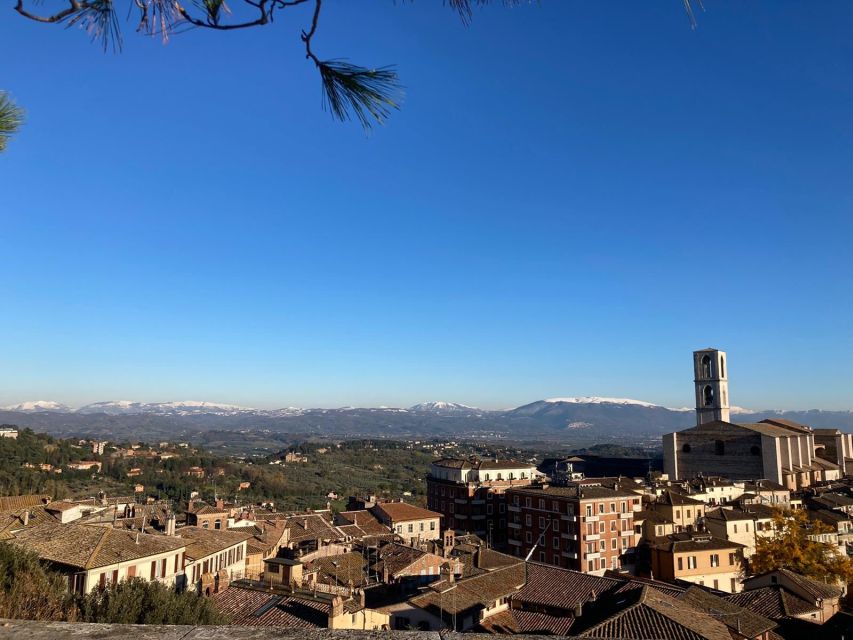
- Views reach toward Assisi and Mount Subasio, including rolling Umbrian hills and, in suitable conditions, snowy peaks.
- The 1.5-hour format is compact, making this a practical introduction before exploring Perugia on your own.
- The meeting point is easy to miss, because it is in the cathedral cloister rather than inside the church.
Why this short Perugia walk works
Perugia can feel confusing at first. Its old center sits high above the surrounding countryside, and its streets, arches, stairways, and layered buildings reflect several different eras at once. A local guide helps turn that jumble into a story.
I like the way this tour connects broad history with things you can actually see. The Etruscans are not just a date in a textbook. Their presence is tied to the Etruscan Arch. Papal rule is not just a political chapter. You encounter its physical force in Rocca Paolina.
The 90-minute length also makes sense. You get a firm introduction without giving up half a day. If you have only a short stay in Perugia, this walk can help you understand the city before returning to places that deserve more time.
The tradeoff is that the guide speaks Italian. If you understand Italian, this is a clear advantage because the tour can carry local expressions, anecdotes, and details that may be harder to convey through translation. If you do not, you should confirm that Italian-only guiding suits you before booking.
More Old Town Walking Tours in Italy:
- Rome Food Tour in the Historic Centre with 8+ Food Tastings
★ 5.0 · 1,000 reviews - Genoa: 2-Hour Guided Walking Tour of the Historical Center
★ 4.2 · 605 reviews - Cagliari: Walking Tour of the Old City
★ 4.8 · 560 reviews
Starting at St. Lawrence Cathedral’s cloister
The meeting point is beside the cathedral, but not inside the church. You need to find the cloister of St. Lawrence Cathedral, reached through a large portal on Piazza IV Novembre.
Here is the useful visual check: stand with the Fontana Maggiore and cathedral in front of you, then walk to the left side of the square. Look for the large entrance marked with red signs for Perugia Sotterranea and Museo del Capitolo. Go through that portal to reach the cloister and the walking-tour meeting point.
This detail is worth taking seriously. Piazza IV Novembre is a busy, open public space, and the cathedral entrance is not the same as the tour entrance. Arriving a little early gives you time to locate the portal without rushing.
The cloister is also a fitting place to begin. You are starting not in a generic street corner, but within a part of Perugia’s religious and civic center. From there, the guide can place the square around you in context.
Piazza IV Novembre and the Fontana Maggiore
The tour moves into Piazza IV Novembre, Perugia’s main historic square. This is the point where the city’s religious, civic, and artistic importance comes together.
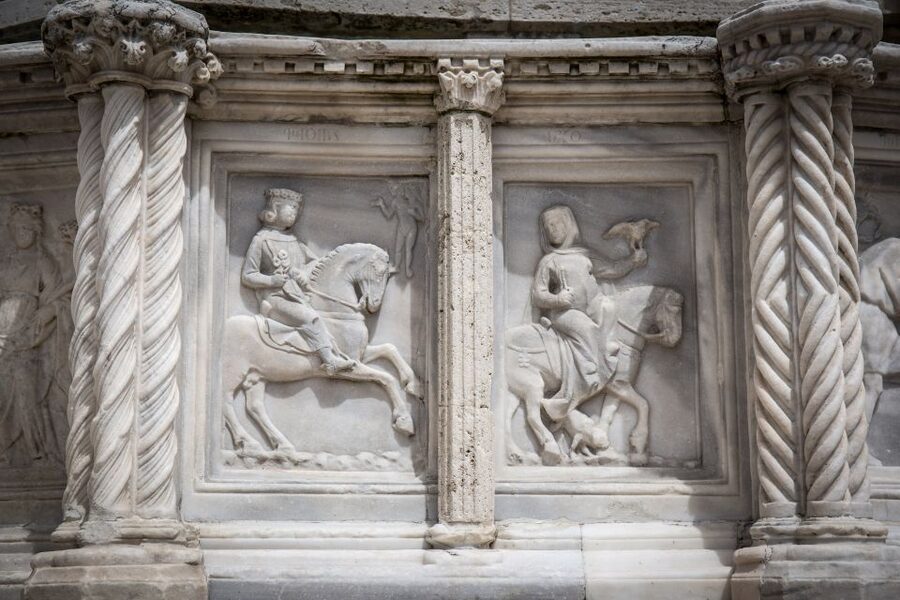
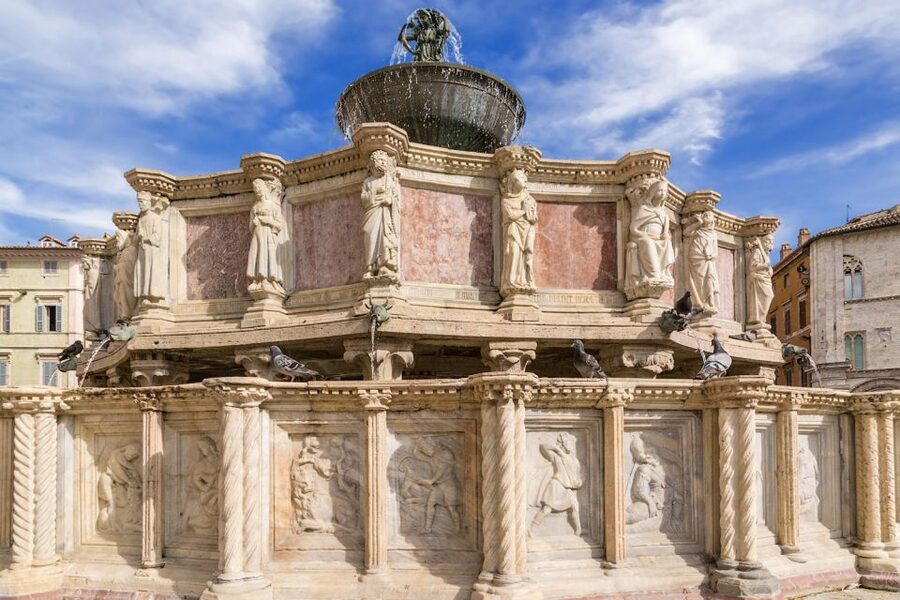
The Fontana Maggiore is the square’s great centerpiece. Built in the Middle Ages, it combines sophisticated engineering with Gothic sculpture. It was not designed as simple decoration. Its water system and carved panels show how much civic pride and technical skill went into creating a public fountain.
Your guide can help you read the fountain rather than simply photograph it. Look closely at the layers of carved stone and the way the monument anchors the square. Without explanation, it is easy to see only an attractive fountain. With context, it becomes a statement about medieval Perugia’s ambition.
The cathedral adds another strong visual layer. You will not spend the tour inside every major building, but the setting gives you a sense of how power operated in the old city. Religious authority, public ceremony, sculpture, and daily urban life all meet here.
I would plan to return to the square after the tour. A guided explanation gives you the outline, but a second look lets you study the fountain and surrounding buildings at your own pace.
From Etruscan roots to Roman rule
Perugia’s story reaches back well before its medieval streets. The walk explains the city through the Etruscans, Romans, the Middle Ages, and later papal control.
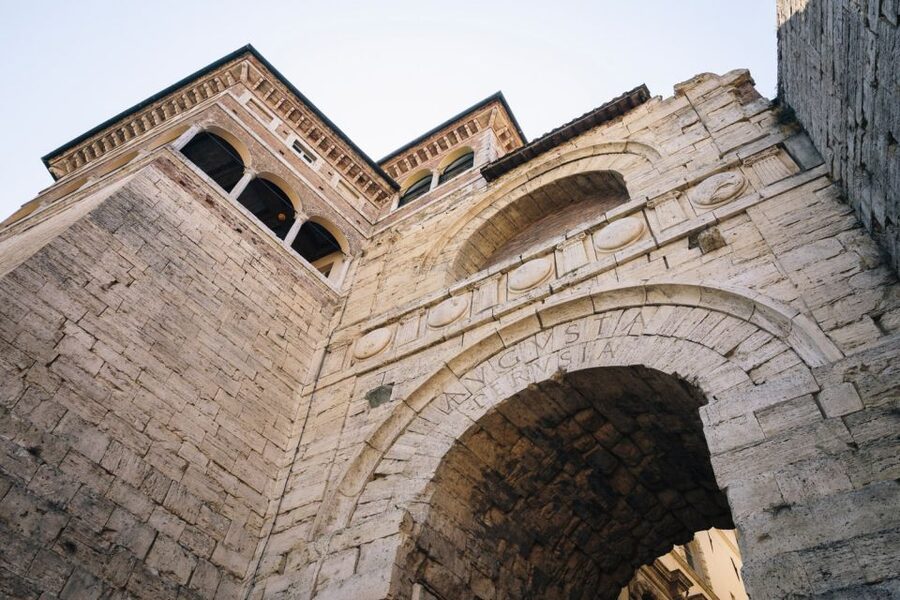
The Etruscan period is especially important because it gives Perugia a stronger sense of age than its medieval stonework alone suggests. The Etruscan Arch, built in the 3rd century BC, is one of the clearest physical reminders of that early city.
Seeing an ancient gate in the middle of a living urban center is one of the tour’s best features. It helps you understand that Perugia was not rebuilt from scratch in each era. New rulers and citizens built around what came before, leaving a layered town rather than a single-period museum.
The Roman period adds another turn to the story. The guide’s job here is not simply to name dates, but to explain how Perugia changed as larger powers shaped the region. That kind of connection is useful because it gives meaning to architectural fragments and street patterns that might otherwise pass unnoticed.
The tour also promises small details about buildings, characters, and city customs. These anecdotes can be the most memorable part of a walk. A major monument gives you the headline, while an overlooked architectural feature often gives you the human story.
A few more walks around Italy worth a look
- Venice: Doge’s Palace and St Mark’s Basilica Walking Tour
★ 4.4 · 6,291 reviews - Milan: Guided Walking Tour & Last Supper Visit with Ticket
★ 4.7 · 5,409 reviews - Naples: Street Food Walking Tour with Local Guide
★ 4.9 · 4,976 reviews - Florence: Highlights Walking Tour with Expert Guide
★ 4.6 · 4,662 reviews
Walking the main street with a local guide
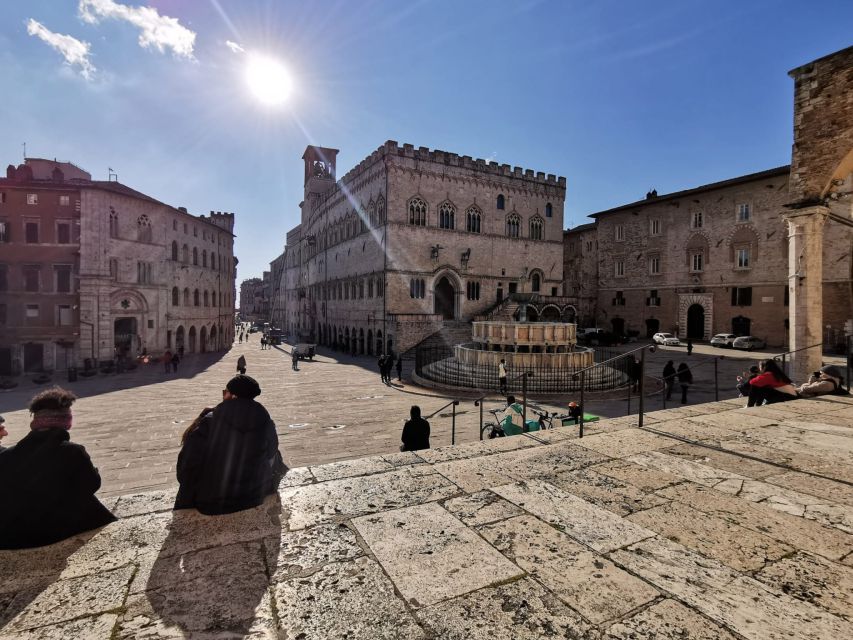
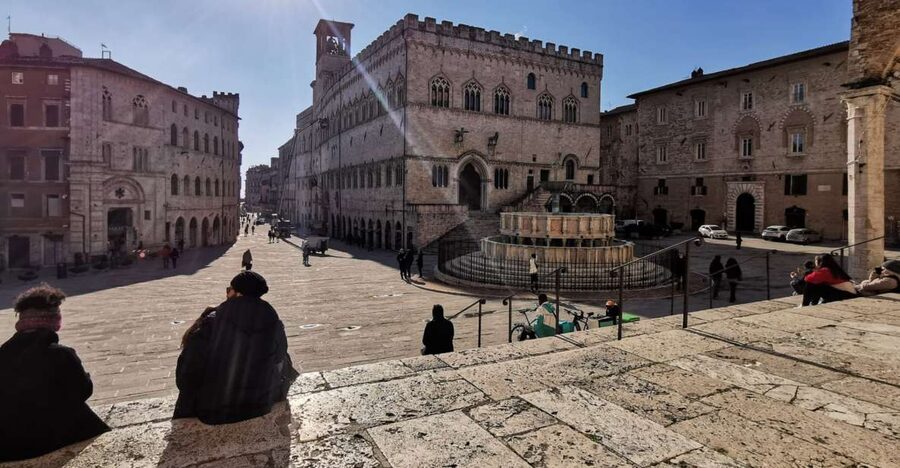
The route crosses Perugia’s main street as the guide explains the city’s characters and details. This is where the tour becomes less like a list of monuments and more like an orientation walk.
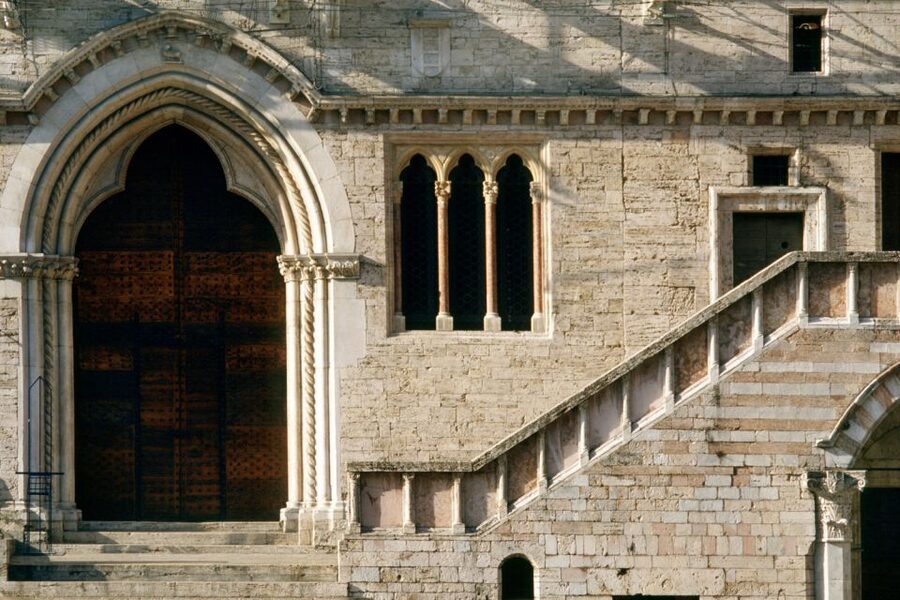
You may notice architectural elements that are easy to overlook when walking alone. That is one of the practical benefits of a local guide. Perugia’s old center is compact, but compact does not mean simple. A doorway, arch, wall, or change in level can reflect a different period of construction or a past use that is not obvious at first glance.
The guide also brings together the city’s political and social changes. Etruscan foundations, Roman influence, medieval civic life, and papal dominance are not separate boxes. They overlap in the streets you are crossing.
Guide Elena has been praised for being empathetic and for keeping attention focused. That quality matters here. A history walk can become tiring when every stop turns into a lecture. A guide who reads the group well can keep the pace lively while still explaining why the places matter.
Because the tour is for a small group, you should have a better chance of hearing the guide and asking a question than on a large coach-style outing. The provided details do not state the exact group size, so I would not assume an intimate private tour. Still, the small-group format is suited to a walking route through narrow historic streets.
The Etruscan Arch and its powerful sense of age
The Etruscan Arch is one of the route’s clearest highlights. Dating from the 3rd century BC, it gives you a direct encounter with Perugia’s early defenses and urban structure.
Ancient gates are especially useful on a city walk because they make time visible. You can stand before the same basic passage that has served as an entrance for centuries, even though the people, rulers, and buildings around it have changed.
The arch also helps balance the tour. Piazza IV Novembre emphasizes medieval Perugia, while the Etruscan Arch reaches much farther back. Together, the two stops show why Perugia feels so layered.
Do not expect a long archaeological visit here. This is a stop within a walking itinerary, not a separate museum tour. Its value comes from the guide’s explanation and from seeing the arch in its urban setting.
Views toward Assisi and Mount Subasio
Perugia’s high position gives the walk a second kind of reward: broad views over Umbria. The tour includes opportunities to see rolling hills and, under suitable conditions, snowy peaks stretching toward Mount Subasio and Assisi.
These views add breathing room between the stone streets and enclosed passages. You get a sense of the wider region that shaped Perugia’s importance. Assisi is not just a name on a distant sign. Its position near Mount Subasio helps you understand the geography around the Umbrian towns.
Weather matters here. The tour is subject to weather conditions, and visibility can change what you see from the city. On a clear day, the outlook may be a strong part of the walk. On a gray or wet day, the outdoor portions will feel less rewarding, even though the historical stops remain.
Bring a camera if views are important to you, but do not plan the entire experience around them. The fountain, arch, and Rocca Paolina provide the main structure of the tour.
Going below the city at Rocca Paolina
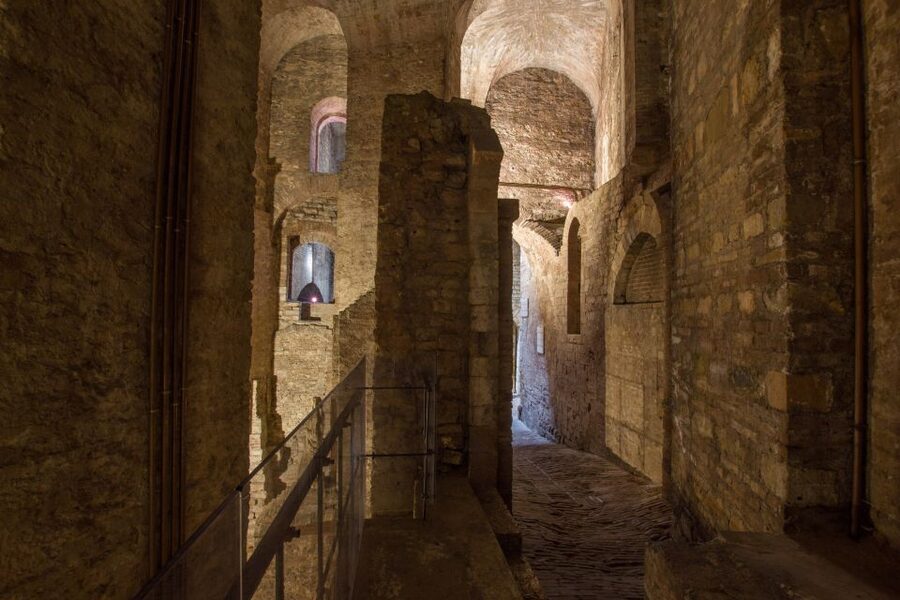
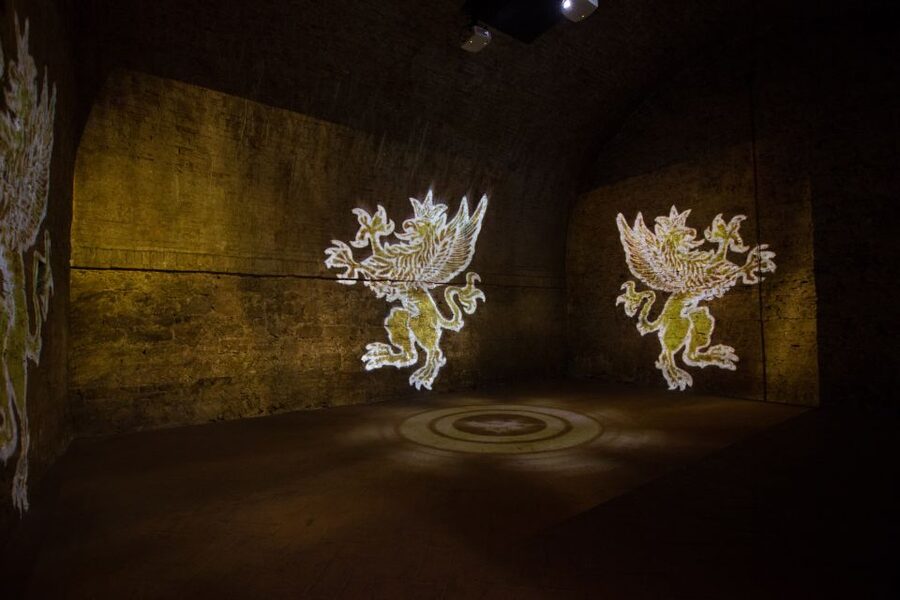
Rocca Paolina is the most distinctive part of the route. You leave the open square and go underground into the remains of a fortress associated with papal power in Perugia.
This is not simply a basement passage. The underground area preserves the old fortress setting and gives you a physical sense of how political authority reshaped the city. Walking through it lets you see old streets and structures beneath the modern center.
The change in atmosphere is striking. Above ground, Perugia feels like a functioning Italian hill town, with public squares and ordinary movement. Below ground, the fortress remains create a darker, more enclosed setting. The contrast helps explain why Rocca Paolina is such a strong symbol of papal control.
The tour includes entrance to Rocca Paolina, which improves the value of the $35 price. You are not only walking past the exterior. You get access to the underground area and any exhibitions on display there.
The one limit is time. With a 90-minute tour covering several eras and stops, you will not explore every passage at leisure. If Rocca Paolina interests you most, return later and spend more time there after the guided walk.
Is $35 a fair price?
At $35 per person, this is a reasonable price for a guided introduction to central Perugia. You are paying for a local guide, a structured route, and entrance to Rocca Paolina. Food and drinks are not included, but that is not a serious drawback for a 90-minute city walk.
The value depends mainly on how much you want context. If you prefer to stroll, read signs, and make your own discoveries, you can see several of these places without booking a tour. If you want someone to connect Etruscan, Roman, medieval, and papal periods while pointing out small details, the price is easier to justify.
The skip-the-ticket-line benefit may also save a little time at included sites. The main value, though, is not speed. It is having the city explained in the order you see it.
The high overall rating of 4.8 from 304 reviews suggests a consistently strong experience, and Elena’s praise points to the most important quality: a guide who can make history feel personal rather than dry.
Who should book this Perugia tour?
I would recommend it to first-time visitors who want a clear introduction to the old center. It also suits anyone interested in architecture, medieval sculpture, Etruscan remains, or the political story behind Rocca Paolina.
The short duration works well before a meal, museum visit, or independent walk. It is also useful early in a Perugia stay, since the route can help you identify places to revisit.
Italian speakers are the best match because the live guiding is in Italian. If your Italian is limited, the walk may still offer visual interest, but you should not book it expecting English commentary.
People who need a long, slow museum visit may find the pace brisk. The route covers a lot: the main square, fountain, cathedral setting, old street details, Etruscan Arch, scenic viewpoints, and Rocca Paolina. Think of it as a well-packed introduction, not a full archaeological study.
The tour is weather dependent, so check conditions before setting out. Perugia’s outdoor streets and viewpoints are part of the appeal, and rain can affect the experience.
My verdict on the Old Town Walking Tour
Book this tour if you want Perugia explained through its actual streets, monuments, and underground remains. The best reasons are the combination of Piazza IV Novembre, the ancient Etruscan Arch, and included access to Rocca Paolina.
I especially like that the route moves from the public grandeur of the Fontana Maggiore to the enclosed fortress remains below the city. That contrast gives you a better feel for Perugia than a simple list of churches and squares.
Skip it if you need English guiding or prefer exploring entirely on your own. For Italian-speaking visitors who value a personable guide, a compact route, and strong historical context, $35 is a fair price for a focused first look at Perugia.
FAQ
Where does the Perugia walking tour meet?
It meets in the cloister of St. Lawrence Cathedral, not inside the church. Enter through the large portal on Piazza IV Novembre marked with red Perugia Sotterranea and Museo del Capitolo signs.
How long does the tour last?
The tour lasts 1.5 hours.
What language is the tour offered in?
The live tour guide speaks Italian.
What does the tour include?
The price includes a local guide and entrance to Rocca Paolina.
Is food or drink included?
No. Food and drinks are not included.
What places does the tour visit?
The route includes Piazza IV Novembre, the Fontana Maggiore, the Etruscan Arch, views toward Mount Subasio and Assisi, and the underground area of Rocca Paolina.
Can I cancel for a full refund?
Yes. You can cancel up to 24 hours in advance for a full refund.
Is it possible to reserve now and pay later?
Yes. The reserve-now, pay-later option lets you keep your plans flexible and pay nothing at the time of booking.
Just added around Italy
- Bergamo: Digital guide made by a local for your walking tour★ 5.0 · 184 reviews
- Full Day Tour by Car and Walking among the Apulian Beauties★ 4.5 · 182 reviews
- The Original Street Food Walking Tour in Bari★ 4.5 · 226 reviews
- Bari Walking City Tour★ 4.5 · 511 reviews
- Bari: Street Food Walking Tour with a Local Guide★ 5.0 · 160 reviews
- Bari Walking Tour with Pasta Experience★ 4.5 · 270 reviews
- Assisi Private Walking Tour including St. Francis Basilica★ 5.0 · 124 reviews
- Private St. Francis Basilica of Assisi and City Walking Tour★ 5.0 · 114 reviews
Old Town Walking Tours, compared.
Underground Vaults Walking Tour in Edinburgh Old Town
Read our review →
3-Hour Walking Tour of Old Town & Prague Castle
Read our review →
Old Town and Jewish Quarter Guided Walking Tour
Read our review →
Cartagena: Historic Center and Getsemaní Shared Walking Tour
Read our review →Browse the lists this tour appears in