
Review · HISTORY WALKING TOURS
Tokyo: Imperial Palace Japanese History Walking Tour
History comes alive at Tokyo’s old castle. This walking tour makes the Imperial Palace grounds easier to understand, especially the shift from Edo Castle and shoguns to the modern Emperor’s palace. I like the friendly guides and the clear storytelling, with Mika, Natsumi, Lakki, and Alexandre earning especially warm praise for their history knowledge and personal help. The main drawback is that the inner palace is closed to the public, so you’ll explore the Eastern Gardens and former castle grounds rather than the Emperor’s private residence.
I also like the practical touches: guides help with photographs, answer questions, offer restaurant tips, and sometimes provide small comforts such as mosquito spray or heat-relief gifts. At $32 per person, it is a fair deal if you want context instead of simply walking past stone walls and gardens. Prepare for outdoor walking in all weather, and note that the route is not suited to people with mobility, heart, back, or recent-surgery concerns.
Key points at a glance
- Stand where Edo Castle once ruled Japan: Explore the former stronghold of the shogun and learn why the original castle buildings disappeared.
- Follow the change from shogun to Emperor: The tour explains how Edo Castle became an imperial residence during Japan’s move into the modern era.
- See more than a garden: Expect old stonework, samurai-era remains, bamboo, royal koi, and trees gifted from across Japan.
- Choose a guide who adds personality: Mika, Natsumi, Lakki, Alexandre, and others are praised for clear explanations, humor, patience, and local advice.
- Meet near Tokyo Station: Find the guide at the Starbucks by the fountain in Wadakuramon Fountain Park, a 5 to 10 minute walk from Tokyo or Otemachi Station.
- Plan for the weather: This is an outdoor walk that operates rain or shine, with no access to the inner palace.
Why this palace walk is worth your time
Tokyo’s Imperial Palace can seem quiet and polished at first glance. You see broad lawns, carefully tended trees, stone walls, and a few grand gates. Without a guide, it is easy to admire the scenery but miss the political drama beneath it.
This tour gives you the basic story. The site was once Edo Castle, the seat of the Tokugawa shoguns for more than 250 years. The shogun governed Japan while the Emperor remained a symbolic figure in Kyoto. Later, during the Meiji period, power shifted back toward the Emperor, and the old castle site took on a new role.
That change is the heart of the walk. You are not just looking at a palace garden. You are following the transformation of Japan from a feudal society organized around farmers, samurai, daimyo, and shogun into the modern imperial state.
I would choose this tour early in a Tokyo visit. The overview helps you make sense of later stops around the city, from historic neighborhoods to museums and temples. Several guides also offer food, cultural, etiquette, and sightseeing suggestions, which can be useful when you are still finding your bearings.
More History Walking Tours in Japan
- Tokyo: Imperial Palace and Shogun Historical Walking Tour
★ 5.0 · 2,251 reviews - Asakusa: A Big-picture History Walk to Know Japan
★ 4.6 · 77 reviews - Kyoto Gion: 2-Hour Geisha Culture & History Walking Tour
★ 5.0 · 1,186 reviews
Meeting at Wadakuramon Fountain Park
The meeting point is straightforward, but Tokyo’s stations are large enough to make simple directions feel complicated. Take the train to Tokyo Station or Otemachi Station, then allow about 5 to 10 minutes to walk to Wadakuramon Fountain Park.
Look for the Starbucks near the fountain. Your guide should be waiting there with a Sunrise Adventure sign. This is a sensible meeting place because it gives you a recognizable landmark, though you should still leave extra time if you are unfamiliar with Tokyo Station’s exits.
The guide leads the group from the park toward Otemon Gate, one of the main entrances to the palace grounds. The tour ends back at the same meeting point, which makes it easier to continue sightseeing or return to the station.
The guide lineup varies. Mika is often praised for her clear English, patience, and care with group comfort. Natsumi receives repeated praise for her storytelling, history explanations, and restaurant suggestions. Lakki is described as warm, funny, and well prepared, while Alexandre is particularly appreciated for his French-language guiding and willingness to answer questions.
English and French are available. If language matters to you, confirm the available language when booking.
Passing through Otemon Gate
Otemon Gate provides a strong opening because it immediately shows the defensive purpose of Edo Castle. You enter through a grand gateway and begin to see how the castle complex was designed to control movement and protect the shogun.
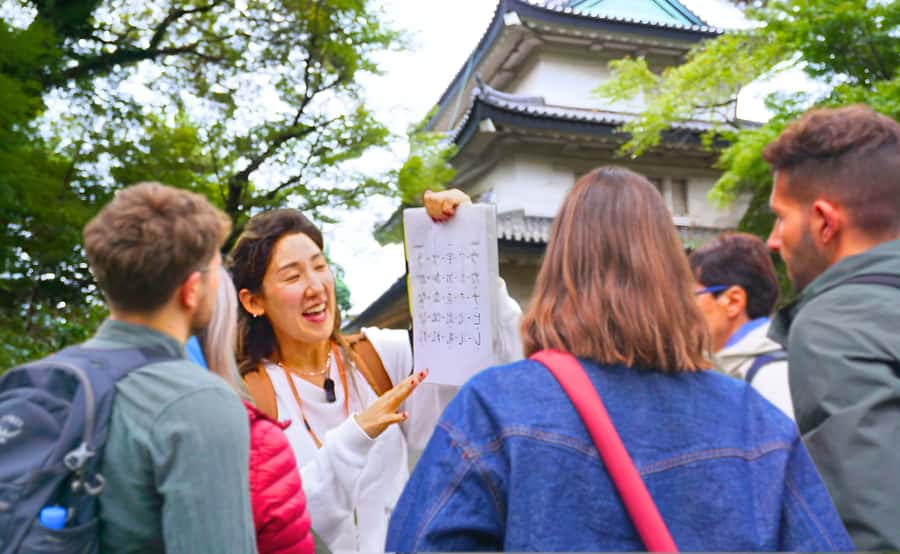
The original castle is no longer standing, and that absence becomes part of the story. Rather than pretending you are seeing a complete castle, the guide explains what happened and uses a miniature model to show how the site looked in the past.
That model is important. Tokyo has changed so much that it can be hard to picture a fortified castle occupying the center of today’s capital. A visual reconstruction helps connect the remaining walls and foundations with the larger complex that once dominated Edo.
You will also learn about the old social ranking system: farmer, samurai, daimyo, and shogun. This is one of the tour’s most useful teaching points because it gives you a simple framework for understanding power, duty, land, and military service in premodern Japan.
The guide may ask questions and involve the group rather than delivering a long lecture. That interactive approach is helpful for families and for anyone who prefers conversation to a formal historical speech. Children can follow the broad characters and ranks, while adults can ask more detailed questions about the Edo and Meiji periods.
Edo Castle ruins and samurai-era remains
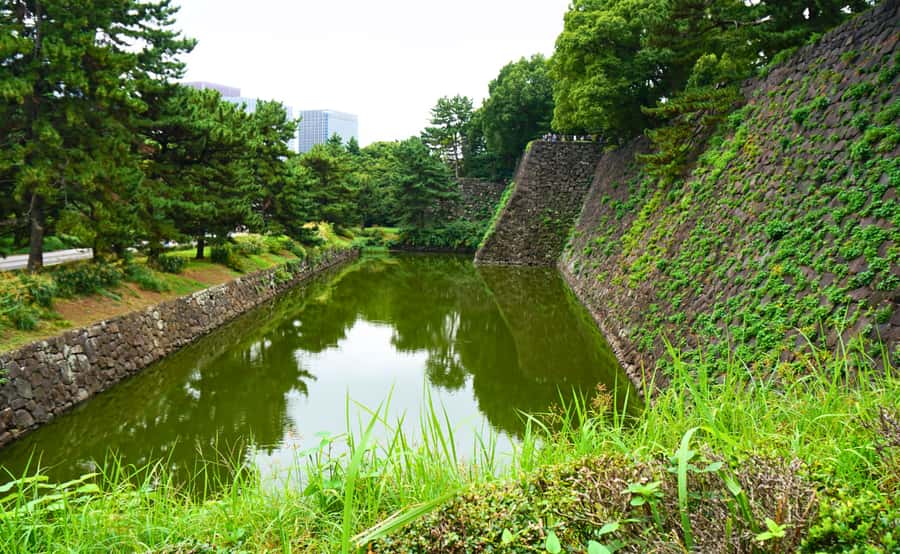
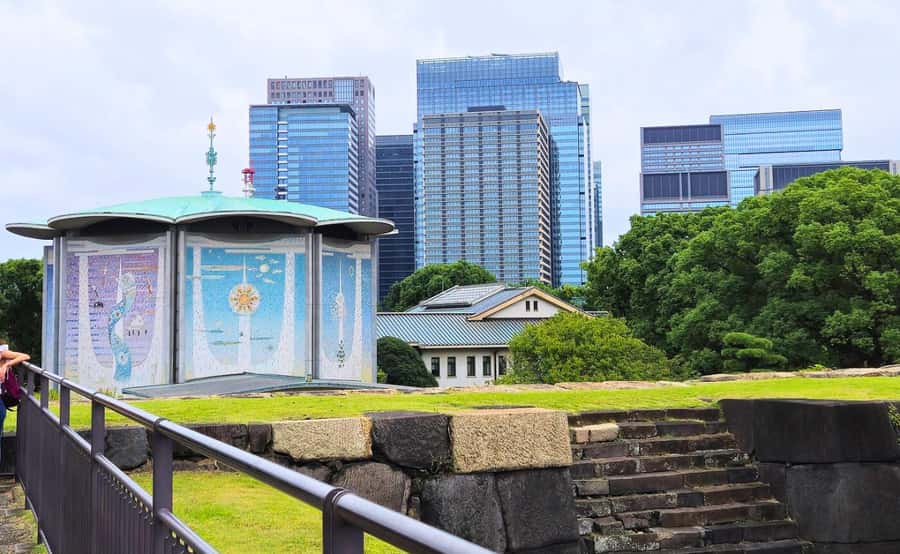
The surviving stone walls and castle foundations are the strongest physical link to the shogun’s world. You will not see the full keep or a preserved castle interior, but the remains show the scale and planning of the old stronghold.
This is where a guide adds real value. Stonework alone does not explain who built it, why the castle mattered, or how the space connected to the social order of the time. A good guide turns scattered remains into a readable site.
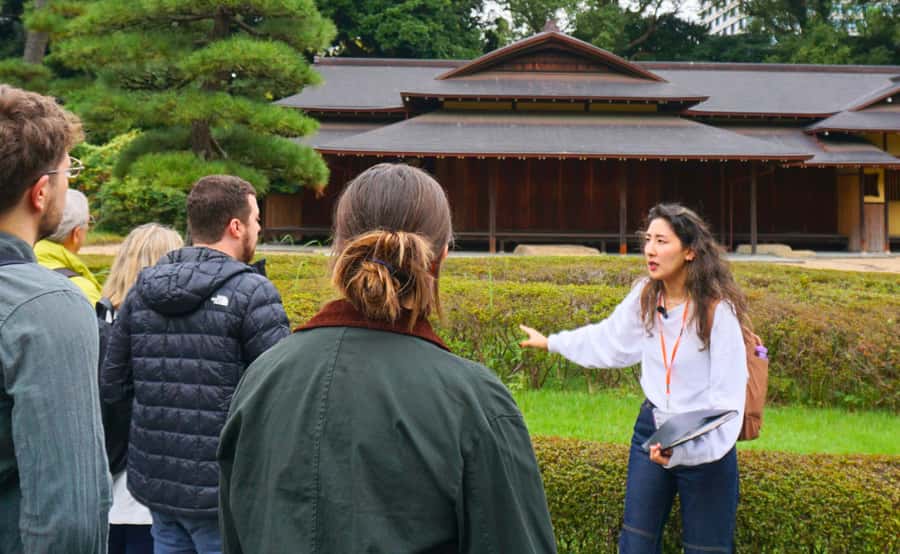
You may also see an old samurai house or samurai-related remains along the route. These details help shift the tour away from imperial ceremony and toward everyday structures of military society.
The history is broad rather than highly academic. You get an accessible introduction to the Edo period, the role of the samurai, the responsibilities of daimyo, and the movement into the Meiji era. If you already have a strong background in Japanese history, you may find some explanations familiar. For most first-time visitors, that broad approach is exactly what makes the tour useful.
The best guides add small facts, humor, and answers to individual questions. Christian’s guide was praised for humor, while Natsumi was repeatedly described as a strong storyteller. Those details matter because two hours of dates and political titles can become heavy without a human touch.
More Castle and Palace Walks in Tokyo:
- Tokyo Castle & Imperial PalaceーShogun Walking Tour
★ 4.7 · 1,068 reviews - Tokyo: Imperial Palace and Shogun Walking Tour
★ 4.9 · 935 reviews - Edinburgh Castle: Guided Walking Tour with Entry Ticket
★ 4.7 · 11,699 reviews - Venice: Doge’s Palace and St Mark’s Basilica Walking Tour
★ 4.4 · 6,291 reviews
Gardens, bamboo, and the palace’s living side

The Eastern Gardens give the walk a welcome change of pace. After the gates, walls, and political history, you move into a calmer setting with trees, garden paths, bamboo, and water.
The gardens are not just decorative scenery. Trees from different parts of Japan were given to the Emperor, so the plantings also reflect the relationship between the imperial household and the wider country. Your guide can explain those connections while you walk, giving the landscape more meaning than it would have on its own.
The bamboo forest is one of the better photo spots. It offers a shaded, quieter section of the route, though you should not expect the scale of Kyoto’s famous bamboo grove. Here, the appeal is the contrast with Tokyo’s surrounding city and the chance to pause among tall green stalks within the palace grounds.
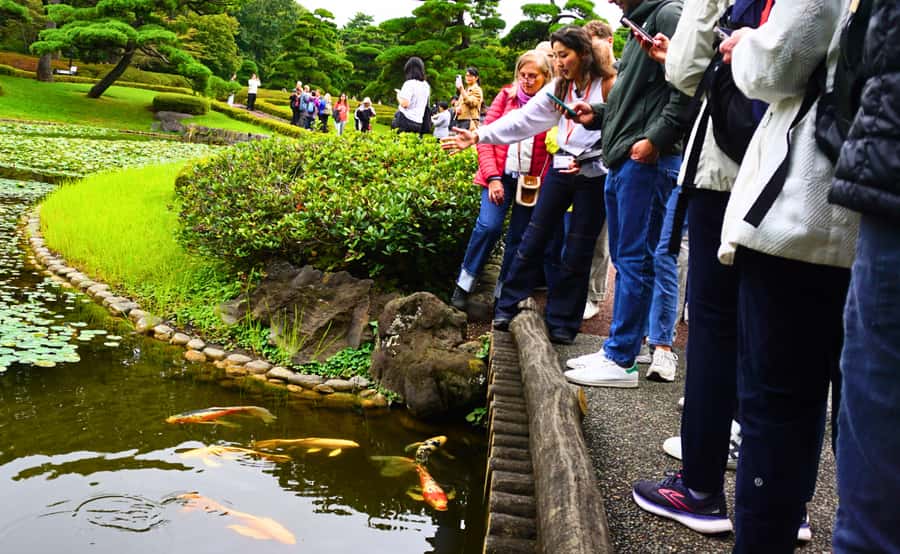
The route also includes royal koi fish. These are an unusual feature and a favorite stop for photographs. The fish, gardens, and carefully maintained trees provide a softer look at the palace complex after the military history of Edo Castle.
Some practical comfort depends on the weather. In hot weather, guides have stopped in shaded areas where possible, offered small gifts for the heat, and helped with mosquito spray. That is useful because the gardens contain plenty of vegetation and mosquitoes can be a nuisance. Wear light clothing suited to the forecast, bring water, and consider insect repellent even if you are visiting in a warm season.
The guide makes or breaks the experience
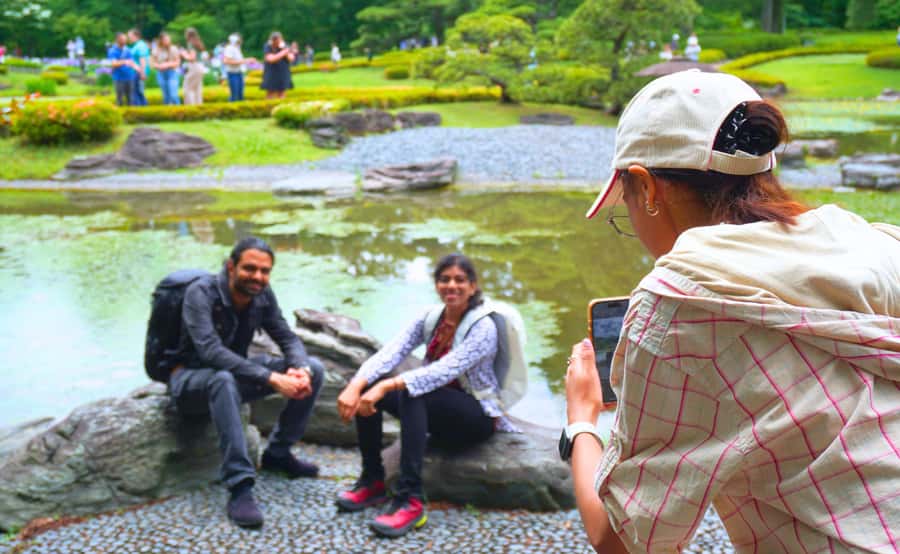
The tour’s strongest feature is the guide. The route itself is pleasant, but the meaning comes from the person leading it.
Mika is praised for excellent English, clear answers, thoughtful pacing, and attention to heat. Natsumi is repeatedly described as kind, entertaining, and very good at explaining how Tokyo developed. Lakki combines humor with strong cultural and historical knowledge. Alexandre has received especially warm praise for French guiding, thoughtful explanations, and extra time with questions.
Other guides, including Nico, Hugo, Arief, Miko, Lucky, and Fei, have also been praised for friendliness, photographs, patience, and useful recommendations. The names vary by departure, so you should book for the tour itself rather than assume a particular guide will lead your group.
I like that the guides do more than point out photo stops. They answer questions about Japanese culture, food, etiquette, and other places to visit. One guide even offered a private-tour option with a tea ceremony, though that is not part of the standard experience and should not be assumed.
The best way to get more from the walk is to arrive with a few questions. Ask about the shogun’s role, the Meiji transition, castle defenses, or the meaning of the gardens. The format is conversational enough that your questions can shape the experience.
Price, pace, and physical demands
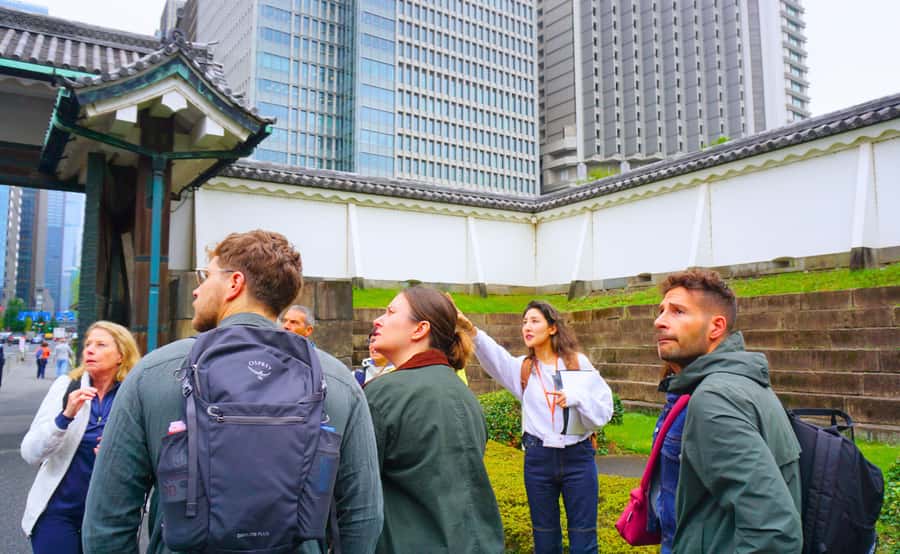
At $32, this tour offers good value for a visitor who wants a compact historical introduction. You are paying for access to a guide who can explain the site, not for entry into a private palace or a large collection of buildings.
The tour is roughly two hours based on the described experience. That is long enough to cover the gate, model, ruins, garden areas, bamboo, and koi without taking an entire day. The pace has been described as comfortable, neither rushed nor painfully slow.
Still, it is a walking tour on outdoor paths. There is no promise of air conditioning, indoor shelter, or weather cancellation. The activity runs rain or shine, so a rainy-day visit will feel very different from a cool morning in the gardens.
The experience is not suitable for wheelchair users or people with mobility impairments. It is also not recommended for people with low fitness, back or heart problems, recent surgery, or pregnancy. That is not a minor footnote. You should choose another activity if steady outdoor walking is likely to cause discomfort.
You can cancel up to 24 hours before the activity for a full refund, and the reserve-now, pay-later option can help if your Tokyo schedule is still changing.
What this tour does not include
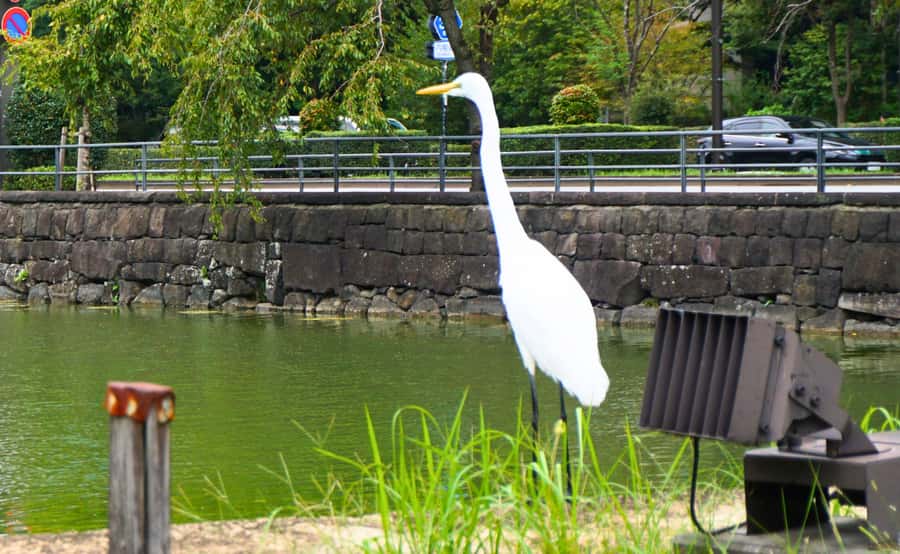
The inner palace is not open to the public, and this experience does not provide access to it. You will explore the Eastern Gardens and the historic grounds around the former castle, not the Emperor’s private residence.
That limitation is worth understanding before you book. If you want grand interior rooms, a palace ceremony, or a close look at the imperial household’s private spaces, this is not the right activity. The appeal is the outdoor site, the old castle remains, and the explanation of Japanese history.
You should also expect no weapons, sharp objects, smoking, drones, alcohol, drugs, skateboards, or fires on the grounds. These rules are sensible for a protected historic and ceremonial area, but they are worth knowing if you are carrying travel gear.
Who should book the Imperial Palace walk?
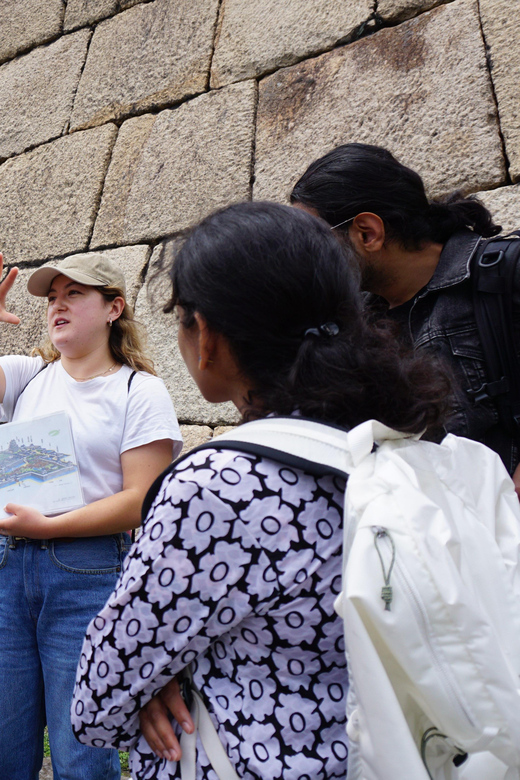
I would recommend this tour to first-time visitors who want a clear introduction to Japanese history without committing to a full museum day. It also suits families, since the guides use questions, stories, models, and visible remains rather than relying only on dates.
History fans will appreciate the focus on the Edo and Meiji periods. You will get a useful explanation of the samurai system, the shogun’s authority, the castle’s role, and the shift to imperial rule.
It is also a good choice for anyone who wants a calm morning or afternoon outdoors. The gardens provide shade, photographs, and a break from Tokyo’s dense streets.
I would be more cautious if your main goal is palace architecture, indoor access, or a highly specialized scholarly tour. The experience is friendly and accessible rather than exhaustive. It gives you the framework, then leaves you free to explore more deeply elsewhere.
Should you book it?
Book this tour if you want the Imperial Palace to make sense, not just look pretty. For $32, you receive a guided walk through former castle grounds, a useful explanation of Japan’s political transformation, garden views, bamboo, royal koi, and practical Tokyo advice.
Choose a weather-friendly day if possible, wear comfortable shoes, and arrive early at the Starbucks by Wadakuramon Fountain Park. If you understand that the inner palace is off limits and outdoor walking is required, this is a strong-value introduction to one of Tokyo’s most important historic sites.
FAQ
Where does the Imperial Palace walking tour start?
Meet your guide at the Starbucks near the fountain in Wadakuramon Fountain Park. The park is about a 5 to 10 minute walk from Tokyo Station or Otemachi Station.
How do I identify the guide?
Your guide will be holding a sign with the Sunrise Adventure logo near the fountain.
Where does the tour finish?
The activity ends back at the original meeting point near the Starbucks.
Is the inner palace included?
No. The inner palace is not open to the public, and this tour visits the Eastern Gardens and former Edo Castle grounds instead.
Which languages are available?
The tour is available in English and French.
Does the tour run in bad weather?
Yes. The tour takes place rain or shine, so you should dress for the weather.
Can I cancel for a refund?
You can cancel up to 24 hours in advance for a full refund.
More History Walking Tours in Tokyo
- History and Hauntings of Salem Guided Walking Tour
★ 5.0 · 14,564 reviews - Lisbon: History, Stories and Lifestyle Walking Tour
★ 4.8 · 10,902 reviews - Boston: Freedom Trail History Small Group Walking Tour
★ 5.0 · 6,450 reviews - Historic Charleston Guided Sightseeing Walking Tour
★ 5.0 · 6,216 reviews
Just added around Tokyo
- Tokyo: Tsukiji Market Walking Tour & Sushi Cooking Class★ 4.6 · 122 reviews
- Tokyo: Dark Side of Tokyo Shinjuku Red Light Walking Tour★ 4.7 · 862 reviews
- Tokyo: Shinjuku Nightlife & Secret Backstreets Walking Tour★ 4.8 · 229 reviews
- Tokyo: Shibuya Highlights Walking Tour★ 4.8 · 601 reviews
- Tokyo: Shibuya Highlights Walking Tour & Secret View Spot★ 4.9 · 196 reviews
- Tokyo: Shinjuku Bar Hopping & Night Walking Tour★ 4.6 · 137 reviews
- Tokyo: Private Custom Walking Tour with Local Guide★ 4.9 · 350 reviews
- Tokyo: Shibuya Crossing & Hidden Streets Walking Tour★ 4.8 · 128 reviews
History Walking Tours, compared.

History and Hauntings of Salem Guided Walking Tour
Read our review →

Freedom Trail History Small Group Walking Tour
Read our review →
Historic Charleston Guided Sightseeing Walking Tour
Read our review →
Tapas Walking Tour with Food, Wine, and History
Read our review →
Savannah History and Haunts Candlelit Ghost Walking Tour
Read our review →
A History of Terror – Belfast City Centre Walking Tour
Read our review →Browse the lists this tour appears in