
Review · JAPAN WALKING TOURS
Asakusa Senso-ji Temple and Old Tokyo Walking Tour
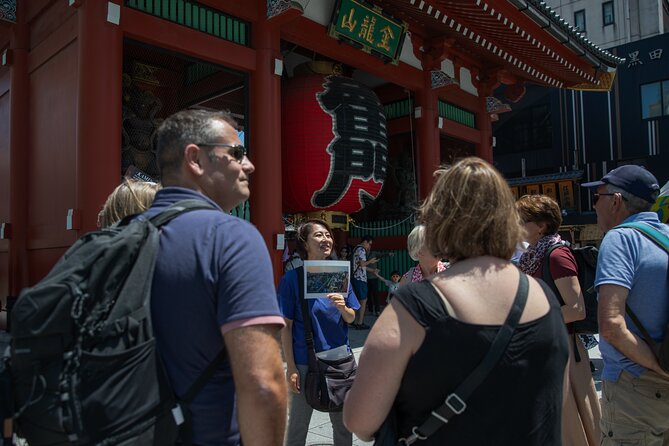
Asakusa rewards curious walkers. This $20 small-group tour links Senso-ji Temple with Nakamise, Asakusa Shrine, Hoppy Street, and the Sumida River, giving you useful context in only two hours. I like the personal scale, with no more than 12 people, and the way the guides explain both Buddhist and Shinto customs. The main drawback is the crowded meeting area, which can make finding your guide tricky.
I also like that the tour finishes at Azuma Bridge, rather than circling back to the start. You end with views toward Tokyo Skytree and the Asahi Beer Hall, and you are well placed to continue exploring. Just remember that food, drinks, transport, and gratuities are not included, so this is a walking lesson in Asakusa rather than a tasting tour.
Key points at a glance
- A useful first morning in Tokyo: The tour gives you basic temple and shrine customs early in your visit, which can help you understand other Japanese sights later.
- A small group of up to 12: You should be able to hear the English-speaking guide and ask questions without shouting across a crowd.
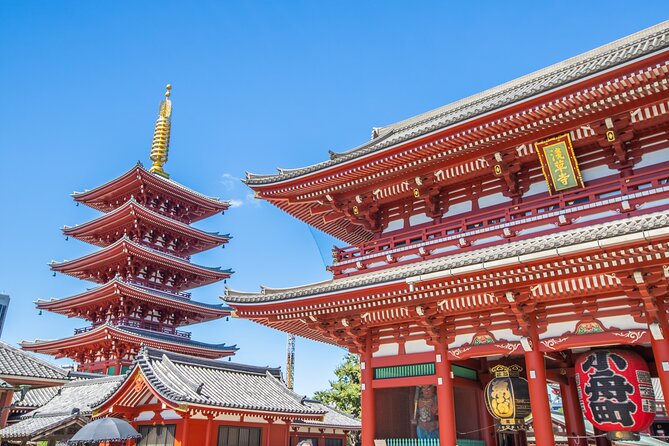
- More than Senso-ji: The route includes Nakamise Shopping Street, Asakusa Shrine, Hoppy Street, Shin Nakamise, and Azuma Bridge.
- Practical cultural guidance: Guides explain purification, prayer, and fortune slips, not just dates and architectural details.
- A good $20 value: The price is modest for two hours of guided sightseeing, especially if you are new to Tokyo.
- Crowds require patience: Asakusa is busy, and the meeting point at Kaminarimon can take a little effort to locate.
Why this short Asakusa walk works so well
Asakusa is one of the easiest parts of Tokyo to enjoy on foot, but it is not always easy to understand on your own. The streets around Senso-ji can feel like a series of gates, stalls, shrines, restaurants, and side lanes. A guide gives those pieces a clear order.
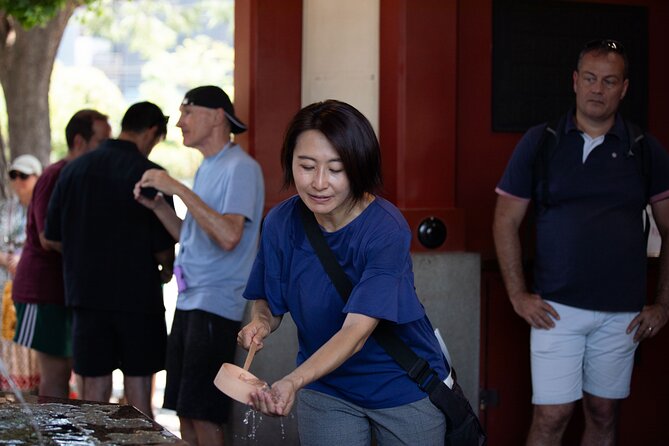
This matters most at a Buddhist temple and a Shinto shrine standing close together. Without explanation, you may see smoke rising from a burner, water basins, prayer boards, fortune slips, and worshippers bowing, but miss the meaning behind them. The guides explain how to purify yourself, how to pray, and how temple customs differ from shrine customs.
The tour lasts about two hours. That is long enough to give you a solid introduction, but short enough to fit into a first day filled with jet lag, train rides, and other Tokyo plans. I would treat it as an orientation walk, not as a full-day tour of every corner of Asakusa.
The group limit of 12 is important. Asakusa is noisy and crowded, especially near Kaminarimon and Nakamise. A smaller group makes it easier to stay close, hear the guide, and ask about details that catch your eye.
A few more walks around Japan worth a look
- Kyoto Geisha Walking Tour: Gion District & Hidden Gems
★ 4.7 · 3,273 reviews - Tokyo Tsukiji Fish Market Food and Culture Walking Tour
★ 5.0 · 3,184 reviews - Kyoto: Gion Magical Night Walking Tour with Geisha Trivia
★ 4.9 · 2,393 reviews
Meeting at Kaminarimon in the busiest part of Asakusa
The meeting point is Tokiwado Kaminari-okoshi Honpo at 1-chome-3-2 Asakusa. This is near Kaminarimon, the famous Thunder Gate and the usual entrance to Nakamise Shopping Street.
Give yourself extra time to find the guide. One person who booked at the last minute found the crowded area a little confusing before locating the group. That is a fair warning, especially if you are arriving by train, managing luggage, or visiting during a busy period.
Your mobile ticket is convenient, but it does not remove the need to check the meeting instructions carefully. Since the starting point is close to a major sightseeing route, you may be tempted to rush straight toward the large gate. Instead, pause and identify the exact meeting location before the start time.
The guide speaks English, and the group is limited to 12 people. The tour operator has used guides including Aya, Polina, Keiko, Glenda, Loc, Mei, Rio, Ayaka, Hiroko, and Nana. Guide assignments can vary, but the strongest praise consistently focuses on clear English, patience, cultural knowledge, and a friendly manner.
Nakamise Shopping Street: your first look at old Tokyo
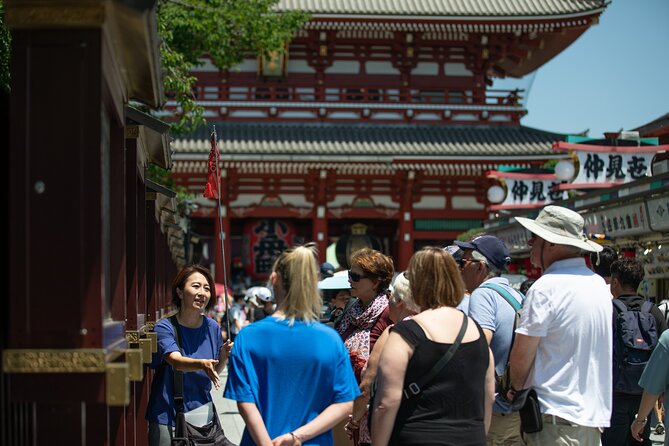
Nakamise leads from Kaminarimon toward Senso-ji. It is lined with traditional stalls and shops, making it an immediate introduction to Asakusa’s connection between religion, commerce, and everyday life.
The scheduled stop is about 10 minutes, so do not expect a long shopping break here. Instead, listen to the guide’s explanation and note what you want to inspect later. The route is useful because the street can be crowded enough to distract you from the details of the shops and the approach to the temple.
This is also a good place to ask about snacks and souvenirs. Guides have offered suggestions for Japanese foods to try during the visit or take home. One useful approach is to keep a mental list, then return after the tour when you can browse at your own pace.
The short stop has one clear limitation: you will not have much time to shop while the group is moving. That is not a serious problem if you see the tour as an introduction. In fact, it prevents the first part of your visit from turning into a rushed shopping trip.
Senso-ji Temple and the customs you might otherwise miss
Senso-ji is the center of this experience. The tour allows about 30 minutes here, and that is where the guide’s role becomes most valuable.
You receive the story of the temple, its place in Asakusa, and its importance to the area’s identity. The strongest guide feedback points to explanations that go beyond dates. Guides have used visual material, including a binder with pictures, to help explain the temple and related events.
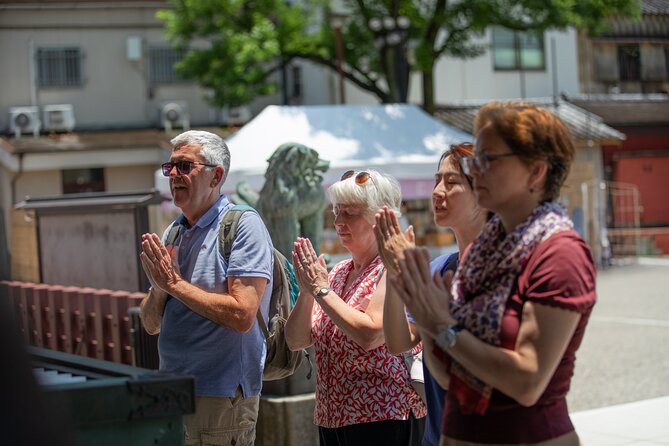
You may also learn how to approach the worship space, use the purification area, pray properly, and try your fortune. These instructions are practical. They help you participate respectfully instead of simply taking photographs and moving on.
The temple is also a place where a guide can point out features you might overlook. One guide was praised for showing a good vantage point over the temple for photographs. Another allowed time for visitors to look around and take pictures after the explanation.
You should not expect private access or a quiet temple setting. Senso-ji is a major attraction, and the crowds are part of the scene. The benefit of the tour is not escaping those crowds. It is learning how to read the place while you are in it.
I particularly like this portion for first-time visitors to Japan. The basic explanation of Buddhist practice and shrine etiquette can help you at other temples and shrines later in your trip. You are not just collecting facts about one building. You are learning a few habits that make the rest of your sightseeing easier.
Same streets, a different way to see them:
- Tokyo: Imperial Palace and Shogun Historical Walking Tour
★ 5.0 · 2,251 reviews - Kyoto: Gion Geisha District Walking Tour – Stories of Geisha
★ 4.7 · 2,187 reviews - Best of Kyoto: Gion, Geisha, Pagodas & Cobblestones
★ 4.9 · 2,058 reviews - Night Walk in Gion: Kyoto’s Geisha District
★ 4.5 · 2,003 reviews
Asakusa Shrine and the meeting of Buddhist and Shinto traditions
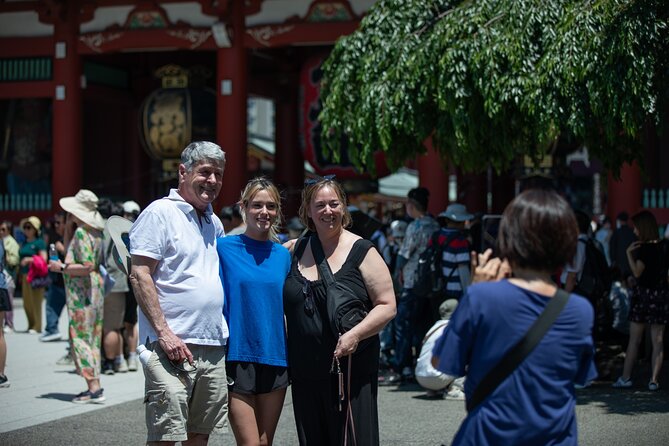
Asakusa Shrine sits beside Senso-ji and receives about 15 minutes on the route. It is also known as Sanja-sama, or the Three Shrine, and is dedicated to the three men connected with the founding of Senso-ji.
This stop gives the tour an important contrast. Senso-ji is a Buddhist temple, while Asakusa Shrine is a Shinto shrine. Because the two are adjacent, the guide can explain the difference in a very direct setting rather than asking you to remember abstract definitions.
The time here is short, but it is enough for an introduction to shrine customs and the relationship between the two sites. If you have never visited Japan before, this may be one of the most useful parts of the walk.
The guide can answer questions as you go, which is helpful if you are unsure about bows, washing, prayers, or the meaning of religious objects. Several guides were praised for taking time with questions instead of delivering a fixed speech and hurrying everyone along.
Hoppy Street: a quick look at Asakusa after dark
Hoppy Street is known for izakayas, or Japanese pubs, and for Hoppy, a non-alcoholic beer-flavored drink. The stop is listed at about 10 minutes.
You will not be taking a long food break here. Food and drinks are not included, and the short visit is better understood as a look at Asakusa’s casual dining culture. It adds a different note after the temple and shrine, showing that the neighborhood is not only about formal worship and souvenir shopping.
This is one place where the tour may leave you wanting more time. One person specifically wished for more opportunity to try local food during the walk, but found it easy to return later using the guide’s suggestions. That is sensible advice. Keep your evening open if you want to sample the pubs, snacks, or restaurants around the route.
The stop is especially useful for solo visitors. A guide can point out areas worth revisiting and help you feel less uncertain about what to order or where to begin. You still pay for your own food, but the suggestions can save you from wandering without a plan.
Shin Nakamise and the modern side of the district
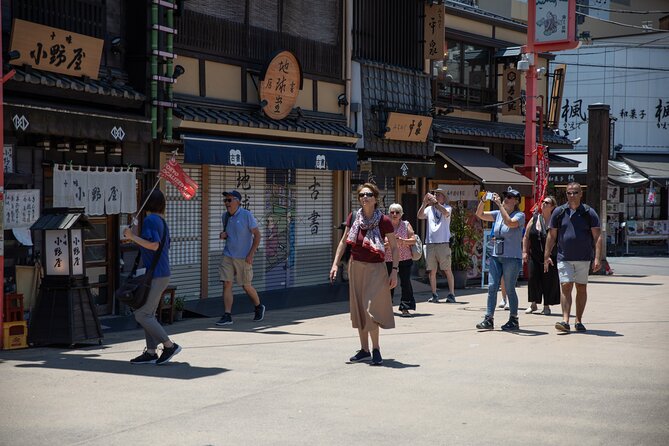
Shin Nakamise extends the shopping area with a more modern mix of boutiques and shops. It offers a contrast with the traditional stalls on the main Nakamise street.
The supplied route does not give a precise time for this stop, so think of it as part of the walk rather than a separate shopping session. The value here is comparison. You can see how Asakusa combines older religious and commercial traditions with contemporary retail.
I would note anything that catches your eye and return after the guided portion. Trying to shop while keeping up with a group is rarely relaxing, particularly in a busy pedestrian area.
Azuma Bridge and the finish by the Sumida River
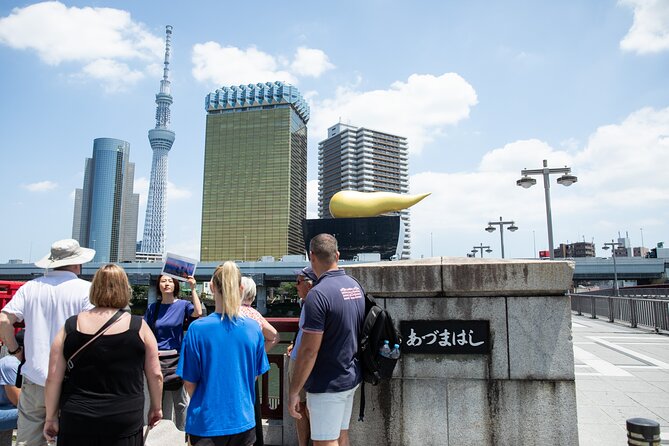
The walk ends at Azuma Bridge, near 2-chome-1-16 Kaminarimon. This is a useful finish because it gives you a different view of Asakusa and the Sumida River rather than returning you to the starting gate.
From the bridge, you can see Tokyo Skytree and the Asahi Beer Hall. The route therefore finishes with a good place for photographs and a clear sense of the district’s setting.
Ending here also gives you flexibility. You can continue along the river, return to the temple and shopping streets, or use the nearby area as a point for your next plan. The tour does not include transport after the finish, so you will need to arrange your own onward travel.
The bridge is more than a final photo stop. After two hours of streets, religious buildings, and shopping lanes, the open river view helps you understand how compact the main Asakusa sights are and where the district sits in relation to the rest of Tokyo.
What the $20 price really buys you
At $20 per person, this is a reasonably priced guided introduction. You are paying for two hours with an English-speaking local guide, a small group, historical and cultural explanations, and help with customs that can be difficult to interpret alone.
You are not paying for a meal, entrance tickets, transport, or a private guide. The listed sights have no admission charge, so the value comes from the explanations and organization rather than access to restricted areas.
For a first visit, I think the price works particularly well. A guide can help you avoid spending the first hour wondering how the temple and shrine fit together. You also receive shopping and food suggestions that may improve the rest of your time in Asakusa.
The value is less clear if you already know the district well, have studied Japanese religious customs, or prefer to wander without a schedule. You could visit the main sites independently, but you would need to do your own research and manage the route through the crowds.
Who should book this walk
I would recommend it to first-time visitors, solo visitors, couples, and anyone who wants a clear introduction before exploring Tokyo independently.
It is also a good choice for people who want cultural guidance without committing half a day. The two-hour length leaves room for lunch, shopping, or another neighborhood afterward.
Families and older visitors may appreciate the small group and straightforward route, although the tour is still a walking activity through crowded streets. Most people can participate, and service animals are allowed, but the information provided does not describe seating, step-free access, or the exact walking distance.
This is not the best match if your main goal is a food tour. Hoppy Street and the shopping lanes are included, but food and drinks cost extra and the schedule does not give you a long tasting session.
You should also be comfortable with a public group setting. Even with a maximum of 12 participants, Senso-ji and Nakamise can be noisy and packed.
Guide quality and the personal touch
The strongest feature of this experience is the guide. Aya is praised for watching the whole group, taking photographs, and making sure questions do not go unanswered. Polina is praised for clear explanations of Asakusa and Senso-ji. Glenda is noted for her calm English, visual materials, temple instruction, and useful area tips.
Other guides, including Keiko, Loc, Mei, Rio, Ayaka, Hiroko, and Nana, are also described as friendly, engaging, and well prepared. The repeated pattern is clear: the tour depends heavily on who leads it, but the provider has a strong record of guides who can explain Japanese history, Buddhism, Shinto, customs, shopping, and food.
You cannot normally guarantee a particular guide from the information provided. I would book for the structure and content, then enjoy the individual guide’s personality as part of the experience.
Practical details before you go
The ticket is mobile, and confirmation is provided at booking. The tour operates near public transportation, but transport to and from the meeting point is your responsibility.
Wear comfortable shoes and leave room in your schedule after the finish. You may want to return to Nakamise, explore Shin Nakamise, or try a food suggestion from the guide.
Free cancellation is available if you cancel at least 24 hours before the start time. Changes or cancellations inside that window are not accepted for a refund, and poor weather can lead to a different date or a full refund.
The tour requires good weather, so check the forecast and keep a light rain plan in mind. Since the meeting point is crowded, arriving early is one of the simplest ways to begin calmly.
Should you book the Asakusa Senso-ji walk?
Book it if you want a short, affordable introduction to one of Tokyo’s most rewarding historic districts. The combination of Senso-ji, Asakusa Shrine, Nakamise, Hoppy Street, Shin Nakamise, and Azuma Bridge gives you more range than a temple-only visit.
I would especially choose it for my first morning or first full day in Tokyo. The explanations of Buddhist and Shinto customs can make later sightseeing more meaningful, while the food and shopping suggestions give you reasons to return.
Skip it if you want a quiet solo walk, a full food tour, or a long unhurried visit inside each sight. For most first-time visitors, though, $20 is a fair price for two hours of clear cultural context, practical guidance, and a well-organized route through Asakusa.
FAQ
How long is the Asakusa Senso-ji walking tour?
The tour lasts approximately two hours.
How much does the tour cost?
The listed price is $20 per person.
How many people can join the group?
The group has a maximum of 12 participants.
What sights are included?
The route includes Nakamise Shopping Street near Kaminarimon, Senso-ji Temple, Asakusa Shrine, Hoppy Street, Shin Nakamise, and Azuma Bridge.
Is an English-speaking guide included?
Yes. An English-speaking local guide is included.
Are food and drinks included?
No. Food, drinks, and personal expenses are not included.
Where does the tour start?
The meeting point is Tokiwado Kaminari-okoshi Honpo at 1-chome-3-2 Asakusa, Taito City, Tokyo.
Where does the tour finish?
The tour finishes near Azuma Bridge at 2-chome-1-16 Kaminarimon, Taito City, Tokyo.
Can I cancel for a refund?
Yes. You can receive a full refund if you cancel at least 24 hours before the experience start time. Cancellations made less than 24 hours before the start time are not refunded.
Just added around Japan
- Tokyo: Asakusa & Sensoji ー Oldest Temple Walking Tour (2hrs)★ 5.0 · 213 reviews
- Asakusa Cultural Walk & Matcha Making Tour★ 5.0 · 245 reviews
- Tokyo: Tsukiji Market Walking Tour & Sushi Cooking Class★ 4.6 · 122 reviews
- Tokyo: Dark Side of Tokyo Shinjuku Red Light Walking Tour★ 4.7 · 862 reviews
- Tokyo: Shinjuku Nightlife & Secret Backstreets Walking Tour★ 4.8 · 229 reviews
- Tokyo: Shibuya Highlights Walking Tour & Secret View Spot★ 4.9 · 196 reviews
- Tokyo: Shinjuku Bar Hopping & Night Walking Tour★ 4.6 · 137 reviews
- Tokyo: Shibuya Highlights Walking Tour★ 4.8 · 601 reviews
Japan Walking Tours, compared.
Kyoto Geisha Walking Tour: Gion District & Hidden Gems
Read our review →
Tokyo Tsukiji Fish Market Food and Culture Walking Tour
Read our review →
Gion Magical Night Walking Tour with Geisha Trivia
Read our review →
Imperial Palace and Shogun Historical Walking Tour
Read our review →
Gion Geisha District Walking Tour – Stories of Geisha
Read our review →
Best of Kyoto: Gion, Geisha, Pagodas & Cobblestones
Read our review →
Shinjuku Local Bar and Izakaya Guided Walking Tour
Read our review →Browse the lists this tour appears in