

Review · HISTORY WALKING TOURS
Barcelona Historical Walking Tour: Gothic Quarter and El Born
Barcelona reveals itself one old street at a time. This two-hour walking tour links the Gothic Quarter with El Born, moving from Roman walls and medieval squares to artists’ cafés and Catalan Gothic churches. I like the compact route and the way it reaches places a bus cannot. I also like the mix of famous sights and quieter corners, especially Plaça de Sant Felip Neri and the old Jewish quarter.
At $30.25 per person, the tour offers solid value if you want a quick orientation with a local guide. The main drawback is that the quality may depend on the guide assigned to your group. Most guides are praised for energy, humor, and clear storytelling, but one poor experience involved a guide who spoke too softly for the group to hear.
Key points about this Barcelona walking tour
- Eleven historic stops in two hours: You move through Roman, medieval, royal, Jewish, artistic, and maritime Barcelona in one compact route.
- Small group limit of 20 people: This is large enough to have company but small enough for questions and a manageable pace.
- Great guide-led introduction: Guides such as Juan, Lidia, Jordan, Petra, Sonia, and Vanesa have been praised for clear stories, humor, and useful local advice.
- Mostly free sights: The Cathedral and Santa Maria del Mar may require admission, while the other listed stops are free to visit from the outside.
- A gentle route through the Old Town: The walk is described as easy and relaxed, with time for photos and short explanations.
- Good morning choice: Earlier departures can mean cooler weather and quieter streets, especially useful in Barcelona’s warm months.
Starting among artists at Els 4 Gats
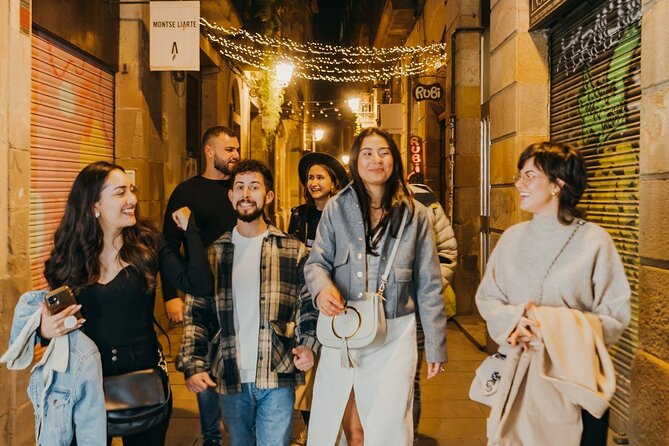
The meeting point is Plaça del Vuit de Març in Ciutat Vella. From there, the tour heads to Els 4 Gats, a historic café linked with Barcelona’s modernist art scene.
This is an excellent opening stop because it gives you a human entry into the city’s past. Antoni Gaudi and Pablo Picasso were among the artists and intellectuals associated with the café. The Art Nouveau design helps explain why Barcelona’s creative reputation is not just a modern marketing idea. It grew from real cafés, studios, friendships, and arguments.
You will spend about 10 minutes here, with no admission fee listed. Do not expect a long interior visit or a full meal stop. The value comes from the guide’s explanation of the place and its connection to the artists who shaped Barcelona.
More History Walking Tours in Barcelona
- Barcelona: Tapas Walking Tour with Food, Wine, and History
★ 4.8 · 4,261 reviews - Barcelona Tapas Walking Tour: Food, Wine & History
★ 4.5 · 1,928 reviews - Barcelona: Dark History Night Walking Tour
★ 4.8 · 344 reviews
A powerful image at El Mon Neix En Cada Besada
Next comes El Mon Neix En Cada Besada, a large photo mosaic created in 2014. Its title means The World Begins With Every Kiss, and the image is made from photographs submitted by people connected to Barcelona.
The artwork is also tied to Catalonia’s defeat on September 11, 1714, during the War of the Spanish Succession. That date became the basis for La Diada, Catalonia’s national day. Your guide can help connect the cheerful image with the serious political meaning beneath it.
This is one of the tour’s useful contrasts. Barcelona’s Old Town is not only about stone buildings and royal power. Public art here can carry ideas about freedom, memory, and Catalan identity. You get about 10 minutes at the mosaic, and there is no admission fee.
Barcelona Cathedral and the story of Saint Eulalia
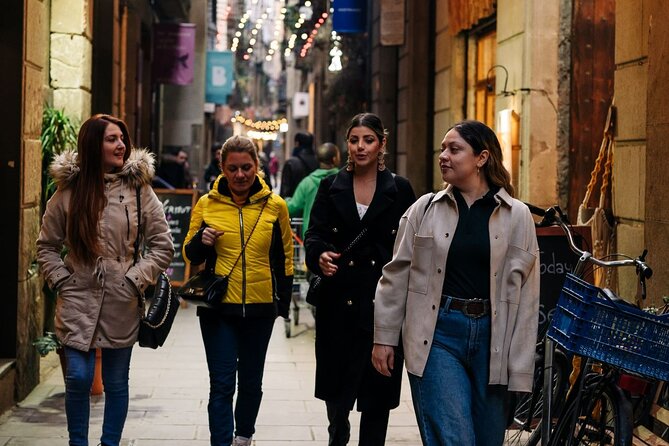
The Catedral de Barcelona sits at the heart of the Gothic Quarter. Its Gothic façade and towers are among the area’s most recognizable sights, but the tour adds a story behind the building.
The cathedral honors Saint Eulalia, Barcelona’s patron saint, who was tortured and killed by the Romans. That story links the modern city to its early Christian past and gives the church more weight than a quick photo stop.
The tour allows roughly 10 minutes here. Admission is not included, so check the current entry arrangements if you want to go inside. If your visit remains outside, you will still get the guide’s explanation and time to look at the surrounding square, façades, and stone details.
Because this is a short tour, do not expect a full cathedral visit with time for every chapel. Think of it as an introduction. You can return later if the interior interests you.
Roman Barcelona behind Casa de l’Ardiaca
Casa de l’Ardiaca is one of the route’s more unusual stops. The building combines Gothic and Renaissance elements and incorporates part of the old Roman wall and aqueducts.
This is where the city’s layers become easy to see. Modern Barcelona grew over Barcino, the Roman settlement, and remnants of that earlier city still appear in courtyards and walls. A guide can point out details that are easy to miss when you walk alone.
The stop lasts about 10 minutes and is free. You may find the site more rewarding after hearing the explanation, since the Roman remains are not always obvious at first glance. This is a good example of why a walking tour helps in the Gothic Quarter: the important clues are often above eye level, tucked into walls, or hidden behind later buildings.
Same streets, a different way to see them:
- Barcelona Tapas and Wine Experience Small-Group Walking Tour
★ 5.0 · 5,804 reviews - Barcelona: Food Walking Tour with Tapas and Wine
★ 4.9 · 2,180 reviews - Barcelona Helicopter, Sailboat & Old Town Private Walking Tour
★ 5.0 · 1,395 reviews - Barcelona: Old Town and Gothic Quarter Walking Tour
★ 4.8 · 1,393 reviews
The legend of Pont del Bisbe
Carrer del Bisbe follows an old route that served as a main thoroughfare in Roman-occupied Barcino. Its most famous feature today is Pont del Bisbe, a Neo-Gothic bridge crossing the narrow street.
The bridge looks medieval, but its present form is Neo-Gothic. That mismatch makes it a fun stop, especially when the guide explains the superstition attached to its design. The legend is meant to capture the imagination, even if you approach such stories with a skeptical eyebrow raised.
You will have around 10 minutes here. It is also a practical photo stop, though the street can feel tight and busy. Listen closely to the guide before taking your picture, since the story is the main reason this bridge matters.
A quiet pause at Plaça de Sant Felip Neri
Plaça de Sant Felip Neri is one of the most moving places on the route. Tucked away from the main Gothic Quarter streets, the square carries scars connected with the Spanish Civil War.
The walls still show the marks of its tragic past. That physical evidence changes the mood quickly. One moment you are looking at a pretty square, and the next you are confronting the damage left by conflict.
The guide spends about 10 minutes here. I would treat this as a place for quiet attention rather than a rushed photo stop. The square’s power comes from the contrast between its calm appearance and the history written into its walls.
This stop also shows the range of the tour. You are not simply being led from one attractive building to another. You are being shown how Barcelona’s streets preserve art, faith, politics, war, and daily life in a very small area.
Walking through the old Jewish quarter
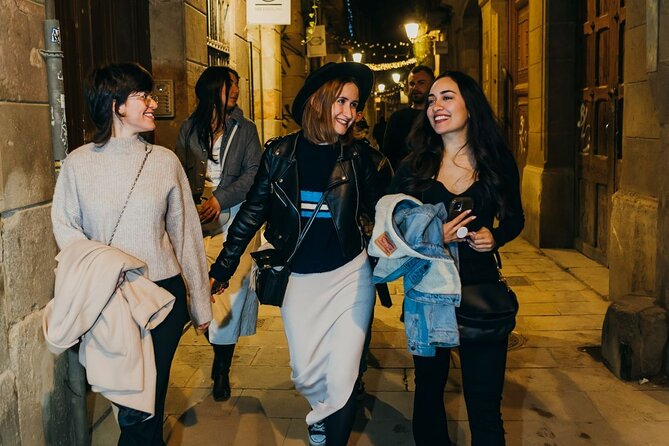
The route continues into El Call, Barcelona’s historic Jewish quarter, presented through MUHBA El Call. Narrow streets and medieval buildings give this part of the Old Town a different feel from the larger squares nearby.
The stop offers context about Jewish life in medieval Barcelona, including references to the synagogue and local legends. It is a useful reminder that the city’s past included several religious and cultural communities, even though later events changed or erased much of that world.
You get about 10 minutes here, with no admission fee listed. That is enough for an introduction, not a museum visit. If you want a detailed study of Barcelona’s Jewish history, you would need to return with more time. On this tour, the benefit is learning where to look and why the narrow lanes matter.
Government, monarchy, and the two faces of power
Plaça de Sant Jaume is a major public square surrounded by government buildings. It remains a center of civic life, so your guide can connect the historic setting with Barcelona’s present-day political identity.
The route then reaches Plaça del Rei, home to the Royal Palace. At first glance, the square feels elegant and composed. The guide also introduces its darker past, adding a less comfortable layer to the royal setting.
Together, these two stops create a useful pair. Plaça de Sant Jaume represents active government, while Plaça del Rei points toward monarchy and medieval power. You spend about 10 minutes at each place, and both are free to view.
Do not expect a long stop inside the palace or a full museum visit. The tour is built around street-level context. It shows you how public spaces functioned, who controlled them, and what stories were left behind.
The angel behind Plaça de l’Àngel
Plaça de l’Àngel was once known as Wheat Square because grain was traded there. Its current name comes from a heavenly legend, which your guide explains during the stop.
This is a small detail, but these details often make a city easier to remember. Barcelona’s place names are not random labels. They can preserve an old trade, a religious story, or a turning point in urban life.
The stop lasts about 10 minutes and is free. It also helps mark the shift toward El Born, where commerce, churches, and maritime connections become more important.
Finishing at Santa Maria del Mar
The tour ends at Basílica de Santa Maria del Mar in El Born. This Catalan Gothic church is closely linked with Barcelona’s maritime past and is one of the most impressive buildings on the route.
Its location makes the ending feel logical. You begin among artists and modernist culture, pass through Roman and medieval Barcelona, and finish with a church tied to the city’s seafaring world. The route covers a surprising amount of time without requiring a full day.
Admission is not included, so plan for an extra cost if you want to enter. The exact visit conditions can change, but the guide can point out the church’s importance from outside. You finish at Plaça de Santa Maria, 1, in Ciutat Vella, which puts you in a useful part of El Born for continuing your day.
You can use the ending as a springboard for more exploring, food, or a return visit to the church. Several guides also offer suggestions for restaurants, bars, attractions, and local food areas after the walk. Tammy was especially praised for sending detailed recommendations after the tour, while Juan was noted for offering practical ideas for the rest of a Barcelona visit.
What the guide can add to the experience
The guide is the key part of this tour. The strongest guide reports describe energetic storytelling, clear explanations, good humor, and a willingness to answer questions.
Juan is repeatedly praised for his wide knowledge of Spanish history, his use of an iPad to show how places looked in the past, and his helpful food and sightseeing suggestions. Lidia is praised for warmth, energy, humor, and local knowledge. Jordan uses comedy to keep the history moving, while Sonia is described as energetic and effective with the city’s early Roman and Christian past.
Other guides named in the feedback include David, Petra, Vanesa, Thami, Darren, Craig, Justin, Sara, Mariah, and Jorge. Vanesa is praised for connecting well with children. Darren helped keep a teenager interested, and Jorge was praised for a relaxed pace that left room for photos.
The less positive experience is worth noting. One participant found the guide too soft-spoken, even after asking her to speak louder, and some people left early. This appears to be an exception among the supplied feedback, but it is a real consideration for a group walking through noisy streets.
Pace, group size, and timing
The maximum group size is 20 people. That is not a private tour, but it is more workable than a large coach group. You should have a reasonable chance to ask questions, though staying near the guide will matter in narrow streets.
The walk lasts about two hours and is described as easy and relaxed. One useful tip is to choose a morning departure when possible. The streets can be cooler and less crowded, and you may find it easier to hear the guide and take photos.
Wear comfortable shoes. The route passes through old streets and public squares, with frequent stops rather than one long march. Most people can participate, but the tour does not promise a specialized accessibility arrangement, so ask the operator if you have specific mobility needs.
The meeting point is near public transportation at Plaça del Vuit de Març. The end point is Santa Maria del Mar in El Born. Since the tour ends in a different neighborhood from where it starts, allow a few minutes to orient yourself afterward.
Is $30.25 a fair price?
At $30.25 per person, the price is reasonable for a guided introduction to central Barcelona. You are paying for two hours of local explanation, a planned route through 11 important stops, and access to stories that are easy to miss when walking alone.
The value is strongest if this is your first visit or if you want a quick overview before exploring on your own. You see Roman remains, Gothic churches, royal spaces, Jewish Barcelona, Civil War history, modernist culture, and El Born in one morning or afternoon.
The value is weaker if you want long interior visits. Cathedral and Santa Maria del Mar admission are not included, and the tour allows only about 10 minutes at each stop. This is a city orientation, not an in-depth museum program.
Group discounts are available, and the tour offers a mobile ticket. Free cancellation is available up to 24 hours before the start time. Changes or cancellations inside that window are not refundable.
Who should book this walk?
I would recommend it to first-time visitors who want to get their bearings fast. It also suits repeat visitors, since Mariah helped one returning visitor learn more about Barcelona after several previous trips.
Families can do well here, especially with an engaging guide such as Vanesa. Teenagers may enjoy the humor and visual material used by guides such as Jordan and Juan. History fans will appreciate the Roman walls, Jewish quarter, royal square, and Civil War connections.
You may want a different plan if you dislike group tours, need long pauses inside churches, or want a specialist focus on Gaudi alone. Gaudi appears through the Els 4 Gats connection and guide commentary, but this is not a dedicated Gaudi architecture tour.
Should you book the Gothic Quarter and El Born walk?
Book it if you want a well-priced, two-hour introduction to Barcelona’s oldest central neighborhoods, with plenty of stories and a manageable route. The strongest reasons are the range of subjects, the small maximum group size, and the chance to see places bus tours cannot reach.
Choose a morning slot for cooler streets and easier listening. Stay close to the guide, ask questions, and treat the cathedral and Santa Maria del Mar as possible return visits if you want more time inside.
The guide assignment is the one variable you cannot fully control. Still, the broad pattern is highly positive, with a 4.9 rating and recommendation from 97 percent of participants. For most people, this is a smart first walk through the Gothic Quarter and El Born.
FAQ
How long is the Barcelona Historical Walking Tour?
The tour lasts approximately two hours.
How much does the tour cost?
The listed price is $30.25 per person. Group discounts are available.
What language is the tour offered in?
The tour is offered in English.
Where does the tour start?
The meeting point is Plaça del Vuit de Març in Ciutat Vella, Barcelona.
Where does the tour finish?
The tour ends at Basílica de Santa Maria del Mar, Plaça de Santa Maria, 1, in Ciutat Vella.
Are entrance tickets included?
The guided walking tour, local guide, city highlights, and less familiar sights are included. Admission is not included for Barcelona Cathedral or Santa Maria del Mar. The other listed stops are free.
How large is the group?
The maximum group size is 20 people.
Can I cancel for a refund?
Yes. You can cancel up to 24 hours before the experience begins for a full refund. Cancellations or changes made less than 24 hours before the start time are not refundable.
Just added around Barcelona
- Barcelona Private Food Tour: Tapas, Paella & 8+ Food Tastings★ 5.0 · 164 reviews
- Barcelona Gothic Quarter Walking Tour with Tapas★ 5.0 · 248 reviews
- Picasso Museum and Walking Tour Plus Optional Wine & Food Tasting★ 5.0 · 596 reviews
- Private Barcelona Old Town and Gothic Quarter Walking Tour★ 5.0 · 134 reviews
- Barcelona Architecture Walking Tour With Casa Batlló Upgrade★ 5.0 · 137 reviews
- Montjuïc Walking Tour With Optional Flamenco Show★ 5.0 · 196 reviews
- Semi-Private Montserrat Monastery, Funicular & Scenic Nature Walk★ 5.0 · 172 reviews
- Private Tour Spanish Civil War & Franco’s Dictatorship★ 5.0 · 116 reviews
History Walking Tours, compared.
History and Hauntings of Salem Guided Walking Tour
Read our review →
Freedom Trail History Small Group Walking Tour
Read our review →
Historic Charleston Guided Sightseeing Walking Tour
Read our review →
Tapas Walking Tour with Food, Wine, and History
Read our review →
Savannah History and Haunts Candlelit Ghost Walking Tour
Read our review →
A History of Terror – Belfast City Centre Walking Tour
Read our review →Browse the lists this tour appears in