Review · HISTORY WALKING TOURS
Berlin: Historic Center Walking Tour with a Real Berliner
Berlin’s story starts small. This two-hour walk connects a trading village, royal capital, divided city, and reunited nation in one clear route through Mitte. I like the small group of up to 10 and the way the tour covers more than the usual Nazi and Cold War headlines. You also get a useful introduction to Berlin’s older royal and cultural center.
The guide is another strong point. Carlo, who receives repeated praise for his warm style and clear explanations, has even continued with a tour when only one person booked. The main drawback is simple: two hours is a brisk introduction, so you will see many landmarks from outside rather than visit their interiors.
Key points to know before booking
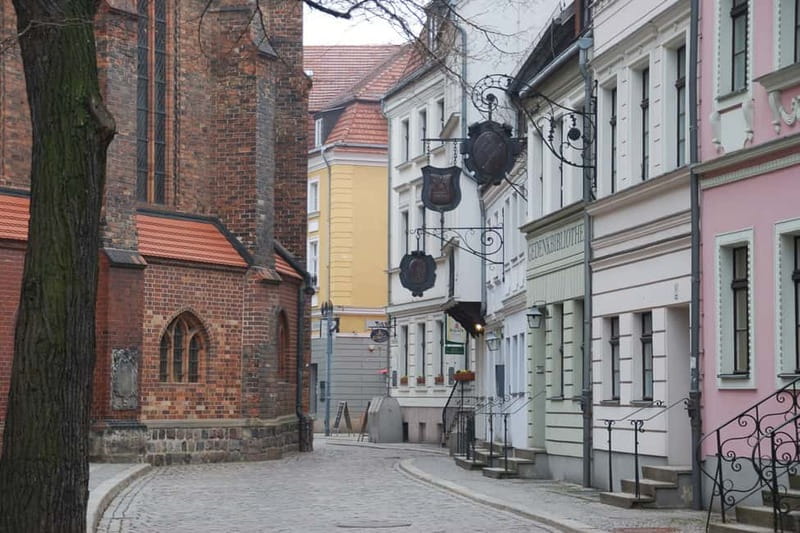
- A compact route with major landmarks: Walk from St. Nicholas’ Church through Museum Island, Unter den Linden, and Brandenburg Gate.
- History beyond the 20th century: The tour traces Berlin from a small trading settlement to Prussian royal capital and modern Germany’s capital.
- Small groups make questions easier: The maximum group size is 10, and some departures may become almost private tours.
- Carlo is a frequently praised guide: His storytelling, friendly manner, and willingness to explain details are major strengths.
- The route ends at Brandenburg Gate: You finish at Berlin’s best-known symbol, with its role in reunification explained.
- Plan for weather and walking: Wear comfortable shoes, and bring rain protection even if the forecast looks kind.
Starting beside St. Nicholas’ Church
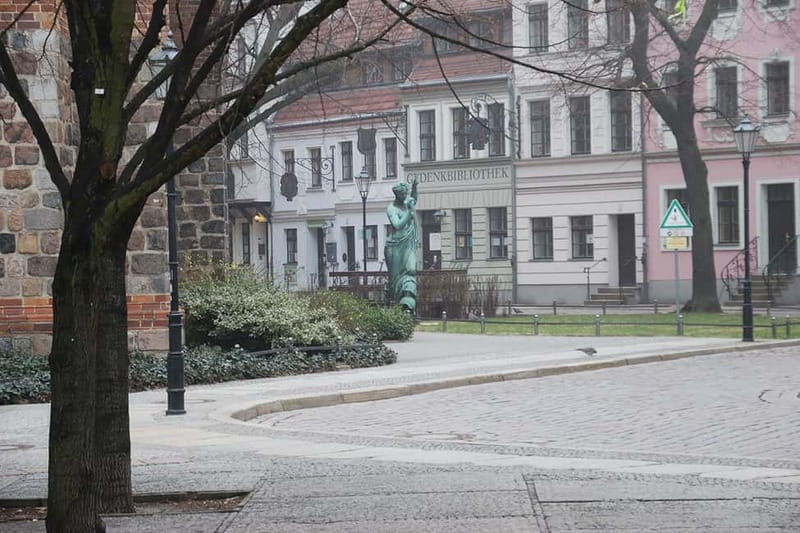
The tour begins in front of the main entrance to the Nikolaikirche Museum, also called St. Nicholas’ Church Museum. Look for the guide holding the Get Your Guide, You in Berlin flag. This detail matters in a busy city center, especially if you are arriving by public transport and do not yet know the area.
Starting here is a smart choice. Berlin’s oldest central quarter, Nikolaiviertel, gives you a useful opening chapter before the route reaches the grander royal buildings. The city did not begin with palaces or broad ceremonial avenues. It grew from modest settlements along the Spree, and this first stop helps set that scale.
Your guide explains the origins of Berlin and how the settlement developed over time. The point is not just to memorize dates. You begin to see why the Spree, the old trading routes, and the central location mattered to the city’s growth.
The tour is offered in German, English, and Italian. English departures receive particularly strong praise for clear delivery, including from people who already live in Germany. If you have limited time in Berlin, this opening gives you a framework for understanding later sights instead of treating each grand building as an isolated photo stop.
More History Walking Tours in Berlin
- Berlin: History of the Third Reich Guided Walking Tour
★ 4.7 · 791 reviews - Berlin Historical Highlights Walking Tour
★ 4.9 · 657 reviews - Berlin Private Complete History All Day Walking Tour
★ 5.0 · 474 reviews
Nikolaiviertel and Berlin’s first chapter
Nikolaiviertel is one of the most useful places in the city for discussing Berlin’s beginnings. The walk here focuses on the city as a small trading village before it became the capital of Prussia and, later, the capital of a reunited Germany.
You should expect an outdoor explanation rather than a long museum visit. The St. Nicholas’ Church Museum is the meeting point, but the walking tour itself is the main activity. That means you can cover ground efficiently, though anyone hoping to explore the museum interiors should plan a separate visit.
I like this part because it prevents the common Berlin mistake of starting history in 1933 or 1945. Those years matter enormously, but Berlin’s identity was shaped much earlier by trade, monarchy, religion, royal power, and its position on the Spree.
Along the Spree toward Museum Island
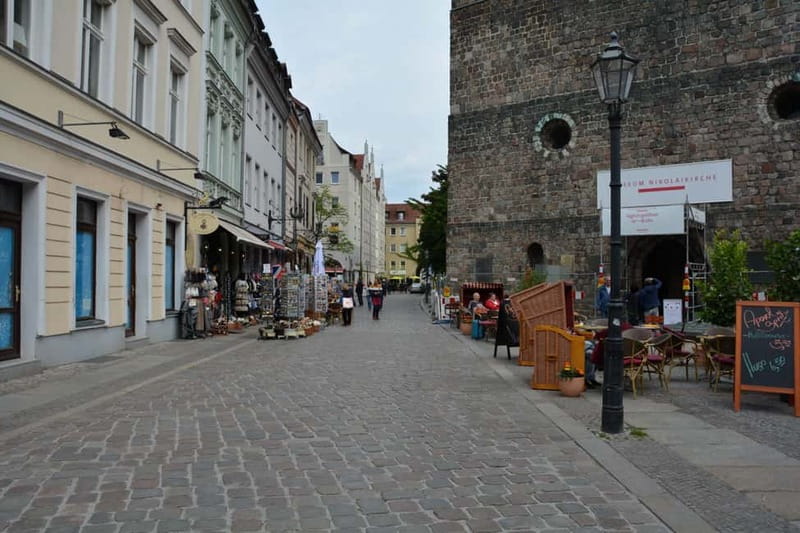
From Nikolaiviertel, the route follows the Spree toward Museum Island. This stretch gives you a change of pace. Instead of standing in a square surrounded by monuments, you walk beside the water and see how the river helps organize the center of Berlin.
The first big visual marker is the Television Tower, Berlin’s highest building. It rises above the city and acts as an easy reference point. Your guide uses the skyline to connect the older center with the later city, including the period when Berlin was divided.
Museum Island then brings several famous sights close together. You see the Berlin Cathedral, the Old Museum, and the Humboldt Forum. This is one of the strongest parts of the route for first-time visitors because a single walk introduces Berlin’s cultural institutions, royal history, architecture, and the changing meaning of the city center.
The buildings also show how Berlin has repeatedly rebuilt and reinterpreted itself. The setting is grand, but the story is not only about beautiful façades. The guide explains how this part of Berlin relates to the city’s past as a royal residence and to its modern role as a cultural capital.
Humboldt Forum and the reconstructed palace
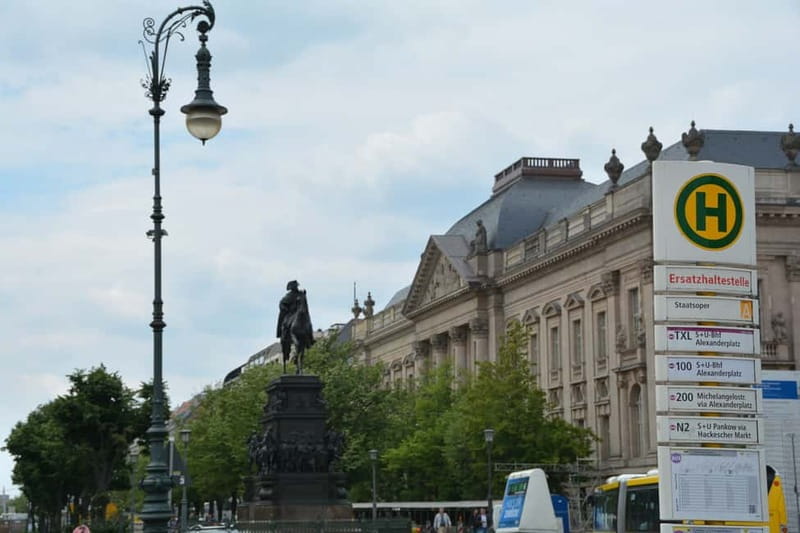
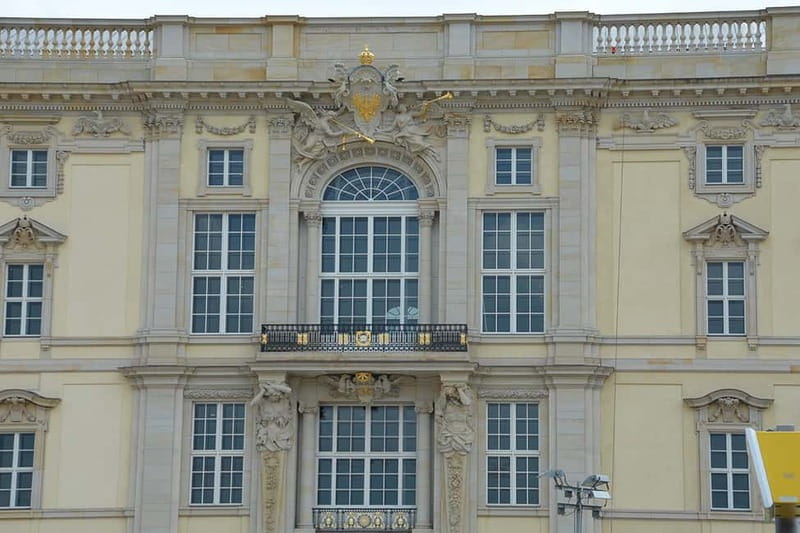
At the Humboldt Forum, you see the reconstructed Berlin City Palace. This is a useful place to discuss a city that has never stopped arguing with its own past.
The palace was tied to the Prussian and German royal tradition. Its reconstruction reflects a modern decision to restore an important part of the historic center, while also creating a contemporary cultural institution. You do not get a full indoor visit on this walking tour, but the exterior and surrounding space provide enough material for a solid explanation.
I would pay close attention here if you are interested in architecture and political memory. Berlin often places old forms beside new functions, and the Humboldt Forum is a clear example. You can see how the city uses reconstruction, museums, and public spaces to decide what belongs in its present.
Because the tour moves on foot, you have time to look at the building from the outside without committing to a long visit. If the palace is high on your list, return later with more time.
More History Walking Tours in Germany
- Berlin: Charité Hospital Walking Tour of Medical History
★ 4.9 · 276 reviews - Berlin Private Half-Day Walking Tour: Discover the German Capital’s History
★ 5.0 · 244 reviews - Berlin History Walking Tour with a French-Speaking Guide
★ 5.0 · 240 reviews - The History of Berlin: WWII PRIVATE Walking Tour With Locals
★ 5.0 · 209 reviews
Berlin Cathedral, the Old Museum, and Museum Island
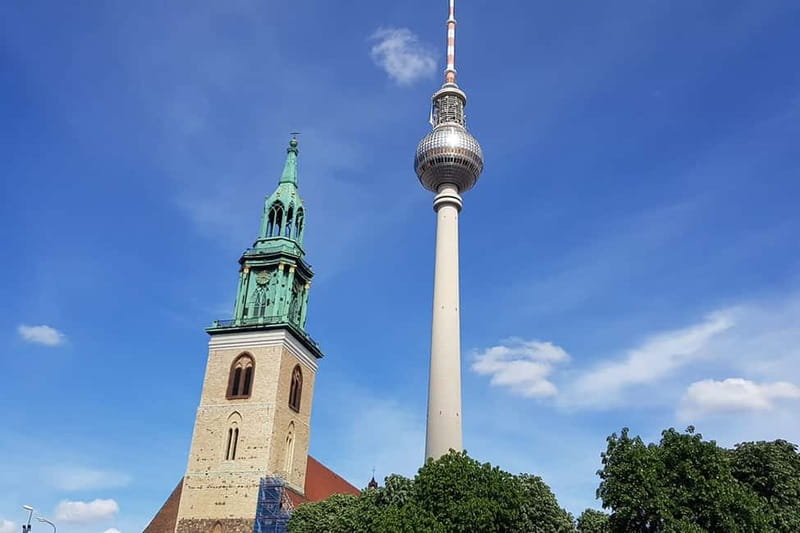
The route continues past Berlin Cathedral and the Old Museum. These are among the most recognizable buildings in central Berlin, and they make the walk feel like an open-air introduction to the city’s cultural center.
Berlin Cathedral gives the area its grandest religious landmark. The Old Museum brings classical culture into the picture. Together with the Humboldt Forum, these buildings show the concentration of museums, royal projects, and monumental architecture in a small area.
The tour lists the cathedral as a sightseeing stop, not an interior visit. That distinction is important. You will hear about the building and see it from the route, but entrance tickets and extended indoor time are not included.
If you want photographs, this section offers plenty of strong views. Still, the guide’s interpretation is the real value. Without context, Museum Island can become a parade of impressive façades. With context, you can understand why these institutions were placed here and how the district reflects Berlin’s ambitions.
Crossing the Palace Bridge into royal Berlin
Crossing the Palace Bridge brings you into the historic center associated with kings and emperors. The bridge provides an easy transition from the Spree and Museum Island to Unter den Linden.
Here, the tour turns toward the city’s ceremonial side. You see impressive buildings from the eras of Prussian and German rulers, but the guide also traces how their meaning changed as Germany moved through monarchy, dictatorship, division, and reunification.
This is where a local guide can help more than a map or audio app. The buildings remain in the same physical area, but the political systems behind them changed dramatically. A good explanation keeps the tour from becoming a simple parade of names and dates.
The small group format should work well here. With no more than 10 participants, you have a better chance of hearing clearly and asking a question without interrupting a large crowd. Past departures have sometimes had only two people or even one, which can turn the walk into a highly personal introduction.
Unter den Linden and the monuments of Prussia
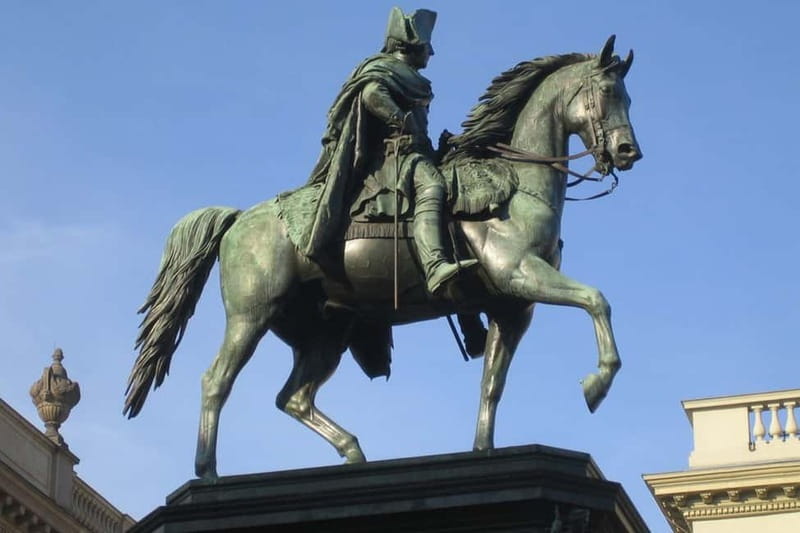
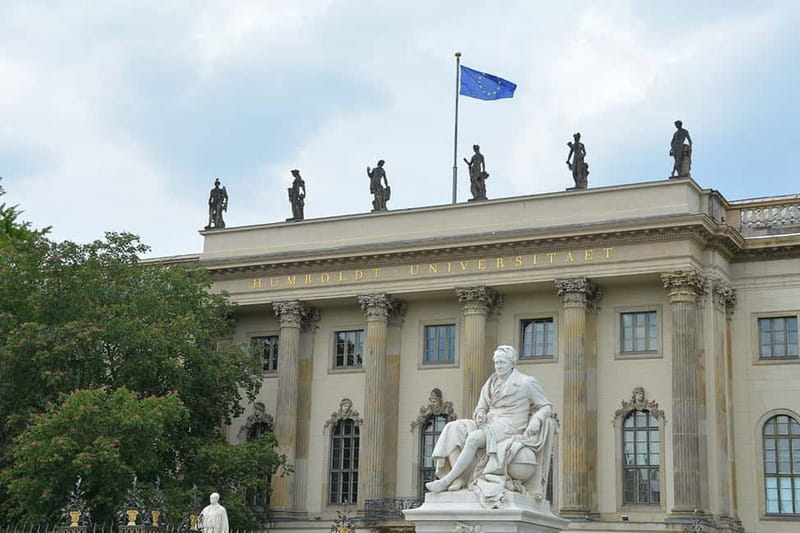
Unter den Linden is Berlin’s oldest boulevard, and it gives the tour its grandest walking stretch. The route includes the Equestrian Statue of Frederick the Great, the State Opera, Humboldt University, and St. Hedwig’s Cathedral.
Frederick the Great is an important figure in the story of Prussian power. The statue is not just a decorative landmark. It opens a discussion about the rulers who shaped Berlin’s growth and about the military and cultural traditions associated with Prussia.
The State Opera and Humboldt University bring another side of the city into view. Berlin was not only a seat of government. It was also a place of music, scholarship, and public culture. St. Hedwig’s Cathedral adds a religious landmark to the boulevard and shows the variety of institutions gathered around the old center.
You should expect a lot of information in a short space. The tour is best for someone who wants a strong overview and plans to revisit favorite places later. It is less suited to someone who prefers to spend 20 minutes inside each building.
Brandenburg Gate and the story of reunification
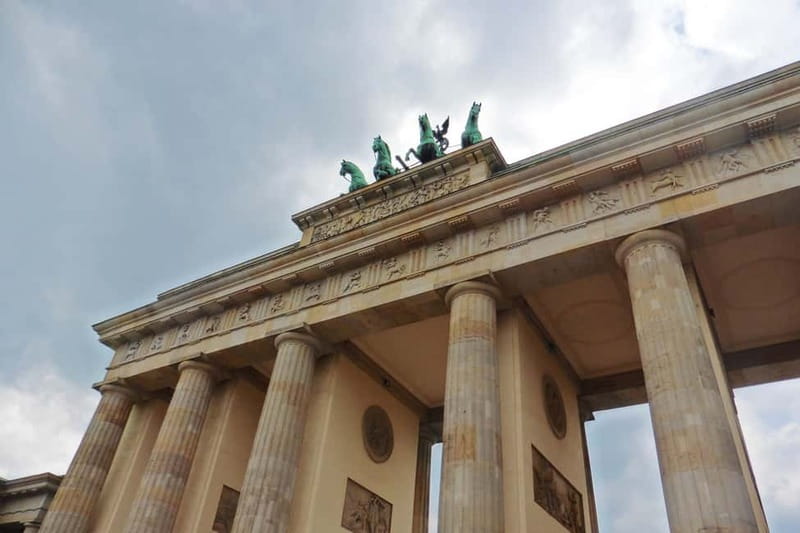
The walk ends at Brandenburg Gate, Berlin’s most famous landmark. This is more than a grand neoclassical gate and a reliable place for photographs. It became a powerful symbol of Berlin’s division and then of reunification in 1990.
Your guide explains the gate’s importance before, during, and after the city was divided. That time line is especially useful because the meaning of the gate changed with the political situation around it. The same structure could represent royal power, a divided city, and a reunited country.
Ending here gives the tour a clear finish. You have moved from Berlin’s early settlement to Prussian authority, cultural institutions, twentieth-century division, and modern reunification. The route does not cover every major period in equal detail, but it gives you a practical map of how those periods connect.
I also like finishing at Brandenburg Gate because you are not left in an obscure side street. You end at a central landmark that can help you plan the rest of your day. The tour itself does not include hotel transport, food, drinks, or entrance tickets, so you can decide what to do next.
How much history fits into two hours?
A surprising amount, but you need realistic expectations. The tour covers Berlin’s origins, its growth as a royal residence, its cultural institutions, the legacy of kings and emperors, and the history of division and reunification.
Several people who took the walk with Carlo praised his ability to explain both older Berlin and the Cold War period. One person described learning more about Berlin and the Cold War in a single afternoon than during years of school. Another praised the fact that the tour did not focus only on World War II.
That balance is the tour’s main strength. Berlin has many walks that concentrate on one twentieth-century subject. This route gives you a wider foundation, which is helpful on your first day or first morning in the city.
The pace will be steady. You walk between several landmarks, and some stops involve standing while the guide talks. If you need frequent rests, tell the guide. One past participant appreciated that the guide made room for sitting when needed, and another mentioned that Carlo even helped point out the bus toward the hotel after the tour.
Price, group size, and practical value
At $43 per person, the tour is not the cheapest way to walk around central Berlin, but it can be good value if you want structure and historical context. You are paying for a professional guide, a planned route, and two hours of explanation across several of the city’s main sights.
The maximum group size of 10 improves the value. A large crowd can make a city walk feel like a lecture delivered to the backs of people’s heads. Here, questions should be easier, and the guide can respond to the group more naturally.
The strongest value comes when you take it early in your visit. The route helps you understand where Berlin’s central districts fit together, and one person specifically found that the walk improved their sense of direction. You can then return to the cathedral, museums, palace, or other sites that deserve more time.
Free cancellation is available up to 24 hours before the start, and you can reserve now while paying later. The tour runs in all weather and on public holidays, so comfortable shoes and suitable clothing matter. The walk is wheelchair accessible, but the route remains an outdoor walking experience rather than a seated sightseeing visit.
Who will enjoy this Berlin walk?
I would recommend it most strongly to first-time visitors who want a clear introduction before tackling Berlin’s many museums and memorials. It also suits history lovers who want more than a single-period tour.
The small group makes it a good choice for people who enjoy asking questions. It can also work well for solo visitors, couples, and families who prefer a human guide to a phone app.
You may want something else if you prefer long interior visits, a special focus on World War II, or a tour built around Berlin’s Cold War wall sites. This walk reaches Brandenburg Gate and explains division, but it is not a dedicated Berlin Wall tour.
The guide’s personal style seems to be a major part of the experience. Carlo is repeatedly praised for being friendly, warm, patient, and easy to understand. The fact that he has continued with very small bookings is also reassuring if you dislike tours that feel impersonal or are at risk of being dropped.
Should you book the Historic Center Walking Tour?
Book it if you want a well-paced first look at Berlin’s historic core, especially if you value context more than ticking off interiors. For $43, the combination of a 10-person maximum, a central route, multilingual guidance, and a strong record of clear storytelling makes sense.
I would schedule it near the start of your stay. Wear comfortable shoes, prepare for rain or sun, and arrive at the St. Nicholas’ Church Museum entrance with enough time to find the guide’s flag.
Skip it if you already know Mitte well or want a narrow tour devoted only to the Berlin Wall, Nazi history, or museum collections. For most first-time visitors, though, this is a useful two-hour foundation, ending at Brandenburg Gate with Berlin’s long story finally arranged in a way that is easy to follow.
FAQ
How long is the Berlin historic center walking tour?
The tour lasts two hours.
Where does the tour begin?
It begins in front of the main entrance to the Nikolaikirche Museum, also called St. Nicholas’ Church Museum.
Where does the tour finish?
The tour finishes at Brandenburg Gate.
What languages are available?
The tour is offered in German, English, and Italian.
How large is the group?
The small group is limited to 10 participants.
Is the tour wheelchair accessible?
Yes, the activity is listed as wheelchair accessible.
What should I bring?
Bring comfortable shoes and comfortable clothes. The tour operates in all weather conditions, so rain protection may also be useful.
Are food, drinks, and hotel transfers included?
No. Food, drinks, hotel pickup, and hotel drop-off are not included.
More Old Town Walking Tours in Berlin
- Underground Vaults Walking Tour in Edinburgh Old Town
★ 4.5 · 8,506 reviews - Prague: 3-Hour Walking Tour of Old Town & Prague Castle
★ 4.7 · 5,696 reviews - Dubrovnik: Old Town Walking Tour
★ 4.8 · 5,174 reviews - Split: Old Town and Diocletian Palace Walking Tour
★ 4.9 · 4,727 reviews
More Old Town Walking Tours in Germany
- Nuremberg: Old Town Guided Walking Tour
★ 4.6 · 2,416 reviews - Munich: Old Town & Viktualienmarkt City Walk in German
★ 4.7 · 2,304 reviews - Heidelberg: Walking Tour of the Old Town
★ 4.6 · 1,742 reviews - Cologne: Night Watchman Old Town Walking Tour
★ 4.6 · 1,638 reviews
Just added around Berlin
- Berlin Walking Tour★ 4.5 · 378 reviews
- Small Group Walking Tour of East Berlin with a French Guide★ 5.0 · 176 reviews
- Berlin Street Art Walking Tour – Off The Grid★ 5.0 · 270 reviews
- Berlin Highlights Private Guided Walking Tour★ 4.5 · 89 reviews
- East Meets West: Berlin Food Culture & Street Art★ 5.0 · 157 reviews
- Private Walking Tour: World War 2 and Cold War Sites in Berlin★ 5.0 · 230 reviews
- Kreuzberg Berlin: Off the Beaten Track PRIVATE Walking Tour★ 5.0 · 128 reviews
- The History of Berlin: WWII PRIVATE Walking Tour With Locals★ 5.0 · 209 reviews
History Walking Tours, compared.
History and Hauntings of Salem Guided Walking Tour
Read our review →
Freedom Trail History Small Group Walking Tour
Read our review →
Historic Charleston Guided Sightseeing Walking Tour
Read our review →
Tapas Walking Tour with Food, Wine, and History
Read our review →
Savannah History and Haunts Candlelit Ghost Walking Tour
Read our review →