
Review · HISTORY WALKING TOURS
Historical Walking Tour: Legends of Gent
Ghent keeps its best stories on foot. This two-hour walk links medieval trade, castles, churches, and local legends with a guide who explains how the city’s past still shapes its streets. I especially like the excellent route through central Ghent and the guide’s practical tips for food, beer, chocolate, and later sightseeing. The main catch is the unusual pay-what-you-want setup, so you should confirm exactly how payment works before joining.
I also like the mix of grand landmarks and less polished corners, from St. Michael’s Bridge to the graffiti lane at Werregarenstraat. Guides such as Tatiana, Kasia, Kenny, Sophia, Robin, and Florian have been praised for humor, clear storytelling, and warm local advice. The walk is easy in distance but keeps you on your feet for about two hours, often over cobblestones.
Five things to know before booking
- The route covers Ghent’s main historic center: You see St. Bavo’s Cathedral, Gravensteen Castle, the Belfry, St. Nicholas’ Church, the old port, and several smaller squares.
- The guide does more than point at buildings: Expect stories about rebellion, punishment, trade, religion, graffiti, and Ghent’s stubborn civic spirit.
- The price needs careful reading: The listed price is $3.62 per person, but the tour also asks you to pay what you think it was worth at the end.
- The group can reach 35 people: Some departures may feel intimate, while a full group can make narrow streets and busy squares harder to manage.
- It is a strong first activity in Ghent: The route gives you a map of the center and helps you choose which sights to revisit on your own.
Starting at St. Michael’s Bridge with Ghent at your feet
The tour begins outside Hostel Uppelink at Sint-Michielsplein, beside St. Michael’s Bridge. This is one of the best places to get your bearings because the bridge frames Ghent’s famous three-tower view: St. Nicholas’ Church, the Belfry, and St. Bavo’s Cathedral.
Your guide starts with medieval Ghent as a trading power. That opening matters because the city can otherwise look like a beautiful collection of unrelated churches, canals, and old houses. The first explanation gives those buildings a purpose. Ghent grew through commerce, guilds, waterways, and a fierce desire for self-rule.
The bridge is also a practical meeting point near public transportation. Arrive ready to walk, and wear shoes that handle uneven paving. The route is not described as physically demanding, but the full two hours are spent standing and moving between stops.
More History Walking Tours in Belgium
- Historical Walking Tour: Legends of Bruges
★ 5.0 · 2,541 reviews - Historical Walking Tour: Legends of Antwerp
★ 5.0 · 1,837 reviews - Brussels: Historical Walking Tour with Chocolate & Waffle Tasting
★ 5.0 · 1,165 reviews
Graslei and Korenlei, where trade shaped the waterfront
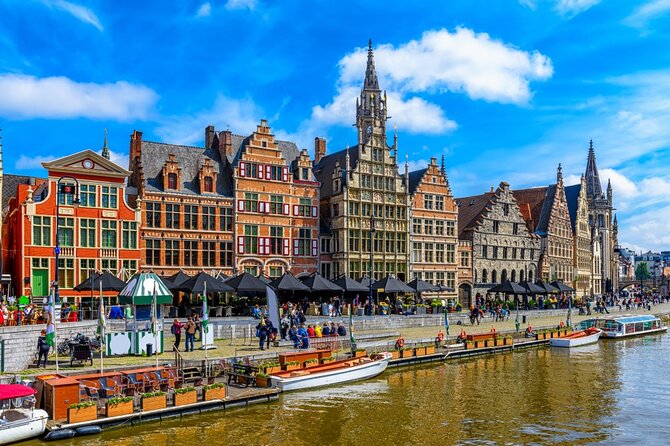
At Graslei and Korenlei, your guide explains the old port and the work carried out in the buildings along the water. This is one of Ghent’s most attractive stretches, but the useful part of the stop is learning to read the façades as working spaces rather than scenery.
You get a short introduction here, about ten minutes, so do not expect a building-by-building architectural lecture. Instead, you receive enough context to understand why this waterfront became the center of city life.
This is a good place to take photographs, but listen before reaching for your camera. The guide’s explanation about trade helps make sense of the city’s later wealth and its repeated clashes with rulers who wanted more control.
Design Museum Gent and the local taste for resistance
The stop at Design Museum Gent adds a different angle. Rather than focusing only on medieval monuments, the guide uses one detail of the museum to explain the stubborn, rebellious character associated with the people of Ghent.
Admission to the museum is not included, and the tour does not appear to enter every attraction. Treat this stop as an outdoor explanation, not as a museum visit. If design interests you, note the museum’s location and return later with a separate ticket.
I like this pause because it keeps the tour from becoming a parade of dates and dead rulers. Ghent’s identity is not presented as polite or obedient. The guide connects the city’s visual culture with its habit of questioning authority.
Het Groot Vleeshuis and the darker side of a grand building
At Het Groot Vleeshuis, or the Great Butchers’ Hall, you look across the water toward the medieval covered market. The building is impressive, but the story here is deliberately less comfortable.
The guide shares darker facts about the hall and its past. That balance is useful. Old European cities are often presented as pretty façades and romantic canals, yet their markets, punishments, disease, and strict social rules were part of daily life too.
You do not need an admission ticket for this stop. The view across the water also makes it easy to follow even if the group is large, although a crowded waterfront can make it harder to hear. If your guide uses a microphone, as one group reported, that helps considerably.
More Crime and Mystery Walks in Belgium:
- Historical Walking Tour: The Story of Bruges – by Legends
★ 4.7 · 483 reviews - Private Historical Tour: Legends of Antwerp
★ 5.0 · 125 reviews - Bruges Guided Walking Tour: Stories, Mysteries and People
★ 4.2 · 71 reviews - Prague: Ghost Walking Tour Where Legends Come To Life
★ 4.4 · 5,253 reviews
Gravensteen Castle, a medieval fortress in the city center
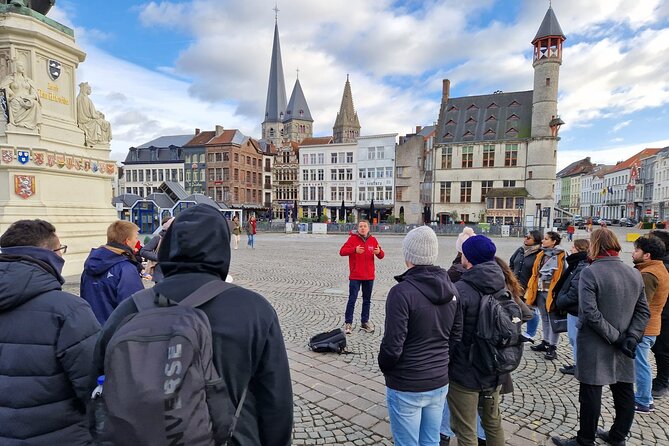
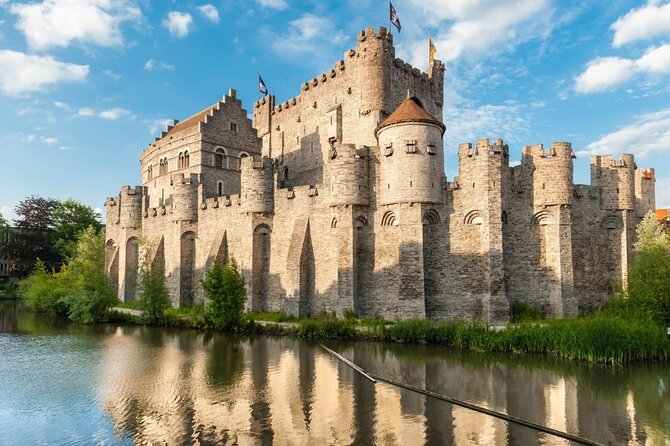
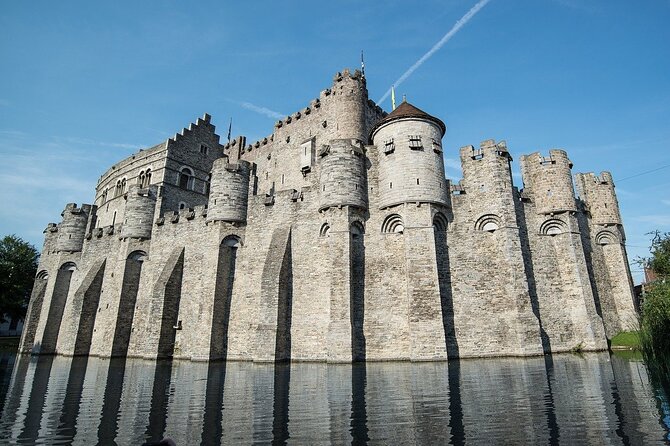
Gravensteen is one of Ghent’s strongest visual moments. Unlike a castle set outside town, the Castle of the Counts sits directly in the historic center. Its preserved walls and towers make the medieval past feel unusually close.
The guide explains the castle’s role and its impressive past from outside. Admission is not included, so you can decide later if you want to return for the interior. That arrangement suits a first walk because you get the setting and the essential story without stopping the group for a full museum visit.
Ten minutes is enough to understand why the castle matters, but not enough for every room, display, or detail. If Gravensteen is your main reason for visiting Ghent, plan a separate visit. The walking tour gives you orientation, not a full castle tour.
St. Veerleplein, the square of death and life
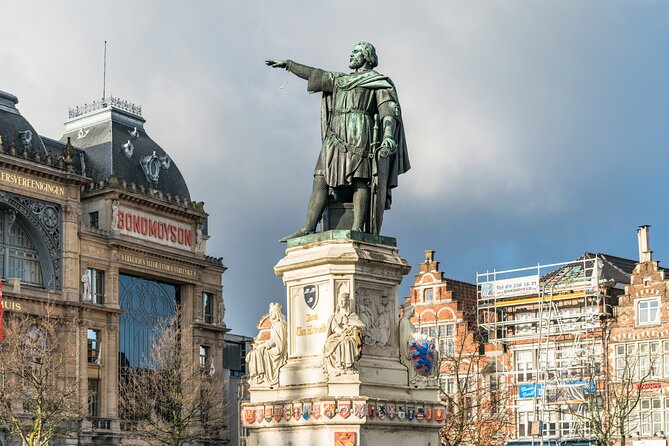
The square in front of Gravensteen is known both as the square of death and the square of life. The guide explains the contrast, turning an attractive open space into a place with a more serious past.
This is where the tour’s title makes sense. Legends are used as a way into civic history, not simply as spooky entertainment. You hear how public spaces could serve different roles over time, and how Ghent’s stories often combine humor with grim details.
The stop is free and brief. It works well immediately after Gravensteen because the castle and square belong to the same chapter of the city’s story.
Huis van Alijn and the story of a former hospital
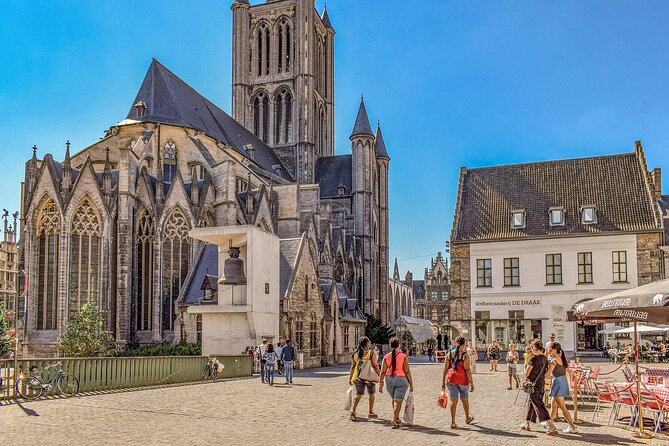
Huis van Alijn is the only remaining god house in Ghent, according to the tour description. The guide explains how it became a hospital and shares the unfortunate story behind that change.
This is a smaller-scale stop, but it adds texture to the grand narrative. You move from rulers, castles, and city power to the institutions that cared for ordinary people. That shift helps you see Ghent as a lived-in city, not only a historic center built for photographs.
The stop is free, and the building is visited from the outside as part of the walking route. If social history interests you, you may want to mark Huis van Alijn for a later visit.
Vrijdagmarkt and the men who shaped the square
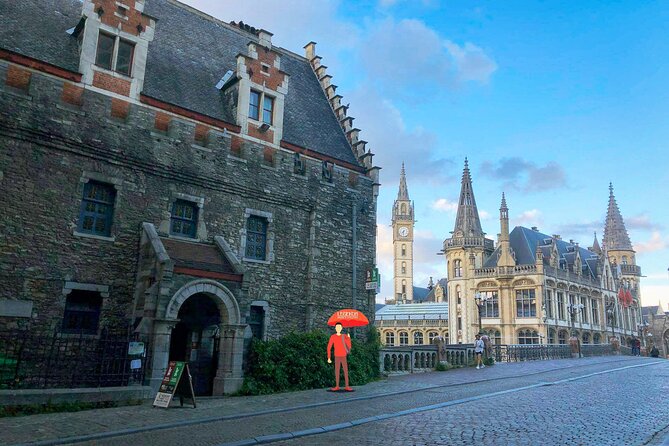
Vrijdagmarkt has played an important role in Ghent’s past, and the statue in the middle gives the guide a natural starting point. The square’s story brings together public power, civic identity, and the personalities connected with the city.
The explanation is short, around ten minutes, so expect a sharp introduction rather than a long political history. Still, this is the kind of stop that helps you understand why Ghent residents take local identity seriously.
The open square also gives a little breathing room after the tighter streets around the castle and old waterfront. It is a useful point to ask your guide about places to eat or drink because the guides regularly offer local recommendations during the walk.
Werregarenstraat, where graffiti has a place
Werregarenstraat is Ghent’s designated graffiti lane. The city created this space so street artists could work without spraying the monumental buildings elsewhere in the center.
This stop gives the tour a welcome present-day edge. You see how Ghent manages the tension between preserving old architecture and allowing modern street culture. The lane can change over time, so what you see is part of an ongoing process rather than a fixed monument.
It is also a good reminder that the city is not frozen in the Middle Ages. The walk moves from guilds and castles to current urban life without losing its focus.
Ghent Town Hall and the city’s biggest conflict
At Stadhuis, the guide explains why the town hall looks confused. Its mixed architectural appearance reflects a major conflict in Ghent’s history.
This is a smart stop because the building itself becomes evidence. Instead of merely saying that Ghent resisted outside control, the guide points to the town hall and shows how political struggles left their mark on the city.
Admission is not included. The short exterior explanation is enough for most first-time visitors, but architecture lovers may want to return and study the different sections more closely.
St. Bavo’s Cathedral and the Van Eyck masterpiece
St. Bavo’s Cathedral is one of the tour’s essential stops. The guide outlines the cathedral’s long history and points to its art treasures, especially the world-famous Ghent Altarpiece by the Van Eyck brothers.
The cathedral is free to see from the route, but the tour does not replace a dedicated visit inside. You should treat this stop as an introduction that helps you know what to look for later.
Because the cathedral holds such an important artwork, ten minutes passes quickly. If you want time with the altarpiece, plan another visit and check the separate admission arrangements for the interior. The walking tour gives you the story and setting, while a return visit lets you focus on the art.
The Belfry, the people’s tower, and a strange legend
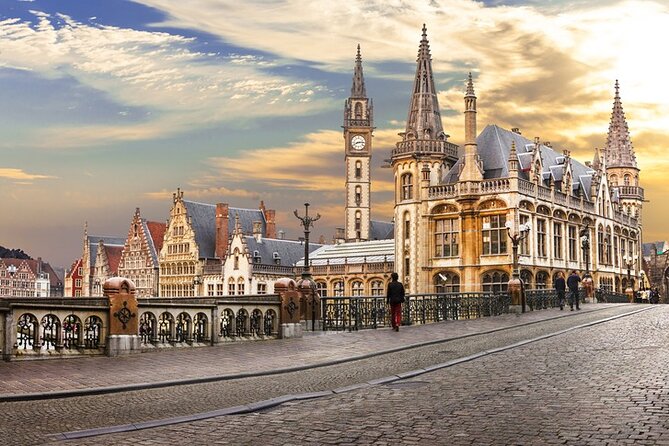
The route ends at the Belfry of Ghent, or Belfort van Gent. The tower represents the city’s independence, power, and stubborn character. The guide also explains its former use as a prison and tells a bizarre legend connected with the façade.
The Belfry is one of the best final stops because it gathers together many ideas from the walk: civic pride, resistance, public authority, and local storytelling. Admission is not included, so you can return later if you want to go inside or climb the tower.
The official end point is at Sint-Baafsplein, near the Belfry. That makes the finish convenient for continuing toward St. Bavo’s Cathedral, the city center, or a meal. It also means you finish near several of Ghent’s biggest sights rather than being left far from the center.
St. Nicholas’ Church completes the three-tower view
The last listed stop is St. Nicholas’ Church, looking over Korenmarkt. Its patron saint, St. Nicholas, protected merchants and sailors, so the church connects neatly with the opening discussion of Ghent as a trading city.
The façade also illustrates a legend about the saint, giving the tour a story-based ending. St. Nicholas’ Church is free to see from the route, although the schedule leaves little time for an extended interior visit.
Ending here brings the skyline full circle. At St. Michael’s Bridge, you first see the three towers together. By the end, you have heard why each one mattered and how religion, trade, and civic power overlapped.
Guides, group size, and the tone of the walk
The guide quality is the main strength of this experience. Tatiana has been praised for energy and storytelling, while Kenny, Kasia, Sophia, Robin, Florian, Camilla, Liedewei, and Hans have each received warm comments for humor, clear explanations, friendliness, or useful recommendations.
That range matters because this format depends heavily on the individual guide. The best guides make the two hours pass quickly, encourage questions, and explain architecture without turning the walk into a lecture. One group described the pace as fast but manageable, while another appreciated the care shown during hot weather.
The maximum group size is 35. A group of 18 to 20 should feel easier to hear and follow than a full departure. In a larger group, stay near the guide at busy crossings and narrow streets. Some guides may use a microphone, but that should not be assumed for every departure.
The tone is generally light and social, with plenty of humor. One guide received criticism for too many commercial recommendations, especially chocolate shops. I would treat the food and drink advice as optional. Ask for places that fit your budget and interests rather than following every suggestion automatically.
Is the $3.62 price good value?
The listed price of $3.62 per person is extremely low for a two-hour guided walk, especially one covering this many major sights. All fees and taxes are included in the listed amount, and the route itself does not require entrance tickets.
The unusual part is that the experience is described as pay what you want at the end. Guides depend on the payment you choose to make, so the advertised price may not be the full amount you are expected to contribute. Read the booking details carefully and ask at the meeting point if anything is unclear.
There is one serious payment warning to keep in mind. One family reported being asked for more than 200 euros after arriving, despite having paid through a booking platform, and said the requested amount varied between participants. This conflicts sharply with the otherwise strong experience record. To protect yourself, carry your confirmation, verify the operator name, and clarify the final payment before the walk begins. Do not assume that a low online price explains a large extra charge.
Who should book this Ghent walking tour?
I would choose this tour for a first visit, especially if you want a quick mental map before exploring on your own. It suits people who enjoy history with jokes, legends, architecture, and local context rather than a formal lecture.
It is also a good match for a short stay. In two hours, you see most of central Ghent’s headline sights and receive ideas for restaurants, beer, chocolate, and further visits. Several guides have been praised for making the city easy to understand without slowing the pace.
You may prefer a private or attraction-focused tour if you want long interior visits at Gravensteen, St. Bavo’s Cathedral, or the Belfry. This walk gives you a broad introduction, not detailed access to each building.
Allow two hours, wear comfortable shoes, and expect cobblestones and steady standing. The tour is offered in English, uses a mobile ticket, allows service animals, and is suitable for most people. It requires good weather and a minimum number of participants. You can cancel for a full refund up to 24 hours before the start, but cancellations or changes within 24 hours are not refundable.
Should you book Legends of Gent?
Yes, if you want a lively first look at Ghent and value a local guide more than extended time inside monuments. The route is smart, the stories cover both famous sights and smaller corners, and the strongest guides turn the city’s stubborn personality into something you can feel in the streets.
Book with care around the payment arrangement. Confirm what the $3.62 charge covers and what pay what you want means at the end. If that point is clear, this is a very inexpensive way to get oriented, hear memorable local stories, and decide where to spend the rest of your time in Ghent.
FAQ
Where does the Ghent walking tour start?
It starts at Hostel Uppelink, Sint-Michielsplein 21, 9000 Gent, Belgium.
Where does the tour finish?
It finishes at the Belfry of Ghent on Sint-Baafsplein, 9000 Gent, Belgium.
How long does the tour last?
The walk lasts approximately two hours.
What language is the tour offered in?
The tour is offered in English.
Is the price fixed or pay what you want?
The listed price is $3.62 per person, and the experience also states that you pay what you want at the end based on your experience. Confirm the payment arrangement before the walk begins.
Are attraction admission tickets included?
The tour includes all fees and taxes, but admission is not included for places such as Design Museum Gent, Gravensteen, Ghent Town Hall, and the Belfry. The route gives you exterior explanations of these sights.
How large can the group be?
The maximum group size is 35 people.
Can I cancel for a refund?
You can cancel at least 24 hours before the start time for a full refund. Cancellations or changes made less than 24 hours before the start are not accepted or refunded. If poor weather or an insufficient number of participants cancels the tour, you will be offered another date or experience, or a full refund.
Just added around Belgium
- Walking Tour: Highlights of Antwerp★ 5.0 · 98 reviews
- Historical Walking Tour in Antwerp Old City★ 5.0 · 277 reviews
- Evening Walking Tour: The Dark Side of Antwerp★ 5.0 · 193 reviews
- Private Historical Tour: Legends of Antwerp★ 5.0 · 125 reviews
- Brussels: Private 3-Hour Sightseeing Walking Tour★ 4.6 · 112 reviews
- Historical Walking Tour: The Story of Bruges – by Legends★ 4.7 · 483 reviews
- Antwerp: Historical Walking Tour in the Old City★ 4.8 · 373 reviews
- Ghent: Guided Walking Tour and Canal Boat Trip★ 3.8 · 128 reviews
History Walking Tours, compared.
History and Hauntings of Salem Guided Walking Tour
Read our review →

Freedom Trail History Small Group Walking Tour
Read our review →
Historic Charleston Guided Sightseeing Walking Tour
Read our review →
Tapas Walking Tour with Food, Wine, and History
Read our review →
Savannah History and Haunts Candlelit Ghost Walking Tour
Read our review →
A History of Terror – Belfast City Centre Walking Tour
Read our review →Browse the lists this tour appears in