
Review · HISTORY WALKING TOURS
Cork: Guided Historical Walking Tour
Cork keeps its secrets underfoot. This 75-minute walking tour ties the city’s streets to buried waterways, maritime trade, and local characters, giving you a useful first look at Cork’s compact centre. I especially like the route’s mix of major sights and small clues, from boathouse entrances on South Mall to the river flowing beneath the main street.
I also like the local storytelling. Guides such as Noel, Mary O’Sullivan, Gerard, Jarrod, Catherine, and Aiden have been praised for making the past easy to follow, often adding personal memories and Cork humour. The main drawback is pace: at $26, you are paying for interpretation rather than admissions, food, or a long stop inside each monument.
Key points at a glance
- A city built over water: Follow the curve of Cork’s main street while learning how old river channels still shape the city centre.
- Local guides make the difference: Noel, Mary, Gerard, Jarrod, Catherine, and Aiden have all been singled out for warm, lively storytelling.
- A useful first walk: The route covers the Opera House, Shandon, Grand Parade, St Fin Barre’s Cathedral, Elizabeth Fort, South Mall, and the English Market.
- Maritime Cork comes into focus: Former boat house entrances and trade links explain why the city developed as a port and commercial centre.
- Good for a short visit: The tour lasts 75 minutes, returns to the starting point, and ends near the English Market.
- Come ready for Irish weather: The walk runs rain or shine, so a waterproof layer and comfortable shoes matter.
Why Cork makes a fine walking tour city
Cork is easy to underestimate if you only glance at its shopping streets. The centre is shaped by water, with streets and buildings occupying ground that once belonged to river channels. That odd layout gives the walk a clear theme: you are not simply moving from monument to monument, you are tracing how the city grew.
The tour also helps you read Cork’s architecture. The city’s maritime past appears in business buildings, old commercial routes, and remnants of former boathouse entrances. Those details can be easy to miss on your own, especially when modern traffic and shopfronts fill the same streets.
I would take this tour early in a Cork stay. It gives you a mental map, points out places worth returning to, and helps you understand why the main street bends in an unusual way. Several guides also add recent local history, personal stories, and small details about daily life, which keeps the walk from feeling like a list of dates.
The rating of 4.7 from 310 reviews suggests a strong and steady experience, though the quality naturally depends on the guide assigned that day. The repeated praise is not just for facts. It is for clear speaking, good humour, local experience, and the ability to connect Cork’s past with the city you see now.
More History Walking Tours in Ireland
- Dublin Historical Centre Food Tour with 8 Food Tastings & Drinks
★ 5.0 · 1,718 reviews - 2-Hour Historical Walking Tour from Dublin
★ 5.0 · 875 reviews - Historical 2-Hour Guided Walking Tour of Dublin
★ 4.7 · 865 reviews
Starting at the Cork Tourist Information Centre
Plan to arrive 10 minutes before departure at the Cork Tourist Information Centre. The meeting point is central and easy to find, which matters when you have a limited window before another activity or a cruise departure.
The walk ends back at the same meeting point, even though the route finishes at the main entrance to the English Market on Princes Street. That makes the tour simple to fit into a day. You can head into the market afterward, return to a nearby hotel, or use the information centre as your base for the next stop.
Group size can vary. One account described a group of about 20 people, with the guide using a headset microphone. That is a useful detail in Cork’s city-centre traffic and street noise. Smaller groups can make questions easier, while a larger group may require you to stay close and keep an eye on the guide at crossings.
The tour is offered in English with a live guide. It is wheelchair accessible, though the route remains an urban walk, so you should be prepared for ordinary city-centre conditions and changing weather.
The river beneath Cork’s main street
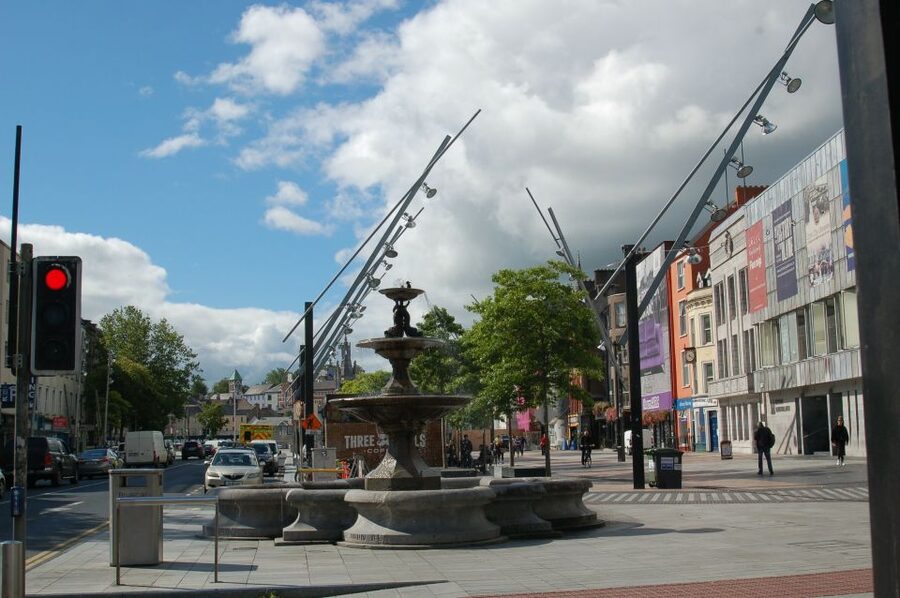
The first part of the route explains Cork’s unusual shape. You follow the curve of the main street while the guide points out the waterways that once ran through, or beneath, the centre. This is one of the most useful parts of the experience because it changes how you see the city afterwards.
Instead of treating the streets as a random collection of bends, you begin to see them as traces of an older water system. The guide connects that layout with Cork’s role as a European and transatlantic trading centre. Ships, goods, and commercial activity helped shape the city, and the river was not a background feature. It was part of the working structure.
I like this kind of explanation because it gives you a reason to notice the ground under your feet. You may pass the same streets later and remember that modern pavement covers an older route. The tour does not require you to imagine Cork as a museum piece. It shows how the old city still affects the new one.
Cork Opera House and the view toward Shandon
Cork Opera House provides one of the route’s main architectural points. From there, you can look across the river toward Shandon Church and its distinctive red-and-white brick tower with four clockfaces.
Shandon is one of Cork’s clearest visual markers. The tower shape is unusual enough to help you orient yourself, and the guide explains its place in the city rather than treating it as a quick photo stop. You learn to recognize the tower from different parts of central Cork, which is handy when you are finding your way later.
The tour does not include admission to Shandon Bells and Tower. One account notes that entry there costs €6 per person, including the chance to climb the tower and pull the bell ropes. Treat that as a separate activity if it appeals to you, and allow extra time beyond this walk.
This part of the route is better for context than for a long visit. You see the shape of Shandon and learn why it matters, but you should not expect an extended interior tour.
Same streets, a different way to see them:
- Dublin Highlights and Hidden Gems Guided Walking Tour
★ 5.0 · 6,020 reviews - Dublin: Highlights and Hidden Gems Walking Tour
★ 4.9 · 2,140 reviews - 1916 Rebellion Walking Tour
★ 5.0 · 1,605 reviews - 90 Minute Dublin Walking tour and Sightseeing tips
★ 5.0 · 916 reviews
Careys Lane and the Huguenot cemetery
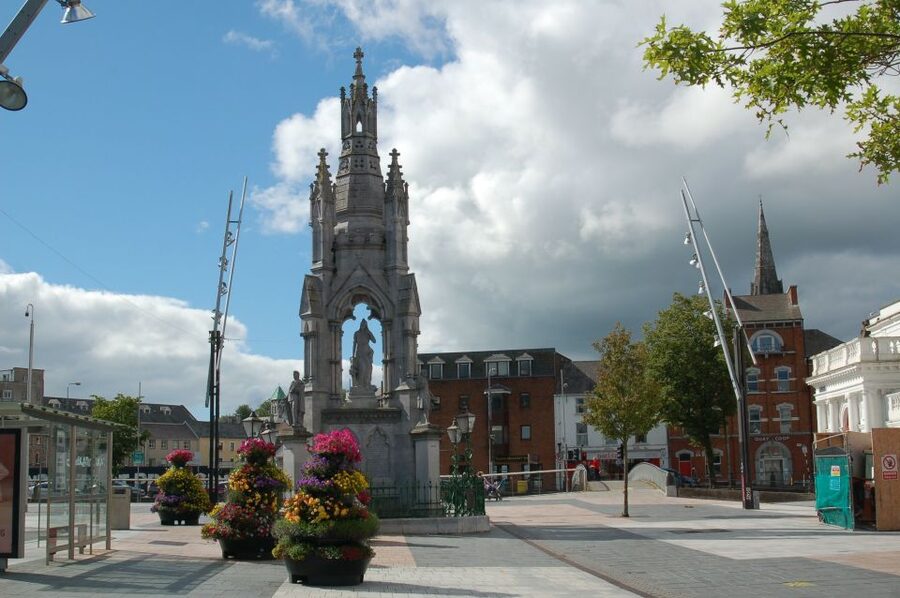
The walk turns down Careys Lane to the Huguenot cemetery. This is a quieter stop, and it adds a human side to Cork’s trading past. The city was shaped not only by goods moving through its port but also by people arriving, settling, working, and building new lives.
The cemetery is especially useful because it broadens the story beyond the most familiar Irish landmarks. The guide also discusses refugees and people who contributed to Cork’s story in ways that can be missed if you focus only on churches, forts, and grand civic buildings.
This is a short walking-tour stop rather than a formal cemetery visit with a long period for reflection. Still, I appreciate its place in the route. It makes the city feel like a meeting point of people and ideas, not merely a set of attractive streets.
Coal Quay, Cornmarket Street, and Grand Parade
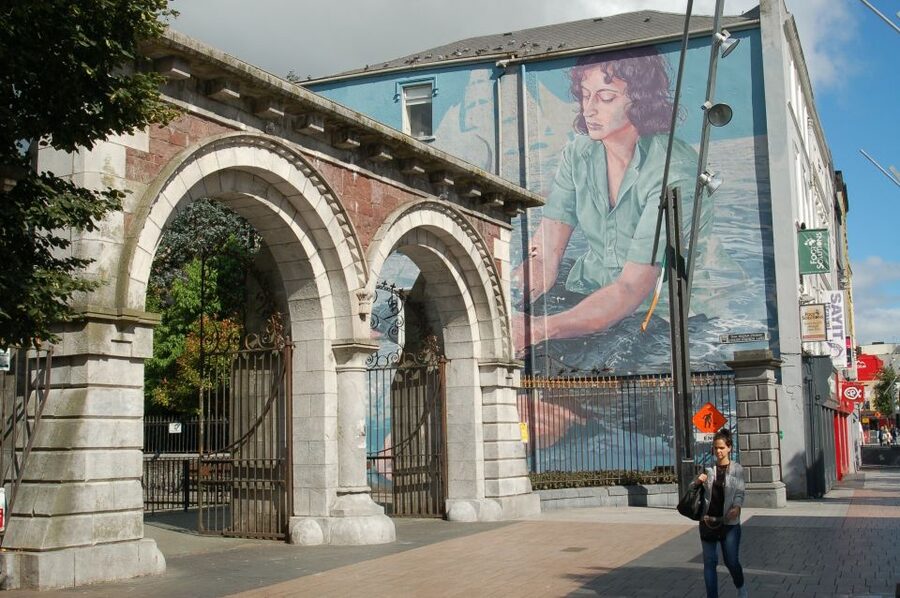
From Careys Lane, the route continues toward Coal Quay and Cornmarket Street. These names preserve clues about commerce and older city life. The walk then reaches Grand Parade, described as the widest street in Cork.
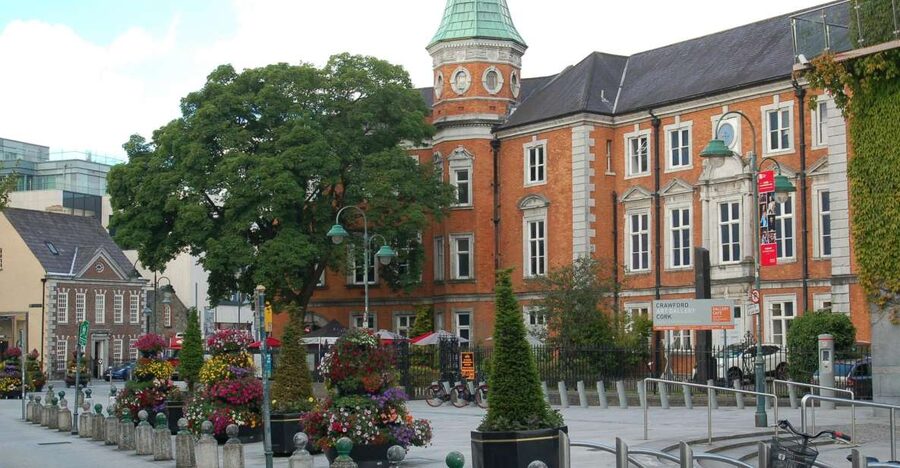
Grand Parade gives the tour room to shift from narrow lanes to civic Cork. Here you see Bishop Lucy Park, the Berwick Fountain, and the National Monument. Each stop adds a different layer: public space, decorative city design, and remembrance.
The guide’s value is in the connections between these places. You are not left to guess why one fountain matters or how a park fits into the city’s story. Guides have been praised for explaining practical details too, including the origins of Cork’s tall, bulky street lights. Small questions like that can make a city feel more understandable.
Grand Parade is also a sensible place to pause mentally and take stock of the route. You have already seen how water shaped the streets, and now you are looking at how Cork presented itself as a civic and commercial centre.
Nano Nagle and the footbridge named for her
The tour then brings you to a footbridge named for Nano Nagle. The guide explains her humanitarian work and efforts to provide education for poor people.
This stop gives the walk a social dimension. Cork’s story is not only about trade, buildings, and political events. It also includes people who worked to improve daily life, often under difficult conditions. The bridge is a practical city feature, but the story attached to it gives the crossing more meaning.
I find stops like this especially helpful for families and first-time visitors because they provide a clear person to remember. A name linked to a place is easier to carry with you than a long sequence of dates. It also gives you a reason to notice the bridge again when you pass through the area later.
St Fin Barre’s Cathedral, South Gate Bridge, and Elizabeth Fort
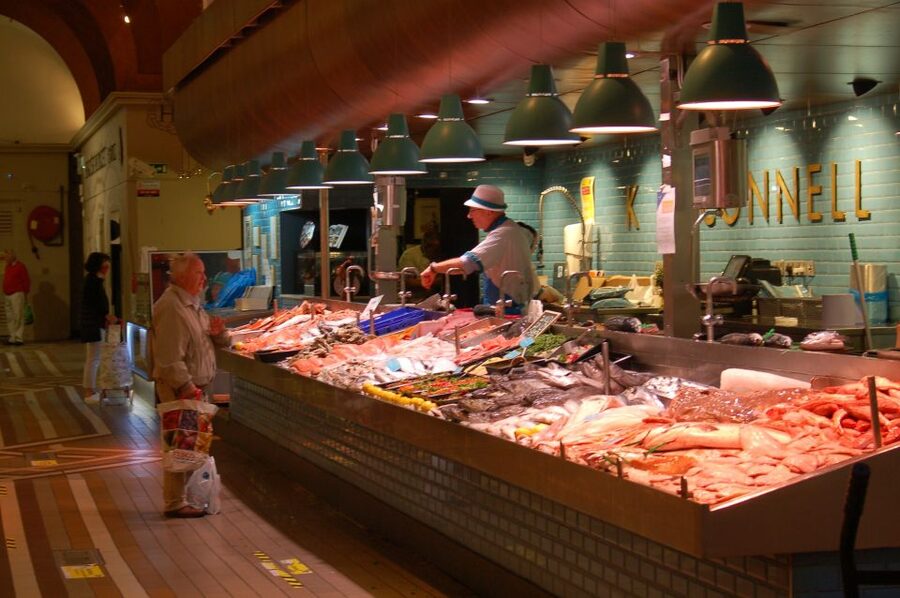
The itinerary continues to St Fin Barre’s Cathedral, South Gate Bridge, and Elizabeth Fort. Together, these sights show Cork through religion, transport, defence, and city growth.
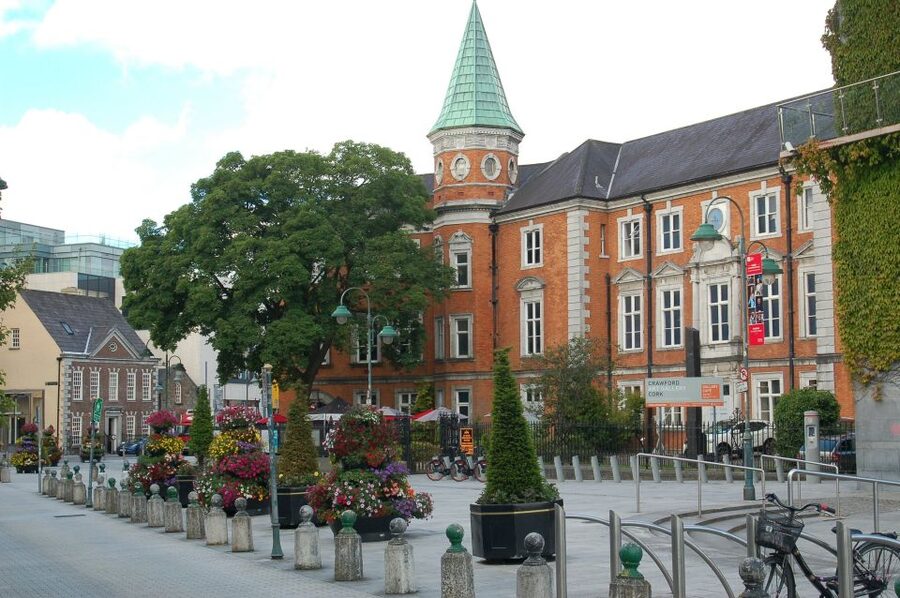
St Fin Barre’s Cathedral is one of the route’s major landmarks. From the outside, it gives you a strong sense of Cork’s architectural ambition. The walk does not include a separate cathedral admission, so you should think of this as an exterior stop and historical explanation unless the guide states otherwise on the day.
South Gate Bridge brings the river back into the story. Bridges are not just useful crossings here. They help explain how the city’s older waterways divided neighbourhoods and directed movement through Cork.
Elizabeth Fort adds a defensive angle. Its position and connection to the city help explain why control of Cork mattered. Again, this is a guided city walk, not a long fort visit, so you will gain orientation and context rather than a full exploration of every interior space.
The sequence works well. You move from a cathedral to a bridge to a fort, and each place answers a different question about how Cork functioned. The guide turns a collection of sights into a connected route.
South Mall’s former boathouse entrances
One of the most distinctive details comes on South Mall, now a leading business quarter. Here, you can see remnants of former boathouse entrances.
This is exactly the sort of feature I want from a city walk. The entrances are easy to overlook because the buildings now serve modern commercial purposes. Once someone points them out, though, the street becomes evidence of an older Cork, when water access and trade were part of everyday business.
South Mall shows how much the city has changed without losing every trace of its earlier function. The tour helps you read the façades rather than simply admire them. If you enjoy small architectural clues, this may be one of the most memorable parts of the route.
The stop also reinforces the maritime theme. Cork’s connection with transatlantic and European trade is not presented as a distant fact. It appears in the physical shape of the city.
Finishing at the English Market
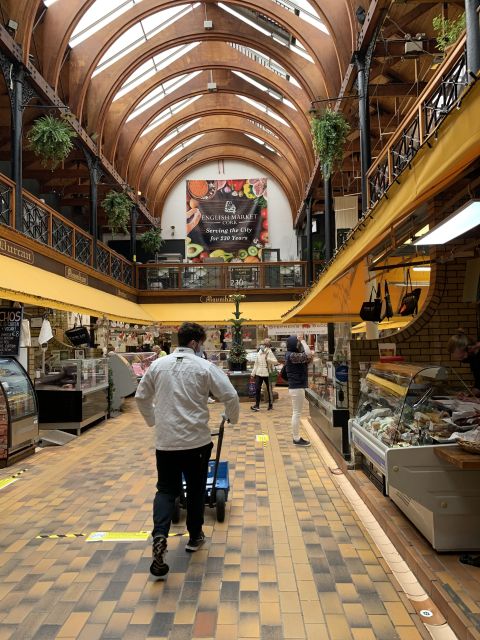
The walk finishes on Princes Street at the main entrance to the English Market. This is a smart ending because the market gives you an immediate next step.
Food and drinks are not included in the tour, but you can make the market your follow-up stop. One account specifically found the ending useful for continuing Cork sightseeing, and I agree with that logic. You finish with a place to browse, eat, or return to later rather than ending beside an isolated monument.
Do not expect the guide to provide a meal or a market tasting. The value is that you are left in a central location with one of Cork’s best-known food destinations close at hand.
Since the walk ends back at the meeting point, check the exact route and finishing instructions on the day. The tour information identifies Princes Street and the English Market entrance as the final sightseeing point, while the activity also states that it ends at the starting meeting point.
How the guides shape the experience
The strongest praise focuses on the guides’ delivery. Noel is repeatedly described as a strong storyteller with personal experience of Cork. Mary O’Sullivan is praised for local knowledge, clear speaking, and a friendly manner. Gerard, Jarrod, Catherine, and Aiden are also noted for being engaging, funny, passionate, or well prepared.
That matters because a historical walk can easily become a lecture. Here, the best guides appear to mix facts with personal stories, recent history, local characters, music references, and practical observations. One guide even used minor amplification so the group could hear over city noise.
You should still expect some variation. A walking tour depends on the guide’s style, the group size, and the weather. The repeated comments about humour, personal stories, and clear explanations suggest that the human side is the main reason to choose this experience.
Price, timing, and what you receive
At $26 per person, this is a reasonable price if you want an introduction rather than a full-day history program. You receive a live, English-language guide for 75 minutes, a planned route through several key areas, and explanations that would be difficult to assemble quickly from a map.
The price does not cover hotel pickup, food, drinks, or admissions. You should budget separately if you want to enter Shandon Tower, St Fin Barre’s Cathedral, or other paid sights. The tour itself is the product: guided movement through Cork and local interpretation.
The stated duration is 75 minutes, while the route description also calls it a one-hour stroll. I would plan for the full 75 minutes and avoid booking another activity immediately afterward. The pace is designed to cover a lot of central Cork, so this is not the right choice if you want long indoor visits or extended photography stops.
Free cancellation is listed up to 24 hours before the activity for a full refund, and reserve-now-pay-later booking is available. The information also calls the tour non-refundable, which conflicts with the cancellation policy. Confirm the terms shown at checkout before paying, especially if your schedule may change.
Who should book this Cork walking tour?
I would recommend it to first-time Cork visitors, people with a short stay, and anyone who wants local context before exploring alone. Families can benefit from the clear stories and manageable length, while history fans will appreciate the links between waterways, trade, migration, religion, education, and defence.
It also suits people arriving without a firm plan. The walk points out places to revisit, including Shandon, the cathedral area, Elizabeth Fort, and the English Market. One account described using it to get oriented and decide on extra stops later.
You may want something else if you dislike walking in poor weather, need long breaks, or prefer to spend most of your time inside monuments. The tour runs rain or shine, and Cork’s streets can be noisy. Wear comfortable shoes and weather-appropriate clothing, and stay close enough to hear the guide.
Should you book it?
Book this tour if you want Cork to make sense quickly. The route covers the city’s main landmarks, but its best moments are the smaller clues: water beneath the streets, boat entrances on South Mall, the Huguenot cemetery, and the stories attached to ordinary bridges and streets.
At $26, it offers good value for a short introduction, especially when your guide is one of the strong local storytellers praised for this experience. Just keep your expectations clear: you are buying a guided orientation walk, not entry to every monument. Take it early in your stay, wear rain-ready clothes, and keep time afterward for the English Market.
FAQ
How long does the Cork historical walking tour last?
The activity is listed as lasting 75 minutes. Its route description also refers to a one-hour stroll, so allow the full 75 minutes when planning your day.
Where does the tour start?
Meet at the Cork Tourist Information Centre. You should arrive 10 minutes before the activity begins.
Where does the tour finish?
The sightseeing route finishes at the main entrance to the English Market on Princes Street. The activity information also states that the tour ends back at the meeting point.
What language is the tour conducted in?
The live guided tour is conducted in English.
Is the walking tour wheelchair accessible?
Yes, the activity is listed as wheelchair accessible.
Does the tour include food or drinks?
No. Food and drinks are not included in the price.
Does the tour include hotel pickup and drop-off?
No. You must make your own way to the Cork Tourist Information Centre, and hotel pickup and drop-off are not included.
What should I bring?
Bring weather-appropriate clothing. The tour operates rain or shine, so a waterproof layer is a sensible choice.
Just added around Ireland
- Galway: Food and Culture Walking Tour with Tastings★ 4.7 · 127 reviews
- The Titanic Trail: 1-Hour Guided Walking Tour of Cobh★ 4.8 · 78 reviews
- Galway: Dark History Guided City Walking Tour★ 4.8 · 236 reviews
- Dublin: North Quay Guided Ghost Walk★ 4.2 · 144 reviews
- Kilkenny: Historical and Hysterical Guided City Walking Tour★ 5.0 · 126 reviews
- Killarney: Gap of Dunloe Walking and Boat Tour★ 4.4 · 72 reviews
- Kilkenny: Historical Highlights Walking Tour★ 4.9 · 90 reviews
- Galway: Welcome to Galway Walking Tour★ 4.8 · 338 reviews
History Walking Tours, compared.
History and Hauntings of Salem Guided Walking Tour
Read our review →
Freedom Trail History Small Group Walking Tour
Read our review →
Historic Charleston Guided Sightseeing Walking Tour
Read our review →
Tapas Walking Tour with Food, Wine, and History
Read our review →
Savannah History and Haunts Candlelit Ghost Walking Tour
Read our review →
A History of Terror – Belfast City Centre Walking Tour
Read our review →Browse the lists this tour appears in