
Review · HISTORY WALKING TOURS
Historical Hitler Walking Tour of Vienna
Hitler’s Vienna is best understood on foot. This thoughtful two-and-a-half-hour walk connects Adolf Hitler’s early years with Vienna’s opera, art, politics, antisemitism, and Jewish life. I like the serious historical context and the way the route uses real places rather than treating the subject as a collection of dramatic anecdotes. I also like that it ends near restaurants and the U-Bahn at Schwedenplatz.
The main caution is simple: this is not a fast tour devoted only to Hitler. It is a wider look at Vienna before, during, and after National Socialism. You will walk outdoors for much of the afternoon, and winter weather can make the 2.5 hours feel longer. Still, the $32.65 price is fair for an English-language tour led by a guide such as Dieter, Wolfgang, Stephan, Charles, or Siggy.
Key points to know before you book
- Hitler’s Vienna is the starting point, not the whole subject: The tour explains his early life while also examining Austria’s political and cultural setting.
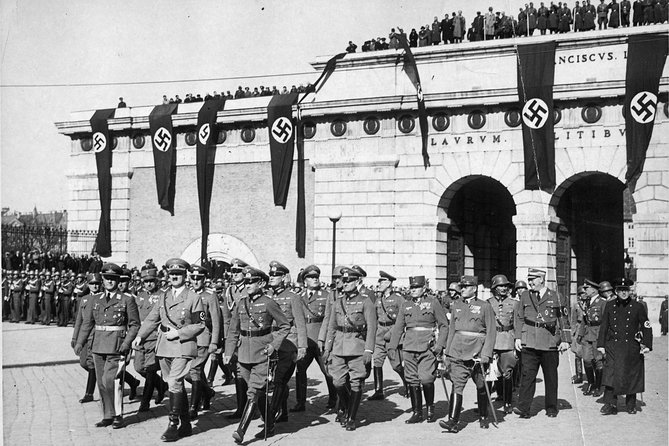
- The route links major and lesser-known memorials: You visit Heldenplatz, Judenplatz, Morzinplatz, and the Memorial Against War and Fascism.
- Jewish Vienna receives serious attention: The Judenplatz Holocaust Memorial and the concealed Stadttempel Synagogue help explain both persecution and Jewish life.
- The walk begins at Albertinaplatz and ends at Schwedenplatz: That makes it easy to continue sightseeing, find dinner, or use Vienna’s U-Bahn.
- The group can include up to 25 people: A smaller group may make questions easier, but you should stay close to the guide in busy central streets.
- Comfortable shoes and weather gear matter: Bring water, sun protection, and a raincoat or umbrella, especially since most of the tour takes place outside.
Why this Vienna walk is worth your afternoon
I like tours that use a city as their classroom. Here, grand buildings and quiet memorials become evidence. The Vienna State Opera is not only a beautiful concert house. Heldenplatz is not only a wide ceremonial square. Morzinplatz is not only a stop beside the Danube Canal. Each location helps explain how politics, culture, prejudice, and power worked in Austria.
The route also avoids turning Hitler into a lone villain who appeared from nowhere. The discussion begins with his connection to Vienna and expands into the social and political climate that shaped his ideas. You learn about antisemitism, Austria’s response to National Socialism, the destruction of Jewish life, and the city’s difficult process of remembering.
That wider frame is the tour’s greatest strength. It also explains why one person felt the title promised a more narrowly focused Hitler walk. If you expect every stop to relate directly to Hitler’s personal movements, you may find the title too broad. If you want to understand the city around him, the route makes much more sense.
The experience costs $32.65 per person. For that price, you receive a licensed English-speaking guide and a route covering several important sites in Vienna’s historical center. You do not pay separate admission fees at the listed stops, and the tour does not add a meal or hotel transport. I consider it good value for an informative walking experience, especially if history is one of your main reasons for visiting Vienna.
The tour is offered at 2:30 pm, which gives you time for a relaxed morning elsewhere in the city. It also places the finish near Schwedenplatz in the early evening, a useful time to stop for food.
More History Walking Tours in Austria
- Vienna: World War II Historical Walking Tour
★ 4.8 · 1,772 reviews - Vienna Historic Center Small Group Walking Tour
★ 5.0 · 1,746 reviews - Vienna: Essential History Walking Tour
★ 4.9 · 633 reviews
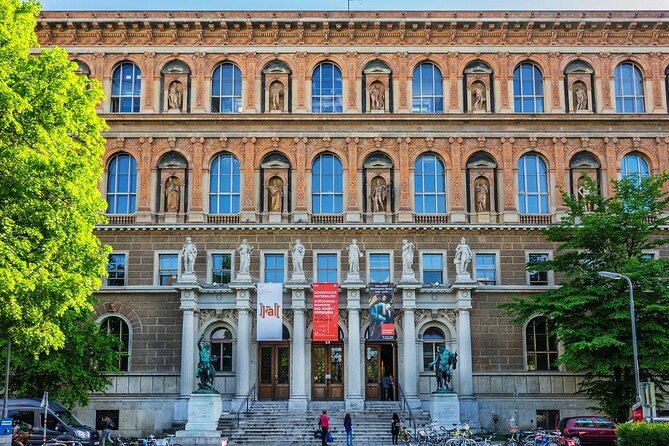
Starting beside the Albertina and the Vienna State Opera
Meet at Albertinaplatz, outside the Albertina Museum. This is a busy central location, so arrive with enough time to find the group. One practical weakness came from a participant being left behind while the group moved away from the meeting area. Keep your eyes on the guide after introductions and make sure you know who to follow.
The first major stop is the Vienna State Opera. Its opening in 1869 took place under Emperor Franz Joseph and Empress Elisabeth, with a performance of Mozart’s Don Juan. That beginning sets up Vienna as a city where music and court culture mattered enormously.
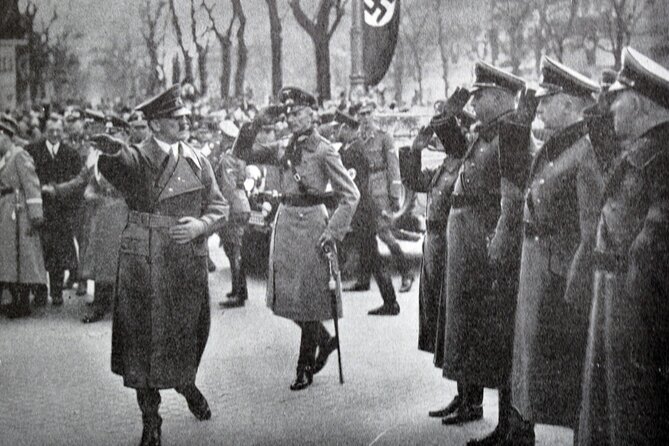
The focus then shifts to 1938. After the Anschluss, Hitler visited the opera house on June 19 and October 27. Under National Socialist rule, artists and employees were forced out, persecuted, or murdered. Some works could no longer be performed. This is a useful place to begin because it shows how the Nazi takeover affected an institution that many people associate with beauty, tradition, and artistic freedom.
You will spend about 10 minutes here, though the guide’s explanation may continue as the group moves onward. Admission is not included because you are viewing the exterior and discussing its history rather than attending a performance.
The Albertinaplatz memorial and Vienna’s difficult memory
The Memorial Against War and Fascism is close to the starting point. Austrian sculptor Alfred Hrdlicka created it, and it has occupied Albertinaplatz since 1988. The work is dedicated to victims of war and fascism and confronts what Austria often preferred to avoid discussing.
This stop is valuable because memory in Vienna is not always polished or comfortable. The monument asks you to consider civilian suffering, dictatorship, and Austria’s role during the Nazi period. It is not presented as a decorative city sculpture. Its purpose is to interrupt the normal sightseeing rhythm.
The stop lasts roughly 10 minutes. The subject can be emotionally heavy, so I appreciate the guide’s role in providing context rather than rushing through the site for a photograph. You should expect a serious tone from here onward.
The art academy and the limits of the Hitler story
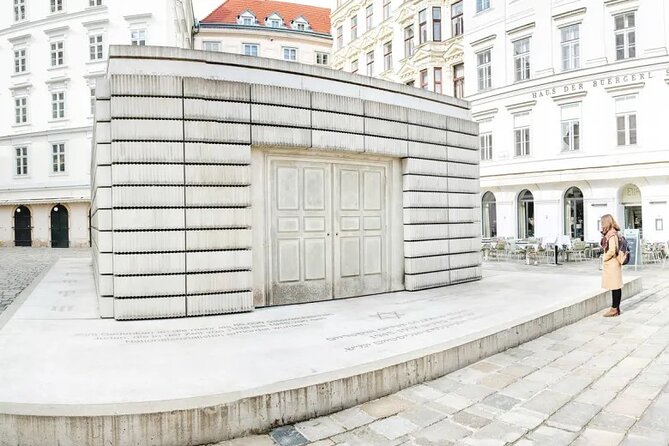
At the Akademie der bildenden Künste, you hear about the art school that did not accept Hitler as a student. This is one of the few stops tied directly to his early life in Vienna.
The point is not to claim that one admissions decision caused the Second World War. A responsible guide should place the episode in proportion, and the better guides do so by connecting it to Hitler’s years in Vienna, his ambitions, and the ideas he encountered there.
This is also where the tour’s title can create the wrong expectation. The art academy is relevant, but the experience does not trace every detail of Hitler’s life. Instead, it uses his Vienna years as a doorway into larger questions about the city and the period.
Guides add detail in different ways. Stephan has used photographs and maps on a tablet to make past scenes easier to picture. Dieter has been praised for a calm pace and careful explanations. Wolfgang is especially good for visitors who enjoy a philosophical angle alongside the dates and names.
More History Walking Tours in Vienna:
- History and Hauntings of Salem Guided Walking Tour
★ 5.0 · 14,564 reviews - Lisbon: History, Stories and Lifestyle Walking Tour
★ 4.8 · 10,902 reviews - Boston: Freedom Trail History Small Group Walking Tour
★ 5.0 · 6,450 reviews - Historic Charleston Guided Sightseeing Walking Tour
★ 5.0 · 6,216 reviews
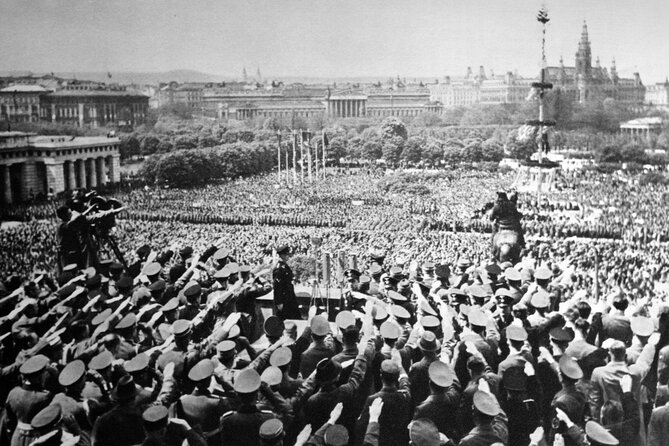
Heldenplatz and the March 1938 speech
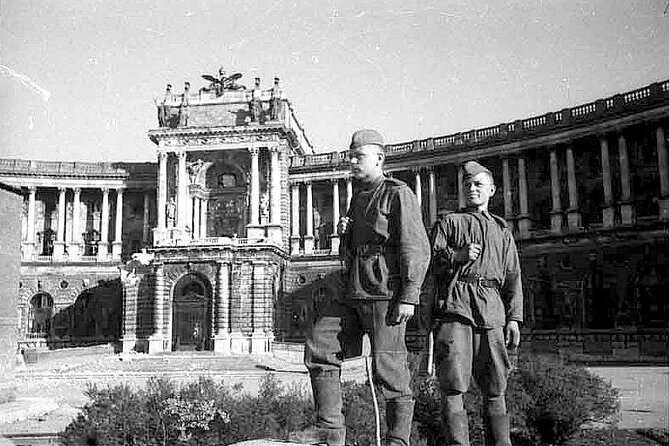
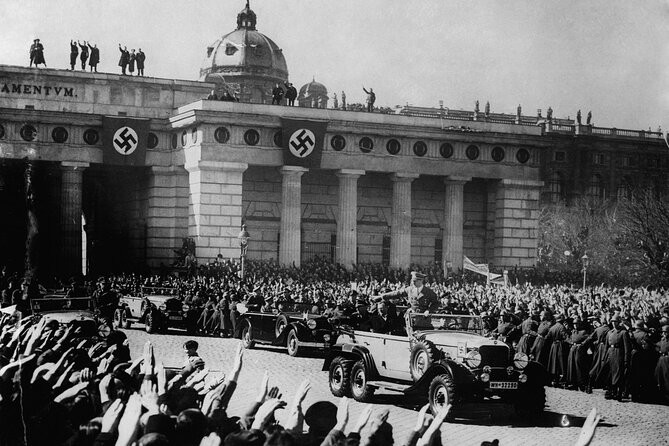
Heldenplatz is one of the most important political spaces on the route. On March 15, 1938, Hitler addressed a large crowd from the balcony of the Neue Hofburg. The speech became a lasting symbol of the Nazi seizure of power in Austria and of the support it received.
You are standing in a grand imperial setting, surrounded by buildings designed to project authority. That contrast makes the stop effective. The square’s architecture can feel ceremonial and distant until you learn how it was used as a stage for political power.
The guide explains why Heldenplatz became a trauma for Austria’s Second Republic after the war. The discussion is not limited to what Hitler said. It also looks at public response, national memory, and the difficult question of Austrian responsibility.
Allow about 10 minutes at the site. You will likely spend more time walking through the surrounding center while the guide continues the story. This is a good moment to ask questions, especially if you want to understand the difference between Austria’s postwar self-image and its actual conduct during the Nazi period.
Judenplatz and the murder of Austrian Jews
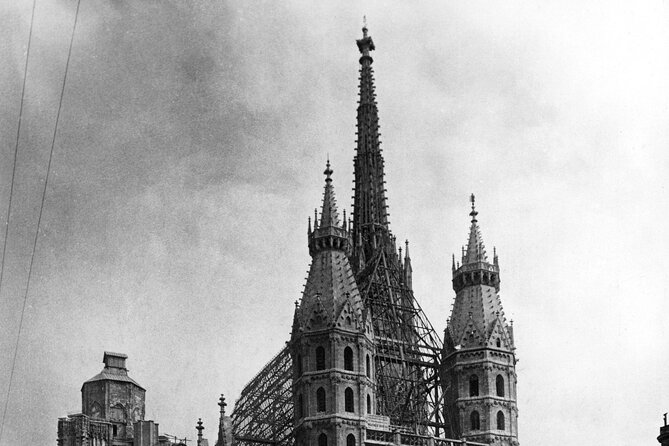
The Judenplatz Holocaust Memorial is one of the most affecting stops. It commemorates more than 65,000 Austrian Jews murdered by the National Socialists between 1938 and 1945.
The memorial is deliberately severe. It does not invite easy closure. The guide uses it to discuss Vienna’s Jewish population, the destruction of Jewish life, and the human cost behind the numbers. You may also hear about the large number of Austrian Jews who took their own lives rather than face deportation, a tragic detail that shows how persecution began long before the death camps.
This section gives the tour moral weight. The route does not treat the Holocaust as a distant German event. It keeps the focus on Vienna and Austria, which is important for understanding what happened on these streets.
The stop lasts about 10 minutes. I would not plan another demanding attraction immediately afterward. The subject deserves a little quiet time, and the walking route continues through the old center before reaching the next memorial.
Morzinplatz and the former Hotel Metropole
At Morzinplatz, you learn about the former Hotel Metropole. Once a luxury hotel, it became one of the Gestapo’s most brutal headquarters in the Third Reich.
The location is a sharp reminder that terror often operated from ordinary urban addresses. The building’s earlier identity as a fashionable hotel makes the change especially disturbing. The tour uses the memorial here to explain detention, interrogation, and the machinery of Nazi repression in Vienna.
This is another stop where the guide’s judgment matters. The subject is grim, but the best delivery stays factual and focused. Dieter has been praised for handling the material with care, while several guides have been described as patient with questions. That matters on a tour dealing with violence and political extremism.
You will spend about 10 minutes at Morzinplatz. The stop also helps connect the earlier discussion of public speeches and cultural institutions with the private, frightening work of the Gestapo.
The concealed synagogue at Seitenstettengasse
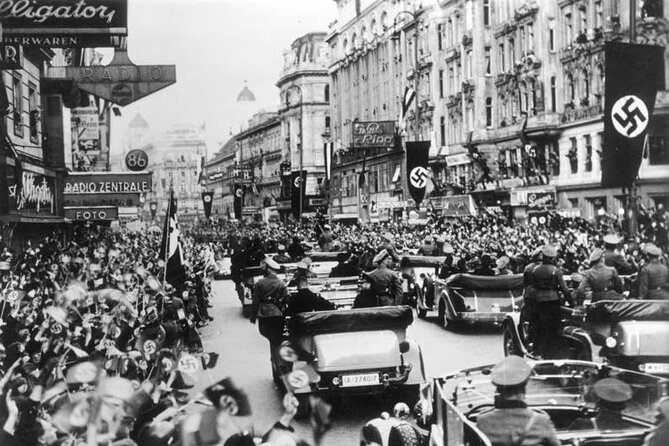
Near the end, the route reaches an information point for Jewish Vienna and the Stadttempel Synagogue, also called the Seitenstettentempel. The main synagogue is located at Seitenstettengasse 4, behind a five-story apartment building.
The reason is rooted in older regulations. Non-Catholic places of worship were required to remain hidden and could not be visible from the street. The synagogue’s entrance is therefore concealed behind the street building, a physical reminder of the restrictions placed on Vienna’s Jewish community before the Nazi era.
This stop adds an important layer. The tour is not only about murder and destruction. It also shows Jewish life, worship, and the long history of discrimination that preceded 1938. Above the entrance gate is a Hebrew inscription expressing thanks and praise, which gives the site a sense of continuity despite the violence that followed.
The synagogue is a functioning religious site, so the tour does not turn it into a spectacle. You should listen to the guide’s explanation and follow any instructions about viewing the exterior.
Pace, group size, and what the guides add
The listed maximum is 25 people. That is not a private walk, but it is small enough for a guide to manage with care. Stay near the front if you have difficulty hearing. One person found the sound device hard to follow, so do not hesitate to tell the guide if you cannot hear.
The pace is generally moderate, with stops of around 10 minutes and time between locations. Several guides have included indoor pauses during cold weather. That is useful, but you should not count on the day staying warm or dry. Vienna weather can change quickly, and the tour requires good conditions to operate.
Wear comfortable shoes. Bring water, sunblock, and a raincoat or umbrella. The route is in central Vienna and close to public transport, but you should still expect a substantial amount of walking.
The guides are the heart of the experience. Dieter is often praised for his careful storytelling, organization, and concern for the group. Wolfgang is valued for historical detail and thoughtful interpretation. Stephan has brought maps and images on a tablet. Charles has been described as an excellent presenter, and Siggy as warm, candid, and engaging. Individual guide styles will vary, but the strongest common feature is serious preparation.
Who should book this tour?
I would choose this walk if you enjoy political history, memorials, architecture, and the moral questions behind public memory. It suits visitors who want more than a list of dates and buildings. You will get the most from it if you are willing to listen closely and think about Austria’s role in the Nazi period.
It is also a good option for someone who has already seen Vienna’s palaces and museums but wants to understand the city’s harder side. The route passes through beautiful central streets, yet its purpose is not sightseeing in the usual sense.
I would be more cautious if you want a narrowly focused biography of Hitler or a general Second World War tour. The experience includes Hitler’s early Vienna years, but it also spends substantial time on Jewish history, memorial culture, fascism, and Austria’s political response. That breadth is a strength for many people and a possible mismatch for others.
The tour is recommended by 96 percent of customers and carries a 4.8 rating from 887 reviews. Those numbers fit the experience described here: strong guiding, serious content, and good value, with occasional problems involving cold weather, audio, or keeping a group together.
My booking advice
Book this tour if you want Vienna explained through its uncomfortable chapters. The route is carefully chosen, the price is reasonable, and the finish at Schwedenplatz makes the afternoon easy to continue.
Bring warm clothing in winter, arrive early at Albertinaplatz, and stay close to the guide when the group leaves each stop. If you prefer history told through places, memorials, and thoughtful explanation, this is a worthwhile choice. If you want Hitler alone, choose something with a narrower title and scope.
FAQ
Where does the Historical Hitler Walking Tour of Vienna begin?
The tour begins at Albertinaplatz, outside the Albertina Museum in Vienna.
Where does the tour end?
The walk ends a few minutes from Schwedenplatz, which has U-Bahn lines 1 and 4 and several restaurants.
What time does the tour start?
The scheduled start time is 2:30 pm.
How long does the tour last?
The tour lasts approximately 2 hours and 30 minutes.
What language is the tour offered in?
The experience is offered in English.
What is included in the price?
The price includes a licensed and informed guide.
Are food and drinks included?
No. Food and drinks are not included.
Is hotel pickup provided?
No. Hotel pickup and drop-off are not included.
How large can the group be?
The maximum group size is 25 people.
What should I bring?
Wear comfortable shoes and clothes. You should also bring water, sunblock, and a raincoat or umbrella because Vienna weather can be unpredictable.
Just added around Vienna
- The unknown Vienna City- a guided walking tour in 3 hours★ 4.7 · 137 reviews
- Hungry in Vienna? A Food Lover’s Coffee & Market Walk★ 4.9 · 276 reviews
- 3-Hour Walking Tour of Vienna Central Cemetery★ 4.7 · 71 reviews
- Vienna: City Center Guided Walking Tour★ 4.8 · 99 reviews
- Private Hidden Vienna Walk — Stories Behind Quiet Corners★ 5.0 · 137 reviews
- Vienna at First Glance a Private Walking Tour for First Timers★ 5.0 · 131 reviews
- Vienna: Essential History Walking Tour★ 4.9 · 633 reviews
- Vienna: Small Group Guided Walking Tour of City Highlights★ 5.0 · 540 reviews
History Walking Tours, compared.
History and Hauntings of Salem Guided Walking Tour
Read our review →
Freedom Trail History Small Group Walking Tour
Read our review →
Historic Charleston Guided Sightseeing Walking Tour
Read our review →
Tapas Walking Tour with Food, Wine, and History
Read our review →
Savannah History and Haunts Candlelit Ghost Walking Tour
Read our review →
A History of Terror – Belfast City Centre Walking Tour
Read our review →Browse the lists this tour appears in