
Review · HISTORY WALKING TOURS
Vienna: Essential History Walking Tour
Vienna’s grand center hides plenty of surprises. This two-hour walk packs Roman ruins, Habsburg power, royal weddings, wartime damage, and useful city tips into a compact route through the old imperial district. I especially like the small-group format, which makes it easier to ask questions, and the guide’s use of stories, humor, and images to bring formal buildings to life. The tour costs $34, a fair price for a strong first look at central Vienna, though entrance fees are not included and the pace may feel brisk for anyone with limited mobility.
The walk is best for first-time visitors who want context before choosing museums and palaces to visit on their own. Guides such as Herbert Stojaspal have earned praise for mixing historical detail with dry humor, while other guides, including Dorothy and Wolfgang, have also been singled out for clear explanations and an easy manner. The main drawback is focus: much of the time is spent around the Habsburg center, so you get less of Vienna’s wider neighborhoods.
Key points at a glance
- Roman beginnings at Michaelerplatz: Start with excavations that reveal Vienna’s early Roman past and learn why this spot mattered for a castle and later imperial power.
- The Habsburg center in one concentrated walk: Hofburg Palace, Heldenplatz, the Imperial Treasury, and the National Library all appear within a short route.
- Stories behind the grand facades: Hear why some Habsburg weddings took place without the groom, how imperial burials worked, and what once occupied the site of Hotel Sacher.
- A sober look at the 20th century: The Albertina and Monument Against War and Fascism add wartime history to the imperial story.
- A useful first-day orientation: Guides offer ideas for museums, food, wine, and later sightseeing, including advice on what seasonal attractions may not offer their full program.
- Compact but not effortless: The route ends at St. Stephen’s Cathedral after two hours, with walking on city streets and no admission included.
Starting at Michaelerplatz and the Roman remains
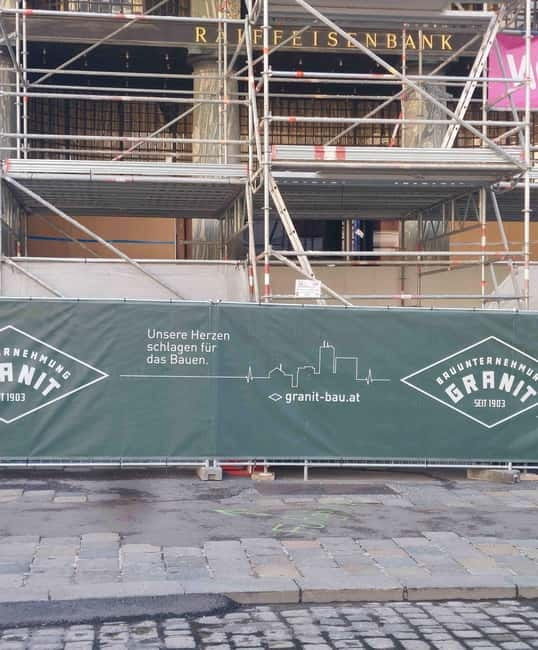
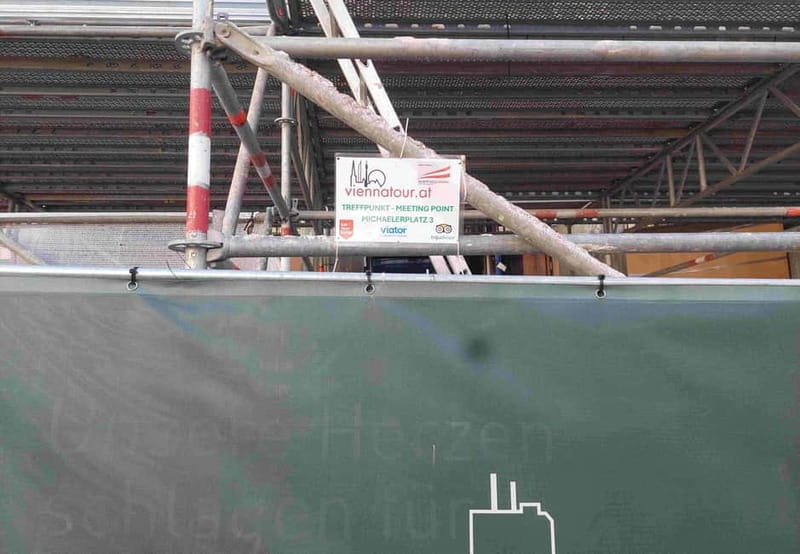
Meet in front of the Loos Haus at Michaelerplatz 3, a short walk from Herrengasse station on the U3 line. Look for the facade marked Raiffeisenbank. This detail matters because Michaelerplatz is busy, and the nearby buildings can make a meeting point easy to miss.
The walk begins with the excavations in Michaelerplatz. Instead of treating Vienna as an imperial city that appeared fully formed, the guide starts much earlier, with Roman Vienna and the practical reasons people built here. You will hear the question of why a castle was established at this location, which gives the rest of the route a useful thread: Vienna grew from a strategic settlement into the center of Habsburg power.
This opening is one of the tour’s strengths. The ruins are not huge, and you would be forgiven for giving them only a quick glance on your own. With a guide, they become part of a longer story about military position, trade, rulers, and the city’s changing shape.
More History Walking Tours in Austria
- Vienna: World War II Historical Walking Tour
★ 4.8 · 1,772 reviews - Vienna Historic Center Small Group Walking Tour
★ 5.0 · 1,746 reviews - Historical Hitler Walking Tour of Vienna
★ 5.0 · 887 reviews
St. Michael’s Church and the layers of Vienna
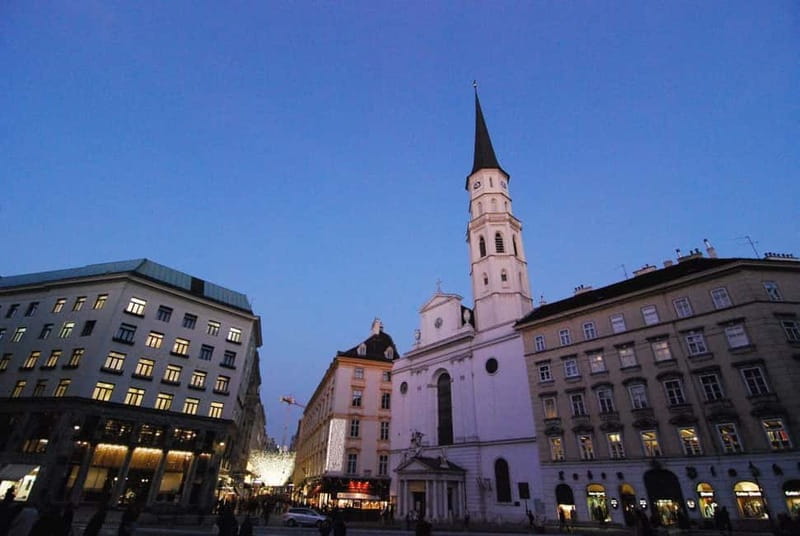
The route continues to St. Michael’s Church, described as Vienna’s third-oldest church. Its appeal is not only its age. The building combines three different architectural styles, giving you a quick lesson in how centuries of construction and alteration can leave their mark on one place.
You are not simply asked to admire the facade. The guide explains how to read the building and why its appearance does not belong neatly to a single period. That approach is useful in Vienna, where grand churches and palaces often show several eras at once.
The schedule is fairly tight, so this is more of an explained exterior stop than an extended church visit. If you want time for quiet viewing or worship, plan to return later on your own.
Hofburg Palace and the machinery of Habsburg power
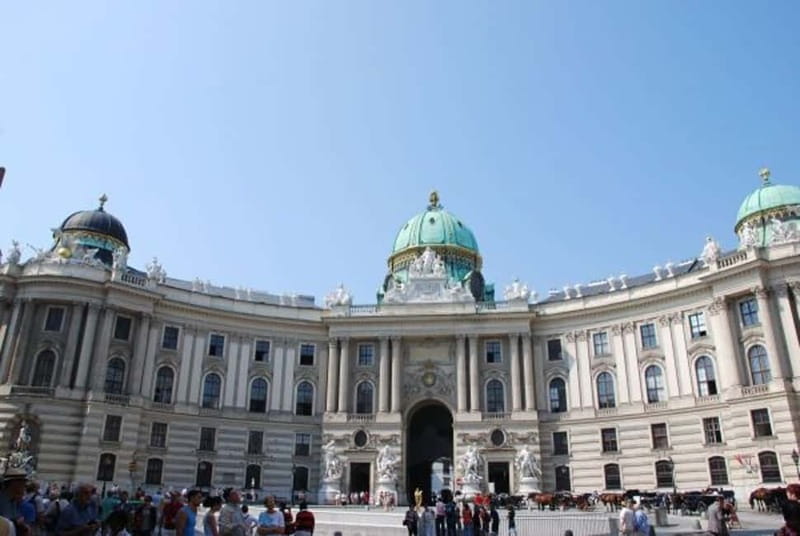
Hofburg Palace is the heart of the walk. The huge complex covers about 555,000 square meters, and the guide helps you understand why it feels less like one palace than a small city built for rulers, servants, officials, ceremonies, and military power.
The tour explains the most important Habsburg rulers and points out what sits behind the formal facades. That is valuable because the Hofburg can seem like a series of impressive courtyards without a clear plan. A good explanation connects the buildings to the people who used them and the political decisions made inside them.
Guides have been praised for keeping this section lively rather than turning it into a list of dates. Herbert, in particular, is often appreciated for dry humor and an ability to answer questions beyond his prepared material. He has also used an iPad to show historical images, including views of buildings after the Second World War. That sort of visual aid can help you understand how much has changed, especially when today’s restored facades look complete.
The tradeoff is time. One guide reportedly spent around an hour and a half of a two-hour tour in the Habsburg area. If you want equal attention for every part of central Vienna, this may feel too palace-heavy. If the imperial story is your main reason for visiting, that concentration is a benefit.
Heldenplatz and the meaning behind the open space
Heldenplatz, or Heroes’ Square, gives the tour room to breathe. Its scale is striking, but the guide goes beyond the open space and monumental buildings to explain what lies behind the facades and why the square mattered to the Habsburg court.
This is a good place to connect architecture with public power. The square was designed to impress, and its size helps you understand how rulers used space for ceremonies and displays. You also get more context about the people linked to the buildings around it.
A short stop here can be more useful than a long lecture because the space itself does much of the work. You see the scale, then the guide supplies the political meaning.
More History Walking Tours in Vienna:
- History and Hauntings of Salem Guided Walking Tour
★ 5.0 · 14,564 reviews - Lisbon: History, Stories and Lifestyle Walking Tour
★ 4.8 · 10,902 reviews - Boston: Freedom Trail History Small Group Walking Tour
★ 5.0 · 6,450 reviews - Historic Charleston Guided Sightseeing Walking Tour
★ 5.0 · 6,216 reviews
The Imperial Treasury and National Library
The Imperial Treasury is one of the places the guide encourages you to visit separately. Since admission is not part of the $34 tour, you will not receive a full museum visit as part of the walk. Instead, you learn why the Treasury matters and what kinds of objects you can expect to see inside.
That preview can help you decide how to spend the rest of your day. One visitor found the walk useful preparation for a later visit to the Treasury, since the objects made more sense after hearing about imperial ceremony and Habsburg rule.
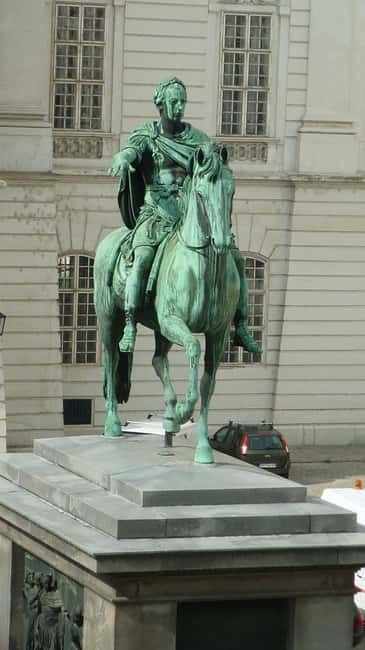
The Austrian National Library comes next, with attention to its famous state room. The tour explains the symbol on the roof and why the square is named after Emperor Joseph II. These details show the value of having a guide in a city where decorative symbols are easy to pass without noticing.
You should think of this part as an introduction, not a substitute for entering the library. If the state room is high on your list, set aside separate time and check admission details independently.
Habsburg weddings and the church without the groom
The walk includes the church where all Habsburg weddings were held. It is a memorable stop because the guide adds a striking detail: in some cases, the groom was not present at the wedding.
That anecdote opens a window onto dynastic marriage as a political tool. These ceremonies were not only personal events. They could seal alliances, transfer claims, and strengthen royal ties across Europe. The story gives human shape to a subject that can otherwise feel distant and formal.
The church is closed on Sundays and public holidays, so the stop may be limited on those days. Even when you cannot go inside, the guide can still explain its role in Habsburg life. If seeing the interior matters to you, check the day of your visit before booking.
Albertina, wartime damage, and the Monument Against War and Fascism
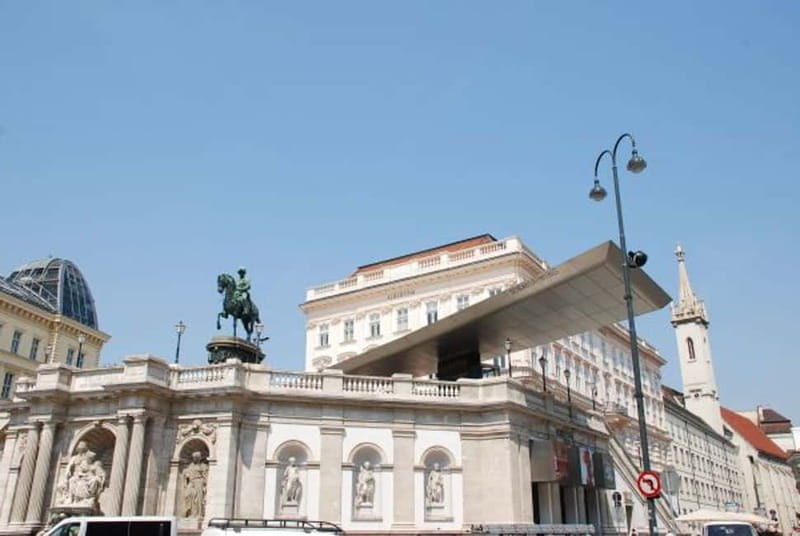
The Albertina brings art into the route. It is home to the world’s largest graphical collection, and the guide points out why the museum is important. You may not have time to visit its galleries during the walk, but the stop helps you decide if it deserves a return visit.
The nearby Monument Against War and Fascism changes the mood. After so much imperial grandeur, the tour confronts Vienna’s darker 20th-century story and the horrors of the Second World War. The placement is effective because it prevents the walk from presenting the city as nothing more than elegant palaces and royal ceremonies.
This section also benefits from historical images. Seeing how buildings looked after wartime damage can make restoration less abstract. You begin to notice that Vienna’s polished center carries scars beneath its calm appearance.
The State Opera, Hotel Sacher, and a vanished theater
At the State Opera, the guide explains why Hotel Sacher now occupies the site of the old Carinthian Gate Theatre. This is exactly the sort of fact you might miss if you simply walk past the opera house on the way to a concert or cafe.
The story also shows how Vienna’s center has changed through demolition, rebuilding, commerce, and cultural fashion. The buildings are not frozen museum pieces. They reflect decisions made by rulers, city planners, business owners, and residents over time.
You will not get a performance or an interior tour of the opera house. The value here is orientation and context, especially if you plan to return for a concert or a closer look.
Neuer Markt, the Imperial Crypt, and Habsburg burial customs
At Neuer Markt, the Providentia Fountain supplies another small story. It is a useful reminder that Vienna’s character often appears in details rather than only in its biggest monuments.
The Imperial Crypt brings the tour back to the Habsburgs, this time through their burial ritual. The guide explains the unusual tradition connected with imperial burials, giving you a better reason to visit the crypt than simply seeing another royal tomb.
As with the Treasury and National Library, admission is not included. The walk provides the background, then you can decide if you want to pay for entry and explore inside at your own pace.
Finishing at St. Stephen’s Cathedral
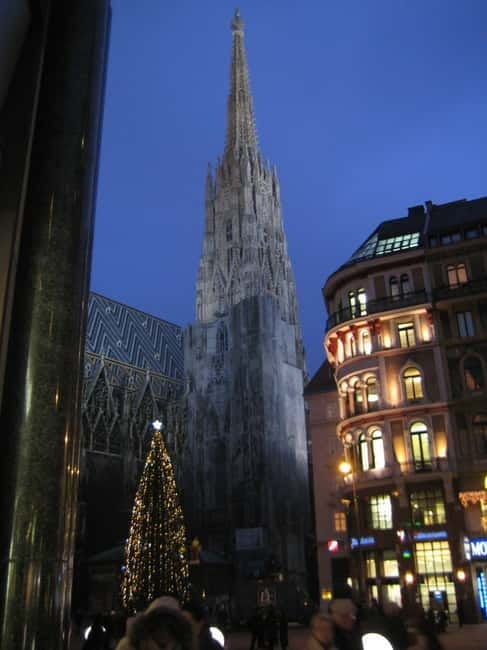
The route ends at Stephansplatz, beside St. Stephen’s Cathedral. This is a practical finish because the cathedral is Vienna’s best-known landmark and a useful point for continuing your day.
The guide discusses the cathedral’s partial destruction during the Second World War and challenges at least one commonly taught version of its story. That final note fits the tour’s style: history is treated as something to question and examine, not just memorize.
You should allow extra time after the tour to look around Stephansplatz and the cathedral area. The official walk lasts two hours, so the ending is a handoff to the rest of your sightseeing rather than a long cathedral visit.
How the $34 price works out
At $34 per person, this is good value if you use it as an orientation tour. You cover a large number of major sights, receive historical context that would take considerable independent reading, and get suggestions for museums, food, wine, and other places to visit.
The strongest value comes from the stories. A palace facade costs nothing to look at, but understanding who lived there, what happened inside, and how the building changed makes the city more rewarding. Guides have also suggested local specialties and places to eat, including Gemischter Satz, a Viennese wine style.
The price is less attractive if you expect extensive interior access. Entrance fees are extra, and several stops are best understood as explained exteriors or introductions. Think of your ticket as payment for the guide and the route, not a package of museum admissions.
Group size, pace, and practical concerns
The tour is conducted in a small group, and past groups have sometimes been as small as six or seven people. That size is a real advantage. You can hear more clearly, ask questions without holding up a crowd, and have a more personal exchange with the guide.
The walk operates in all weather, so bring suitable clothing. Vienna’s weather can shift, and there is no promise of indoor shelter at every stop. Large bags and luggage are not allowed, and video or audio recording is prohibited.
The tour is not suitable for children under 12 or people with mobility impairments. You will walk on city streets and move between several central sights in two hours. The route is not described as especially strenuous, and some people appreciate that it covers a lot without excessive walking, but the pace and standing time still matter.
English and German tours are available. Cancellation is free up to 24 hours before the start, and the reserve-now, pay-later option can help if your plans are still shifting.
Who should book this Vienna walk?
I would choose this tour early in a first visit, ideally on the first or second day. The information can help you decide which palace, museum, church, or crypt deserves a longer visit later.
It suits adults and older children interested in politics, architecture, royal families, and unusual historical customs. You will also get plenty from it if you prefer anecdotes to a formal lecture. Herbert’s dry humor and visual aids have been especially popular, but the experience depends on the guide assigned that day.
I would skip it if you mainly want access to interiors, a slow photography walk, or a tour focused on neighborhoods beyond the imperial center. I would also think twice if you dislike concentrated palace history. One visitor found the Habsburg section too long, a fair warning for anyone expecting a broad survey of all Vienna.
Final verdict: a strong first look at imperial Vienna
Book this tour if you want Vienna’s famous buildings to make sense. For $34, you receive a compact route, a small group, a local guide, and enough context to turn grand facades into places connected with real people and difficult choices.
The best reason to go is the combination of major sights and lesser-known details: Roman remains under Michaelerplatz, the absent Habsburg grooms, the vanished Carinthian Gate Theatre, wartime damage, and the rituals of the Imperial Crypt. Just remember that museum entry costs extra, Sundays and public holidays affect the church stop, and the two-hour schedule favors coverage over lingering.
FAQ
How long does the Vienna Essential History Walking Tour last?
The tour lasts two hours.
Where does the tour begin?
It begins in front of Loos Haus at Michaelerplatz 3, 1010 Vienna. The meeting point is about a three-minute walk from Herrengasse station on the U3 metro line. Look for the Raiffeisenbank name on the facade.
Where does the tour end?
The walk ends at St. Stephen’s Cathedral area, at Stephansplatz 8A in central Vienna.
Which languages are available?
The tour is offered in English and German.
Are entrance fees included?
No. Entrance fees for places such as the Imperial Treasury, Imperial Crypt, or other attractions are not included.
Is the tour suitable for children and people with mobility impairments?
The tour is not suitable for children under 12 or people with mobility impairments.
What happens if it rains?
The tour operates in all weather conditions, so you should dress accordingly. Large bags and luggage are not allowed, and video or audio recording is prohibited.
Just added around Vienna
- The unknown Vienna City- a guided walking tour in 3 hours★ 4.7 · 137 reviews
- Hungry in Vienna? A Food Lover’s Coffee & Market Walk★ 4.9 · 276 reviews
- 3-Hour Walking Tour of Vienna Central Cemetery★ 4.7 · 71 reviews
- Vienna: City Center Guided Walking Tour★ 4.8 · 99 reviews
- Vienna at First Glance a Private Walking Tour for First Timers★ 5.0 · 131 reviews
- Private Hidden Vienna Walk — Stories Behind Quiet Corners★ 5.0 · 137 reviews
- Historical Hitler Walking Tour of Vienna★ 5.0 · 887 reviews
- Vienna: Small Group Guided Walking Tour of City Highlights★ 5.0 · 540 reviews
History Walking Tours, compared.
History and Hauntings of Salem Guided Walking Tour
Read our review →
Freedom Trail History Small Group Walking Tour
Read our review →
Historic Charleston Guided Sightseeing Walking Tour
Read our review →
Tapas Walking Tour with Food, Wine, and History
Read our review →
Savannah History and Haunts Candlelit Ghost Walking Tour
Read our review →
A History of Terror – Belfast City Centre Walking Tour
Read our review →Browse the lists this tour appears in