
Review · HISTORY WALKING TOURS
Riga: 2-Hour History of Art Nouveau Walking Tour
Riga wears its style on the street. This two-hour walk links the Old Town with the city’s celebrated Art Nouveau district, where grand facades, sculpted figures, and clever design tell the story of Riga at a turning point. I especially like the focus on Mikhail Eisenstein and the way the tour compares decorative buildings with more restrained national romantic designs.
I also like the small-group feel when numbers stay below ten, plus the chance to ask questions along the way. Guides such as Tatiana, Gunta, Caspars, Liga, and Nelli have earned praise for clear explanations and friendly delivery. The main drawback is that children over six pay the full price, and younger children may lose interest before the two hours are over.
Key points at a glance
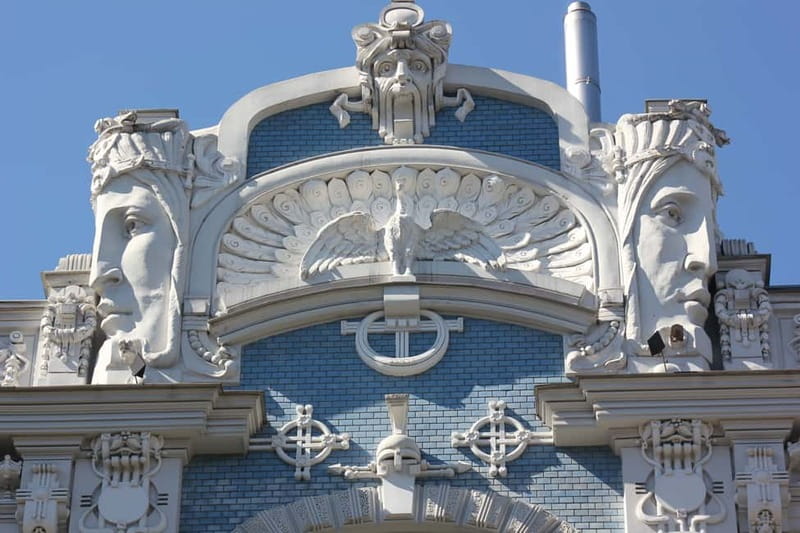
- Begin at the House of the Black Heads: The meeting point in Town Hall Square makes this easy to pair with an Old Town visit.
- Follow the architectural shift: The route moves from central Riga toward the Art Nouveau district, showing how design ideas changed from street to street.
- Focus on Mikhail Eisenstein: You hear about one of Riga’s most distinctive and controversial architects, not just see his decorated facades.
- Study famous Alberta Street: This is one of the tour’s essential stops, with close attention to ornament, composition, and architectural detail.
- Expect a walking lesson, not just a photo walk: The guide explains Latvian, German, Russian, and Jewish influences on Riga’s buildings.
- Allow two hours and wear good shoes: The route is accessible for wheelchair users, though it remains a city walk with changing streets and possible route adjustments.
Why Riga is such a good city for Art Nouveau
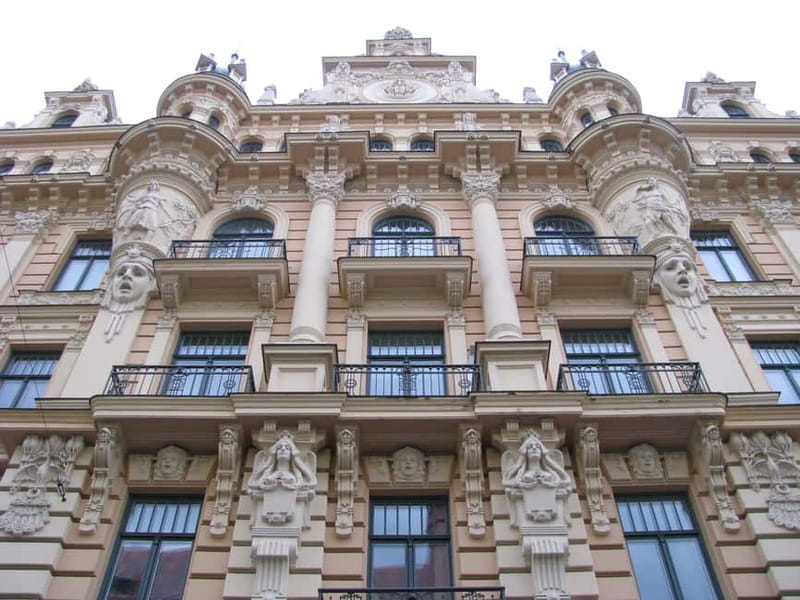
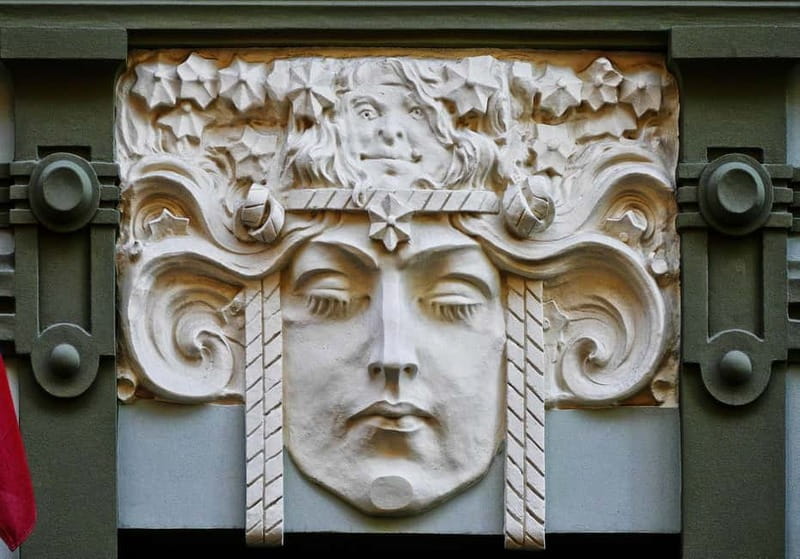
Riga is one of the best places in Europe to see Art Nouveau in ordinary city streets rather than behind museum glass. The style appears across apartment blocks and public facades, often with dramatic masks, plant forms, geometric patterns, and carefully arranged windows.
The appeal of this tour is that it asks you to look beyond decoration. Art Nouveau was meant to unite beauty and function. A facade could be lavish, but the building still had to work as a home, office, or urban structure. Your guide helps you consider both sides of that idea.
I find this especially useful because Riga’s buildings can overwhelm you at first. There is so much to see above street level that you may notice only the largest sculptures. A guide draws your eyes to smaller features, explains why certain shapes were used, and points out differences between neighboring buildings.
The tour also gives the architecture a proper setting. Riga was once the most important port city in the Russian Empire, and the city’s growth brought together Latvian, German, Russian, and Jewish architects and residents. That mix helps explain why the city does not present one single version of Art Nouveau.
More History Walking Tours in the world:
- History and Hauntings of Salem Guided Walking Tour
★ 5.0 · 14,564 reviews - Lisbon: History, Stories and Lifestyle Walking Tour
★ 4.8 · 10,902 reviews - Boston: Freedom Trail History Small Group Walking Tour
★ 5.0 · 6,450 reviews
Starting in Town Hall Square at the House of the Black Heads
You meet the guide at the Smile Line office in the House of the Black Heads, Town Hall Square, 7. This is a practical starting point in central Riga, especially if you are already exploring the Old Town.
The House of the Black Heads gives the walk an atmospheric opening. From there, the route passes through central Riga before reaching the Art Nouveau district. That transition matters. You do not simply appear among decorated apartment buildings. You see how the city changes as the walk moves away from the medieval center.
The exact route can change on some departures, so I would treat the named streets and buildings as the main focus rather than expect a rigid stop-by-stop script. The guide’s job is to show you the most important examples and explain their meaning, not rush you through a fixed checklist.
The meeting point is also easy to connect with other sightseeing. You can visit the Old Town before or after the walk, though I would leave enough time between plans. A two-hour tour can run close to its full length, particularly when the group asks questions.
Crossing from the Old Town to the Art Nouveau district
The walk through central Riga gives you a useful comparison. The Old Town carries older architectural traditions, while the Art Nouveau district reflects a later period of confidence, wealth, and urban expansion.
This part is less about one famous facade and more about learning how to read the city. You begin to notice how building entrances, upper floors, windows, and decorative details work together. Once your guide explains those choices, you can use the same method later on your own.
The tour is conducted in English or German, with other languages available by request, including Swedish, Norwegian, Polish, Spanish, Portuguese, French, Italian, and Japanese. That range is helpful, but you should request another language ahead of time rather than assume it will be available on every departure.
The guide also serves as a useful local contact. Julie appreciated receiving suggestions for shops and cafes, and that kind of practical advice can add value beyond the architecture itself. It is a small detail, but it makes a short tour more useful for the rest of your time in Riga.
Mikhail Eisenstein and Riga’s boldest facades
Mikhail Eisenstein is a central figure on this walk. The tour presents him as talented and controversial, which is more interesting than treating him as a simple architectural hero.
His buildings are known for powerful visual effects. Highly decorative facades can feel almost theatrical, with ornament placed to catch your eye from the street. The guide explains Eisenstein’s background and his life in Riga, then puts his work beside that of other architects in the district.
This comparison is important. If you see only Eisenstein’s most dramatic buildings, you might think Riga’s Art Nouveau style was all about excess. The tour shows a wider range, from ornate designs to more intellectual and restrained work.
I like this approach because it gives you something to argue with. Do the buildings really combine beauty and function? Does the decoration help the structure, or does it compete with it? You are encouraged to make your own judgment instead of receiving a string of dates and names.
The subject also rewards a guide who can explain ideas in plain language. Tatiana received repeated praise for her clear, engaging style, while Gunta was noted for answering questions with care. Caspars was praised for focusing on small details and keeping the walk well organized. The names may vary by departure, but the strong point is consistent: the guide matters greatly on an architecture tour.
A few more walks around the world worth a look
- Berlin’s Best: 2 Hour Walking Tour Third Reich and the Cold War
★ 5.0 · 5,486 reviews - Budapest City Landmarks Walking Tour in 2 Hours
★ 5.0 · 2,048 reviews - Leipzig: 2-Hour Guided Walking Tour in German
★ 4.8 · 1,612 reviews - Lucca: 2-Hour City Center Walking Tour
★ 4.7 · 1,314 reviews
Alberta Street and the details above your head
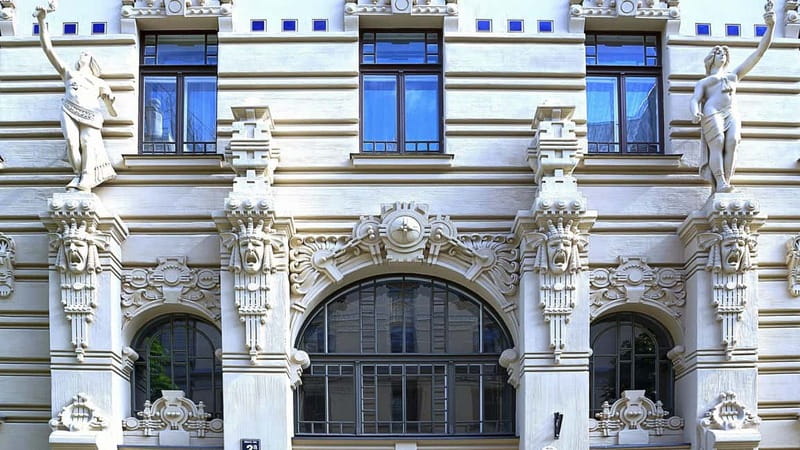
Alberta Street is the visual center of the experience. It is one of the places where Riga’s Art Nouveau identity becomes easiest to understand because several important buildings can be viewed together.
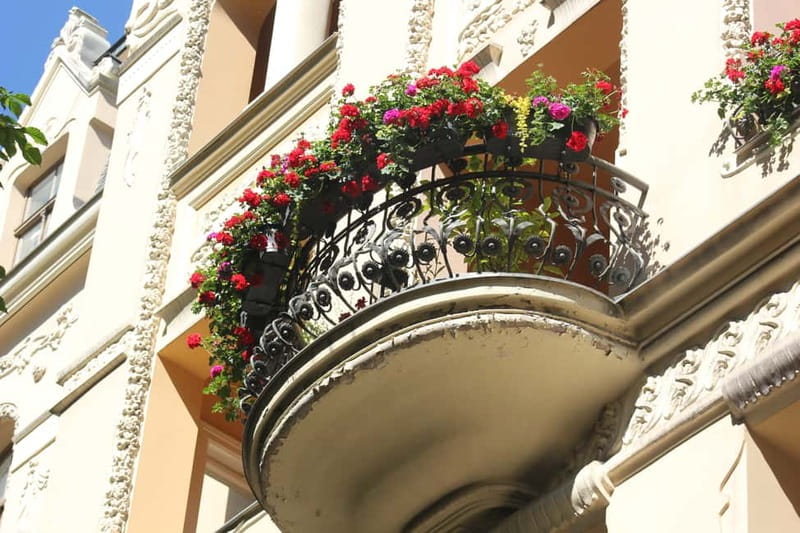
This is where I would slow down and look upward. Facades are designed in layers. The ground floor may be more practical, while the upper sections carry the dramatic sculpture and ornamental work. Windows, balconies, columns, faces, and repeating shapes all contribute to the building’s effect.
A guide can help you separate styles that otherwise blur together. One building may favor elaborate ornament, while another uses geometric order or national romantic ideas. The tour explains how Latvian identity entered the design, rather than presenting every building as a copy of the same European style.
You should also expect some standing while the guide explains a facade. That is part of the value, but it may be tiring in cold or wet weather. The tour runs in winter as well as summer, and comfortable shoes are specifically recommended. Wear clothing suited to two hours outdoors, since the main experience takes place on the pavement, not inside heated exhibition rooms.
The route is wheelchair accessible, which makes it more practical for many visitors. Still, city routes may change, and street conditions can vary. If accessibility is especially important for you, confirm the route details before booking.
More than one kind of Art Nouveau
The tour’s best idea is the contrast between different interpretations of the style. You may see heavily decorated buildings beside designs that feel more controlled or intellectual.
This prevents the walk from becoming a hunt for the biggest facade. A building with less ornament can still be important because of its proportions, materials, structure, or national romantic character. The guide helps you see why a quieter building belongs in the conversation.
That range also explains why Riga is rewarding for repeat visits. After the tour, you will likely notice details on other streets that you would have missed before. Larry’s comment that the experience changed how he looked at buildings captures the practical benefit. The tour gives you a visual vocabulary.
The architecture also reflects the city’s mixed cultural setting. Latvian, German, Russian, and Jewish architects contributed to Riga’s built environment. You are not simply seeing a French or Belgian style copied into Latvia. You are seeing an international movement adapted to a specific city and its people.
The tour does not appear to include building entry tickets, so plan on seeing the exteriors as you walk. That is not a serious weakness for this subject. Riga’s facades are the main attraction, and the street view lets you compare several buildings quickly. Still, if you want interiors, ask the guide for separate suggestions.
Guide quality and group size
A strong guide is the difference between a pleasant stroll and a useful architecture lesson. The best comments about this experience focus on guides who explain clearly, answer questions, speak excellent English, and show real enthusiasm for the subject.
Tatiana is mentioned often, with praise for her energy, patience, and command of Riga’s history. Other guides, including Gunta, Caspars, Liga, and Nelli, also receive high marks for friendly and well-organized tours. This suggests that Smile Line has a solid group of guides rather than relying on one person alone.
The tour requires at least three participants. If too few people book, it may be cancelled with a full refund, or you may have the option to upgrade to a private tour. That minimum is worth remembering if you are visiting in a quiet season.
Small numbers can make a big difference. A group of under ten allows you to hear the guide more easily and ask questions without holding up a crowd. One departure also used an audio system, which helped the group listen while looking at the buildings. Equipment may vary, but a clear sound system is useful on a city street.
Large groups would make the facades harder to discuss and the street stops less personal. If your booking is close to the minimum, you may get an especially conversational experience. If you are traveling alone, the organized setting also offers an easy way to explore beyond the Old Town without wandering unfamiliar streets by yourself.
Is $39 a fair price for two hours?
At $39 per person, this is not the cheapest way to walk around Riga, but the price is reasonable if you want interpretation rather than directions.
You are paying for a local guide, two hours of focused sightseeing, and a route that connects the Old Town with the Art Nouveau district. You could visit Alberta Street on your own, but you would miss much of the context unless you researched the architects and styles in advance.
The value is strongest for first-time visitors, architecture fans, and anyone who wants a clear introduction before exploring more buildings alone. It is less useful if you prefer to move quickly, take photographs without stopping, or already know Riga’s Art Nouveau architecture well.
Children under six can join free. Children over six pay the full price, and that may feel steep if they are not interested in buildings. Jonathan’s experience is a useful warning: older children may become bored by the final part of the walk even when adults enjoy it.
Free cancellation is available up to 24 hours before the start, and you can reserve without paying immediately. Those terms make it easier to fit the tour into a changing Riga schedule.
Who should book this Riga walking tour?
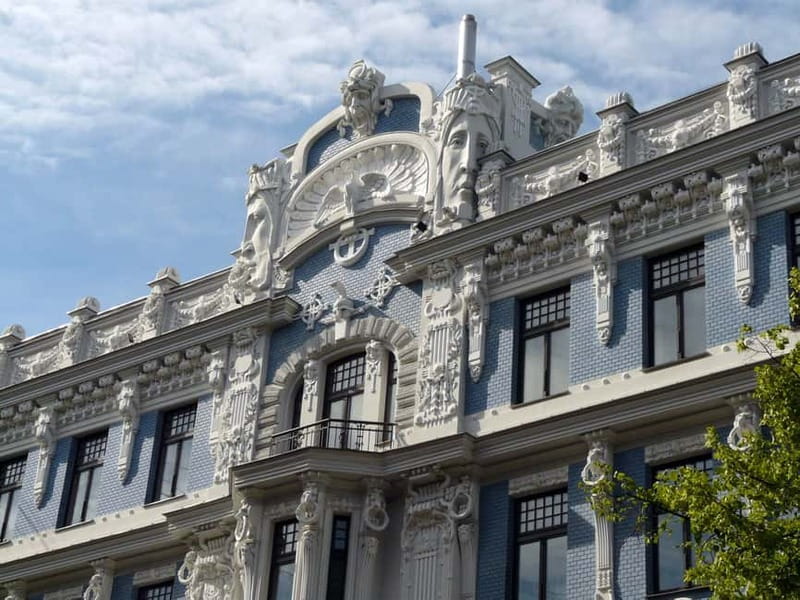
I would recommend it to anyone who sees Riga as more than an Old Town destination. The tour gives you a second side of the city and explains why the Art Nouveau district matters.
It suits you especially well if:
- You want a guided introduction before exploring on your own.
- You enjoy architecture, urban history, or photography.
- You prefer a relaxed two-hour walk to a long full-day excursion.
- You are traveling alone and want a structured way to see the city.
- You appreciate local recommendations for cafes and shops.
- You want explanations in English or German, with other languages possible by request.
I would be more cautious if you have very young children, limited tolerance for outdoor walking, or little interest in architectural detail. The tour is not built around games or entertainment for children. It is a focused lesson delivered while standing in front of buildings.
Final recommendation
Book this tour if you want to understand Riga’s Art Nouveau buildings rather than simply photograph them. The combination of the Old Town departure, Alberta Street, Mikhail Eisenstein, and several competing architectural styles gives the walk a clear shape.
The strongest reason to go is the guide’s interpretation. Tatiana, Gunta, Caspars, Liga, and Nelli have all been praised for making the subject accessible and personal. At $39, the tour earns its price when you listen closely, look above street level, and use the guide’s tips to continue exploring afterward.
FAQ
Where does the Art Nouveau walking tour meet?
Meet the guide at the Smile Line office in the House of the Black Heads, Town Hall Square, 7, in central Riga.
How long does the tour last?
The walking tour lasts two hours.
What languages are available?
The regular tour languages are English and German. Swedish, Norwegian, Polish, Spanish, Portuguese, French, Italian, and Japanese may be available upon request.
Is the tour suitable for wheelchair users?
The tour is listed as wheelchair accessible. Some routes may change, so confirm current route details if you need specific accessibility information.
Is there a minimum number of participants?
Yes. The group tour requires at least three participants. If there are not enough bookings, the tour may be cancelled with a full refund, or you may be offered a private tour upgrade.
Are children allowed to join?
Yes. Children under six can join free. Children over six are charged the full price.
Are entry tickets included?
No. Entry tickets are not included. The experience is a guided walking tour of Riga’s architecture.
What should I bring?
Bring comfortable shoes. You will spend the two hours walking and stopping outdoors to examine the buildings.
Just added around the world
- Bern Private Walking Tour with a Local★ 4.5 · 75 reviews
- Berlin Walking Tour★ 4.5 · 378 reviews
- Bern Walking Tour: Explore Top Sights & Hidden Gems★ 5.0 · 108 reviews
- Small Group Walking Tour of East Berlin with a French Guide★ 5.0 · 176 reviews
- Berlin Street Art Walking Tour – Off The Grid★ 5.0 · 270 reviews
- Berlin Highlights Private Guided Walking Tour★ 4.5 · 89 reviews
- Private Walking Tour: World War 2 and Cold War Sites in Berlin★ 5.0 · 230 reviews
- The History of Berlin: WWII PRIVATE Walking Tour With Locals★ 5.0 · 209 reviews
History Walking Tours, compared.
History and Hauntings of Salem Guided Walking Tour
Read our review →
Freedom Trail History Small Group Walking Tour
Read our review →
Historic Charleston Guided Sightseeing Walking Tour
Read our review →
Tapas Walking Tour with Food, Wine, and History
Read our review →
Savannah History and Haunts Candlelit Ghost Walking Tour
Read our review →
A History of Terror – Belfast City Centre Walking Tour
Read our review →Browse the lists this tour appears in