
Review · CITY HIGHLIGHTS WALKING TOURS
Lisbon: Starter Walking Tour to the highlights in German
Lisbon reveals itself on foot. This two-hour walk links the city center’s best-known sights with useful local context, taking you through Baixa, Chiado, and Bica before finishing near the Tagus River. I especially like the small groups of up to 12 people and the chance to hear about present-day Lisbon, not only kings, earthquakes, and monuments. The German-language guiding is another strong point, particularly for anyone who wants history and everyday culture explained clearly.
The route includes the Santa Justa Lift, Carmo Convent Ruins, the Elevador da Bica, and Mercado da Ribeira. I also like that you receive restaurant and sightseeing suggestions for the rest of your stay. The main drawback is physical: Lisbon’s hills, stairs, and slippery slopes can make this walk tiring, and it is not suitable for wheelchair users or people with mobility impairments.
Key Points Before You Book
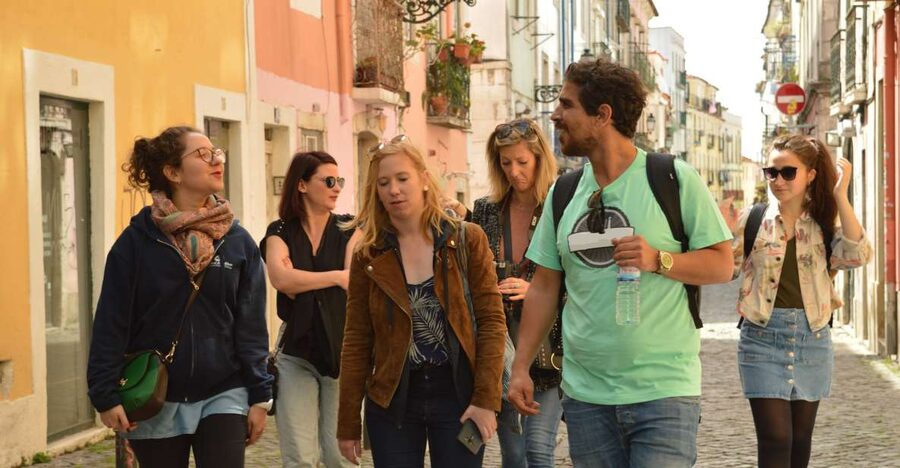
- German-language city introduction: Learn about Lisbon’s past, culture, current events, and daily life from a live local guide.
- A compact central route: See Baixa, Rossio, Chiado, Bica, and the area around Mercado da Ribeira in two hours.
- Small-group format: Shared tours have a maximum of 12 participants, with a private option available.
- Strong guide feedback: Pedro is praised for being friendly, clear, open to questions, and good at connecting history with modern Lisbon.
- Good first-day value: At $33 per person, the tour can help you get oriented before choosing where to eat and what to visit next.
- Expect hills and stairs: Wear comfortable shoes, carry water, and leave large bags and strollers behind.
Why This Two-Hour Walk Works as a Lisbon Introduction
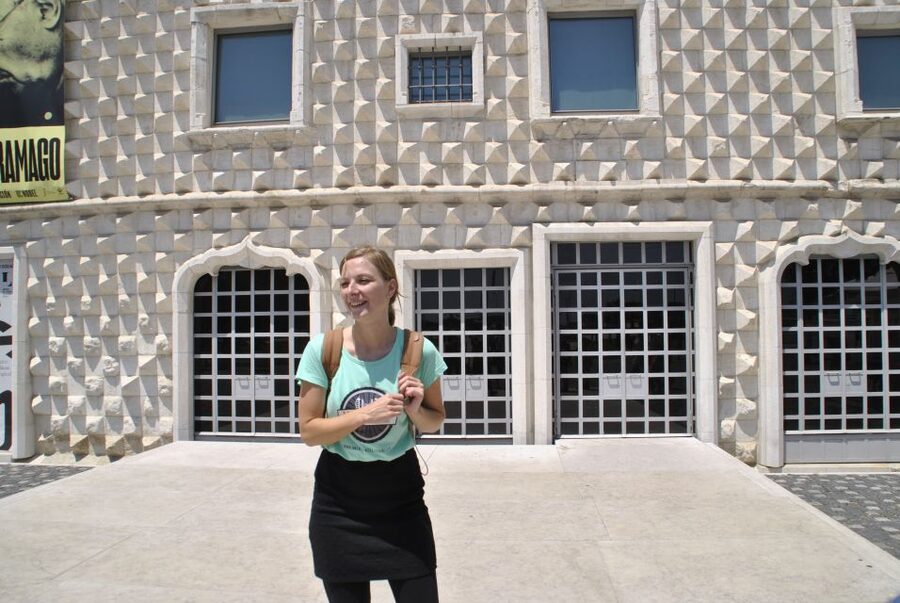
Lisbon can feel confusing at first. The center is compact, but steep streets, grand squares, tiled façades, old tram lines, and sudden viewpoints make it hard to know how the pieces fit together. This tour gives you a basic map in your head while showing you several of the places most visitors want to see.
The two-hour length is useful. You get enough time to learn the city’s story without giving up an entire morning or afternoon. I would book it near the beginning of a Lisbon stay, then use the guide’s suggestions to plan the following days.
The route is also practical because it moves through several central districts rather than focusing on one monument. You see the orderly lower city of Baixa, the more atmospheric streets around Chiado and Bica, and the riverfront market area near the end.
The German guide makes a real difference for many people. Historical explanations are easier to follow in your strongest language, and you can ask questions without worrying about missed details. Recent feedback gives special praise to Pedro, who is described as friendly, well informed, and open to conversations about Lisbon. That combination suits a walking tour well. You get facts, but you can also ask about how the city works today.
More City Highlights Walking Tours in Lisbon:
- Lisbon: City Highlights Guided Walking Tour
★ 4.7 · 168 reviews - Lisbon: Full-Day Private Walking Sightseeing Tour
★ 4.9 · 123 reviews - Historic Charleston Guided Sightseeing Walking Tour
★ 5.0 · 6,216 reviews
Meeting at Rossio Square
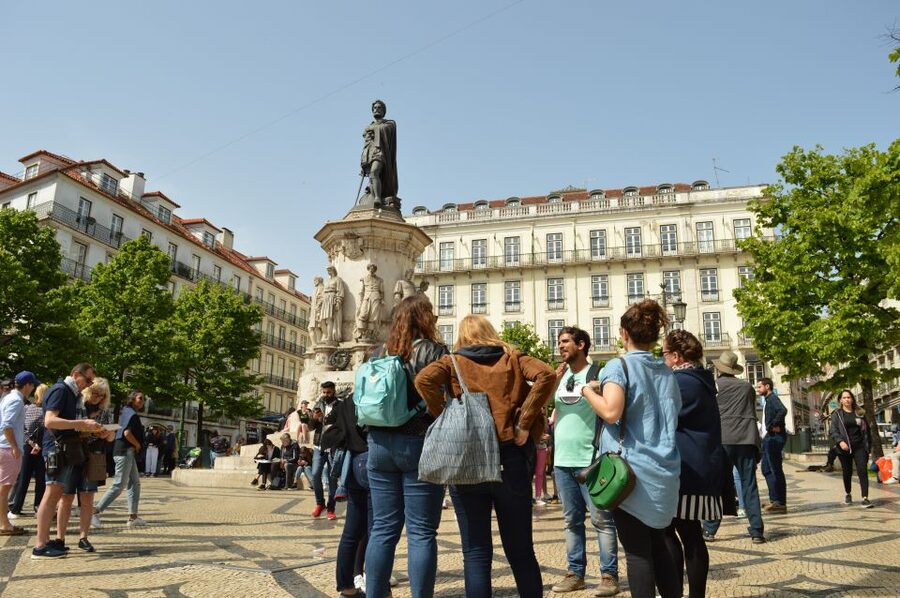
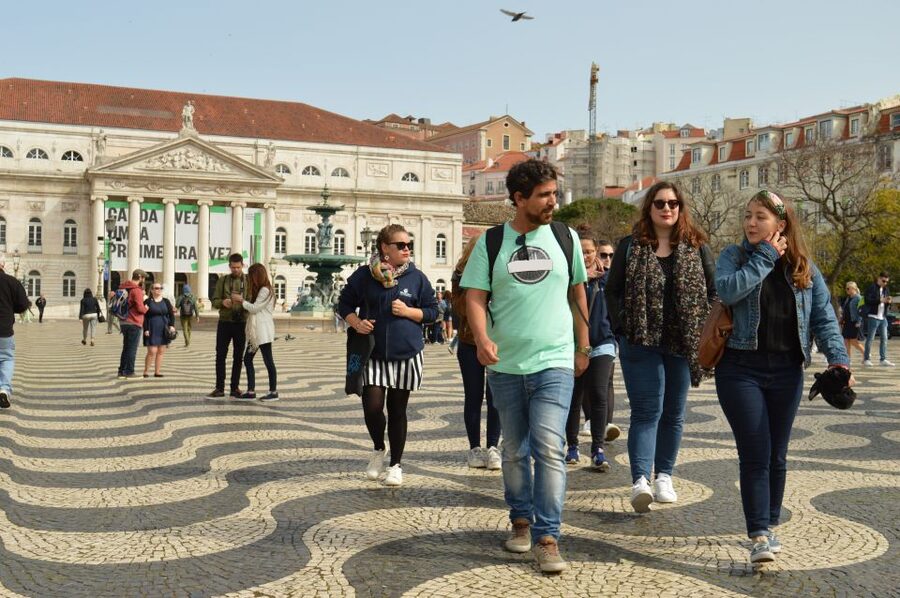
The meeting point is the northern fountain in Rossio Square, also called Praça Dom Pedro IV. Look between the National Theater and the statue of the royal figure. The guide will wear a mint-colored WALK ‘N’ ROLL shirt or carry a matching mint-colored burlap bag.
Rossio is a sensible place to begin. It is one of Lisbon’s central gathering points and gives you an immediate introduction to the city’s broad plazas, patterned pavement, and grand façades. Starting here also makes the first moments easy to manage, since the guide’s clothing and bag should help you make contact.
Arrive ready to walk rather than expecting a bus or van. Hotel pickup and drop-off are not included. Large bags and luggage are not allowed, so this is not a good activity to schedule while moving between hotels or carrying airport gear.
Baixa and Rossio: Lisbon’s Rebuilt Center
From Rossio, the guide takes you into Baixa de Lisboa, the lower central district. This area is closely tied to the rebuilding of Lisbon after the devastating 1755 earthquake, and it offers a clear contrast with the older, more irregular streets found on the hills.
Baixa is a useful place to hear how Lisbon developed. Its broad streets and planned blocks feel different from the narrower lanes in other parts of the city. As you walk, look up at the façades and notice the mix of ornament, balconies, shops, and tiled surfaces.
The tour also returns attention to Rossio Square. The square is more than a meeting point. It is an important urban space where you can watch Lisbon’s daily rhythm and understand how the central districts connect. Your guide can add the historical background that a quick photograph will miss.
I would not expect long stops at every attraction. A starter walk has to keep moving, and the value comes from linking places together. If you want detailed architectural study or plenty of time for photographs, you may need to return on your own.
Santa Justa Lift and Carmo Convent Ruins
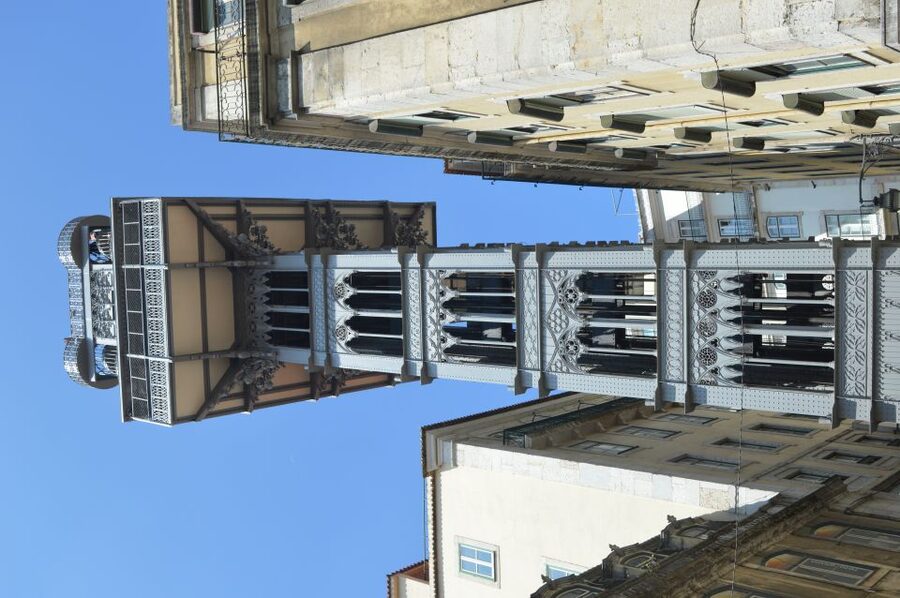
The Santa Justa Lift is one of Lisbon’s most recognizable structures. Its iron design and vertical form make it an unusual sight in the middle of the city. The tour includes a guided stop here, so you can learn why this lift matters to Lisbon’s street layout and how it connects the lower streets with the higher area near Carmo.
Do not assume the tour includes a ride. The activity is described as a walking tour, and rides or admission fees are not listed as included. The guide can explain the attraction from street level, while you decide later if you want to wait for the lift or return for a closer look.
Nearby, the Carmo Convent Ruins offer one of Lisbon’s most powerful visual reminders of the 1755 earthquake. The roofless Gothic structure gives the stop a different mood from the lively streets below. It also helps place Lisbon’s history in a physical setting rather than treating it as a list of dates.
The Carmo area can involve uneven surfaces and steps. You should be comfortable walking for the full two hours and climbing a few stairs. If rain has made slopes slippery, the final 30 minutes of the route may change to reduce the chance of accidents.
A few more walks around Lisbon worth a look
- Lisbon: History, Stories and Lifestyle Walking Tour
★ 4.8 · 10,902 reviews - Best of Lisbon Small-Group Guided Walking Tour
★ 5.0 · 4,869 reviews - Lisbon: Food and Wine Small Group Walking Tour
★ 4.9 · 4,082 reviews - Best of Lisbon Walking Tour: Rossio, Chiado & Alfama
★ 4.9 · 2,700 reviews
Chiado and the Way Toward Bica
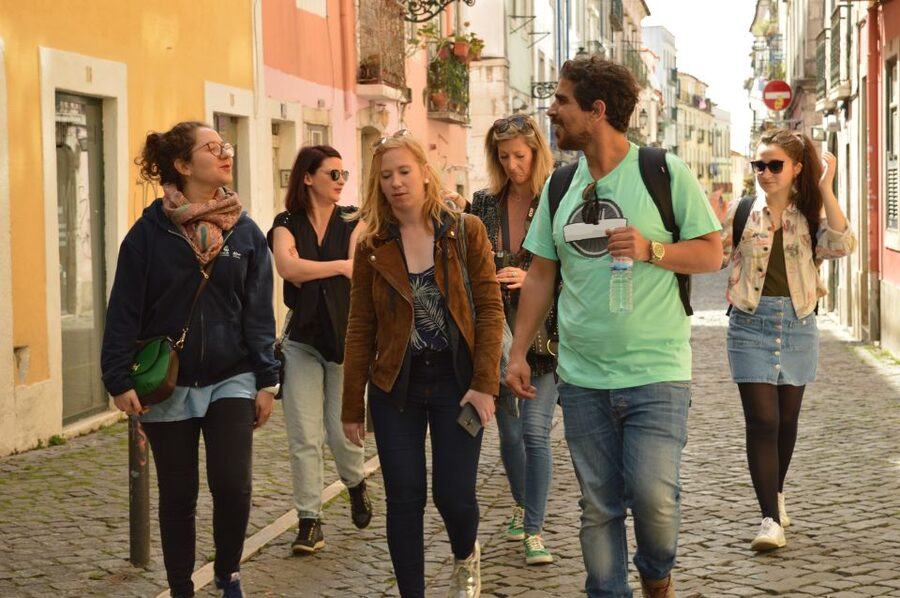
The walk continues through Chiado, a central district known for its elegant streets, shops, cafés, and cultural connections. Here the tour shifts from earthquake history and major monuments toward the character of Lisbon’s older city center.
This is also a good stretch for noticing details that are easy to miss. Look for azulejos, the painted wall tiles used across Portugal. They may appear on whole façades, around doorways, or as smaller decorative features. The guide can explain how these tiles fit into Portuguese architecture and everyday city life.
Art Nouveau details also appear along the route. You might find curved lines, decorative metalwork, or carefully designed façades above the level of ordinary street traffic. Lisbon rewards anyone who looks up, but a guide helps direct your attention to the right places.
The tour includes Praça Luís de Camões, a prominent square linking Chiado with the streets leading toward Bica. It is a useful transition point. You are still in the central city, but the terrain and atmosphere begin to change as the route moves toward one of Lisbon’s famous hills.
The Elevador da Bica and Lisbon’s Hills
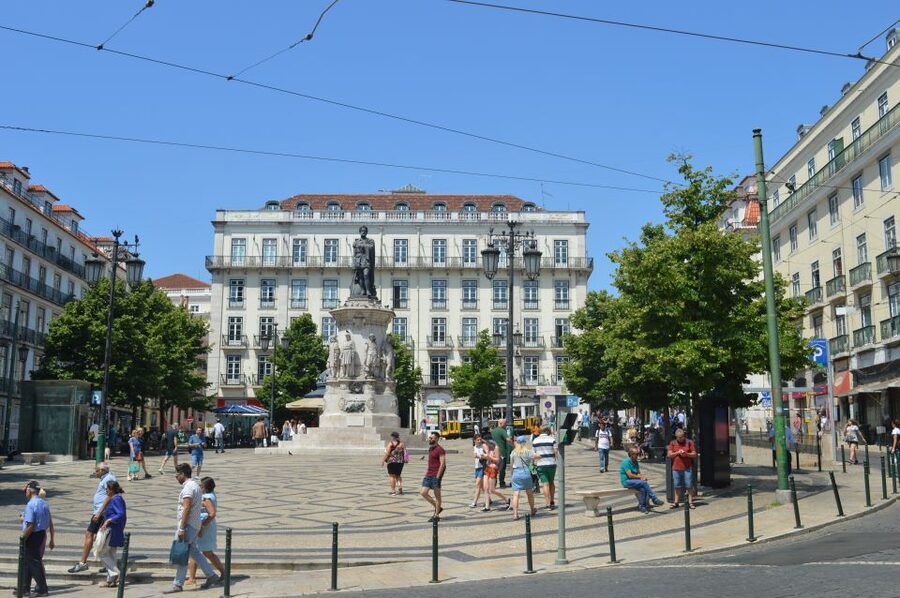
The Elevador da Bica is one of the city’s familiar cable cars, traveling up a steep street between the lower area and Bica. It is a classic Lisbon sight because it shows how the city adapted its transportation network to difficult terrain.
The tour focuses on seeing and understanding the route rather than promising a ride. If the cable car is operating, the street may be busy with people stopping for photographs, so keep your attention on the guide and your footing.
This is the part of the walk where fitness matters most. Lisbon’s central hills are not extreme for an active walker, but the combination of slopes, stairs, and uneven pavement can be demanding. Comfortable shoes are essential. Bring water and sunscreen, especially in warm weather.
The route may be adjusted during the last 30 minutes if rain makes the slopes unsafe. That is a sensible safety measure, but it also means the exact finish can change in wet conditions. You should treat the listed route as the intended plan, not a guarantee that every street will be covered in bad weather.
Mercado da Ribeira and Time Out Market Lisboa
The walk finishes at Mercado da Ribeira, now widely associated with Time Out Market Lisboa, close to the Tagus River. This gives the tour a useful ending: you finish near food, drinks, and the river rather than at another monument.
Food and drinks are not included, but the location makes it easy to continue your day. You can use the market as a convenient place to eat after the tour, though you should not expect the guide to provide a meal as part of the activity.
The market also gives the guide a chance to share practical advice about Lisbon’s food scene and other places to explore. That kind of information can be worth as much as a historical fact. A recommendation made with your interests in mind may help you avoid spending the rest of the trip in the same few tourist-heavy streets.
Because the route ends here, you can also continue toward the riverfront or make your own way back to another part of the center. Transportation back to your hotel is not included, so plan your onward route before the walk begins.
What $33 Per Person Gets You
The price is $33 per person, which is fair for a two-hour guided walk in central Lisbon, especially with German-language instruction and a group limited to 12 people. You are paying for a guide who connects several districts and sights, rather than for entry to a monument or a transport ride.
The value depends on how you use the information. If you simply want photographs of the Santa Justa Lift and Carmo ruins, you can visit those places independently. The tour earns its price by explaining how Baixa, Chiado, Bica, and the riverfront relate to one another.
It is also useful for first-time visitors who want to save planning time. The guide can point out architectural details, explain Portuguese customs and city life, and suggest places to eat or visit later. That can prevent a common Lisbon mistake: spending all your time around the first famous square you find.
A private group option is available if you want the guide’s attention reserved for your own party. The shared tour should be the better value for most people, while a private booking makes more sense if you have specific questions or prefer a more personal pace.
Who Should Book This Walking Tour
I would recommend this experience to first-time visitors, German-speaking adults, couples, friends, and active families with older children who can walk for two hours. It works especially well for anyone who wants context before exploring Lisbon independently.
You should also consider it if you enjoy current local information rather than a tour focused only on old buildings. The guide discusses culture, history, current events, and daily life, so the experience aims to explain the city as a living place.
It is less suitable if you have limited mobility, use a wheelchair, or need a stroller. The route includes hills and stairs, and baby strollers are not allowed. It is also a poor match if you want a slow photography walk, extensive time inside attractions, or included food and transportation.
The strong 4.9 rating from 781 ratings reflects a consistent pattern: people value the small group, the German explanations, and the amount covered in two hours. The praise for Pedro also points to the kind of guide that makes this format work best: friendly, clear, and willing to answer questions.
Practical Preparation for a Better Walk
Wear shoes with good grip. Lisbon’s polished paving can become slippery, and the route includes slopes. Pack water and sunscreen, but keep your bag small.
Leave luggage at your accommodation or another secure storage point. Large bags and strollers are not allowed, and carrying them would make the hills harder anyway.
Keep the rest of the day flexible if rain is forecast. The route may change during its final 30 minutes in wet weather. Free cancellation is available up to 24 hours before the start, and you can reserve now and pay later, which helps if your plans are still shifting.
Should You Book It?
Book this tour if you want a short, well-organized introduction to central Lisbon in German, with a small group and practical advice for the rest of your stay. The combination of Baixa, Rossio, Santa Justa, Carmo, Chiado, Bica, and Mercado da Ribeira gives you a useful first look at the city.
Skip it if you cannot manage hills and stairs, or if you prefer to explore at your own slow pace. For most active first-time visitors, $33 is a sensible price for two hours of orientation, local explanation, and a better idea of where to spend the next few days.
FAQ
How long does the Lisbon walking tour last?
The tour lasts two hours.
What language is the tour conducted in?
The live tour guide speaks German.
Where does the tour start?
It starts at the northern fountain in Rossio Square, also called Praça Dom Pedro IV, between the National Theater and the Royal Statue.
How can I recognize the guide?
The guide will wear a mint-colored WALK ‘N’ ROLL T-shirt or carry a mint-colored WALK ‘N’ ROLL burlap bag.
Where does the tour finish?
The tour finishes at Time Out Market Lisboa, also known as Mercado da Ribeira, near the Tagus River.
What sights are included in the route?
The route includes Baixa de Lisboa, Rossio Square, the Santa Justa Lift, Carmo Convent Ruins, Chiado, Praça Luís de Camões, the Elevador da Bica, and Mercado da Ribeira.
Is food included?
No. Food and drinks are not included in the tour price.
Does the tour include hotel pickup?
No. Hotel pickup and drop-off are not included.
Is the tour suitable for wheelchair users?
No. The experience is not suitable for wheelchair users or people with mobility impairments.
What should I bring?
Bring comfortable shoes, sunscreen, and water. Large bags, luggage, and baby strollers are not allowed.
Just added around Lisbon
- Small Group Walking Tour of Belém★ 4.9 · 80 reviews
- Lisbon: Walking Tour in the Center (Max 12 Participants)★ 5.0 · 741 reviews
- Lisbon Tram No. 28 Ride & Walking Tour★ 4.1 · 766 reviews
- Lisbon Through the Eyes of a Local – Food and Walking Tour★ 4.9 · 141 reviews
- Lisbon: Private Boat Trip, Guided Walking Tour, Bike & Tram★ 4.8 · 116 reviews
- Lisbon: Kickstart Street Art Walking Tour★ 4.9 · 717 reviews
- Lisbon: Food & Wine Walking Tour Through Baixa★ 4.9 · 287 reviews
- Lisbon: Helicopter Ride, Boat Trip, & Old Town Walking Tour★ 4.7 · 480 reviews
City Highlights Walking Tours, compared.

Historic Charleston Guided Sightseeing Walking Tour
Read our review →
Dublin Highlights and Hidden Gems Guided Walking Tour
Read our review →
Guided Walking Tour of City Center Highlights
Read our review →

City Highlights Temple and Market Walking Tour
Read our review →
Montmartre Hidden Gems and Scenic Highlights Walking Tour
Read our review →
Browse the lists this tour appears in