
Review · HISTORY WALKING TOURS
Panaji: Heritage Walk through Goa’s Latin Quarter
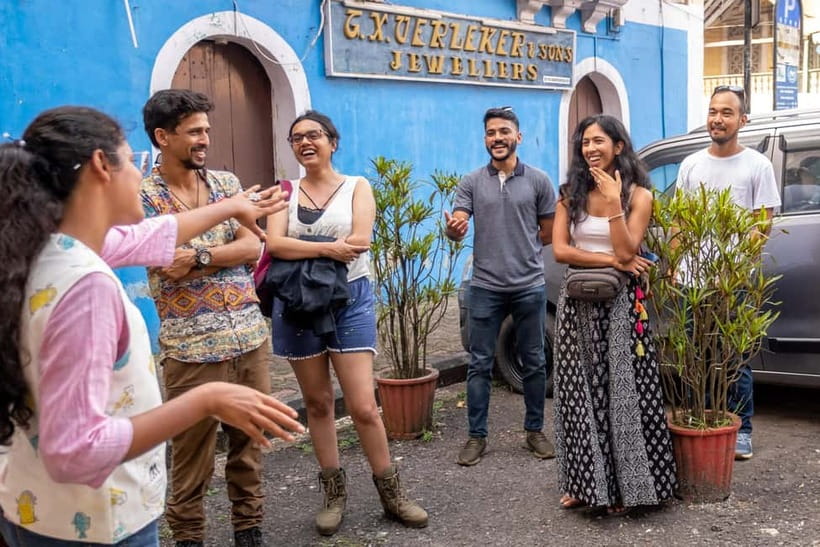
Colorful houses tell old stories. This $12 walking tour through Fontainhas, Panaji’s Portuguese-influenced Latin Quarter, mixes architecture, food, art, local music, and everyday Goan life in a compact 2.5-hour walk. I especially like the bakery stop at 31st January Bakery and the chance to meet a Goan musician rather than simply photograph old buildings. The main consideration is the walking itself: uneven lanes, warm weather, and limited accessibility make this a poor fit for anyone with mobility difficulties.
The guides are the heart of the experience. Names frequently praised include Yashasvi, Divya, Calvin Gomes, Trancy, Alita, Rachana, and Shreeya. Their strength is storytelling, with local folklore, Portuguese connections, and practical explanations that help the neighborhood feel lived-in rather than staged. Book the morning for cooler streets and fewer people, or choose the 4:30 p.m. departure if you want a more comfortable walk that ends near dinner time.
At a glance: what makes this walk worthwhile
- A compact tour of Fontainhas: See colorful homes, narrow lanes, chapels, galleries, and heritage buildings without needing transport between sights.
- Portuguese influence explained: Learn how Portugal shaped Goa’s architecture, food, music, art, and place names.
- A real bakery stop: Sample local Goan-Portuguese treats at the long-running 31st January Bakery.
- Live Goan music: Meet a local musician and hear how Portuguese traditions affected music in Goa.
- Small details beyond the photo stop: Hear local stories, look at art, visit heritage homes, and possibly stop at a ceramics studio.
- Strong value at $12: The price includes an English-speaking guide, heritage-home access, and the musician meeting, though food, drinks, and souvenirs cost extra.
Starting beside Panjim Post Office
Your meeting point is the entrance to the Panjim Head Post Office, close to the Sao Tome Chapel and the Mala district. This is a sensible place to begin because it puts you near the old quarter without asking you to find a distant hotel pickup point. You arrange your own way to the post office, and the tour finishes there as well.
The group can reach 20 people. That is not a private stroll, but it is still small enough for a good guide to answer questions and keep the group together through tight lanes. One particularly well-sized group had 10 people, which allowed everyone to hear clearly and still chat with one another.
Bring comfortable shoes, light clothing, and a reusable water bottle. Cash is useful for anything you decide to buy along the way. The tour is in English, so you will get the most from it if you enjoy listening to stories and asking questions as you walk.
More History Walking Tours in India
- Fontainhas Heritage Walk by Make It Happen
★ 5.0 · 2,834 reviews - The Great Indian Food Tour: Old Delhi Food and Heritage Walk
★ 5.0 · 1,698 reviews - Old Goa Heritage Walk by Make It Happen
★ 5.0 · 797 reviews
Tobacco Square and the arrival of the Portuguese
The opening section begins at Tobacco Square, where the guide sets out the larger story of Portuguese Goa. This gives the rest of the walk a useful frame. Instead of looking at a blue or yellow house as an isolated pretty object, you start to understand why Portuguese design became part of Panaji’s identity.
The guide can shape the explanation around your interests. You might focus on architecture, local customs, music, food, or the transition from colonial rule to modern Goa. That flexibility matters because the walk is not simply a fixed list of dates and buildings.
Do not expect a museum-style presentation. The best guides use short stories and local examples. Divya was praised for being funny, spontaneous, and engaging, while Yashasvi was noted for sharing folklore and less obvious details about Goa. Priyanka brought professional archaeological training to her explanations. The guide you receive will vary, but the recurring strength is a personal, conversational approach.
Fontainhas: colorful homes and narrow lanes

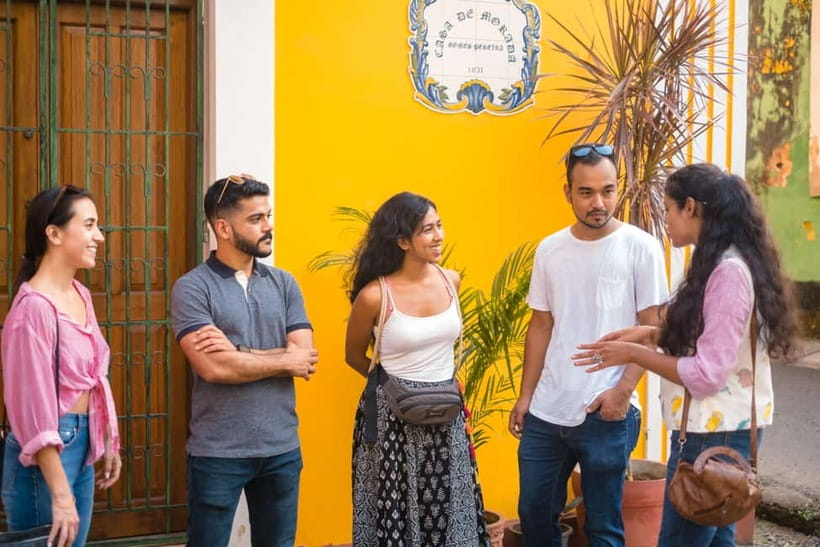
Fontainhas is the visual center of the tour. Developed in the late eighteenth century, the neighborhood takes its name from the Portuguese word for little fountain, referring to springs at the foot of the Altinho hills. Portuguese influence remains visible in the architecture and street names.
The walk through the quarter lasts about 45 minutes in one section, followed by another 30-minute stroll later. That structure works well. You get time to look closely at the houses, then pause indoors or under cover before continuing.
Expect painted facades, old residences, winding lanes, and small details that reward a slower pace. The houses are not merely backdrops for photographs. Your guide explains how the architecture reflects Goa’s connection with Portugal, and how the neighborhood still functions as a local community.
This is also the point where you should avoid rushing. Fontainhas is compact, but its charm depends on looking up, noticing doors and windows, and watching how daily life fits around the old buildings. The area is photogenic, yet the guide’s commentary adds the meaning that an independent walk can easily miss.
The drawback is the same feature that makes the quarter appealing. The lanes are small, and the walking surface may not suit everyone. The activity is specifically not recommended for people with mobility impairments.
San Thome Chapel and the 31st January Bakery
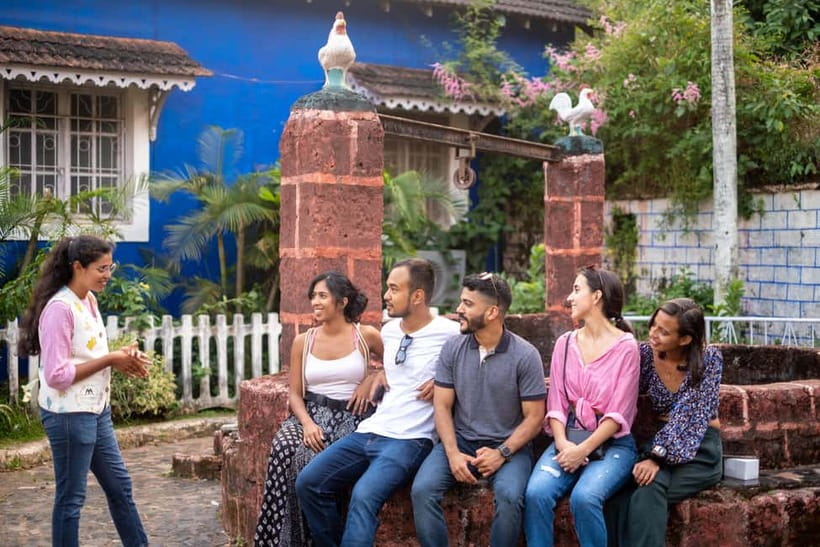
The small Church of San Thome provides one of the early architectural stops. It helps show how religious buildings fit into the quarter’s Portuguese-influenced character without requiring a long detour.
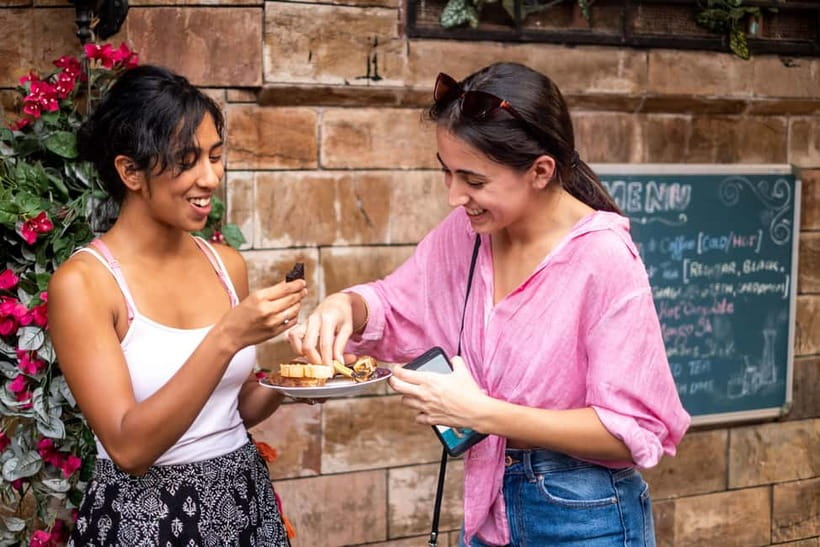
The bakery stop at Confeitaria 31 de Janeiro is one of the most enjoyable touches. The bakery dates to 1930 and is known for Goan-Portuguese treats. Depending on the visit, you may sample sweet or savory baked goods, including pastel de nata. Some departures also include a local drink or kokum.
Food stops like this make the tour more useful than a string of exterior photos. You get a taste of the region’s mixed cultural background, and the pause breaks up the walking. Food and drinks are not formally included in the listed price, so bring cash and confirm with your guide what is offered and what must be paid for separately.
If you have a sweet tooth, this may become one of the tour’s most memorable moments. If you prefer a tightly timed sightseeing route, remember that bakery visits and conversation can make the schedule feel relaxed rather than brisk.
Same streets, a different way to see them:
- Group Guided Walking Tour in Fort and Colaba
★ 5.0 · 1,073 reviews - Private Guided Walking Tour in Fort & Colaba
★ 5.0 · 895 reviews - Old Delhi Food, Heritage&Cultural Walk with Rickshaw ride to Masterji Kee Haveli
★ 5.0 · 742 reviews - Breakfast Walk in Old Delhi
★ 5.0 · 449 reviews
Chapel of San Sebastian and the art stops
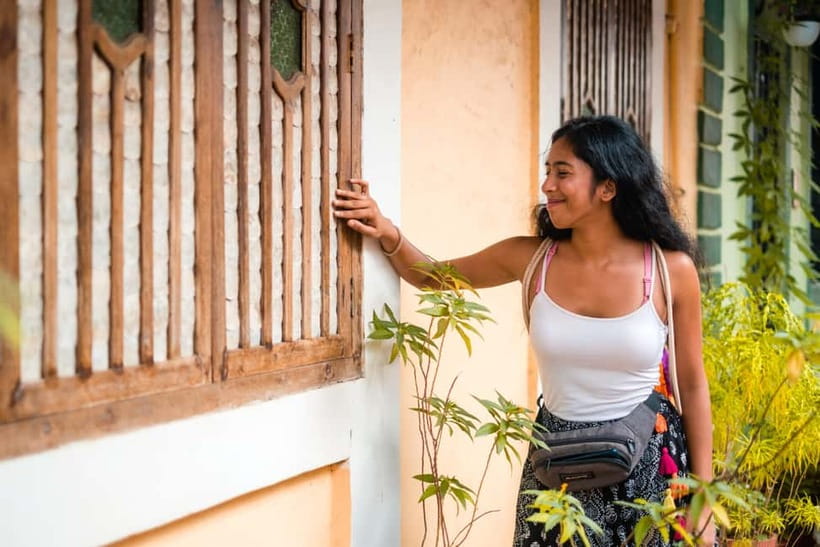
The route continues toward the Chapel of San Sebastian, another photogenic stop in the quarter. The guide uses the chapel and nearby streets to explain how religious buildings, homes, and public spaces developed alongside one another.
The art portion adds welcome variety. You may see buildings around Panjim Inn, Fundacao Orient, and Galerie Gitanjali, with opportunities to visit art galleries and view works by local and international artists. One stop has included paintings by a renowned Goan artist.
This is particularly useful if you want to understand Goa as a center for more than beaches and nightlife. Art helps connect the old architecture with the present day. The buildings are not frozen pieces of colonial decoration. They continue to house cultural spaces, galleries, cafés, and homes.
The exact gallery or studio access can depend on opening hours. One person specifically noted that many places were closed on a Sunday, so Sunday departures may offer a quieter street walk but fewer interiors. If galleries are a priority, ask about the day’s access before booking.
Panjim Inn and Fundacao Orient
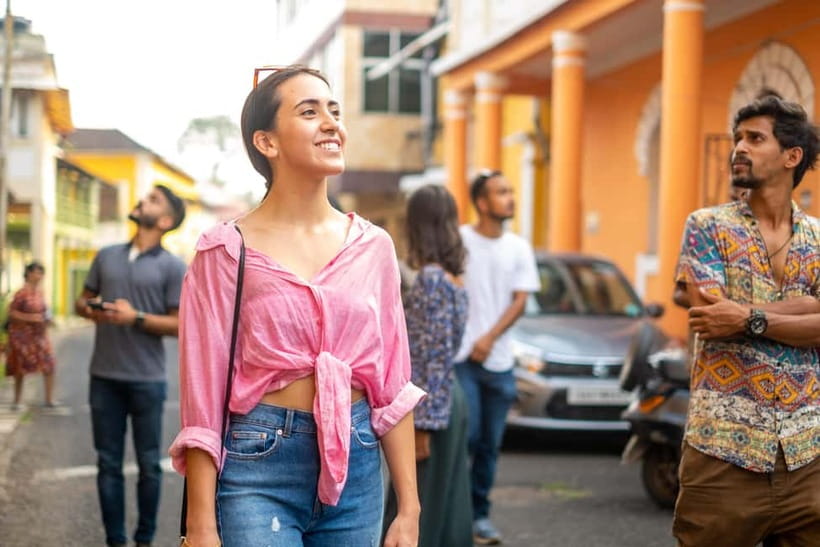
The areas around Panjim Inn and Fundacao Orient give the tour some of its strongest architectural context. You will look at interesting buildings while the guide explains how Portuguese design appears in details across the neighborhood.
This is where a good storyteller earns the $12 price. On your own, you can see the colors and shapes, but you may miss why they matter. A guide can point out the connection between street names, house styles, religious buildings, and Goa’s wider cultural past.
The tour also gives you a chance to ask questions based on what you notice. If you are interested in food, ask how Portuguese traditions appear in Goan cooking. If music is your interest, save a question for the final meeting. If you enjoy architecture, ask the guide to compare the homes with public buildings and chapels.
The experience is educational without needing to feel like a formal class. Several guides, including Calvin Gomes and Rachana, were praised for making the material easy to follow and for answering questions patiently.
Meeting a Goan musician
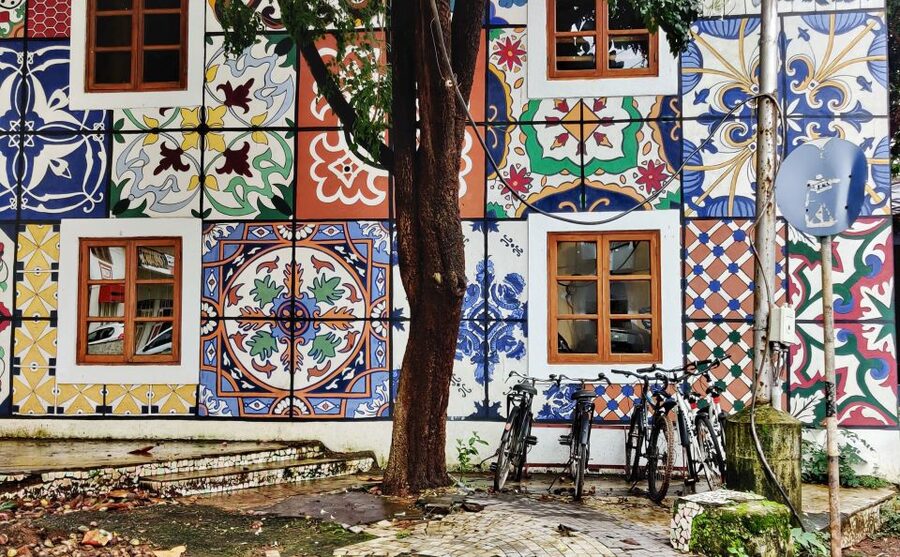
The final cultural stop is one of the tour’s best features. You meet a well-known Goan musician and learn how Portuguese influence shaped music in Goa. The experience includes a live performance, and the musician may be introduced in a café or another local setting.
This is more personal than listening to a guide describe musical traditions. You hear the connection directly from an artist, and the performance gives the history an emotional lift. Glossy, Francis, and other local performers were singled out as memorable parts of different departures.
The music stop also helps explain why the tour includes more than architecture. Goa’s Portuguese connection appears in sound, food, language, art, and family traditions. The musician brings those threads together in a way that a building-by-building tour cannot.
The final portion may also include a stop at a studio producing handmade ceramic souvenirs. These are optional purchases, not part of the ticket price. It is a pleasant last look at local creative work, but you should not assume every visitor must buy something.
The pace, weather, and best departure time
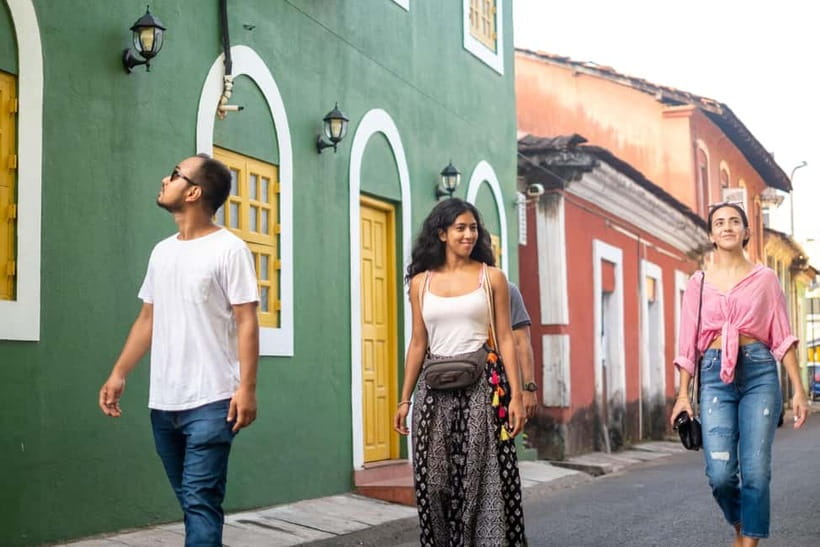
The full experience lasts 2.5 hours. That is long enough to cover the quarter properly but short enough to fit into a day of sightseeing. The route includes guided sections of roughly 20, 10, 15, and 10 minutes, with two walking portions of about 45 and 30 minutes.
The pace is generally described as comfortable, with stops for food, art, music, and conversation. You are not walking continuously for two and a half hours. Still, you should wear proper walking shoes and carry water, especially outside the cooler months.
The morning departure around 10:30 a.m. can be a smart choice if you want fewer people in the lanes. An afternoon departure around 4:30 p.m. may be better for heat, with the added benefit of finishing around dinner time. Goa’s weather can make a major difference to your enjoyment, so choose the time rather than accepting any slot without thought.
The group limit of 20 keeps the cost low, but the experience will not feel like a private tour. If you want a quiet, personal conversation with the guide at every stop, a private booking would suit you better. For most people, the group format is a fair trade for the low price.
Is $12 good value?
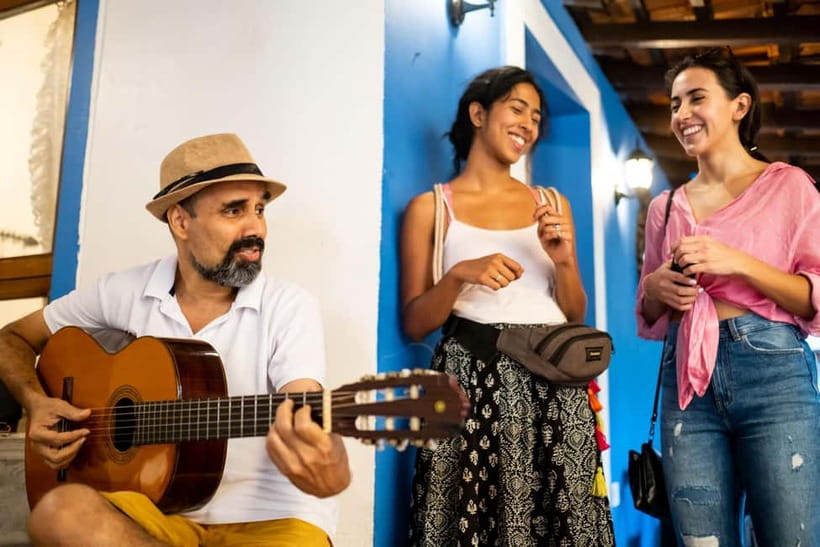
Yes, provided you want cultural context rather than just a short photo walk. At $12 per person, you receive an English-speaking local guide, entry into heritage homes, access to cultural stops, and a meeting with a Goan musician. Those inclusions give the tour more substance than a basic neighborhood stroll.
The food and drinks are extra, and souvenirs are not included. Hotel pickup, drop-off, and insurance are also excluded. These are easy costs to manage because the tour begins and ends at the same central meeting point, and you can decide for yourself if you want bakery treats, drinks, or ceramics.
The strongest value comes from the guide. Names change from day to day, but guides such as Yashasvi, Divya, Calvin Gomes, Trancy, Alita, and Rachana have been praised for clear English, warmth, humor, and strong local knowledge. A good guide turns a pretty neighborhood into a place you can understand.
Free cancellation is available up to 24 hours before the start time, and you can reserve now while paying later. Those terms are useful if your Goa schedule is still shifting.
Who should book this Fontainhas walk?
I would recommend it to first-time visitors to Panaji, architecture fans, history lovers, art-minded visitors, and anyone who wants to see a cultural side of Goa beyond its beaches. It is also a good early activity because the guide can give you practical context for the rest of your time in the state.
Families with older children may enjoy the short stops, pastries, music, and colorful streets. Solo visitors can benefit from the social group setting and the chance to ask a local guide questions.
I would hesitate if you have mobility limitations, dislike walking in warm weather, or want a tour focused only on major monuments. I would also check the day of the week if gallery and heritage-home access matters to you, since Sunday closures may reduce the number of interiors open.
Should you book it?
Book this tour if you want Fontainhas to make sense, not just look pretty in photographs. The bakery, art spaces, heritage homes, local stories, and live music create a nicely varied morning or afternoon for only $12.
Skip it if you prefer exploring alone, need step-free access, or have no interest in Portuguese influence on Goan culture. For most visitors, though, the tour offers an easy and affordable way to meet Panaji through its streets, sounds, food, and people.
FAQ
Where does the Panaji Latin Quarter tour begin?
It begins at the entrance of the Panjim Head Post Office. The Sao Tome Chapel is a nearby landmark and may make the meeting point easier to find.
Where does the walking tour finish?
The tour returns to the India Post Panjim Head Post Office.
How long does the tour last?
The experience lasts 2.5 hours.
What language is the tour conducted in?
The live tour guide speaks English.
How large can the group be?
This is a group tour with a maximum of 20 people.
What is included in the $12 price?
The price includes a local English-speaking guide, entry into heritage homes, and a meeting with a well-renowned Goan musician.
Are food and drinks included?
Additional food and drinks are not included. The route includes a stop at 31st January Bakery, and some departures have included local treats or drinks, so bring cash.
Are hotel pickup and drop-off provided?
No. You must make your own way to the Panjim Head Post Office, and the tour returns there.
What should I bring?
Bring comfortable shoes, comfortable clothing, cash, and a reusable water bottle.
Is the tour suitable for people with mobility impairments?
No. The activity is not suitable for people with mobility impairments because it is a walking tour through narrow neighborhood lanes.
Can I cancel the booking?
You can cancel up to 24 hours in advance for a full refund. Reserve now and pay later is also available.
Just added around India
- Tipu Palace + Koté Vishnu + Fort + KR Market + Jain Temple = Bengaluru Pété Walk★ 5.0 · 150 reviews
- Street Food walking tour in Bangalore with a food evangelist★ 5.0 · 83 reviews
- Bengaluru Pete City Market Half-Day Walking Tour★ 5.0 · 163 reviews
- Amritsar Heritage Walking Tour★ 5.0 · 112 reviews
- Agra Walking Tour★ 5.0 · 109 reviews
- The Great Indian Food Tour: Old Delhi Food and Heritage Walk★ 5.0 · 106 reviews
- Spiritual Walk Tour Trivandrum (Guided Walking Experience)★ 4.6 · 87 reviews
- Spiritual Walking tour with Puja Ceremony -The Pushkar Route★ 5.0 · 101 reviews
History Walking Tours, compared.
History and Hauntings of Salem Guided Walking Tour
Read our review →

Freedom Trail History Small Group Walking Tour
Read our review →
Historic Charleston Guided Sightseeing Walking Tour
Read our review →
Tapas Walking Tour with Food, Wine, and History
Read our review →
Savannah History and Haunts Candlelit Ghost Walking Tour
Read our review →
A History of Terror – Belfast City Centre Walking Tour
Read our review →Browse the lists this tour appears in