
Review · HISTORY WALKING TOURS
Kyoto Gion: 2-Hour Geisha Culture & History Walking Tour
Gion rewards slow walking. This two-hour Kyoto tour links geisha streets, old shrines, temples, and quieter lanes with stories that help the district make sense. I especially like the chance to learn how maiko become geisha and the easy mix of famous sights with less crowded corners. The main catch is that the route covers several stops in a short time, so you should expect a brisk walk rather than long visits at each place.
At $23.88 per person, this is a strong-value introduction to eastern Kyoto, especially if you are seeing Gion for the first time. You may spot a geisha, but that is never promised. For the best chance, book a start around 5 or 6 p.m., when geisha and maiko may be heading to evening appointments. Hot weather can also make the walk tiring, and there is no scheduled drink stop.
Key points to know before booking
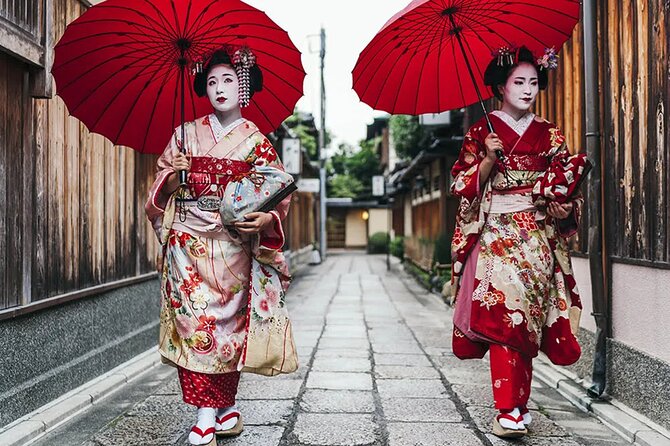
- Hanamikoji Street sets the cultural scene: Learn about geisha training, dance, kimono work, and traditional hairstyles in Gion’s best-known quarter.
- The route packs in seven distinct areas: You visit shrines, temples, old streets, a riverside rest area, and historic dining lanes in about two hours.
- A geisha sighting is possible, not guaranteed: The timing advice matters more than luck alone, though no tour can promise an encounter.
- Guides are the main strength: Guides such as Soyo, Uta, Dan, Kenta, Ukyo, Alex, Naoya, and Oliver are praised for clear English, storytelling, local advice, and a friendly manner.
- The group is capped at 15 people: That keeps the walk more manageable than a large coach excursion, though busy Gion streets can still feel crowded.
- The route requires moderate fitness: You will spend the full tour on foot, with no admission fees at the listed stops.
Why Gion makes a good walking tour
Gion can look simple at first: a few photogenic streets, wooden buildings, temple roofs, and plenty of people holding cameras. The real interest is in understanding what you are seeing. A guide can explain why certain streets feel formal, how the geisha world works, and why a plain-looking townhouse may be more important than a famous photo stop.
This tour focuses on that context. It does not treat Gion as a stage set for geisha sightings. Instead, you hear about the training of maiko and geisha, the discipline behind their dances, and the work that goes into their kimono, makeup, and hair. That makes the district feel less like a costume display and more like a living part of Kyoto culture.
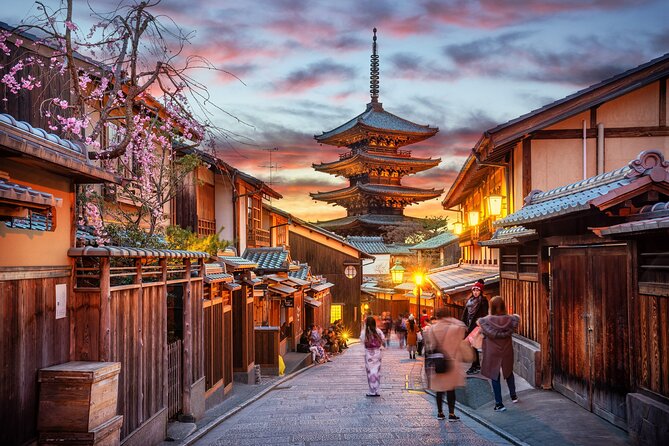
The route also gives you a useful first look at several nearby areas. You pass through Hanamikoji, Sannenzaka and Ninenzaka, Yasaka Shrine, Hokan-ji Temple, Pontocho, Gion Shirakawa, and Yasui-Konpiragu. The stops are short, usually 15 to 20 minutes, so the tour works best as an orientation walk. You will not study every temple in detail, but you will leave knowing which places deserve a return visit.
More History Walking Tours in Japan
- Kyoto: Private 2.5 Hour Historical Walking Tour
★ 4.9 · 121 reviews - Tokyo: Imperial Palace and Shogun Historical Walking Tour
★ 5.0 · 2,251 reviews - Tokyo: Imperial Palace Japanese History Walking Tour
★ 4.9 · 987 reviews
Meeting at Shijo-ohashi Bridge
The starting point is the McDonald’s at 105-1 Hashimotocho, near Shijo-ohashi Bridge. This is a practical meeting place close to public transportation and near the river, though you should allow enough time to find the exact spot in a busy central district.
The activity ends back at the meeting point. That makes the tour easy to fit into a Kyoto day. You can continue into Gion for dinner, return across the bridge, or use the nearby transport connections.
A mobile ticket keeps the arrival process simple. The group can include up to 15 people, a useful limit for narrow lanes and short stops. Guides have included Soyo and Uta, Dan, Kenta and Ukyo, Alex, Naoya, and Oliver. The repeated praise for these guides centers on friendly conversation, strong English, patience, and lively explanations rather than dry historical lectures.
Hanamikoji Street and the world of geisha
Hanamikoji Street is the natural opening act. It is known as the heart of Gion’s geisha district, and the guide uses it to explain the difference between a maiko and a geisha, the stages of training, and the polished arts expected of them.
You hear about dance, music, kimono craftsmanship, and traditional hairstyles. These details matter because a geisha appearance is the visible result of years of instruction and careful preparation. Without that explanation, it is easy to reduce the experience to costumes and photographs.
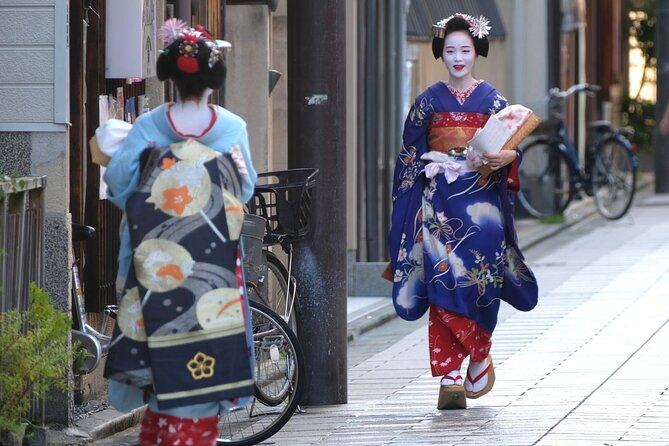
You might see a geisha or maiko moving through the area, particularly on an early evening tour. If that happens, the respectful approach is to watch from a distance and let the guide set the tone. The tour promises only a chance, not a sighting, so book it for the cultural explanation first.
Hanamikoji can be crowded. The 15-minute stop is enough for an introduction, but not enough for a slow photographic session or a long look at every building. Keep your group together and listen closely when the guide points out details.
Sannenzaka and Ninenzaka: old streets with a strange warning
The walk continues to Sannenzaka and Ninenzaka, two of Kyoto’s best-known old streets. Their sloping lanes, traditional façades, and shops make them obvious photo stops. The tour adds a local story to the scenery: the claim that falling on the steps means you will die within two years.
Your guide explains the truth behind that eerie rumor, turning a quick photograph into a small lesson in local folklore. This is one of the tour’s useful habits: it gives you a story to remember instead of only pointing out a view.
These streets are popular and can feel crowded, especially during busy daytime periods. You should not expect an empty old-Kyoto scene. The tour helps you understand the setting, but it cannot remove the crowds or provide much time for shopping.
More History Walking Tours in Kyoto:
- History and Hauntings of Salem Guided Walking Tour
★ 5.0 · 14,564 reviews - Lisbon: History, Stories and Lifestyle Walking Tour
★ 4.8 · 10,902 reviews - Boston: Freedom Trail History Small Group Walking Tour
★ 5.0 · 6,450 reviews - Historic Charleston Guided Sightseeing Walking Tour
★ 5.0 · 6,216 reviews
Yasaka Shrine and Hokan-ji Temple
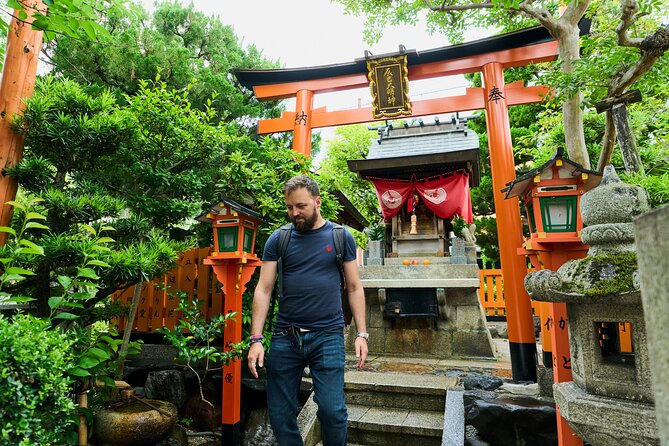
Yasaka Shrine brings a different mood. The tour identifies it as a 1,000-year-old shrine, giving you a chance to see a major Shinto site within the Gion area. Your guide introduces the place and helps you understand the difference between the shrine’s religious setting and the surrounding entertainment district.
The stop lasts about 20 minutes. That is enough to look around and ask questions, though not enough for an extended visit. If you want a quieter experience, note the details that interest you and return on your own later.
Hokan-ji Temple is another 20-minute stop and one of the most photogenic points on the route. Its appearance is closely tied to the classic image of Kyoto, so this is a good place to take pictures. The practical limitation is that a popular photo spot rarely feels private. You may need patience to get a clear view.
Together, Yasaka Shrine and Hokan-ji show why this walk works well for first-time visitors. You see both Shinto and Buddhist sites, then connect them with the streets and buildings around them. The tour does not ask you to memorize religious doctrine. It gives you enough background to look with more understanding.
Pontocho and the Kamogawa riverside
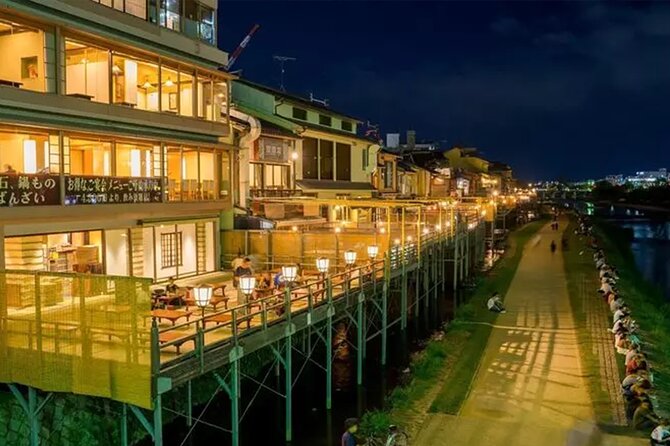
Pontocho is presented as a historic gourmet street. Its narrow character and connection with Kyoto dining add another side of the city’s evening life. The guide may also point out places to eat, along with restaurant and rooftop bar suggestions.
This advice can be especially useful early in your Kyoto stay. You can ask what kind of meal fits your budget or where to return after the walk. The guide’s recommendations are one reason this tour offers more than a fixed route through famous sights.
The itinerary also includes a local place to relax beside the Kamogawa River. The exact point is not specified, so think of it as a short change of pace rather than a formal attraction. After several streets and religious sites, the river gives the group a calmer setting and a chance to take in the city at a slower rhythm.
One practical note: the route has no planned beverage stop. In hot weather, that matters. Carry water, especially because the activity is continuous and the tour has been described as tiring in strong heat.
Gion Shirakawa and Edo-period townhouses
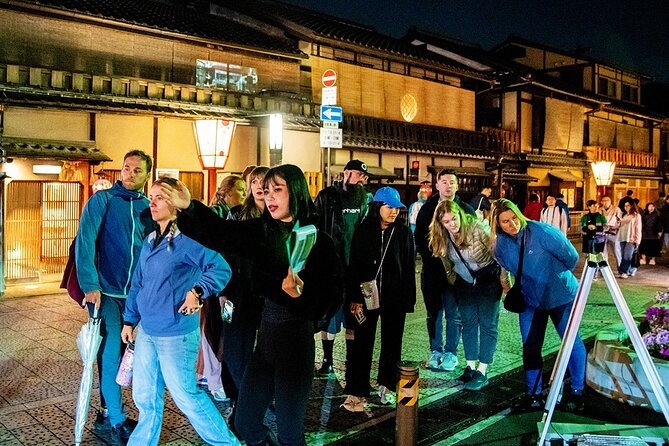
Gion Shirakawa offers one of the walk’s best chances to see old Kyoto architecture in a quieter setting. Here you look at wooden townhouses dating from the Edo period and hear why these buildings matter.
The value is not only visual. A townhouse can tell you about how Kyoto’s streets once worked, how businesses and homes occupied the same narrow buildings, and how traditional construction shaped the district. Your guide supplies the story that turns an attractive façade into a piece of urban history.
This is also a good place to slow down and notice smaller details. Look at the woodwork, street width, and relationship between the buildings and the waterway. The stop lasts around 20 minutes, enough for photographs and a clear explanation.
Crowds can still appear, but Gion Shirakawa often feels less hectic than the busiest photo lanes. If your main interest is old Kyoto architecture, this may be one of the most rewarding parts of the walk.
Yasui-Konpiragu and Shinto worship

The final listed stop is Yasui-Konpiragu, where you get an introduction to Shinto worship. The visit adds a hands-on cultural element to a route that otherwise focuses heavily on streets, buildings, and explanation.
The stop lasts about 15 minutes. Your guide can explain what you are seeing and how the site fits into Japanese religious practice. This is useful if you are unsure how to behave at a shrine or want to understand the meaning behind the rituals.
Because the tour returns to the original meeting point, Yasui-Konpiragu also works as a natural closing stop. You finish with a practical cultural lesson rather than simply ending after the last photograph.
How much walking and time you should expect
The advertised duration is about two hours, and the schedule is tightly arranged. Stops range from 15 to 20 minutes, so the guide must keep the group moving. You should wear comfortable shoes and be ready to walk at a steady pace.
A moderate fitness level is recommended. There is no mention of a vehicle segment, and the experience is built around walking through streets, lanes, shrine grounds, and temple areas. The route may be manageable for many people, but heat, slopes, and crowded paths can make it more demanding than the short duration suggests.
The evening timing deserves special attention. Several people find sunset or early evening especially attractive, and a start around 5 or 6 p.m. may improve your chance of seeing a geisha or maiko. At the same time, a later start can mean some sites or nearby businesses are less active. One piece of practical advice from the experience is to avoid starting too late if you want open places along the way.
Price, group size, and overall value
At $23.88 per person, the price is modest for a local guide, a two-hour route, and interpretation at several major Kyoto locations. Every listed stop has free admission, so you are paying mainly for the guide’s time, route planning, cultural context, and local recommendations.
That is good value if you want orientation rather than a formal temple tour. You get an introduction to geisha culture, a shrine, a temple, traditional streets, old townhouses, a dining lane, and a riverside pause without paying separate entry fees.
The value is lower if you want long visits at each stop or an intimate private experience. A group of up to 15 is reasonable, but it is not the same as walking alone with a guide. In narrow streets, you may need to stand close and listen carefully.
The experience has a 5 out of 5 rating from 1,186 ratings, with 100 percent recommending it. The most consistent praise goes to the guides’ storytelling, warmth, English, and ability to answer questions. Specific guides such as Uta and Naoya are noted for making the walk engaging and patient, while Dan is praised for clear historical explanations. Alex is described as especially good at keeping an international group together and involved.
Who should book this Gion walk?
I would choose this tour if you are new to Kyoto, curious about geisha culture, or unsure how Gion’s separate sights fit together. It is also useful if you have only a short window and want a guided introduction before exploring on your own.
It suits you if you enjoy stories, photographs, and a steady walking pace. The mix of famous streets and quieter back lanes gives the route more substance than a simple photo circuit.
You may want a different experience if you need frequent rests, dislike crowds, or want guaranteed access to a geisha performance. This is a street-level cultural walk, not an evening show or a formal tea-house visit. The geisha sighting is a lucky possibility, not the product being sold.
Free cancellation is available if you cancel at least 24 hours before the local start time. Changes or cancellations within 24 hours are not refunded, and poor weather may lead to another date or a full refund.
Should you book the Kyoto Gion walking tour?
Yes, if you want an affordable and well-paced introduction to Gion with a strong guide at the center. I especially like the combination of geisha culture, Edo-period townhouses, shrines, temples, and practical food advice. The tour gives you enough context to make a later solo walk more rewarding.
Book it for early evening if seeing a geisha is important to you, but keep your expectations sensible. Bring water, wear good shoes, and treat the walk as a cultural orientation rather than a guaranteed celebrity sighting. At $23.88, it is an easy choice for most first-time visitors who want Gion to feel like a real neighborhood, not just a collection of pretty streets.
FAQ
How long does the Kyoto Gion walking tour last?
The tour lasts approximately two hours.
Where does the tour begin?
It begins at the McDonald’s near Shijo-ohashi Bridge, at 105-1 Hashimotocho, Shimogyo Ward, Kyoto 600-8011, Japan.
Where does the tour end?
The activity ends back at the original meeting point.
Is a geisha sighting guaranteed?
No. The tour offers a chance to spot a geisha or maiko, but sightings are not guaranteed. A start around 5 or 6 p.m. may give you a better chance.
How many people can join the tour?
The tour has a maximum group size of 15 people.
Can I cancel for a full refund?
Yes, if you cancel at least 24 hours before the experience begins. Cancellations made within 24 hours are not refunded. If poor weather cancels the tour, you are offered another date or a full refund.
More 2-Hour Experiences in Kyoto
- Berlin’s Best: 2 Hour Walking Tour Third Reich and the Cold War
★ 5.0 · 5,486 reviews - Budapest City Landmarks Walking Tour in 2 Hours
★ 5.0 · 2,048 reviews - Leipzig: 2-Hour Guided Walking Tour in German
★ 4.8 · 1,612 reviews - Lucca: 2-Hour City Center Walking Tour
★ 4.7 · 1,314 reviews
More Cultural Walking Tours in Kyoto
- Kyoto Gion Cultural Walk & Geisha Show with Dining Options
★ 5.0 · 518 reviews - Kyoto: Gion Hidden Gems & Geisha Culture Tour
★ 4.9 · 126 reviews - Kyoto: Geisha Dinner & Gion Cultural Walk
★ 5.0 · 73 reviews - Savannah First Squares Culinary & Cultural Walking Food Tour
★ 5.0 · 3,229 reviews
Just added around Kyoto
- Kyoto : Private Custom Walking Tour With A Local Guide★ 4.6 · 144 reviews
- Kyoto: Private 2.5 Hour Historical Walking Tour★ 4.9 · 121 reviews
- Kyoto: Private Walking Tour with a Local★ 4.6 · 118 reviews
- Kyoto: Gion Sunset Walking Tour with Local Guide★ 4.7 · 351 reviews
- Kyoto: Gion Walking Tour★ 5.0 · 195 reviews
- Kyoto: Izakaya Bars Guided Walking Tour★ 4.9 · 815 reviews
- Kyoto Gion Cultural Walk & Geisha Show with Dining Options★ 5.0 · 518 reviews
- Kyoto: Gion Hidden Gems & Geisha Culture Tour★ 4.9 · 126 reviews
History Walking Tours, compared.
History and Hauntings of Salem Guided Walking Tour
Read our review →

Freedom Trail History Small Group Walking Tour
Read our review →
Historic Charleston Guided Sightseeing Walking Tour
Read our review →
Tapas Walking Tour with Food, Wine, and History
Read our review →
Savannah History and Haunts Candlelit Ghost Walking Tour
Read our review →
A History of Terror – Belfast City Centre Walking Tour
Read our review →Browse the lists this tour appears in