
Review · HISTORY WALKING TOURS
Vienna: World War II Historical Walking Tour
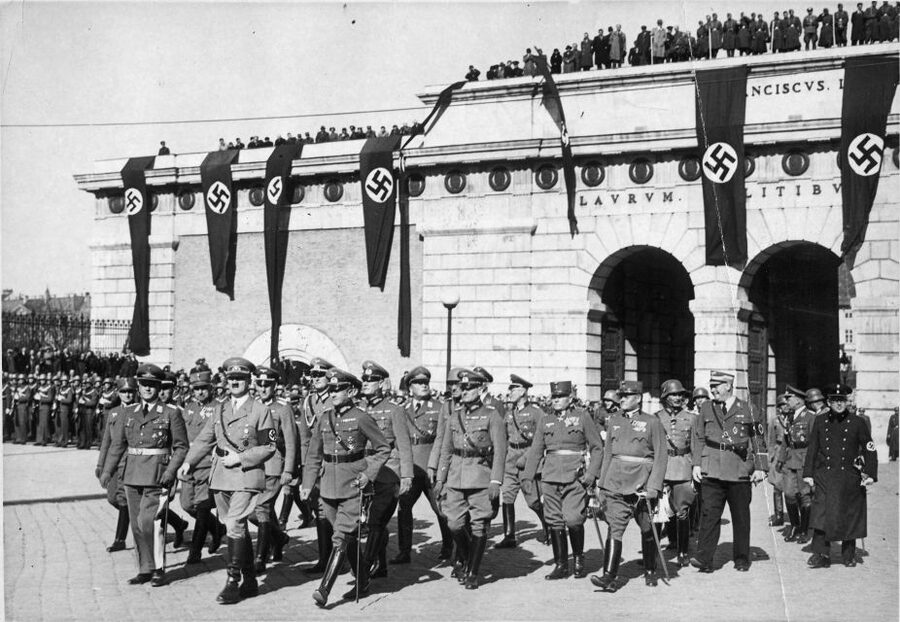
Vienna’s grand center carries some very dark memories. This 2.5-hour English walking tour connects Hitler’s early years, Nazi rule, the destruction of Jewish Vienna, wartime bombing, liberation, and the city’s unusual postwar division. I like the way it links famous central sights with lesser-seen evidence of the war, especially the synagogue that survived Nazi rule and the Holocaust memorial.
I also like the thoughtful pacing. Guides such as Dieter, Stefan, Siggi, Charles, and Wolfgang have been praised for clear storytelling, historical context, and patient answers. The main consideration is the length: you cover about 4 kilometers, and the tour finishes near a different metro stop rather than returning to the Albertina.
Key points to know before booking
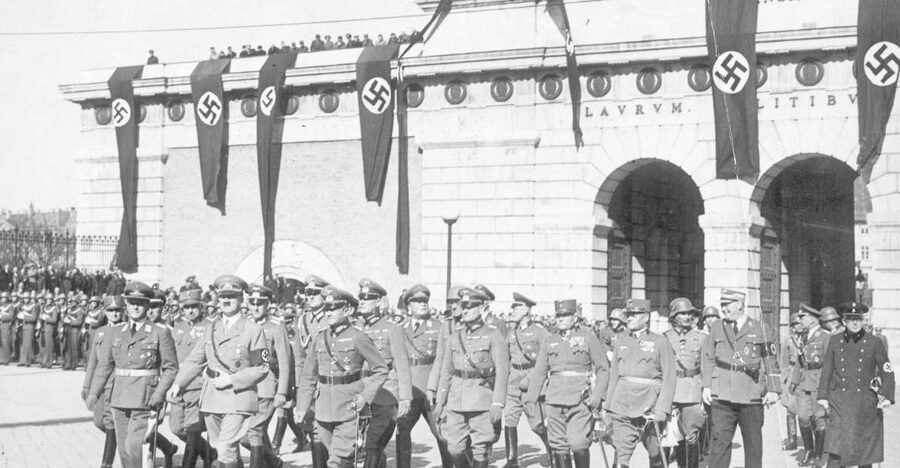
- Hitler’s Vienna: Begin beside the Albertina Museum and Opera House while your guide explains the city’s political and social climate during Hitler’s early years.
- A rare surviving synagogue: See the only synagogue in Vienna said to have survived the Nazi regime.
- The Jewish community’s destruction: Learn how fear, ethnic rivalry, and Nazi persecution reshaped Vienna’s large Jewish population.
- A city hit by more than 100,000 bombs: The route shows how World War II damaged Vienna and changed its streets.
- The Holocaust memorial: Pause at one of Vienna’s most solemn places of remembrance.
- An unusual postwar city: Hear how Vienna was divided among the Allied powers, with all four occupying powers sharing zones in one city.
Starting at the Albertina with Vienna’s polished face
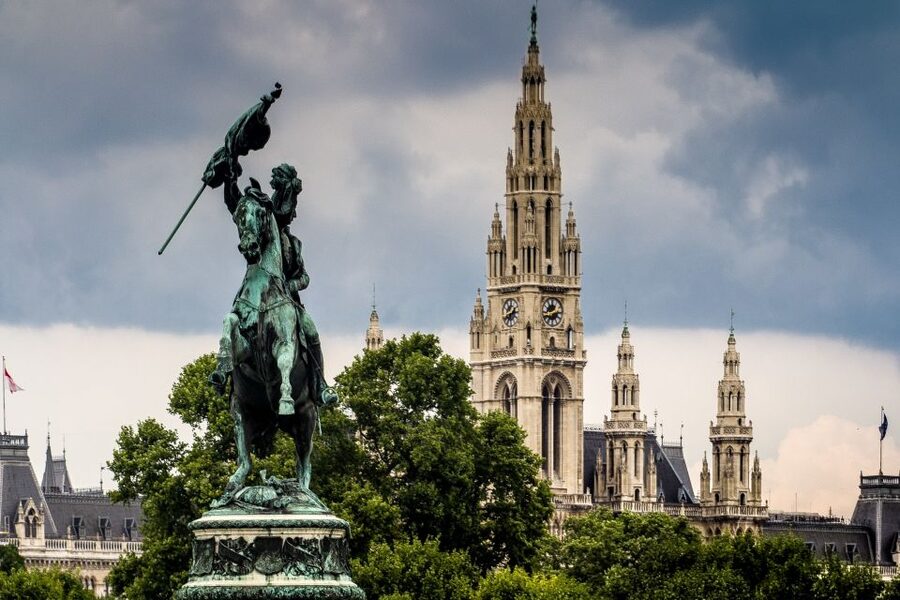
The meeting point is easy to find if you know what to look for: a green umbrella in front of Albrechtsbrunnen, the fountain below the Albertina Museum. It is beside the Vienna State Opera, close to the Karlsplatz/Oper subway stop.
This is a fitting start. You are surrounded by some of Vienna’s most elegant architecture, yet the opening discussion turns to the social and political tensions that shaped the city in the early twentieth century. The contrast helps. Vienna can look serene and imperial, but its history includes fierce nationalism, antisemitism, political conflict, and public support for Hitler’s annexation of Austria.
Your guide sets out the main story before the walking begins in earnest. That matters because the subject can become a jumble of dates and names. The better guides build a clear line from Hitler’s years as a young art student in Vienna to his ideology, the annexation of Austria, the war, and the city’s liberation.
Dieter has been especially praised for tying separate events together rather than simply listing facts. Stefan is also noted for using a strong overview before moving into specific sites. If you already know the broad outline of World War II, this opening can still add value by placing the events in a distinctly Viennese setting.
More History Walking Tours in Austria
- Vienna Historic Center Small Group Walking Tour
★ 5.0 · 1,746 reviews - Historical Hitler Walking Tour of Vienna
★ 5.0 · 887 reviews - Vienna: Essential History Walking Tour
★ 4.9 · 633 reviews
Understanding Hitler’s early years in Vienna
The tour does not treat Hitler’s time in Vienna as a simple explanation for the crimes that followed. That is important. A responsible guide can show the political ideas and social pressures around him without pretending that a city alone created a dictator.
You learn about the young Hitler, his ambitions as an art student, and the ideology he encountered in Vienna. The focus is not only on his personal story, but also on the wider climate of the city. This gives you a more useful way to think about his later rise.
The subject is difficult, and presentation makes a real difference. Charles has been praised for handling complex material with care, while Siggi has used historical photographs to make the discussion easier to follow. Guides also invite questions and sometimes pose moral questions of their own, so you are asked to think about how prejudice grows and how ordinary political language can turn dangerous.
This section will suit anyone who wants context rather than a narrow military tour. If you are mainly interested in tanks, battle maps, or troop movements, this is not the right focus. The tour is more concerned with ideology, society, memory, and the choices made by people and institutions.
The destruction of Vienna’s Jewish community
One of the tour’s most painful subjects is the fate of Vienna’s Jewish community. Before the Nazi period, Vienna had a large and important Jewish population. The walking tour explains how ethnic rivalry, fear, and persecution affected that community during the Nazi takeover and war years.
This is where the tour gains much of its human weight. You are not only hearing about governments and military events. You are learning how political hatred entered daily life and how a community was stripped of safety, rights, homes, and lives.
The guide’s tone matters here. The strongest guides keep the subject serious without turning it into a theatrical performance. Personal family accounts, historical images, and stories connected to particular places help put people back into a story that can otherwise feel distant.
I would give this part your full attention. It is not a quick stop for a photograph. The point is to understand how Vienna’s history changed for real people, and how much of that change happened through social pressure and public cooperation, not only through decisions made far away.
Seeing Vienna’s only surviving synagogue
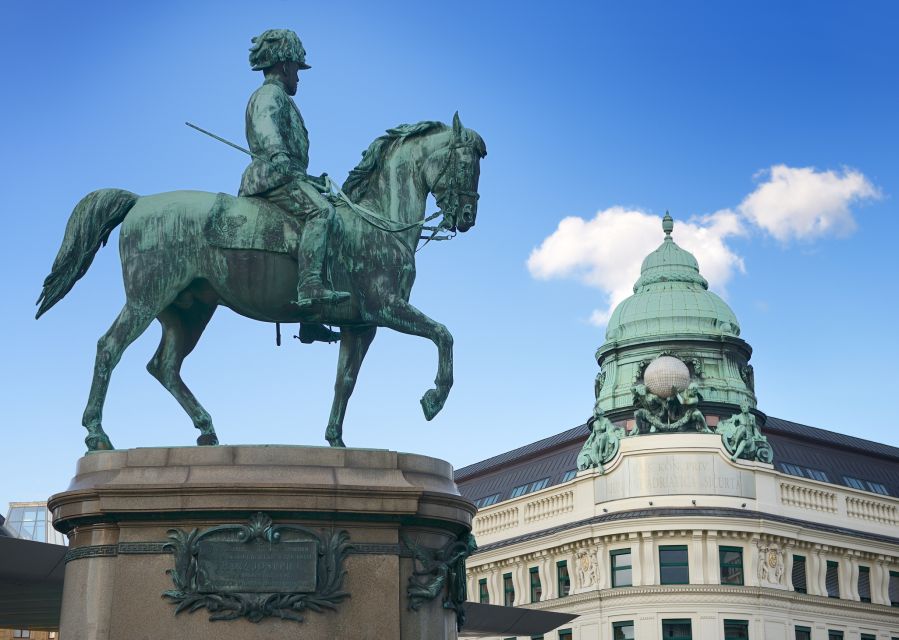
A central highlight is the synagogue described as the only one in Vienna to survive the Nazi regime. It gives the walk a rare physical focal point.
The value of this stop is not just architectural. The building represents what was lost. A surviving structure can make the scale of destruction easier to grasp, particularly when the guide explains what happened to Vienna’s wider Jewish religious and cultural life.
Do not expect a standard museum visit here. Entrance fees are not included, and the experience is a guided outdoor walk rather than a tour of every interior. The synagogue is important because of its survival and the story attached to it.
This stop also rewards careful listening. The building may look modest beside Vienna’s grand palaces and churches, but its meaning is far greater than its size suggests. It is one of the places where the tour moves from broad history to a single, tangible reminder.
More History Walking Tours in Vienna:
- History and Hauntings of Salem Guided Walking Tour
★ 5.0 · 14,564 reviews - Lisbon: History, Stories and Lifestyle Walking Tour
★ 4.8 · 10,902 reviews - Boston: Freedom Trail History Small Group Walking Tour
★ 5.0 · 6,450 reviews - Historic Charleston Guided Sightseeing Walking Tour
★ 5.0 · 6,216 reviews
Pausing at Vienna’s Holocaust memorial
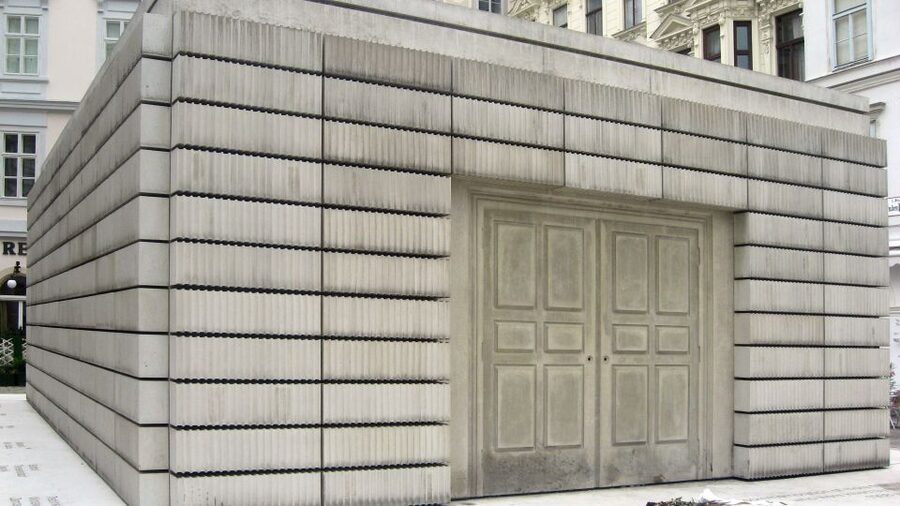
The Holocaust memorial is another key stop, and the mood becomes especially solemn there. Your guide explains its place in Vienna’s memory of the Holocaust and connects the memorial to the broader story of persecution.
The memorial works best as a pause rather than a rushed photo opportunity. Guides need to give you time to look, listen, and consider what the site represents. Charles, Dieter, and other guides have been praised for treating this material with sensitivity, and that approach suits the subject.
I also appreciate that the memorial appears within a wider city walk. You are not taken to a single isolated site and then sent away with a few facts. Instead, it forms part of a chain linking Vienna’s political climate, Jewish life, Nazi rule, war damage, and postwar remembrance.
There are no attraction entrances included, so you should think of the tour as an outdoor history lesson with stops at important places. That keeps the $31 price reasonable, but it also means you should not book expecting a museum admission package.
Following the scars left by more than 100,000 bombs
The tour explains the effect of more than 100,000 bombs on Vienna. The city’s celebrated historic center can hide the scale of wartime damage, especially when restored façades make the past look tidy.
A guide helps you read the streets differently. A square, building, or surviving fragment can become evidence of wartime destruction, rebuilding, and selective preservation. The value is in the interpretation. Without a guide, you might walk past these details without knowing what they mean.
This portion also broadens the story beyond Nazi persecution. You learn what the war did to Vienna as a city, including the physical damage and the disruption of daily life. The result is a fuller picture of a capital caught between dictatorship, bombing, liberation, and occupation.
The route is described as a comfortable 4 kilometers over 2.5 hours, but it is still a city walk. Wear comfortable shoes and dress for the weather. The tour operates outdoors, and winter cold or rain can change how enjoyable it feels. Guides have adjusted pauses during heavy rain and found sheltered places when possible, but you should not count on perfect protection.
Vienna after 1945, divided among the Allies
The postwar section explains how Vienna was divided after World War II. This is one of the most unusual parts of the city’s modern history: Vienna was the only city where the Allied powers managed a zone together.
That arrangement shaped the city’s politics and daily life. Your guide explains the four-power occupation and how Vienna differed from the surrounding Soviet-occupied zone of Austria. This adds an important final chapter to the tour. The story does not end with liberation. It continues through occupation, division, and the difficult rebuilding of public life.
The subject can sound complicated in a textbook. On the street, it becomes easier to picture because your guide can connect the political arrangement to the places around you. The best explanations show how a city once controlled by one dictatorship became a city administered by several victorious powers.
This is also why the route does not simply return to the Albertina. The tour finishes elsewhere, with a metro stop nearby. That is not a problem if you plan for it, but you should avoid scheduling a tight reservation back at the Opera House immediately afterward.
Guides, headsets, and the walking pace
The guides are a major reason this tour receives such a strong overall rating of 4.8 from 1,772 reviews. Dieter is repeatedly praised for broad subject knowledge, calm pacing, and clear answers. Stefan is known for storytelling and historical context, while Siggi has used printed photographs and adapted discussions to group interests.
Other named guides include Michael, Wolfgang, Charles, Florian, and Charlie. The tone can vary slightly from guide to guide, but the common strength is the ability to explain rather than merely recite. Several guides have also been praised for adding personal or family perspectives while keeping the subject balanced.
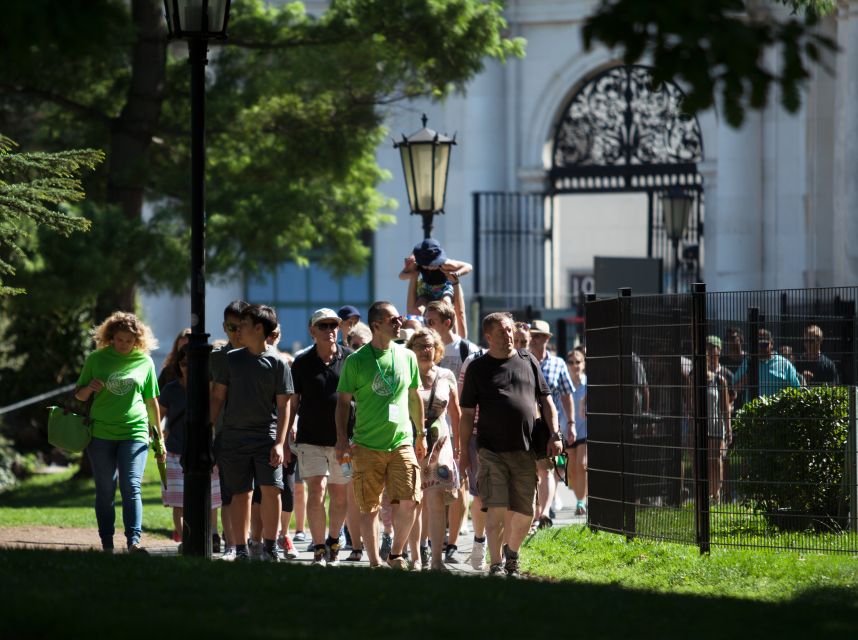
The tour uses headsets for larger groups, and this is more useful than it may sound. Vienna’s streets can be noisy, and you do not want to spend two and a half hours trying to stay within arm’s reach of the guide. The equipment lets you look at the buildings and keep walking while still hearing the explanation.
The pacing is another strong point. You walk, stop, sit when possible, and continue. Some guides include toilet or snack breaks, and sheltered pauses can help in poor weather. The route is not described as difficult, but anyone with limited mobility should remember that it covers city streets over 150 minutes. One participant with mobility issues found the distance manageable, though your own comfort will depend on your condition and the weather.
Is $31 good value for Vienna?
At $31 per person, this is a fair price for a live, English-language tour lasting 150 minutes. You are paying for a guide who supplies the context that individual sightseeing cannot easily provide, along with a carefully chosen route through central Vienna.
The value is strongest if you want the political and social story behind the sights. A self-guided walk may cost less, but you would need to research Hitler’s Vienna, the Jewish community, wartime bombing, the Holocaust memorial, and the postwar occupation on your own. The tour brings those subjects together in one morning or afternoon.
The price does not include attraction entrances, transport, food, or a separate trip to the meeting point. That keeps the cost clear, but you should budget for your own metro ride and anything you buy along the route.
Free cancellation up to 24 hours before the start and reserve-now, pay-later booking add useful flexibility. Still, the main value is not the booking policy. It is the chance to hear a connected explanation while standing in the city where these events unfolded.
Who should book this walk?
I would recommend it to anyone with a serious interest in World War II, the Holocaust, modern Austria, or the political roots of fascism. It is also a strong early-trip activity because it can help you understand Vienna’s streets and major sights for the rest of your stay.
It suits adults and older teenagers who can engage with painful material. The tone is serious, but guides also use stories, questions, and occasional humor to keep the group involved. If you prefer history presented with care rather than shock value, this is a good match.
You may want to skip it if you dislike walking, need a fully indoor activity, or want a tour devoted mainly to military battles. It is also not ideal for anyone expecting entry to the synagogue or Holocaust memorial. The power of the experience comes from the route, the guide’s explanation, and the city itself.
Final verdict: a thoughtful way to read Vienna
I would book this tour if Vienna’s twentieth-century history is important to you. The route covers Hitler’s early years, the persecution of Jewish Vienna, the surviving synagogue, the Holocaust memorial, bombing, liberation, and the city’s shared Allied occupation without reducing the story to a list of dates.
The practical advice is simple: meet under the green umbrella, wear good shoes, bring weather protection, and allow time after the walk because it finishes near another subway stop. At $31, it offers strong value for a serious, well-paced introduction to the parts of Vienna that its elegant center can easily conceal.
FAQ
How long is the Vienna World War II Historical Walking Tour?
The tour lasts 150 minutes, or 2.5 hours.
What language is the tour in?
The live guided tour is conducted in English.
Where does the tour begin?
It begins in front of Albrechtsbrunnen, the fountain below the Albertina Museum beside the Vienna Opera House.
How do I find the meeting point?
Look for the green umbrella in front of Albrechtsbrunnen. The closest listed subway stop is Karlsplatz/Oper.
What historical sites are included?
The tour visits the synagogue described as the only one in Vienna to survive the Nazi regime and Vienna’s Holocaust memorial. It also covers wartime damage and sites connected with postwar division.
Are attraction entrance fees included?
No. Entrances to attractions are not included in the tour price.
Does the tour return to the Albertina Museum?
No. The walk does not return to its starting point, but a metro stop is located close to the finish.
How far do you walk?
The full route is about 4 kilometers, according to tour information provided by a participant.
Can I cancel the booking?
Yes. You can cancel up to 24 hours in advance for a full refund. Reserve-now, pay-later booking is also available.
Just added around Vienna
- The unknown Vienna City- a guided walking tour in 3 hours★ 4.7 · 137 reviews
- Hungry in Vienna? A Food Lover’s Coffee & Market Walk★ 4.9 · 276 reviews
- 3-Hour Walking Tour of Vienna Central Cemetery★ 4.7 · 71 reviews
- Vienna: City Center Guided Walking Tour★ 4.8 · 99 reviews
- Private Hidden Vienna Walk — Stories Behind Quiet Corners★ 5.0 · 137 reviews
- Vienna at First Glance a Private Walking Tour for First Timers★ 5.0 · 131 reviews
- Historical Hitler Walking Tour of Vienna★ 5.0 · 887 reviews
- Vienna: Essential History Walking Tour★ 4.9 · 633 reviews
History Walking Tours, compared.
History and Hauntings of Salem Guided Walking Tour
Read our review →
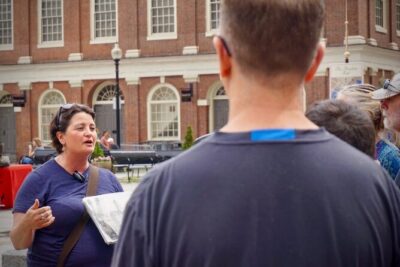
Freedom Trail History Small Group Walking Tour
Read our review →
Historic Charleston Guided Sightseeing Walking Tour
Read our review →
Tapas Walking Tour with Food, Wine, and History
Read our review →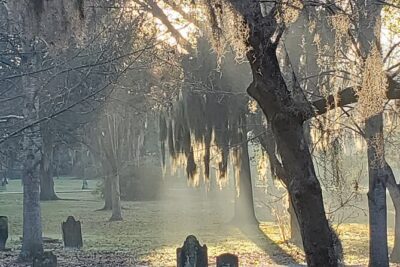
Savannah History and Haunts Candlelit Ghost Walking Tour
Read our review →
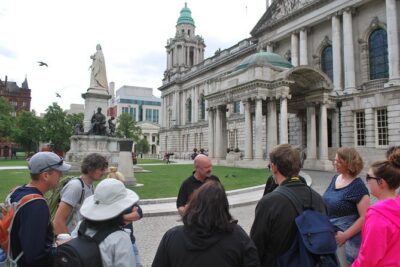
A History of Terror – Belfast City Centre Walking Tour
Read our review →Browse the lists this tour appears in