
Review · NIGHT WALKING TOURS
Osaka Bar Hopping Night Walking Tour in Namba (3 bars, 6 tastes)
Osaka comes alive after dark. This three-hour walk through Namba pairs three local bars with small plates, Japanese drinks, and narrow lanes you could easily pass by alone. I like the small maximum of seven people, and I like that the guide handles menus and ordering when Japanese reading skills run out. The main catch is value: at $98.66, the evening needs good food, varied drinks, and a strong guide to feel worthwhile.
The route also gives you more than a bar crawl. You see the Glico billboard, pass through Shinsaibashi-suji, visit moss-covered Hozenji Temple, and finish among the lanterns and tiny drinking spots of Hozenji Yokocho. Still, the quality can vary. Some nights bring sushi, fugu, whiskey, or karaoke, while other outings have featured ordinary bars, repeated drink choices, or slow service.
Key points at a glance
- Small groups of up to seven: You get a better chance to ask questions, talk with the guide, and meet the other people in your group.
- Three Namba stops: The evening usually includes food and drinks across three venues, though the exact bars and dishes can change.
- Hozenji Yokocho after dark: This atmospheric lane gives the walk its strongest sense of old Osaka nightlife.
- Food can cover dinner: Several portions are included, and some outings have offered more food than expected.
- Guide quality matters: Guides such as Mina, Taku, Mari, Fuka, Yuko, and Mich have helped turn the evening into a social night out.
- Bring cash: Extra food and drinks usually require cash, since many bars do not accept credit cards.
Starting in Namba beneath Osaka’s famous billboard
The meeting point is outside FamilyMart at 1-chōme-7-10 Namba. The tour ends at the same place, which makes the route easy to manage if you are staying near Namba, Dotonbori, or Shinsaibashi.
Arrive early. This tour starts on time, and missing the group means no joining later, refund, or rescheduling. That rule matters in Namba, where a short walk can become confusing among crowded streets, shopping arcades, and restaurant signs.
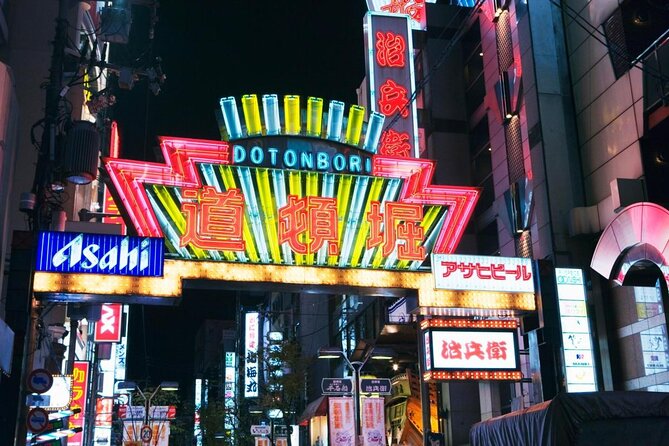
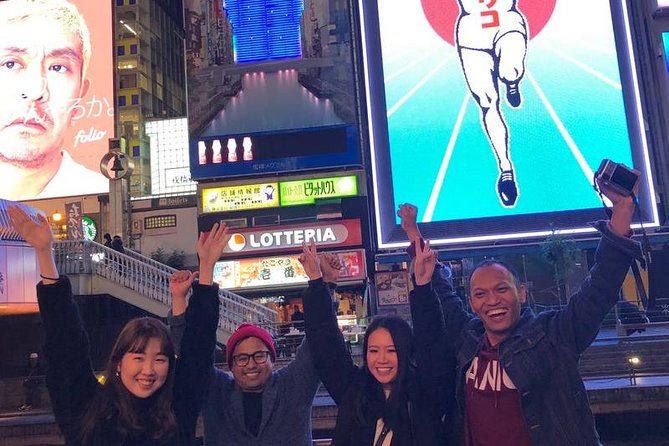
The opening walk brings you toward the famous Glico running man billboard. The giant sign was first erected in 1935 as an advertisement for Ezaki Glico, the Osaka confectionery company. It is one of the city’s most familiar photo spots, but it also sets the mood for the night: bright signs, food everywhere, and Osaka’s playful approach to going out.
You also pass Shinsaibashi-suji Shopping Street. This long, lively arcade is useful context before the quieter food alleys arrive. By day it is a major shopping route. At night, it helps show how quickly central Osaka shifts from retail streets to compact bars and restaurants.
More Night Walking Tours in Japan:
- Kyoto: Gion Magical Night Walking Tour with Geisha Trivia
★ 4.9 · 2,393 reviews - Night Walk in Gion: Kyoto’s Geisha District
★ 4.5 · 2,003 reviews - Kyoto Gion Night Walk & Geisha District Guided Tour
★ 5.0 · 786 reviews
Three bars, six tastes, and a full evening meal
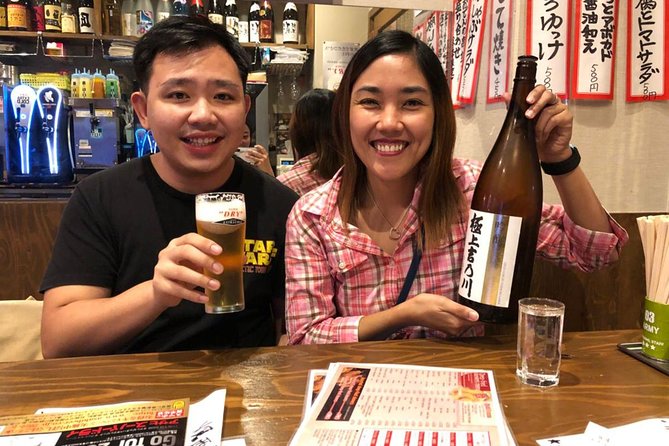
The main promise is three bars and six tastes over about three hours. In practical terms, you should think of this as a guided dinner with drinks, not a high-speed pub crawl.
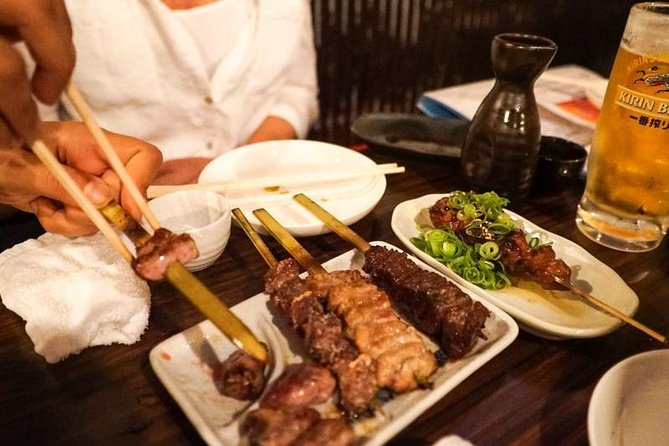
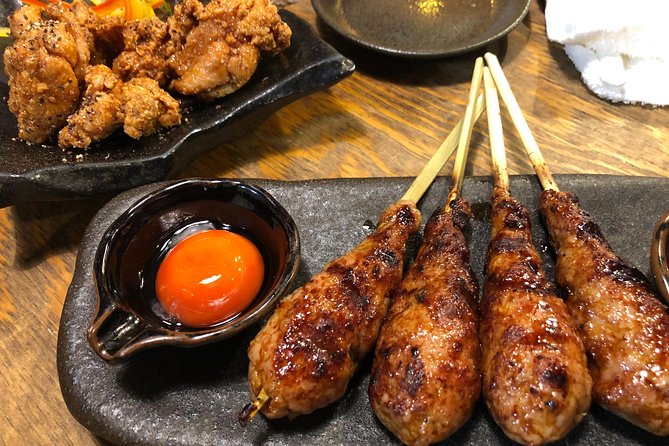
The food is meant to add up to a full meal. The exact menu can change, but past outings have included sushi, skewers, small Japanese dishes, and special items such as fugu. One particularly enjoyable version ended with a Japanese whiskey bar. Another included karaoke at the final stop.
That variation is both a strength and a weakness. You may get a lively mix of dishes and drinks that would be hard to order alone. You may also find that the three venues do not feel as different as expected, or that the same general drink choices appear at each stop.
I would book this for the social setting and local help, not for a fixed tasting menu. The food is enough for many people to count as dinner, but it is not presented as a guaranteed list of named dishes. If you have your heart set on sake, whiskey, fugu, or a particular food, ask about the current menu before booking.
Stop one: Minami and the first izakaya
The first stop is in Minami, the broad nightlife area around Namba and Dotonbori. Here, you visit a popular local bar with your guide and begin with Japanese food and drinks.
This first venue has an important job. It sets the pace, introduces the group, and gives you a chance to learn how ordering works in an izakaya. Your guide can explain the menu and help place orders, which is useful when dishes are unfamiliar or written only in Japanese.
Past evenings have started with sushi and drinks. Some people have found the food generous, while others felt it was basic for the price of the tour. Service speed can also affect the entire night. One slow first stop reportedly lasted more than an hour for food, forcing the group to hurry later.
That is a fair concern. A bar-hopping tour needs room to linger, talk, and enjoy the food. If your first dish is slow, the guide may need to shorten later stops to keep the route on schedule. A good guide can keep the mood up, but cannot fully control a restaurant kitchen.
The short walk through Namba’s food streets
Between venues, the walking is part of the value. You are not simply being moved from one bar to another. The route passes through Dotonbori and Namba, with detours into smaller lanes that many first-time visitors would not choose on their own.
This is where the guide can add real value. You can ask what a food is, how locals order it, and which streets are linked with ramen, okonomiyaki, takoyaki, or other Osaka specialties. Guides such as Yuko and Mich have been praised for pointing out famous food areas and less-used paths while keeping the night relaxed.
The walking distance also means sensible shoes are a good idea. You are outside for much of the evening, and Osaka summers can be hot and humid. Carry water and wear a hat if you are walking in the heat before the tour begins.
A few more walks around Japan worth a look
- Kyoto Geisha Walking Tour: Gion District & Hidden Gems
★ 4.7 · 3,273 reviews - Tokyo Tsukiji Fish Market Food and Culture Walking Tour
★ 5.0 · 3,184 reviews - Tokyo: Imperial Palace and Shogun Historical Walking Tour
★ 5.0 · 2,251 reviews - Kyoto: Gion Geisha District Walking Tour – Stories of Geisha
★ 4.7 · 2,187 reviews
Stop two: Moss-covered Fudo at Hozenji Temple
Hozenji Temple is a brief ten-minute stop, but it gives the evening a needed pause. The temple sits at the turning point of Hozenji Yokocho, a narrow lane near Sennichimae-suji in Namba.
The focal point is the Mizukake Fudo statue. It is covered in moss because visitors pour water over it as an act of respect and prayer. The green statue, quiet temple setting, and old-style lane feel very different from the huge signs along Dotonbori.
Do not expect a long temple visit. This is a short cultural stop within a food and nightlife walk. Its value comes from the contrast. You move from loud commercial Osaka into a small religious corner, then head straight back into the city’s evening food scene.
A guide who explains the custom and the setting can make these ten minutes meaningful. If your guide gives little background, it may feel like a quick photo stop. This is one place where the guide’s communication skills matter.
Stop three: Hozenji Yokocho and Osaka drinking culture
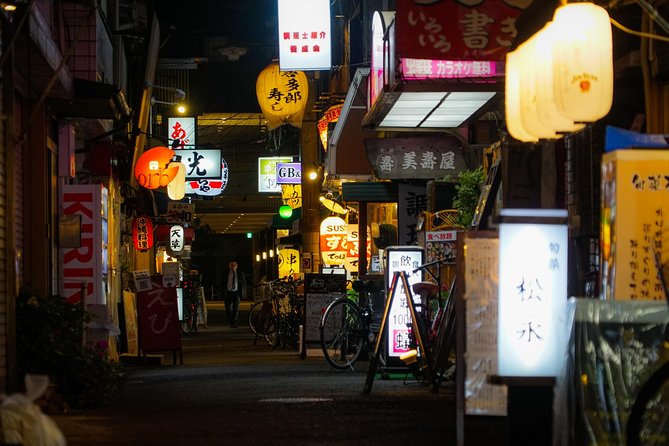
Hozenji Yokocho is the most atmospheric part of the route. The lane is known for small restaurants and nightlife venues, and its narrow passageways offer a more intimate view of Namba than the main streets.
The final bar is often where the evening finds its personality. Some outings have included drinks and karaoke. Others have ended at a whiskey bar or a small venue with a lively mood. Karaoke is not guaranteed, but when it happens, it can turn a group of strangers into a cheerful night out.
This stop also shows the limits of the tour. The venues may be local and convenient without being especially unusual. A few people have found the selected bars generic, with ordinary drinks and food. Another evening included only two restaurants and one bar, which felt different from the expected three izakaya format.
The best way to view Hozenji Yokocho is as a chance to enter places you might hesitate to try alone. You are paying for the introduction, translation help, and company. You are not paying for a private table at Osaka’s most famous bar.
How much food and drink do you really get?
The price is $98.66 per person. That is not cheap for three hours in Osaka, especially if you compare it with ordering small dishes and drinks on your own.
The value improves if you want a full dinner, several drinks, and a guide for the whole evening. You do not pay for the guide’s food and drinks, and the included portions can be substantial. Some people finished feeling well fed, while others praised the range of foods and drinks at each stop.
The value drops if you mainly want alcohol. The drink selection has not always been varied, and the tour does not promise unlimited drinks at every venue. Sake is part of the stated offering, but it is not sensible to assume every stop will serve only sake. Other Japanese drinks may appear instead.
Extra dishes and drinks are not included, so bring cash. Many of the bars do not accept credit cards. This is also useful if one dish catches your eye and you want to order beyond the included portion.
The guide can make or break the night
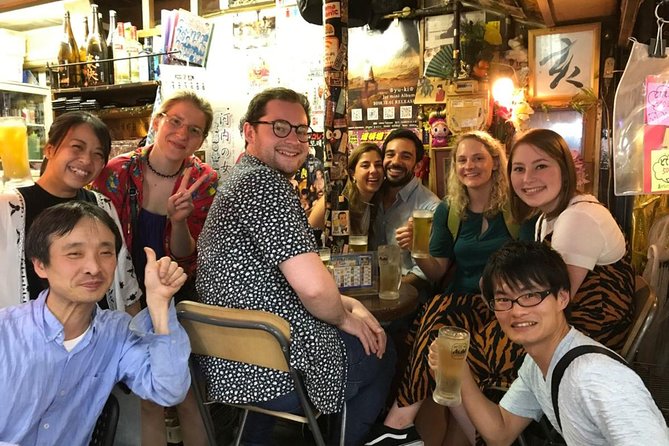
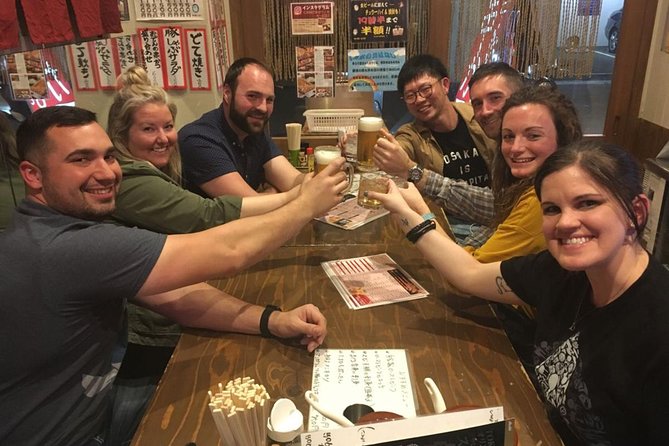
A small group is one of the tour’s strongest features. With a maximum of seven people, you can usually hear the guide, ask questions, and chat with the others without shouting across a large group.
The best guides bring more than translation. Mina has been praised for making the evening feel personal. Taku helped create a fun route with a karaoke finish. Mari, Fuka, Aina, Yuto, Maru, Reo, Shuta, and Mich have each been associated with friendly conversation, local food explanations, or a relaxed group atmosphere.
The most useful guides explain what you are eating, why a place matters, and how the local drinking culture works. They also help shy solo visitors join the conversation. One solo participant felt safe and comfortable on the tour, which is a real benefit when entering small bars alone feels awkward.
Guide quality is not perfectly consistent. Some outings have included a newer guide who did not know every dish or offered little background on the bars. One person felt the guide talked too much about herself, while another felt the evening was simply a night out rather than a proper tour.
That means you should keep your expectations clear. This is not a formal lecture about Osaka cuisine. It is a social night with cultural information mixed in. If you want a guide who talks constantly about food and history, the result may vary.
Dietary needs, smoking, and age rules
Anyone aged 20 or over can join. Japan’s legal drinking age is relevant here, since alcohol is central to the activity.
Vegetarian and vegan requests can be noted, but options are limited. Japanese restaurants are not always set up with full vegetarian menus, and the kitchens are not operated by the tour company. Substitutions may not be possible at every stop, though alternatives may be offered elsewhere.
Do not treat the tour as allergy-safe. The company cannot guarantee meals free from allergens, and some venues may not be able to change a dish. If you have a serious allergy or strict dietary requirement, this may not be the right food tour.
Smoking is allowed at some venues, and the route may not be changed to avoid those places. That is worth considering if you are sensitive to smoke.
Who will enjoy this Namba night?
I would choose this tour if you want help entering small Japanese bars, enjoy meeting people, and prefer a guided evening to planning every dish yourself. It is especially useful for a first night in Osaka, when the Namba lanes can feel exciting but hard to read.
Solo visitors can benefit from the small group and built-in company. Couples and friends may enjoy the easy pace, local drinks, and chance to try food without ordering a full dish at every stop.
I would be more cautious if you are a serious food hunter, want high-end bars, or expect every stop to be distinctive. You may prefer to spend $98.66 ordering directly in Dotonbori, where you can choose your own dishes and stay as long as you like.
The tour also suits people who want a meal but do not want a formal restaurant tasting. You get movement, conversation, photos, local streets, and several food stops. The tradeoff is less control over the menu and venues.
Practical details before you book
The experience uses a mobile ticket and lasts about three hours. It begins and ends at FamilyMart, 1-chōme-7-10 Namba, Chuo Ward, Osaka.
Confirmation arrives when you book. The meeting point is near public transportation, and most people can take part. Wear comfortable shoes, arrive early, and bring cash for anything beyond the included food and drinks.
Free cancellation is available if you cancel at least 24 hours before the start time. Changes or cancellations inside that window are not accepted for a refund. Poor weather or failure to reach the minimum group size can lead to a different date or a full refund.
Should you book the Osaka bar-hopping tour?
Book it if you want an easy, social introduction to Namba’s izakaya culture, with enough food to replace dinner and a guide to help with menus. The small group, Hozenji Yokocho walk, and chance of karaoke or unusual dishes give the evening real character.
Skip it if you want guaranteed premium food, a fixed drink list, or three clearly different izakaya bars. At this price, the guide and venue choices need to be strong. If you accept that the night can range from ordinary to excellent, and you value company as much as the food, this is a useful way to get your first taste of Osaka after dark.
FAQ
How long does the Osaka bar-hopping tour last?
The tour lasts approximately three hours.
How many bars does the tour visit?
The experience is designed around three bar stops in the Namba area, although the exact venues and format can vary.
Where does the tour start and finish?
It starts at FamilyMart, 1-chōme-7-10 Namba, Chuo Ward, Osaka, 542-0076, Japan. It ends back at the same meeting point.
What age do I need to be to join?
You must be at least 20 years old.
Are food and drinks included?
Several local foods and drinks are included, with the advertised format offering three bars and six tastes. Extra food and drinks cost more.
Should I bring cash?
Yes. Many bars do not accept credit cards, so bring cash for any additional food or drinks.
Can vegetarians and people with allergies join?
Vegetarian and vegan options are limited, and allergy-free meals cannot be guaranteed. Some venues may not allow substitutions, though the guide may try to provide alternatives at other stops.
Just added around Japan
- Tokyo: Asakusa & Sensoji ー Oldest Temple Walking Tour (2hrs)★ 5.0 · 213 reviews
- Asakusa Senso-ji Temple and Old Tokyo Walking Tour★ 5.0 · 560 reviews
- Asakusa Cultural Walk & Matcha Making Tour★ 5.0 · 245 reviews
- Tokyo: Tsukiji Market Walking Tour & Sushi Cooking Class★ 4.6 · 122 reviews
- Tokyo: Dark Side of Tokyo Shinjuku Red Light Walking Tour★ 4.7 · 862 reviews
- Tokyo: Shinjuku Nightlife & Secret Backstreets Walking Tour★ 4.8 · 229 reviews
- Tokyo: Shibuya Highlights Walking Tour★ 4.8 · 601 reviews
- Tokyo: Shibuya Highlights Walking Tour & Secret View Spot★ 4.9 · 196 reviews
Night Walking Tours, compared.
Private Street Food Evening Walking Tour in Ho Chi Minh City
Read our review →
Albaicín and Sacromonte Guided Sunset Walking Tour
Read our review →
Bremen: Walking Tour in German with Night Guard
Read our review →
Ghosts of Charleston Night-Time Walking Tour with Unitarian Church Graveyard
Read our review →
Savannah’s Ghost City “Dead of Night” Walking Night Tour
Read our review →
Gion Magical Night Walking Tour with Geisha Trivia
Read our review →
Browse the lists this tour appears in