
Review · FOOD WALKING TOURS
Osaka Local Foodie Walking Tour in Dotonbori and Shinsekai
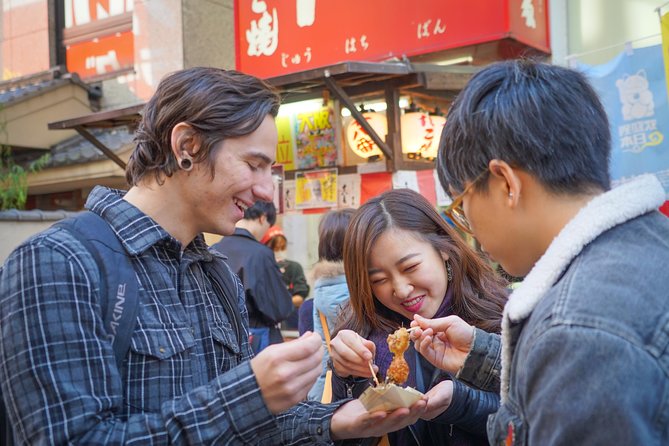
Come hungry, walk curious. This three-hour Osaka food walk links the old-fashioned streets of Shinsekai with the neon lanes of Dotonbori, pairing classic dishes with local stories and useful orientation. I especially like the small maximum group of seven and the chance to try kushikatsu, okonomiyaki, and takoyaki without planning several restaurants yourself.
The strongest part is the guide-led look at Osaka’s side streets, shrines, shopping arcades, and food customs. Guides such as Aika, Yuma, Michiko, Emi, and Justin have earned praise for their warmth, clear explanations, restaurant advice, and help with photographs or subway directions. The main caution is value: at $111.42 per person, this is not the best choice if you expect many small food stops or a serious culinary study.
Key points to know before booking
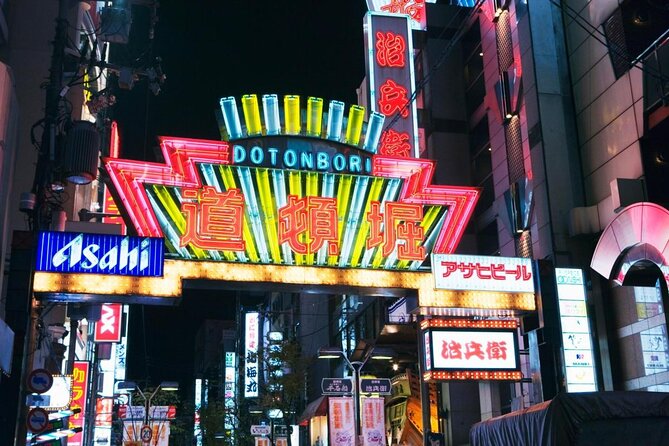
- Six kushikatsu skewers, okonomiyaki, takoyaki, and three drinks are included.
- Shinsekai and Dotonbori offer two very different faces of Osaka, from Tsutenkaku Tower and Jan-Jan Yokocho to the Glico sign and Hozen-ji.
- The group is capped at seven people, and a family of six may effectively receive a private experience if no one else books.
- The tour is as much a neighborhood walk as a food tour, with temples, shrines, alleys, shopping streets, and photo stops.
- Dietary limits need advance planning: gluten-free and vegan meals cannot be provided, and vegetarian requests must be made by the previous day.
- The pace and food variety can vary by guide and group, so this suits curious first-time visitors more than demanding food specialists.
Why this route gives you a useful first look at Osaka
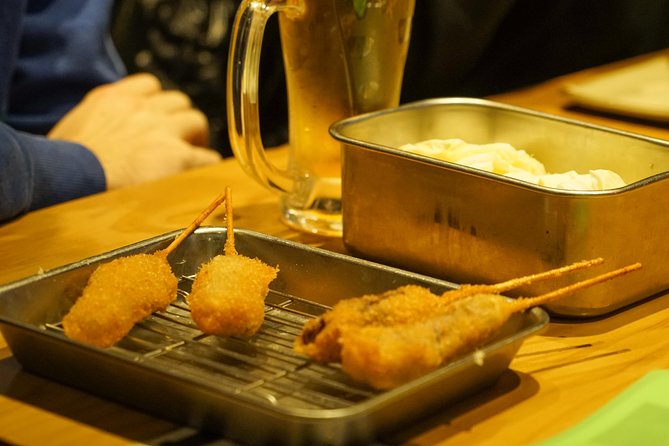
Osaka is often introduced through its food, and this route goes straight to the city’s famous slogan of eating until you drop. Yet the better reason to take it is orientation. In three hours, you move between two districts that feel quite different, while someone explains what you are seeing instead of leaving you to decode the signs and crowds alone.
Shinsekai has an older, more local character. Dotonbori is brighter, louder, and packed with famous photo spots, restaurants, souvenir shops, and nightlife. The route also includes Hozen-ji Temple, Ukiyo-koji Alley, Sennichimae Doguyasuji Shopping Street, and Dōgu-ya-suji, a useful mix if you want more than a string of restaurant visits.
You should expect a walking tour with substantial eating, not a formal cooking class or a parade of ten tiny tastings. Some people appreciate the generous portions and sit-down meals. Others find that two or three main food venues do not feel like enough for the price.
More Food Walking Tours in Japan
- Tokyo Tsukiji Fish Market Food and Culture Walking Tour
★ 5.0 · 3,184 reviews - Tokyo: Tsukiji Fish Market Food and Walking tour
★ 5.0 · 1,724 reviews - Nishiki Market Brunch Walking Tour (7 Tastings + Brunch)
★ 5.0 · 1,355 reviews
Starting in Shinsekai beneath Tsutenkaku Tower
The meeting point is outside FamilyMart Japan in Nishinari Ward, at 1-chōme-17, Sannō. Allow extra time to find it. One person found the starting point awkward to reach, and the tour begins on time. If you miss the group, there is no refund or later joining option.
From there, you head through Jan-Jan Yokocho, an alley tied closely to Shinsekai’s old entertainment district. The name and atmosphere reflect Osaka’s plainspoken, working-class side. Tsutenkaku Tower provides the landmark overhead, while the small businesses and narrow passage give you a look at a part of Osaka that feels less polished than Dotonbori.
The first food stop is kushikatsu, deep-fried meat and vegetables on skewers. Six pieces are included, along with drinks. This is one of Osaka’s signature foods, and it makes a good opening dish because you can try several ingredients in a simple, casual setting.
The drinks may include alcohol or non-alcoholic choices. Three drinks are included overall, which is useful if you want beer, plum wine, or soft drinks with the meal. Still, drink value depends on your habits. If you do not drink alcohol, or do not want several drinks, part of the package may feel less useful.
Shinsekai’s old streets, market, and Billiken
After eating, the route continues around Shinsekai Market, Tsutenkaku Tower, and the Billiken Statue. Jan-Jan Yokocho is described as a kind of living museum of Osaka from more than 80 years ago, and the appeal is in the details: shopfronts, alleyways, signs, and the way old entertainment areas sit beside everyday businesses.
Billiken is an important Shinsekai symbol. You do not need a long lecture to enjoy the statue, but a good guide can explain why it matters to the district and how local customs differ from what you may see at larger tourist sites.
This is where the quality of the guide matters most. Aika, Yuma, Emi, Michiko, Naru, Kent, and Justin received especially warm praise for connecting food with daily life, local customs, and Osaka’s past. One guide also helped a first-night visitor work through the subway system after the tour. That sort of practical help can be worth a lot when Osaka is still a maze of lines and station exits.
The experience is not perfectly consistent. One dissatisfied participant felt the guide moved quickly and offered information only when asked. Another found the walking pace too slow. You should be ready to speak up if you need a slower pace, more explanation, or a quicker move toward the next meal.
Dōgu-ya-suji and the useful side of souvenir shopping
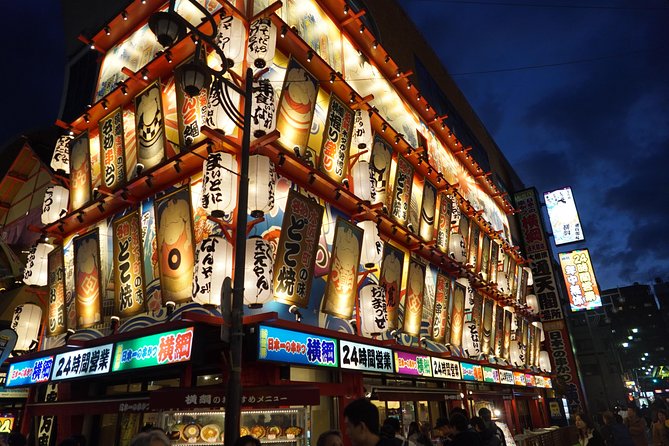
The route then shifts toward central Osaka, including Dōgu-ya-suji and Sennichimae Doguyasuji Shopping Street. These arcades are known for restaurant equipment, kitchen tools, food samples, and souvenirs. A visit to Hōchō-ya, a knife shop, is included on the daytime version of the route.
This stop gives the tour a practical edge. You can see the tools behind Osaka’s restaurant culture, and you may find a useful gift that is less predictable than a standard magnet or keychain. The knife shop can be interesting even if you do not buy anything, though remember that international transport rules and airline luggage policies may matter for blades.
The schedule differs by time of day. In the daytime, you may have souvenir-shopping time on Dōgu-ya-suji. At night, the guide explains the area near Namba Grand Kagetsu before taking you to nearby shops. The exact feel therefore depends on when you book.
Same streets, a different way to see them:
- Kyoto Geisha Walking Tour: Gion District & Hidden Gems
★ 4.7 · 3,273 reviews - Kyoto: Gion Magical Night Walking Tour with Geisha Trivia
★ 4.9 · 2,393 reviews - Tokyo: Imperial Palace and Shogun Historical Walking Tour
★ 5.0 · 2,251 reviews - Kyoto: Gion Geisha District Walking Tour – Stories of Geisha
★ 4.7 · 2,187 reviews
Hozen-ji Temple and Ukiyo-koji Alley
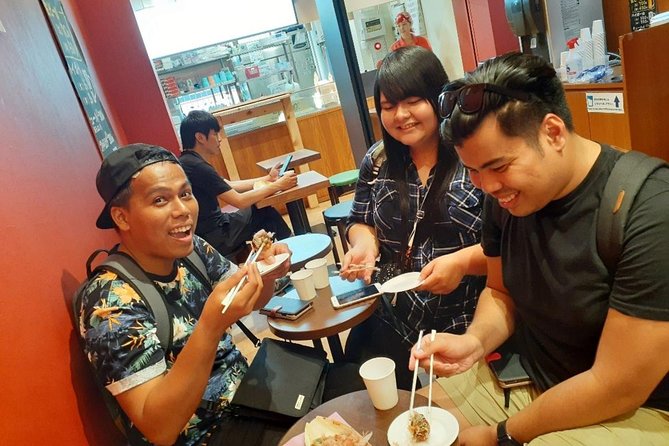
Hozen-ji Temple is a small shrine stop in the middle of central Osaka. Its compact setting gives you a change of pace after food stalls and shopping streets. The route continues through Ukiyo-koji, a narrow alley that helps you see how much of Osaka’s character is found in small lanes rather than broad avenues.
The stop is also a reminder that Osaka is not only neon signs and fried food. You get a brief look at a religious site tucked into the entertainment district, then continue eating your way toward Dotonbori.
Timing can affect this stop. One person found the temple visit less satisfying because it was dark. If your tour runs in the evening, the atmosphere may be more atmospheric, but details can be harder to see. Ask the guide about the shrine as you go, since the amount of explanation may depend on the guide and the group’s questions.
Takoyaki is listed as part of the food experience, served as one box for the group, along with sweets or other small snacks. Takoyaki is Osaka’s famous round snack made from batter and tender octopus. It arrives hot, soft, and often covered with sauce, mayonnaise, seaweed, or bonito flakes.
Be careful with the word box. This is not necessarily a personal serving of several separate portions. Food is often shared, and some people found they were full before reaching the takoyaki. If sampling many dishes matters to you, pace yourself at the earlier stops.
The Glico sign and Dotonbori’s bright finish
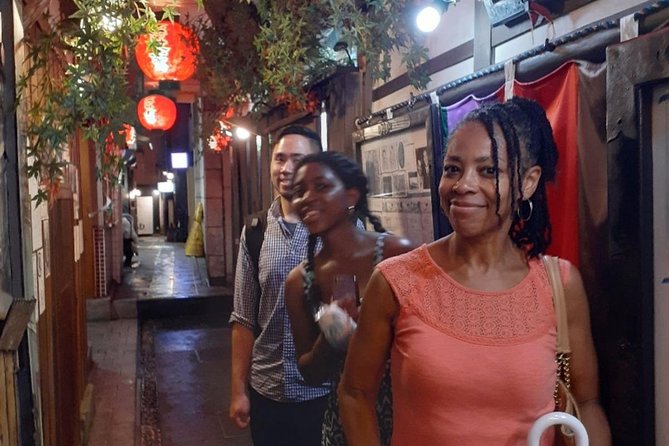
The famous Glico sign is the route’s best-known photo stop. You will have time to take pictures in front of the running athlete, one of Osaka’s most familiar images. The sign is a natural end point because it places you in the middle of Dotonbori, where you can continue exploring after the guide leaves.
Dotonbori is crowded and visually loud, especially at night. That is part of the fun, but it is not a quiet setting for long explanations. Keep close to the guide and expect plenty of foot traffic. Justin was praised for leading a group through crowded night streets while pointing out photo opportunities and making sure no one missed important details.
The tour ends at the Glico sign, at 1-chōme-10-3 Dōtonbori. That is convenient if you want to stay for dinner, shop, or continue into Namba. It also means you are not returned to the starting point, so plan your next move from Dotonbori.
Okonomiyaki is the main sit-down meal
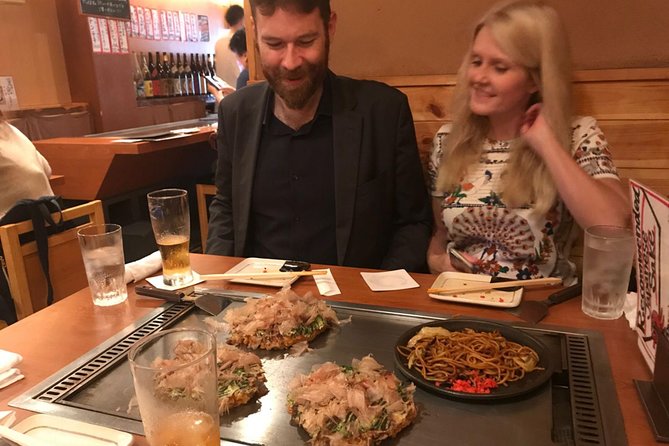
The final major food stop is okonomiyaki, Osaka’s savory pancake. The name combines okonomi, meaning as you like, with yaki, meaning grilled. It is made with a batter and toppings, then cooked on a hot surface. One piece is included.
Several people enjoyed making or grilling their own okonomiyaki, which adds a hands-on moment to the meal. Others felt the restaurant was more tourist-oriented than the first kushikatsu stop. That contrast is worth understanding: the tour may begin with a more local-feeling food venue and finish somewhere easier for an international group to use.
The portion can be filling, especially after kushikatsu, snacks, drinks, and takoyaki. A few people wished the takoyaki had come earlier, since they were already full by the time it arrived. If your priority is tasting variety, take smaller bites and avoid treating the first meal as a full dinner.
The food quality receives plenty of praise, but it is not universally considered exceptional. Some people found the dishes delicious and tried foods they would not have ordered alone. Others wanted more variety, smaller portions, and more independent stalls rather than larger servings of one dish.
What $111.42 buys you
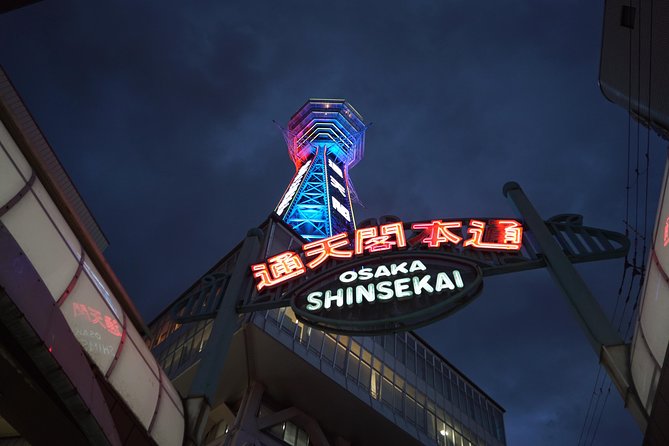
At $111.42 per person, the price is high for three hours if you judge it only by food quantity. You receive six kushikatsu pieces, one serving of okonomiyaki, a box of takoyaki, three drinks, and some additional snacks. Transportation costs are separate, with approximately ¥190 listed as the extra fare.
The better question is what you value. You are paying for a local guide, group planning, restaurant access, cultural context, neighborhood orientation, and the confidence to order Osaka specialties without guessing. If you arrive in Osaka for the first time and want someone to handle the route, the price may feel reasonable.
If you already know Dotonbori and Shinsekai, or enjoy researching restaurants on your own, the package may not offer enough. Several people felt they could have eaten more creatively and spent less by choosing their own restaurants. This is especially true for serious food fans seeking regional detail, unusual ingredients, or a long list of small independent stops.
A group of six can have very good value if the booking leaves you as the only group. One family effectively received a private tour and praised the guide’s English, flexibility, and help. With the maximum set at seven, the group remains small even when fully booked.
Dietary needs, heat, pace, and other practical points
This tour cannot accommodate gluten-free or vegan diets. Vegetarian food is possible only if you choose the vegetarian option when booking or request it by the previous day. Even then, kushikatsu uses pork-based dashi, so tell the provider in advance if you cannot consume it.
Allergy requests must also be made at least one day ahead. The kitchens do not belong to the tour company, and allergy-free meals or substitutions cannot be guaranteed. Do not wait until the meeting point.
Osaka’s summer temperatures can reach 40°C, while winter lows can fall to -5°C. Three hours of walking, standing, and eating can feel very different in those conditions. Wear comfortable shoes, carry water in hot weather, and bring suitable layers in winter.
All ages are welcome, and most people can take part. Smoking may be allowed at some venues, and the route cannot always be changed to avoid those places. The tour is near public transportation, but the start and end points are different.
Free cancellation is available up to 24 hours before the start time. Changes or cancellations inside that window are not accepted.
Who will enjoy this Osaka food walk
I would recommend this experience to first-time visitors who want a simple introduction to Osaka’s famous districts and food. It also works for repeat visitors who want a guide to the streets, temple corners, shopping arcades, and dishes they may otherwise skip.
It suits you if you like a social small-group setting, enjoy asking questions, and want a guide who can suggest places to visit afterward. Guides such as Aika and Yuma were praised for restaurant tips, photographs, and friendly conversation, while Emi and Michiko were praised for linking food with ordinary life in Osaka.
I would be more cautious if you define a food tour as many small tastings at a long list of specialist venues. The number of stops is limited, portions can be substantial, and the quality of the explanation may depend on the guide. You should also reconsider if you need strict gluten-free, vegan, or allergy-controlled meals.
Should you book it?
Book this tour if you want an easy, friendly introduction to Shinsekai and Dotonbori with Osaka’s best-known comfort foods included. The small group, useful route, three drinks, and strong guide praise make it a good first-night activity, especially if you want help finding your way around.
Skip it if you want a serious food study, many tiny portions, or unusual restaurants chosen for culinary depth. At $111.42, you should value the guide and neighborhood context as much as the meal. If you do, the tour can give you a pleasant start in Osaka. If you only want the most food for your money, spend that budget independently.
FAQ
How long does the Osaka Local Foodie Walking Tour last?
The tour lasts approximately three hours.
What food is included?
The tour includes six kushikatsu skewers, one piece of okonomiyaki, one box of takoyaki, and three drinks. Additional snacks or sweets may also be included during the walk.
Are alcoholic drinks included?
Yes. The three included drinks can be alcoholic or non-alcoholic.
How many people can join the tour?
The maximum group size is seven travelers.
Can vegetarian guests join?
A vegetarian course is available if you select it when booking or request it by the previous day. Kushikatsu still uses pork-based dashi unless you tell the provider in advance so other vegetarian dishes can be prepared.
Can the tour accommodate gluten-free or vegan diets?
No. Gluten-free and vegan diets cannot be accommodated.
Where does the tour end?
The tour ends at the Glico Sign in Dotonbori. The starting point is outside FamilyMart Japan in Nishinari Ward, so you do not return to the starting location.
Just added around Japan
- Tokyo: Asakusa & Sensoji ー Oldest Temple Walking Tour (2hrs)★ 5.0 · 213 reviews
- Asakusa Senso-ji Temple and Old Tokyo Walking Tour★ 5.0 · 560 reviews
- Asakusa Cultural Walk & Matcha Making Tour★ 5.0 · 245 reviews
- Tokyo: Tsukiji Market Walking Tour & Sushi Cooking Class★ 4.6 · 122 reviews
- Tokyo: Dark Side of Tokyo Shinjuku Red Light Walking Tour★ 4.7 · 862 reviews
- Tokyo: Shinjuku Nightlife & Secret Backstreets Walking Tour★ 4.8 · 229 reviews
- Tokyo: Shibuya Highlights Walking Tour & Secret View Spot★ 4.9 · 196 reviews
- Tokyo: Shinjuku Bar Hopping & Night Walking Tour★ 4.6 · 137 reviews
Food Walking Tours, compared.
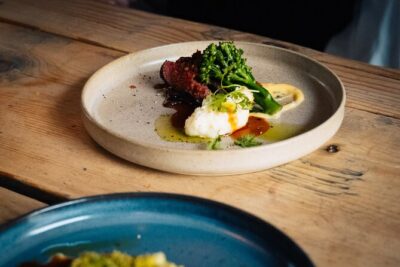
Reykjavik Food Walk – Local Foodie Adventure in Iceland
Read our review →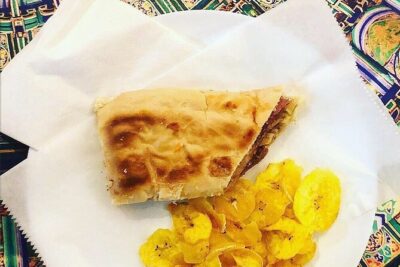

New Orleans Food Walking Tour of the French Quarter with Small-Group Option
Read our review →
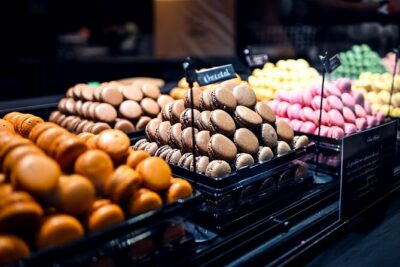
Authentic Parisian Gourmet Food Tour with 10 Local Dishes & Wines
Read our review →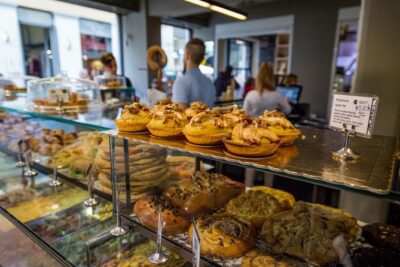
Tapas Walking Tour with Food, Wine, and History
Read our review →
Browse the lists this tour appears in