

Review · HISTORY WALKING TOURS
Warsaw: Jewish History Guided Walking Tour in English
History feels close here. Warsaw’s Jewish history walking tour links surviving places, vanished streets, and powerful stories across 150 minutes. I like the focus on Nożyk Synagogue, the only surviving pre-war synagogue in Warsaw, and the way the route connects Jewish life before the war with the ghetto and Warsaw Uprising. I also like that guides such as Andrzej, Jacek, Aga, Luke, and Christopher bring different voices and plenty of time for questions.
The main drawback is simple: you are outside for the entire two and a half hours. Cold weather can make the walk tough, and the tour may join a general walking group rather than remaining small or private. At some stops, the guide is explaining places that no longer exist, so photos and maps become essential.
Key things to know before you book
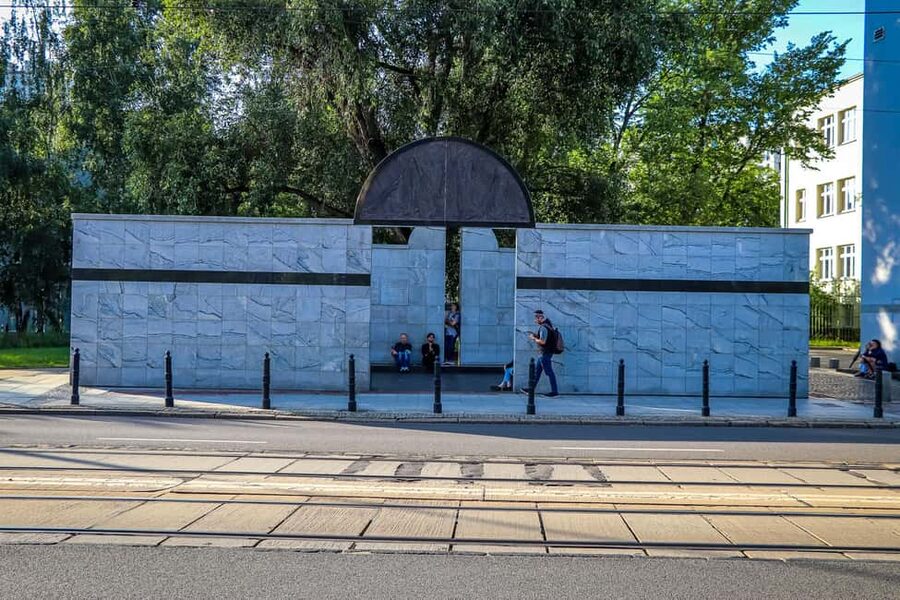
- Nożyk Synagogue is the only surviving pre-war synagogue in Warsaw, making it one of the route’s most important physical links to the city’s Jewish past.
- Chłodna Street marks the site of the former ghetto bridge, where a raised walkway once connected two separated parts of the ghetto.
- Waliców Street shows how the ghetto boundary cut through ordinary city life, while also leading into the story of the Warsaw Uprising.
- The tour covers Jewish life before the Holocaust, including artists, actors, writers, journalists, political activity, and participation in Polish uprisings.
- Guides use photos, maps, humor, and discussion to explain places that were destroyed or radically changed.
- The $26 price is fair for a 150-minute English tour, especially if you want historical context rather than a quick list of memorials.
Why this tour matters before you walk the route
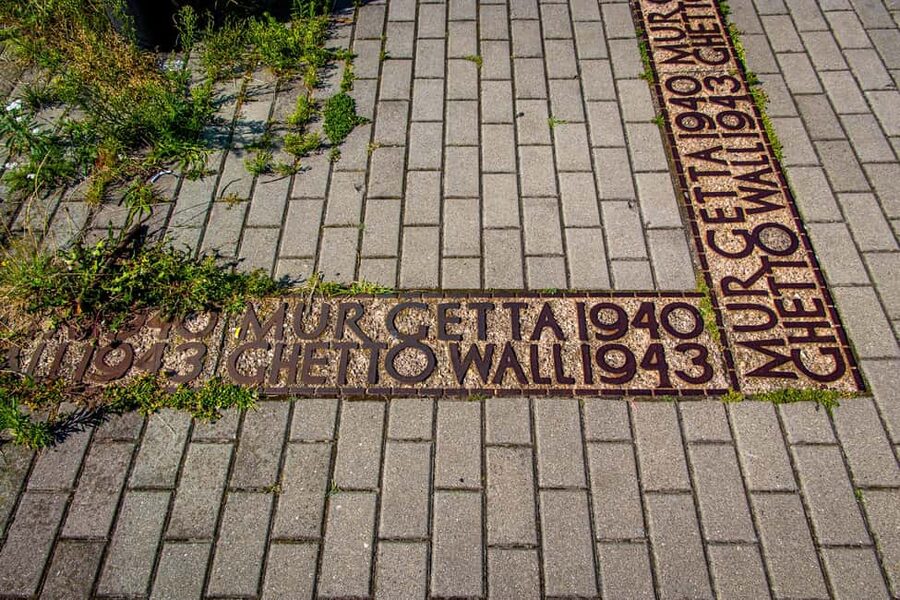
It is easy to approach Warsaw’s Jewish history as a sequence of wartime tragedies. That would miss the point. Before the Second World War, Warsaw was the second-largest Jewish city in the world. Jewish residents helped shape the city’s public life, culture, politics, business, journalism, theater, and literature.
This tour begins with that fuller picture. You learn about Jewish life during calmer periods, but also about the role of Jews in struggles against occupying powers during the 19th century. Jewish residents joined other people in Warsaw during Polish uprisings, so the story is not separate from the city’s wider history.
That context matters. If you only hear about the ghetto and the Holocaust, you may leave with an incomplete picture of what was destroyed. The tour first gives you a sense of the community’s scale and variety, then explains how violently that life was dismantled.
I appreciate this approach because it treats Jewish Warsaw as more than a place of death. You hear about persecution, resistance, and murder, but also about people who worked, created, organized, loved, argued, and built a future. The final emphasis on today’s young and diverse Jewish community gives the walk a forward-looking finish.
More Jewish Heritage Walking Tours in Poland
- Krakow: Kazimierz Jewish Quarter Walking Tour
★ 4.8 · 571 reviews - Warsaw: Warsaw Ghetto Private Walking Tour with Hotel Pickup
★ 4.9 · 369 reviews - Krakow: Jewish Ghetto Walking Tour
★ 4.6 · 349 reviews
Starting at Grzybowski Square
The meeting point is next to All Saints Church at Grzybowski Square. Look for the yellow umbrella. That is a useful detail in a busy central area, especially if you are arriving from another part of Warsaw and want to find the group without confusion.
Grzybowski Square is a fitting place to begin. It places you near the former Jewish district while reminding you that Warsaw’s Jewish story existed within a wider Polish and Christian city. The nearby church also helps you get your bearings before the guide begins explaining how the city changed over time.
There is no hotel pickup, so plan to reach the square on your own. The tour is conducted in English by a live guide. Since the walk lasts 150 minutes, arrive ready to remain outdoors rather than expecting a short orientation followed by indoor visits.
Nożyk Synagogue and the surviving city
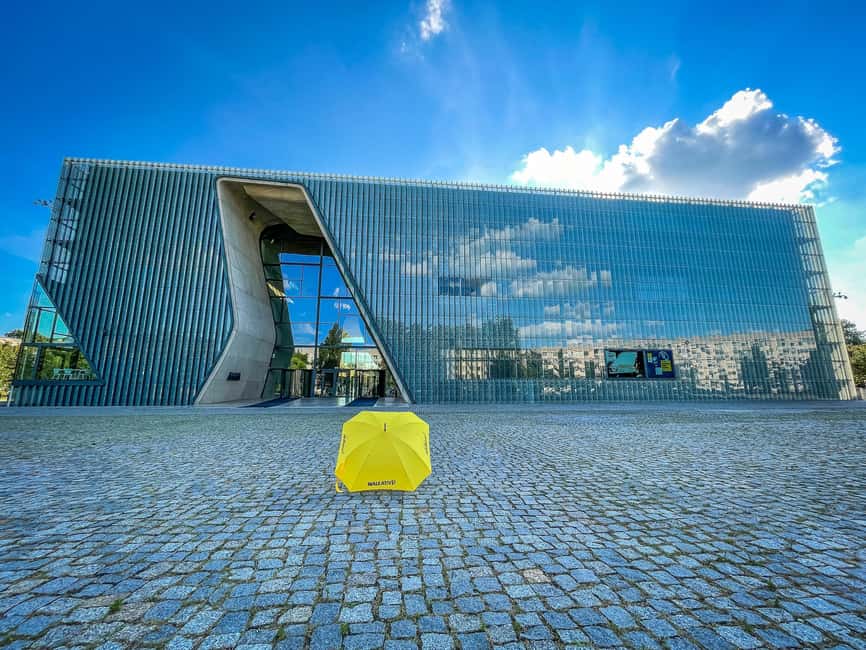
Nożyk Synagogue is the clearest surviving building connection to pre-war Jewish Warsaw. It is the only pre-war synagogue in the city that survived, which gives the stop unusual weight. In an area where so much was destroyed, one intact religious building can make the past feel more tangible.
The route includes seeing the synagogue, but you should not assume that an indoor visit is part of the tour. One participant specifically wished there had been a chance for those who had not previously entered to go inside. If entering the synagogue is important to you, check the arrangements before booking or plan a separate visit.
The guide uses the building to explain the role of Jewish religious and civic life in Warsaw. This is not just an architectural photo stop. It helps you understand that the city contained established institutions, traditions, neighborhoods, and generations of residents before the war.
Some guides have used old photographs and maps to show what the surrounding streets once looked like. That visual support is especially helpful here, because today’s Warsaw can be hard to read as a map of the pre-war city.
Chłodna Street and the former ghetto bridge
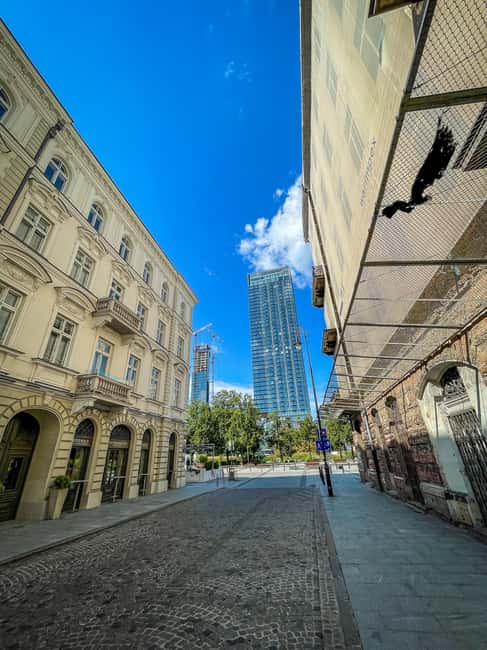
Chłodna Street is one of the most striking stops because the physical setting forces you to think about division. The tour visits the site of the bridge that once joined two parts of the Warsaw ghetto.
The bridge was not an ordinary street crossing. It allowed movement over a major road while the ghetto was split into separate sections. The route helps you picture the strange, cruel geography of a place where people were confined, yet divided from one another inside the confinement itself.
Nothing dramatic needs to remain on the street for the place to matter. In fact, the absence of the bridge becomes part of the lesson. You are looking at a normal urban road while hearing how it once represented separation, surveillance, and forced movement.
This is where a guide’s storytelling makes a real difference. Several guides, including Luke and Christopher, have been praised for explaining difficult material clearly while keeping the group involved. They encourage questions, add photographs, and connect individual locations to the larger story instead of leaving you with isolated facts.
Same streets, a different way to see them:
- Warsaw: Old Town Highlights Walking Tour in English
★ 4.7 · 1,516 reviews - Old Town Krakow & Wawel Castle Walking Tour
★ 5.0 · 1,508 reviews - Creepy Krakow: 2-Hour City Walking Tour
★ 4.7 · 1,131 reviews - Gdańsk City Sights & History Guided Walking Tour in English
★ 4.8 · 876 reviews
Waliców Street and the changing boundaries of the ghetto
Waliców Street was once part of the ghetto border. The stop shows how the boundary ran through the existing city, separating Jewish residents from the surrounding population and reshaping ordinary streets into controlled edges.
It also connects the tour to the Warsaw Uprising. That wider wartime context is important because Warsaw experienced more than one major uprising and because the city’s destruction cannot be reduced to a single event. A strong guide explains the differences without turning the walk into a confusing timeline.
The experience here is more interpretive than scenic. You will not find a perfectly preserved wartime street at every point. Instead, you listen, look at the modern surroundings, and use the guide’s maps or images to reconstruct what disappeared.
I would pay close attention to how your guide handles this. One group found it difficult to hear at times because the guide walked ahead while finishing a sentence. That is a minor issue, but it matters in a large group. Stay near the guide, especially at busy crossings and while moving between stops.
From cultural life to catastrophe
The most valuable part of the tour is the contrast between flourishing interwar culture and the destruction that followed. Warsaw’s Jewish community included hundreds of artists, actors, writers, and journalists. Its cultural life was unusually broad and active.
The guide’s job is to make that world more than a statistic. You may hear about Jewish participation in the city’s artistic and public life, then follow the story toward the restrictions, persecution, and mass murder of the Holocaust. That movement from normality to catastrophe gives the subject its full force.
This approach also helps if you already know the basic wartime story. One person who had studied Polish Jewish history still found that the guide clarified how life worked before and during the war. The walk adds place and scale to facts you may have previously encountered only in books or museums.
The subject is painful, but the tone is not necessarily grim from start to finish. Guides have used humor carefully, answered direct questions, and offered moments of human detail. One guide was praised for combining family experience with humor while remaining respectful. Another asked the group before sharing especially difficult material.
That sensitivity is useful. You can expect an honest account, but the guide should help you process the information rather than simply piling on horror.
Resistance, bravery, and the Warsaw Uprising
The tour does not present Jewish residents only as victims. You also hear about bravery, resistance, and the enduring effort to protect community life under impossible conditions.
The connection to the Warsaw Uprising adds another layer. The city’s wartime resistance involved complex relationships among different groups, and a good explanation helps you understand where Jewish resistance fits into the wider story of occupied Warsaw.
A guide may also point out sites connected with the ghetto uprising or mention places such as Mila 18, depending on the route and the guide’s presentation. Since not every building or memorial survives, maps and photographs are often as important as the street itself.
This is one reason the tour works best when you are willing to imagine the missing city. If you want a sequence of preserved interiors, it may feel frustrating. If you want help reading modern Warsaw through its lost streets, the format is much more rewarding.
The guides make or break the experience
The strongest feature of this walk is the quality of the English presentation. Guides named in the tour feedback include Andrzej, Jacek, Aga, Luke, Christopher, Anna, Agneska, Tomasz, Yatzic, Olivia, and others. Their individual styles differ, but the recurring strengths are clear: strong command of the subject, fluent English, a willingness to answer questions, and genuine care with difficult material.
Jacek has been praised for his pace and ability to keep a group involved. Christopher is especially strong for visitors who want detailed answers and connections across Warsaw. Luke has been described as passionate, direct, and accessible to people with little prior knowledge.
Other guides have added practical Warsaw advice at the end, such as general city suggestions and coffee recommendations. That is a small bonus, but useful if you take the tour early in your stay.
The experience can vary with group size. The standard walk joins a general walking tour, and your payment covers the reservation fee and the guide’s payment. If you want a smaller private outing, contact the provider after booking to ask about arranging one.
Two and a half hours outdoors
The full 150 minutes passes quickly when the guide keeps the story moving, but you should prepare for the weather. Cold conditions came up more than once, including a particularly chilly outing where a café break would have been welcome.
Wear proper outdoor clothing, especially from late autumn through early spring. Comfortable shoes matter because the tour is entirely on foot. In warm weather, bring water and consider sun protection. These are ordinary precautions, but the length of the walk makes them important.
There is no scheduled café stop listed, so do not count on warming up indoors during the route. If you are sensitive to cold, choose your clothing more carefully than you might for a short city stroll.
The pace is generally manageable. A group of four found it comfortable, while another participant wished the tour had continued longer. That tells you something about the format: it provides a substantial introduction, but it cannot cover every Jewish site in Warsaw in one outing.
Is $26 good value?
At $26 per person, I consider this good value for a 150-minute English walking tour with a live guide. You are paying for interpretation, historical structure, and access to a local perspective, not for expensive admissions or transport.
The value is highest if you are new to Warsaw’s Jewish history. The route gives you a clear framework for later visits to museums, memorials, or synagogues. It also saves you from looking at ordinary streets without understanding what stood there before the war.
The price is less attractive if you want a private guide, an indoor-heavy itinerary, or guaranteed synagogue entry. Those needs may require a different arrangement. Still, the option to request a private tour after booking gives you some flexibility.
You can reserve now and pay later, which helps if your schedule is still changing. Free cancellation is available up to 24 hours in advance for a full refund. Starting times vary, so check availability for the date you want.
Who should book this walk?
I would recommend it to first-time visitors who want an honest introduction to Warsaw’s Jewish past and to anyone who prefers learning through streets rather than only through museum displays.
It also suits visitors with family or personal connections to Jewish Warsaw. The walk can give names, locations, and historical context to stories that otherwise feel abstract. One participant found the discussion of Mila 18 particularly meaningful because of an ancestral connection.
You do not need much prior knowledge. The guides explain the background for beginners, while the question period and added details give more experienced students something to work with.
I would hesitate only if you have limited mobility, dislike extended outdoor walks, or need a guaranteed indoor visit. The route includes difficult subject matter, so it also deserves a thoughtful place in your itinerary rather than being squeezed between light entertainment and dinner.
Should you book the Warsaw Jewish History Walking Tour?
Book it if you want context, strong storytelling, and a serious look at both Jewish life and Jewish loss in Warsaw. The Nożyk Synagogue, Chłodna Street bridge site, and Waliców Street give the walk a clear physical route, while the discussion of culture, resistance, and present-day Jewish life keeps it from becoming only a Holocaust memorial tour.
Go prepared for cold, crowds, and some locations where the main evidence is a photograph or map. Stay close enough to hear, wear good shoes, and ask questions. At $26, this is a thoughtful and useful way to begin understanding Warsaw’s Jewish history.
FAQ
How long is the Warsaw Jewish History Guided Walking Tour?
The tour lasts 150 minutes, or two and a half hours.
What language is the tour conducted in?
The live guided tour is conducted in English.
How much does the tour cost?
The listed price is $26 per person.
Where does the tour meet?
Meet next to All Saints Church at Grzybowski Square. Look for the yellow umbrella.
What places does the tour visit?
The route includes Nożyk Synagogue, the site of the former bridge on Chłodna Street, and Waliców Street, which was once part of the ghetto border.
Is Nożyk Synagogue the only surviving pre-war synagogue in Warsaw?
Yes. It is described as the only surviving pre-war synagogue in Warsaw.
Does the tour include hotel pickup and drop-off?
No. Hotel pickup and drop-off are not included.
Is entry inside Nożyk Synagogue included?
The tour includes seeing Nożyk Synagogue, but indoor entry is not specified as included. Check with the provider if entering the synagogue is important to you.
Can I book a private tour?
The standard tour joins a general walking tour. If you want a smaller private tour, contact the provider after booking to ask about arranging one.
Can I cancel the booking?
Yes. You can cancel up to 24 hours in advance for a full refund.
Can I reserve now and pay later?
Yes. The reserve-now, pay-later option lets you hold a place without paying at the time of booking.
More History Walking Tours in Poland
- History and Hauntings of Salem Guided Walking Tour
★ 5.0 · 14,564 reviews - Lisbon: History, Stories and Lifestyle Walking Tour
★ 4.8 · 10,902 reviews - Boston: Freedom Trail History Small Group Walking Tour
★ 5.0 · 6,450 reviews - Historic Charleston Guided Sightseeing Walking Tour
★ 5.0 · 6,216 reviews
Just added around Poland
- Krakow: Jewish Quarter Guided Walking Tour★ 4.8 · 119 reviews
- Szczecin: Old Town Highlights Private Walking Tour★ 4.7 · 76 reviews
- Old Town Poznan: Guided Walking Tour in English★ 4.6 · 78 reviews
- Krakow: Old Town Guided Walking Tour★ 4.6 · 94 reviews
- Krakow: Old Town Highlights Walking Tour★ 4.5 · 173 reviews
- Krakow: Street Food Walking Tour★ 4.8 · 285 reviews
- Kraków: Old Town & Wawel Castle Walking Tour in English★ 4.8 · 532 reviews
- Krakow: 2h Kazimierz (Jewish Quarter) Walking Tour★ 4.5 · 75 reviews
History Walking Tours, compared.
History and Hauntings of Salem Guided Walking Tour
Read our review →
Freedom Trail History Small Group Walking Tour
Read our review →
Historic Charleston Guided Sightseeing Walking Tour
Read our review →
Tapas Walking Tour with Food, Wine, and History
Read our review →
Savannah History and Haunts Candlelit Ghost Walking Tour
Read our review →
A History of Terror – Belfast City Centre Walking Tour
Read our review →Browse the lists this tour appears in