
Review · HISTORY WALKING TOURS
Osaka: Castle History Walking Tour / Castle Tower Admission
Look past the golden roof. Osaka Castle makes more sense when you see it as a fighting machine, not just a pretty landmark. This 90-minute English walking tour traces the moats, gates, stone walls, traps, and firing positions that once made attackers work for every step. I like the way it explains the castle’s design before taking you into the tower, and I also like that the castle admission and separate entrance are included.
The tour is especially good for visitors who want more than a quick photo. Guides such as Mao, Spike, Kaz, Yuta, Saya, Ken, and Yu have been praised for clear explanations, friendly conversation, and patience with families and older members of the group. The main drawback is that the castle museum itself is not guided floor by floor, so you will need to explore those exhibits on your own after the walk.
Key points to know before booking

- The defenses come first: You study triple moats, layered gates, zigzag routes, and masugata entrances before entering the tower.
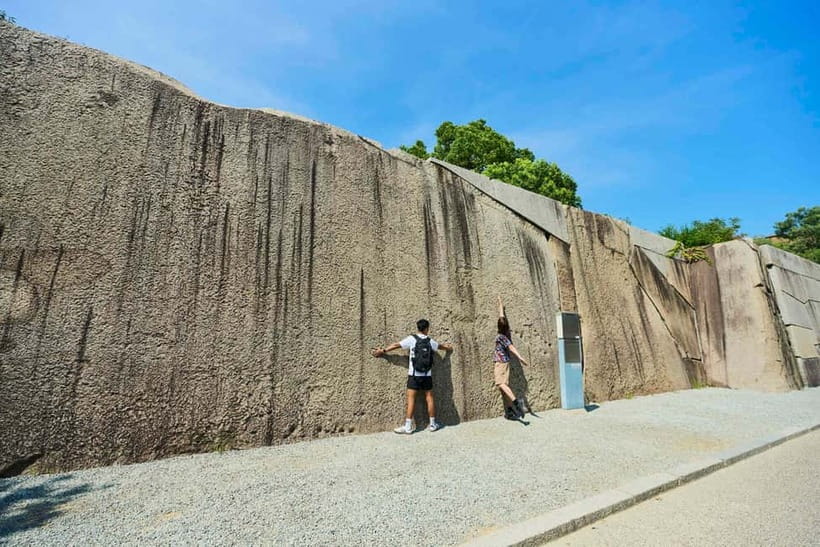
- The largest stone has a story: You learn how builders moved this huge block in the 16th century and how craftsmen marked their work.
- The tower visit finishes the tour: You get castle admission, access to the upper levels, and city views from the top.
- Hokoku Shrine adds political context: The stop connects Osaka Castle with Toyotomi Hideyoshi and the struggle that followed his death.
- Early morning can save time: One visitor found the 9 a.m. start useful because lines were much longer by late morning.
- It is a walking tour, not a full museum tour: The guide explains the castle’s military role, while the individual museum floors remain self-guided.
Meeting at Lawson S Otemae Rest House Store
Your meeting point is in front of Lawson S Otemae Rest House Store, near Osaka Castle. This matters because several Lawson stores are in the area. Check the exact location on Google Maps before setting out and look for the Local Guide Stars sign.
Arrive with comfortable shoes. The route crosses historical grounds, stone surfaces, gates, and open areas, and the focus is on walking rather than sitting through a presentation. Wear clothing suited to the weather, since much of the explanation takes place outdoors.
The tour lasts 90 minutes, though the listed stops include time around Osaka Castle, Hokoku Shrine, and the tower. The exact pace can depend on crowds, questions, and entry conditions. Guides have shown a useful willingness to adjust the pace. Kaz, for example, was praised for helping a group that included an injured family member, while Spike was noted for keeping an older participant comfortable and safe.
More History Walking Tours in Japan
- Tokyo: Imperial Palace and Shogun Historical Walking Tour
★ 5.0 · 2,251 reviews - Kyoto Gion: 2-Hour Geisha Culture & History Walking Tour
★ 5.0 · 1,186 reviews - Tokyo: Imperial Palace Japanese History Walking Tour
★ 4.9 · 987 reviews
Why Osaka Castle needs a guide
Osaka Castle is easy to admire and easy to misunderstand. You can see the bright tower, take a few photographs, and leave without noticing why the walls turn sharply, why the gates do not line up, or why the route to the center feels strangely indirect.
This tour gives you a simple question to carry through the grounds: How would an army attack this place? Once you think that way, the castle becomes a puzzle. Moats slow you down. Gates divide you from your companions. Angled walls leave fewer easy handholds. Narrow approaches expose attackers to defenders above.
I like this approach because it turns architecture into action. Instead of hearing a list of dates, you picture soldiers trying to advance while the fortress breaks their formation and buys time for defenders.
The guides also connect the physical site to the contest between Toyotomi Hideyoshi’s legacy and Tokugawa Ieyasu’s ambition. That political story gives the walls a purpose. Osaka Castle was not only a residence or symbol of power. It was a statement that its owners expected to survive a serious assault.
Triple moats and the first defensive layers
The outdoor portion begins with the castle’s outer defenses. You see the triple moats and learn how each layer delayed an attacking force. A moat was not just a stretch of water to cross. It disrupted movement, forced attackers toward controlled points, and gave defenders more time to respond.
The guide also points out the layered gates. These were built to prevent a straight rush into the castle. An attacker who passed one gate did not simply find a clear road ahead. The next barrier could force another turn, another delay, and another exposed position.
This is one of the strongest parts of the tour for families and first-time visitors. The information is visual. You do not need specialist knowledge of Japanese castles to understand the basic plan once the guide shows you the route.
Masugata entrances and zigzag routes
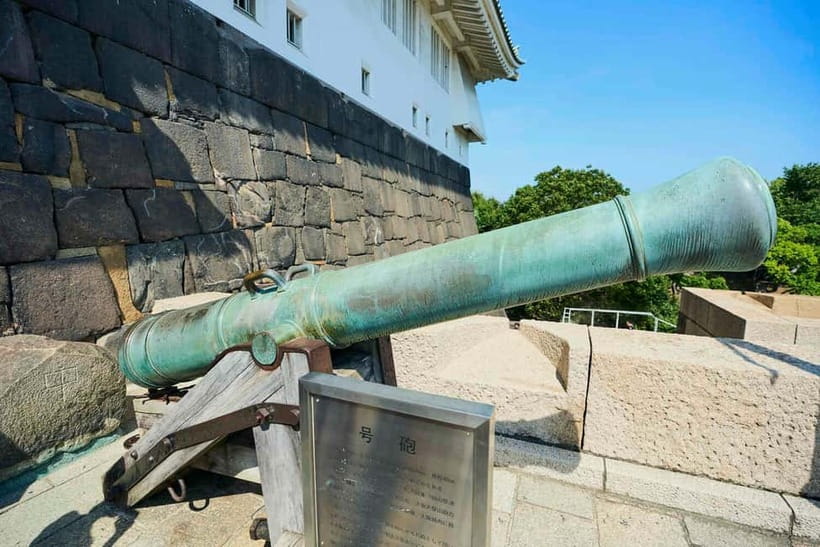
The masugata entrance is one of the castle’s cleverest features. Rather than opening directly into the next section, the gate arrangement creates a boxed or angled approach. Attackers enter a confined space, lose momentum, and become easier targets for defenders.
You walk routes that once made an invading force turn instead of charge. The turns were not decorative. They divided groups, slowed movement, and kept attackers from seeing the next objective clearly.
Look up as well as ahead. The tour explains how arrow slits and gun ports allowed defenders to fire from protected positions. The castle’s walls were designed to make climbing difficult, with angles and stonework that offered few useful holds.
That practical detail is what separates this walk from a standard sightseeing circuit. You are not simply told that Osaka Castle was strong. You see the small decisions that made it hard to enter.
More Castle and Palace Walks in Japan:
- Tokyo Castle & Imperial PalaceーShogun Walking Tour
★ 4.7 · 1,068 reviews - Tokyo: Imperial Palace and Shogun Walking Tour
★ 4.9 · 935 reviews - Ultimate Osaka Walking Tour: Castle, Dotonbori & Hidden Gems
★ 5.0 · 862 reviews - Kyoto: Imperial Palace & Nijo Castle Guided Walking Tour
★ 4.7 · 453 reviews
The enormous stone and the marks of its builders
A highlight is the castle’s largest stone. The guide explains how builders transported such a massive block in the 16th century, when there were no modern cranes or trucks to do the work.
The point is not only the stone’s size. It shows the labor, planning, and political power required to build a major fortress. Moving large blocks meant organizing people, tools, routes, and time. One piece of masonry opens a window onto the entire construction effort.
You also look for marks left by master craftsmen. These hidden symbols are easy to miss when you walk alone. They give the stone walls a human touch. Behind the grand military plan were teams of workers identifying their contribution and shaping blocks to fit a larger design.
The stonework stop is particularly useful if you enjoy architecture. It gives you something specific to examine after the guide moves on. Look closely at the walls, compare the size of the blocks, and notice how the construction feels less like a smooth surface and more like a carefully fitted defensive skin.
Hokoku Shrine and the Toyotomi story
The route includes a guided visit to Hokoku Shrine. This stop adds a cultural and political layer to the castle visit, linking the area with Toyotomi Hideyoshi and the legacy that later became part of the struggle for control of Japan.
A traditional Japanese wedding ceremony has occasionally taken place at the shrine during a tour, creating an unexpected cultural moment. That sort of event cannot be promised, but the shrine itself provides a quieter change of pace from the massive walls and crowded castle approaches.
The guide uses the stop to explain the historical forces around Osaka Castle. Hideyoshi’s rise, the importance of his legacy, and Ieyasu’s ambition help explain why the castle remained such a powerful symbol after Hideyoshi’s death.
This is also where a good guide earns the fee. Dates and names can blur together, but a clear explanation of who wanted power and why the castle mattered makes the later story easier to follow.
Entering the tower and earning the city view
The tower visit is the payoff. Your admission ticket is included, and the tour uses a separate entrance to help you bypass the regular ticket line. Several visitors appreciated the faster access, especially when the general line and elevator queue grew later in the morning.
The upper levels provide views across Osaka. From above, the scale of the surrounding grounds and the city becomes easier to grasp. The view is not only a photo stop. It also helps you understand the castle’s position as a command post, observation point, and final defensive refuge.
Inside, the tower presents the castle as both military structure and political theater. Arrow slits and gun ports show the practical side. Gold decoration shows another weapon: wealth and spectacle could impress allies, unsettle enemies, and reinforce the ruler’s authority.
The guide takes you to the tower, but the museum floors are not explained room by room. After the guided portion, you can explore the exhibits independently. That arrangement works well if you want a clear outdoor explanation followed by free time, but it may disappoint you if you expect a docent in every gallery.
How an invincible fortress fell
The tour does not stop with construction. It explains how Osaka Castle fell during the conflicts of 1614 and 1615, despite the defenses that made it appear nearly impossible to conquer.
That ending gives the military discussion a useful edge. A fortress can delay an enemy, divide an army, and protect its defenders, but it cannot decide politics by itself. Leadership, alliances, resources, and strategy matter as much as stone walls.
The fall also brings the Toyotomi and Tokugawa rivalry into focus. Osaka Castle represented more than a strong position. It carried the memory of Hideyoshi’s rule and challenged Ieyasu’s plans for lasting control.
This is a satisfying way to finish because you leave with both sides of the story. The castle was a brilliant defensive design, but no design is truly invincible when the political balance around it changes.
Guide quality and the human side of the tour
The strongest pattern in the guide feedback is warmth combined with useful historical detail. Mao has been praised for pointing out things visitors would otherwise miss. Spike has been singled out for strong explanations and for making the journey from the gates to the top feel engaging. Yuta has been described as patient, friendly, and happy to answer detailed questions.
Saya, Kaz, Ken, Yu, Ami, Kat, Tets, and others have also been praised for clear English, good pacing, and an ability to include children or older family members. One guide kept a three-year-old engaged for the full tour, while another adjusted the experience for teenage boys who might not normally choose a history walk.
The mood is conversational rather than formal. If nobody else joins your scheduled departure, the experience may feel close to a private tour, though you should not count on that. More commonly, you will be part of a small group with time for questions.
Timing, crowds, and the $33 value
At $33 per person, the price is fair if you want context, admission, and time-saving entry in one short visit. Osaka Castle is free to admire from the grounds, but the tower admission costs extra, and the military design is easy to miss without explanation.
The separate entrance can be valuable on a busy day. A 9 a.m. start was particularly useful for one visitor, who found the entrance and elevator lines much longer by 11 a.m. Starting early also leaves you free to continue exploring or find food afterward.
The tour is not the right choice if you want to spend several hours reading every museum display. It is also not a bargain for someone who only wants a quick exterior photograph. You are paying for interpretation, a planned route, English explanations, and admission rather than for transport or a full-day program.
The cancellation policy is flexible, with a full refund available when you cancel at least 24 hours ahead. You can also reserve now and pay later, which helps if your Osaka schedule is still shifting.
Who should book this Osaka Castle tour?
I would choose this tour if you enjoy military architecture, Japanese history, or places that make more sense when someone explains the details. It is also a smart pick for families, since the defenses give children something concrete to imagine, and the guides have shown patience with young visitors.
It suits first-time visitors especially well. You get the broad story, the key outdoor features, the shrine, the tower, and the city view without spending half a day working out the route yourself.
You may prefer to visit independently if you want a slow museum visit, long photography stops, or complete control over your pace. In that case, use the guide’s route as a starting point and stay afterward to explore the tower on your own.
Should you book it?
Book this Osaka Castle tour if you want to understand why the castle was built the way it was, not just see its golden exterior. The best reasons are the defensive design, the giant stone, the guide’s explanation of the Toyotomi and Tokugawa conflict, and the included tower entry.
At $33, it offers solid value for a focused 90-minute introduction. Choose an early start when possible, wear comfortable shoes, confirm the Lawson meeting point carefully, and allow extra time afterward for the museum floors. If those details fit your plans, this is a practical and rewarding way to make Osaka Castle more than a photo stop.
FAQ
How long does the Osaka Castle walking tour last?
The activity lasts 90 minutes. The route includes guided time around Osaka Castle and Hokoku Shrine, followed by a tower visit and time for photographs or self-guided exploration.
What is included in the price?
The $33 price includes Osaka Castle Tower admission and a professional English-speaking guide.
Is the tour conducted in English?
Yes. The live guide conducts the tour in English.
Does the tour include skip-the-line access?
Yes. The activity uses a separate entrance for skip-the-line access to Osaka Castle Tower.
Is every floor of the castle museum guided?
No. The tour does not include a guided explanation of every museum floor. You can explore those areas independently after the guided visit.
Where does the tour meet?
The meeting point is in front of Lawson S Otemae Rest House Store. There are several Lawson stores nearby, so confirm the location on Google Maps and look for the Local Guide Stars sign.
What should I wear or bring?
Wear comfortable shoes and clothing suited to the weather. The experience includes walking through outdoor historical areas.
Is the tour suitable for children?
Yes. The tour is suitable for people interested in history, military strategy, and architecture, and guides have successfully kept young children and teenagers engaged.
Can I cancel for a full refund?
Yes. You can cancel up to 24 hours in advance for a full refund. You can also reserve now and pay later.
Just added around Japan
- Asakusa Senso-ji Temple and Old Tokyo Walking Tour★ 5.0 · 560 reviews
- Tokyo: Asakusa & Sensoji ー Oldest Temple Walking Tour (2hrs)★ 5.0 · 213 reviews
- Asakusa Cultural Walk & Matcha Making Tour★ 5.0 · 245 reviews
- Tokyo: Tsukiji Market Walking Tour & Sushi Cooking Class★ 4.6 · 122 reviews
- Tokyo: Dark Side of Tokyo Shinjuku Red Light Walking Tour★ 4.7 · 862 reviews
- Tokyo: Shinjuku Nightlife & Secret Backstreets Walking Tour★ 4.8 · 229 reviews
- Tokyo: Shibuya Highlights Walking Tour★ 4.8 · 601 reviews
- Tokyo: Shibuya Highlights Walking Tour & Secret View Spot★ 4.9 · 196 reviews
History Walking Tours, compared.
History and Hauntings of Salem Guided Walking Tour
Read our review →

Freedom Trail History Small Group Walking Tour
Read our review →
Historic Charleston Guided Sightseeing Walking Tour
Read our review →
Tapas Walking Tour with Food, Wine, and History
Read our review →
Savannah History and Haunts Candlelit Ghost Walking Tour
Read our review →
A History of Terror – Belfast City Centre Walking Tour
Read our review →Browse the lists this tour appears in